
Alexandria lawmakers outline state legislative priorities ahead of January session
Delegation discusses housing, healthcare and gun safety amid budget constraints and federal funding uncertainty

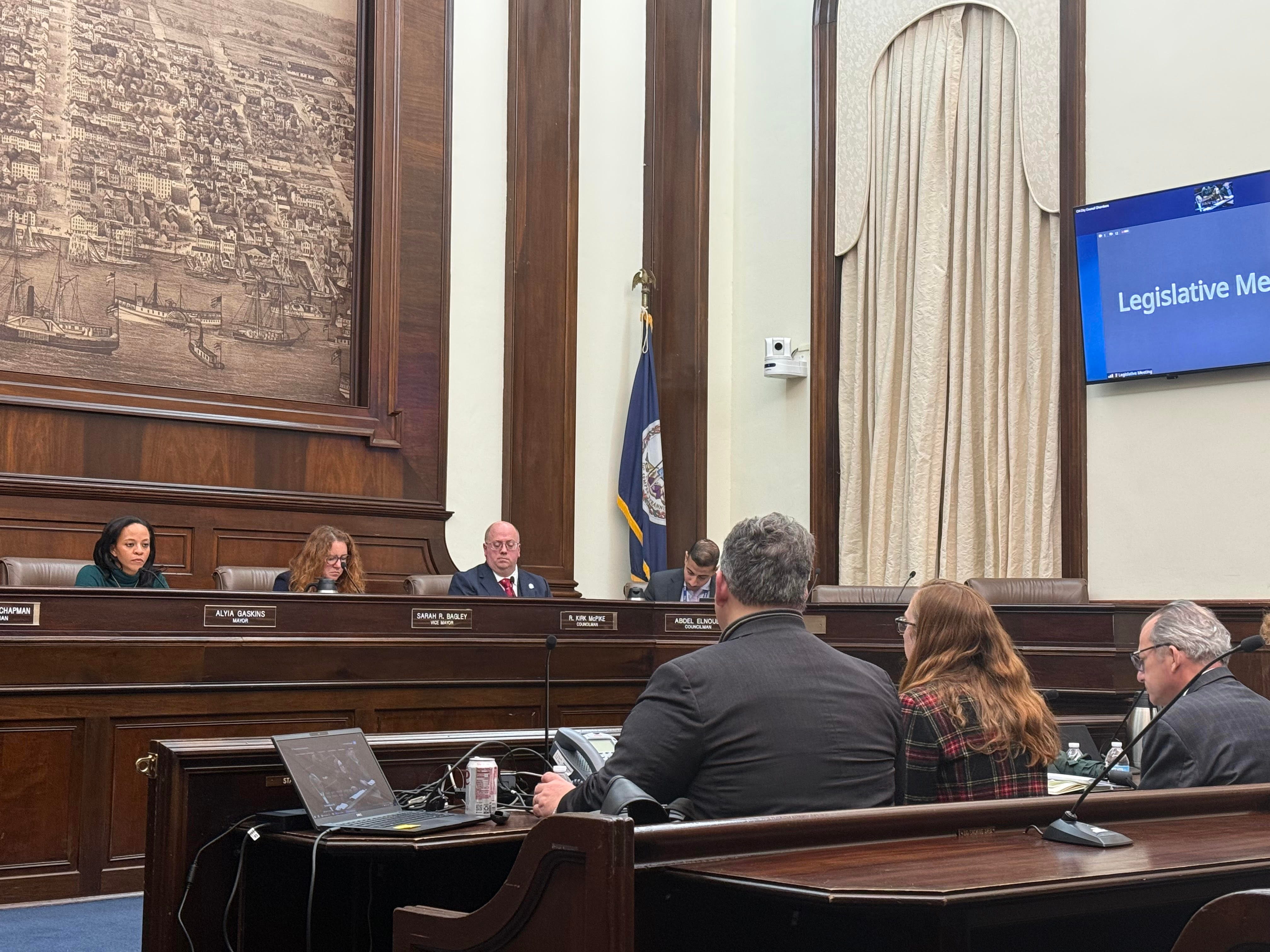
Alexandria’s representatives to the Virginia General Assembly outlined their agenda during a work session with City Council on Tuesday night, identifying housing affordability, gun violence prevention, healthcare costs, and immigration protections as priorities for the upcoming legislative session.
Del. Alfonso Lopez, Del. Elizabeth Bennett-Parker, and Sen. Adam Ebbin addressed council members at the Nov. 25 meeting to discuss plans for the 60-day session beginning in January. Del. Charniele Herring was unable to attend.
The session comes as Democrats prepare to take unified control in Richmond for the first time in several years, with Governor-elect Abigail Spanberger set to take office alongside Democratic majorities in both chambers.
However, lawmakers cautioned that budget constraints and federal funding uncertainty will limit what they can accomplish.
“The easier things are things that don’t create new programs that cost money,” Ebbin said. “But I think we’ll still be — I mean, we’ll do things that you’ll like.”
Housing
Housing affordability was a central topic, with delegates pointing to both regulatory reforms and funding increases.
Lopez said the state’s Affordable Housing Trust Fund, which he helped create, has grown from $6.8 million to $175 million over the past 11 years, but should reach $400 million. He said that for every housing project funded in Northern Virginia, seven go unfunded.
Bennett-Parker said progress has been made toward eliminating double-stairwell requirements for multifamily buildings, a construction code change that could reduce housing costs. The measure has moved through the building code process and awaits final approval from the Department of Housing and Community Development board in March, she said.
The delegation also discussed legislation that would establish a right of first refusal for localities when affordable housing units with expiring restrictions are sold, giving cities additional tools to preserve existing affordable stock.
Healthcare
Ebbin said the state faces difficult choices on healthcare, particularly given uncertainty over federal Affordable Care Act subsidies.
The state may need to spend up to $240 million to replace those subsidies if federal support is eliminated, he said.
“We’re going to have a limited amount of funds in total to address some really pressing needs like healthcare,” Ebbin said.
Bennett-Parker said lawmakers would pursue targeted approaches for specific populations, including children, rather than attempting to fully replace lost federal funding.
“We’re just not going to be able to take on all the challenges that the federal government has left us and make up for them,” she said. “That’s not to say that we won’t try and do some targeted or certain populations or children.”
The delegation discussed creating a prescription drug affordability board and improving pharmaceutical price transparency as potential measures to address rising costs.
Gun legislation
Lopez said he plans to advance gun violence prevention legislation, including expanding gun safe storage tax credits. He said he would seek to restore provisions previously removed by Republican majorities or vetoed by past governors.
The delegation also plans to reintroduce legislation to ban assault weapons.
Immigration and worker protections
The delegation said they are preparing legislation to address potential federal policy changes and protect immigrant communities, though they did not provide specifics.
Lopez, who chairs the House Labor and Workforce Committee, said he plans to work on labor protections, workforce development and worker misclassification issues, including overtime pay requirements.
Environmental policy and energy costs
Lopez, who serves as co-chair of the policy committee on natural resources and environmental policy, said he is working on legislation addressing Chesapeake Bay restoration, wetlands policy, and land conservation.
Rejoining the Regional Greenhouse Gas Initiative remains a priority for the delegation. Gov. Glenn Youngkin withdrew Virginia from the multistate cap-and-trade program during his administration. Lopez said Spanberger could rejoin through regulatory action without requiring new legislation.
Ebbin said addressing rising energy costs is a priority and that lawmakers have filed legislation to promote energy-saving measures such as heat pumps for qualifying households.
Tax policy
Bennett-Parker said she would continue work on tax fairness, citing legislation she passed that eliminated a tax break for high earners and returned approximately $5 million annually to the state general fund.
School funding
Councilwoman Jacinta Greene asked about legislation that would allow localities to impose a 1 percent sales tax for school construction.
“We have some of the state’s oldest buildings that even though we’ve tried to maintain them as best we can, still certainly need more than just a nice cleaning,” Greene said.
Bennett-Parker said she does not expect that legislation to pass. She said potential sales tax measures for school construction could also affect prospects for transit funding in Northern Virginia, where she has been working on related legislation.
Lopez said federal funding uncertainty complicates efforts to address school funding formulas. He said between 21 percent and 26 percent of Virginia’s budget consists of federal pass-through dollars, with Medicaid and K-12 education representing major areas of concern.
That fiscal reality makes restructuring the Local Composite Index, which determines how state education funding is distributed to localities, unlikely this session, he said.
Looking ahead
The delegation will also have to contend with outgoing Gov. Glenn Youngkin’s proposed budget, expected Dec. 18, before crafting their own spending priorities.
Lopez framed the upcoming session in stark political terms, saying he plans to focus on environmental policy, small business protection, gun violence prevention, infrastructure, and immigration.
“We can address some of the ugliness from across the Potomac and address some of the really ugly, obscene things that are happening across the Commonwealth and finding ways that we can be proactive where we haven’t been able to be under the current governor’s administration,” Lopez said.
The delegation said they expect to receive the city’s draft legislative package soon, as coordination continues ahead of January.