
Council sides with police union on wages in impasse hearing, directs staff to consider reducing authorized force
Unanimous vote approves $10.2 million in raises; city to study whether fewer officers could offset costs.

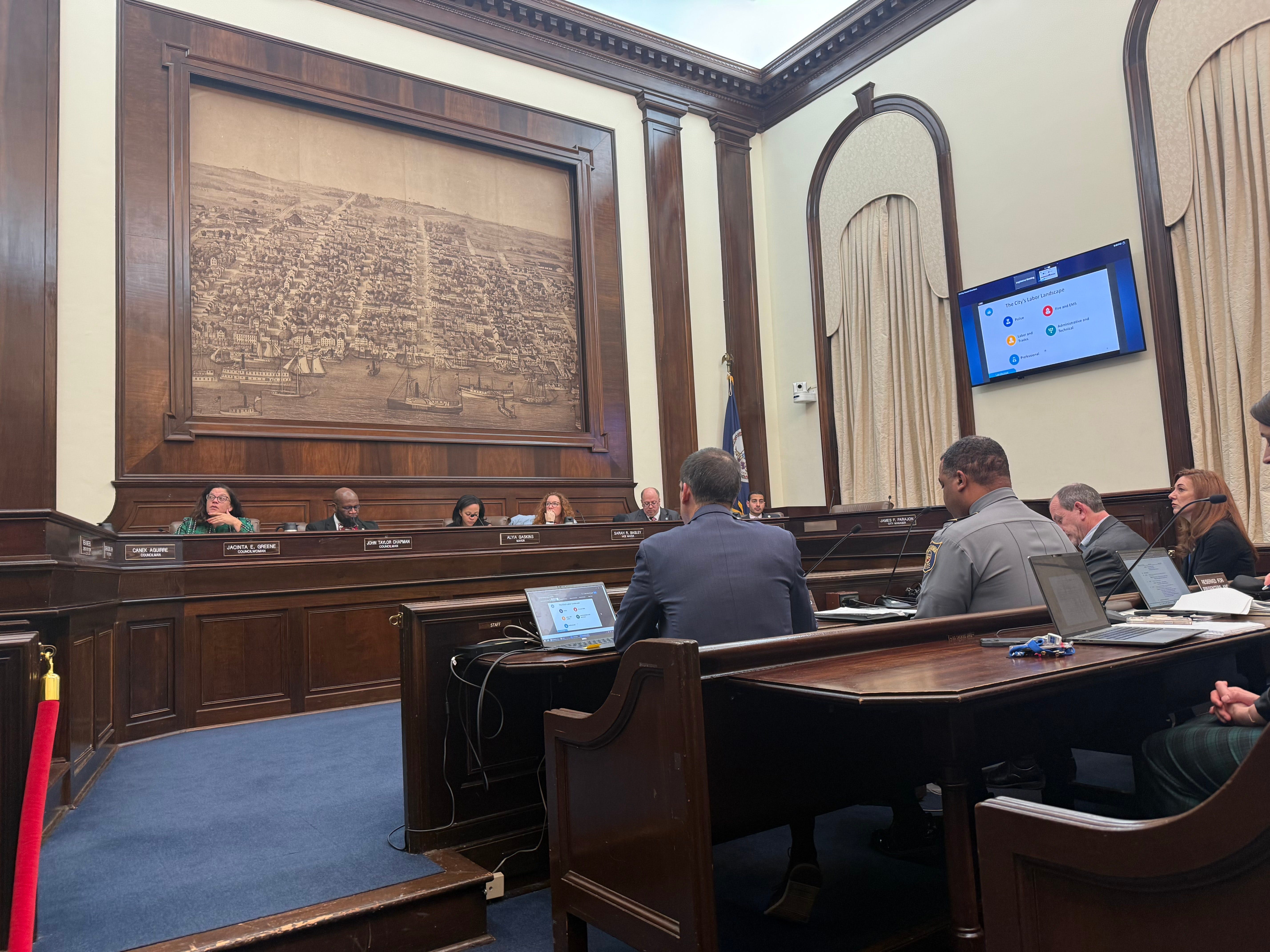
The Alexandria City Council unanimously voted on Tuesday night to approve the police union’s wage proposal in a collective bargaining dispute, greenlighting approximately $10.2 million in salary increases over three years rather than city management’s $8 million alternative.
The decision followed a lengthy impasse hearing between the city and the Alexandria Chapter of the Southern States Police Benevolent Association over a successor contract covering fiscal years 2027 through 2029.
Council also asked city management to look at potential savings from reducing the police department’s authorized force as they weigh the budgetary impact of the higher costs.
The wage proposal includes a 17.21% starting salary increase for police officers to $75,000, a 21% increase for sergeants, and a 15% increase for lieutenants in fiscal year 2027. Both the city and union agreed on these first-year increases, but disagreed on cost-of-living adjustments for years two and three.
The union proposed 2% annual adjustments for fiscal years 2028 and 2029, while the city offered 0.5% increases. The difference amounts to approximately $2.2 million over the contract’s life.
“The SSPBA has proposed a solution and city management has modeled its counterproposal on the same proposed FY27 starting salaries,” said William Thetford Jr., the union’s attorney. “The question is, what are we going to do about years 2 and 3?”
The council’s decision came after presentations from both sides highlighting staffing challenges facing the Alexandria Police Department. The department currently has 291 sworn officers against an authorized strength of 322, representing 31 vacancies.
“We have had increased vacancies this time last year to this year,” said Police Chief Tarrick McGuire. “The top three reasons last year by order, why people were leaving the organization, the first two centered around retirement and personal reasons. And then the last one was because they were leaving to go to another organization.”
This year, departures to other law enforcement agencies became the primary reason officers leave, McGuire said, with many going to federal agencies offering higher pay.
Union representatives argued Alexandria officers’ salaries lag behind regional comparators including Arlington County, Fairfax County, Prince William County, Montgomery County and Prince George’s County.
“Given the low compensation of these bargaining unit employees compared to their regional comparators, the city runs the risk of being unable to compete for new hires or to retain qualified law enforcement officers over the course of their careers,” according to a factfinder’s report issued Nov. 15.
City management warned the increased costs would require difficult budget choices. Morgan Routt, the city’s director of management and budget, said the union’s wage proposal would require either a 0.9-cent real estate tax rate increase, elimination of 35 jobs or $4.3 million in expenditure reductions by fiscal year 2029.
“We have a fairly housing cost-burdened community, 26,000 households,” Routt said. “We have a tax base that is heavily residentially based, over 80%. And we have a fairly high tax rate as well for the region.”
The council also voted unanimously to adopt the city’s position on longevity bonuses, approving a $1,200 annual bonus for officers at the top of the pay scale. The union had sought $2,500.
On pay parity provisions, the council adopted the city’s proposal requiring market studies every three years rather than annually as the union requested. The city’s version also eliminates automatic wage reopeners if salaries fall below market averages.
The parties had reached tentative agreement on 47 of 50 original articles before entering the impasse process. The remaining disputed items included wages, longevity bonuses, pay parity, leave policies, officer health and wellness programs, retirement benefits, and reopener procedures.
The Office of Management and Budget will now prepare a fiscal impact study for council consideration. The collective bargaining agreement requires the council to adopt a resolution expressing a good-faith commitment to appropriate necessary funding, though actual appropriation remains subject to the city’s normal budget process.
The current collective bargaining agreement covering fiscal years 2024 through 2026 remains in effect until a successor agreement is ratified by the union and signed by both parties.