
Funding cuts, ICE fears strained Alexandria Health Department in 2025, report says
Grant funding dropped nearly 50% as staff navigated immigration concerns, measles threat

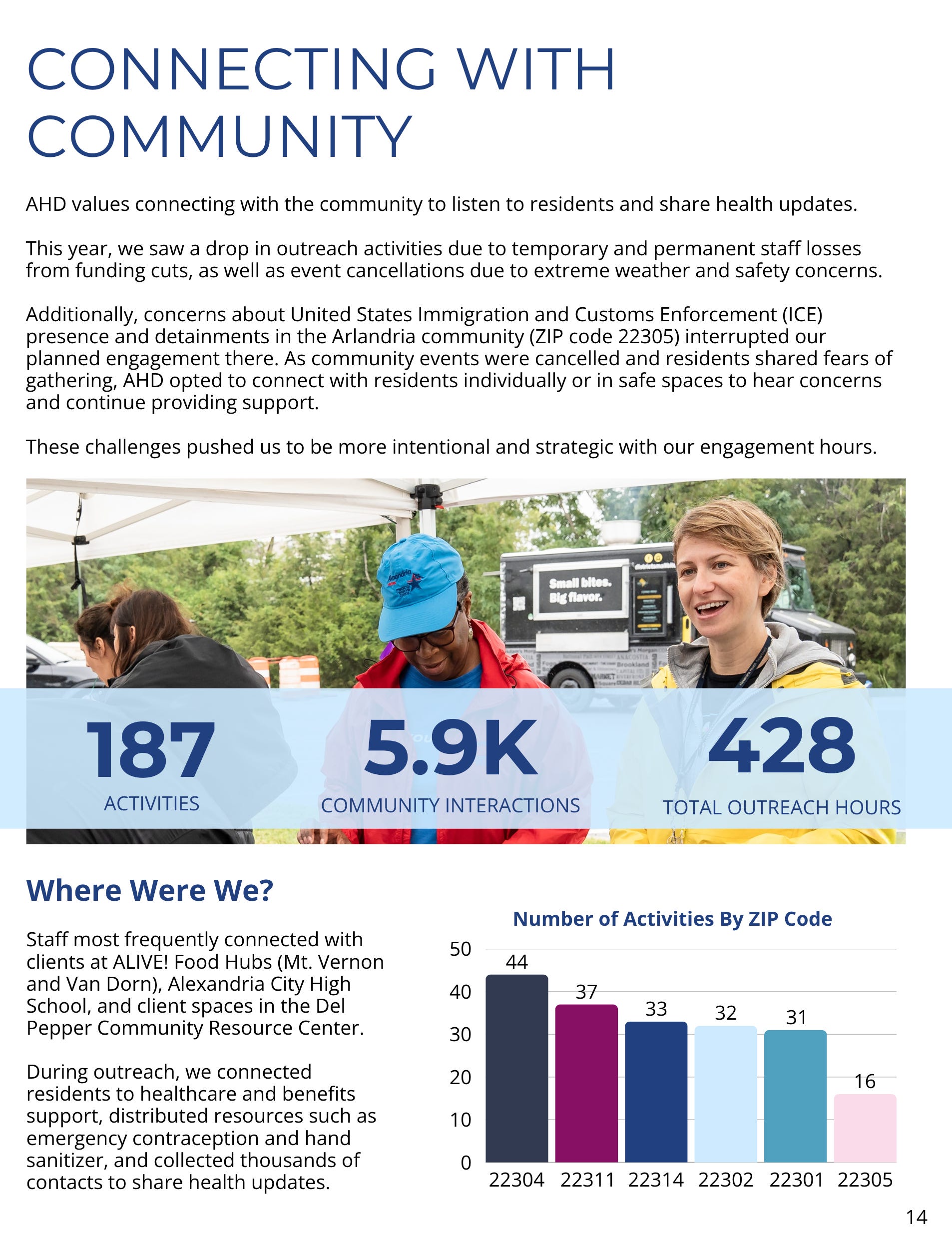
Concerns about immigration enforcement disrupted the Alexandria Health Department’s community outreach in the Arlandria neighborhood last year, according to the department’s annual report released Tuesday.
The report states that concerns about U.S. Immigration and Customs Enforcement presence and detainments in Arlandria interrupted planned engagement there. Community events were cancelled as residents shared fears of gathering, prompting staff to connect with residents individually or in safe spaces instead.
The department saw a drop in outreach activities overall due to staff losses and safety concerns, logging nearly 5,900 community interactions across 187 activities.
The Arlandria and Landmark/Van Dorn neighborhoods have been identified as priority areas in the department’s next five-year community health improvement plan, set for release in 2026.
Immigration concerns were among several challenges Health Director Dr. David Rose described in a letter to residents accompanying the report.
“We lost team members and like many across the country, shared deep concerns as we saw dedicated public servants forced out of critical public health institutions,” Rose wrote. “Together with our neighbors, we battled anxiety about the safety of our immigrant communities.”
The report notes that federal health leadership “has changed drastically” but that the department’s core mission remains steady.
The department also faced significant budget pressures. Its budget fell from $18.8 million in fiscal year 2025 to $17.7 million in fiscal year 2026 as grant funding dropped from $3.5 million to $1.9 million — a loss attributed in part to the sudden elimination of pandemic preparedness funding. A government shutdown also forced the department to rapidly adapt its spending.
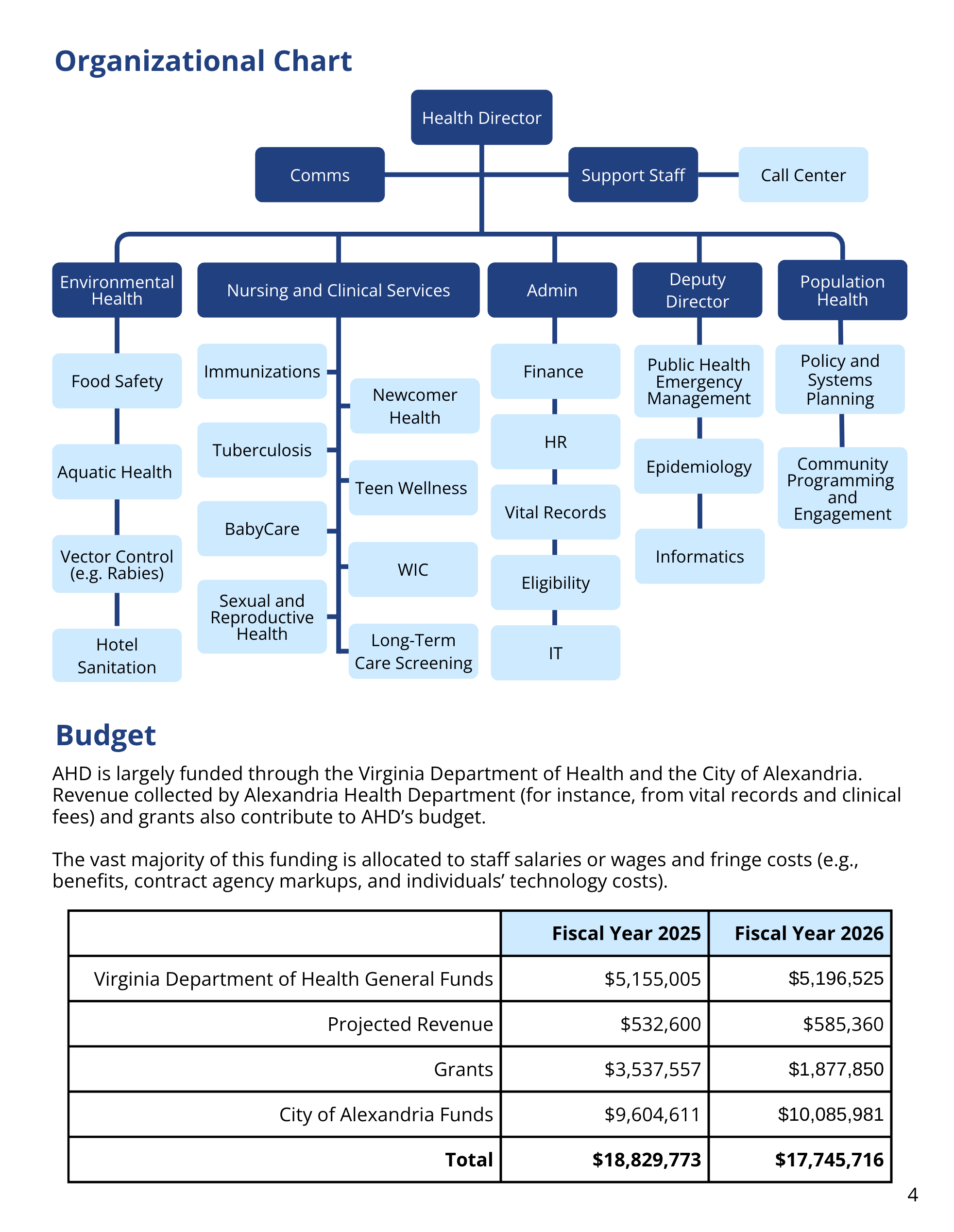
The City of Alexandria increased its contribution from $9.6 million to $10.1 million to help offset the losses.
Despite the challenges, the department’s team of fewer than 100 public health professionals provided more than 8,000 clinical services, administered over 6,300 vaccines, investigated more than 400 communicable disease cases, responded to more than 30 outbreaks, processed 14,000 vital records, and completed 1,600 food safety inspections.
The department’s 800-member Medical Reserve Corps volunteer force served at more than 100 events.
With measles cases rising nationally, the department partnered with shelters, schools, detention centers, and healthcare providers to prepare. Staff updated clinical processes for vaccination and treatment, built digital tools to track exposures, created multilingual outbreak communication materials, and reviewed school immunization rates.
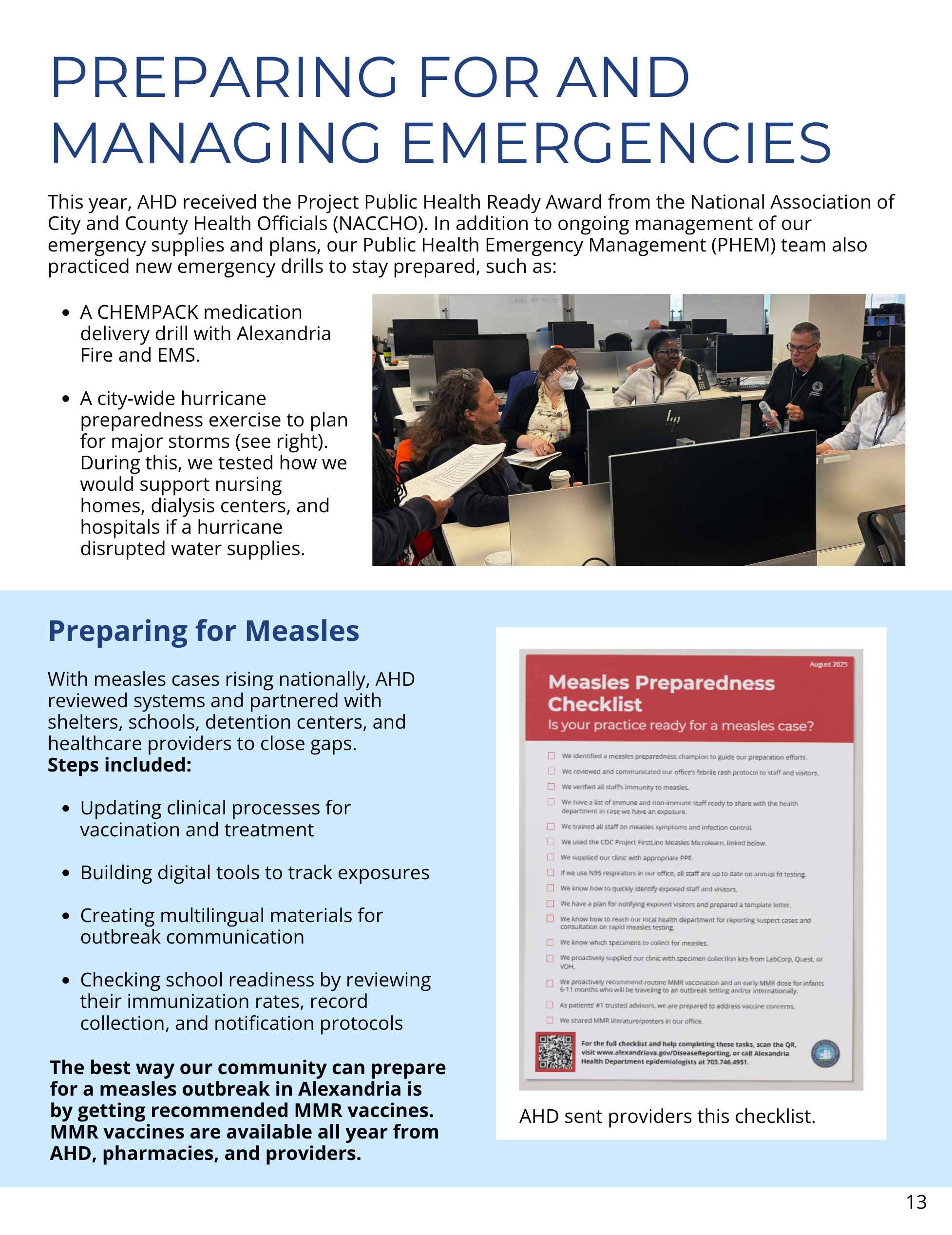
Emergency preparedness efforts also included a CHEMPACK medication delivery drill with Alexandria Fire and EMS and a citywide hurricane preparedness exercise. The work earned the department the Project Public Health Ready Award from the National Association of City and County Health Officials.
Staff investigated nearly 400 reports of close encounters with animals, testing 27 for rabies and confirming three cases.
Staffing shortages have strained the department’s Women, Infants, and Children nutrition program. The number of nutritionists dropped from four to two compared to five years ago, while caseloads increased. Nutritionists now see around 50 clients back-to-back daily with no breaks.
“State requirements and low wages make it very hard to hire and onboard qualified, passionate staff,” the report stated.
The department launched several new initiatives in 2025, including a pilot program offering sports physicals at all four Alexandria City Public Schools middle schools, serving 146 students. Staff began providing free emergency contraception at the main office without requiring an appointment.
A hand-washing education program dubbed “Operation Scrub-a-Dub” partnered with the school system to create a curriculum for elementary students. Staff also offered free health literacy classes in English and Amharic to residents, including inmates at the city’s detention center, seniors at Claridge House apartments, and formerly incarcerated women.
The ALX Breathes program, which helps residents reduce asthma and COPD triggers in their homes, reported that 71% of participants experienced fewer asthma-related interruptions and 67% missed fewer days of school or work.
Back-to-school immunization clinics were moved from weekends to weekday evenings, resulting in nearly four times more clients than the previous year. STI walk-in visits increased fivefold, and more than 1,000 clients visited sexual and reproductive health clinics. The department achieved a perfect score on state and federal Title X audits.
The department successfully treated a patient with multidrug-resistant tuberculosis over eight months, a case that required staff to monitor the patient taking medication daily.
A pilot program aimed at helping unpermitted street food vendors obtain proper licensing “did not achieve its intended outcomes,” the report acknowledged, though staff built connections with other city agencies to strengthen future efforts.
The department secured permanent state funding for a full-time informaticist to modernize data systems and began preparing for a new electronic health record system.
The Alexandria Health Department serves 160,000 residents and has promoted public health in the city for more than a century.
Read the full AHD 2025 Annual Report.