
Publisher's note: Understanding the Braddock Road corridor improvements project
A guide to what's being proposed, what residents are saying, and what questions remain ahead of Monday's hearing

As debate intensifies ahead of Monday’s Traffic and Parking Board hearing, there’s been confusion about what the city is actually proposing for Braddock Road. Here’s what you need to know based on the city’s 271-page docket.
What is the project area?
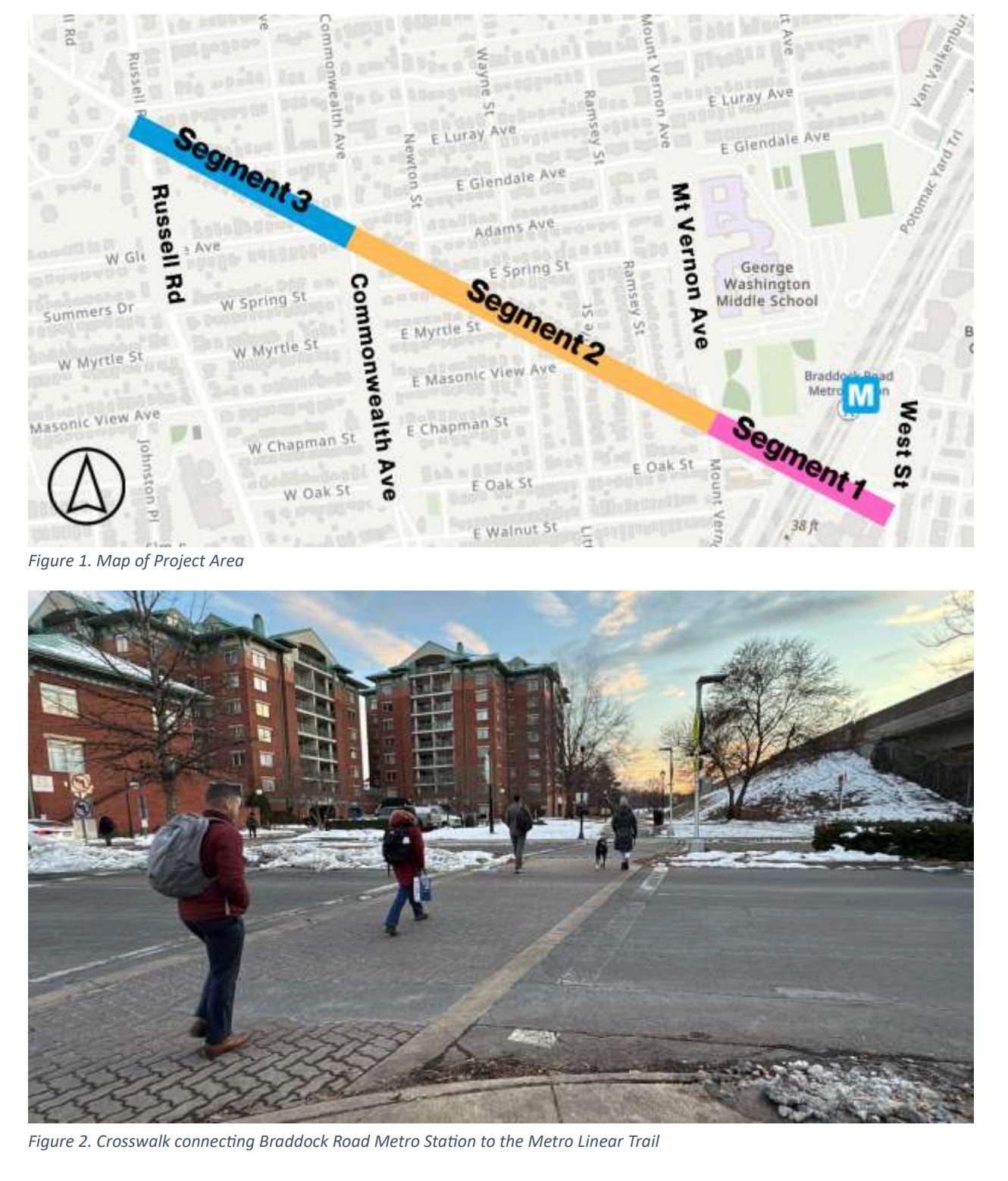
The project covers Braddock Road from Russell Road to West Street (also called North West Street). This includes three distinct segments:
Russell to Commonwealth Avenue (Rosemont residential area).
Commonwealth to Mount Vernon Avenue (Rosemont residential area).
Mount Vernon to West Street (includes Braddock Metro station, Yates Corner/7-Eleven, trails).
What is the city recommending?
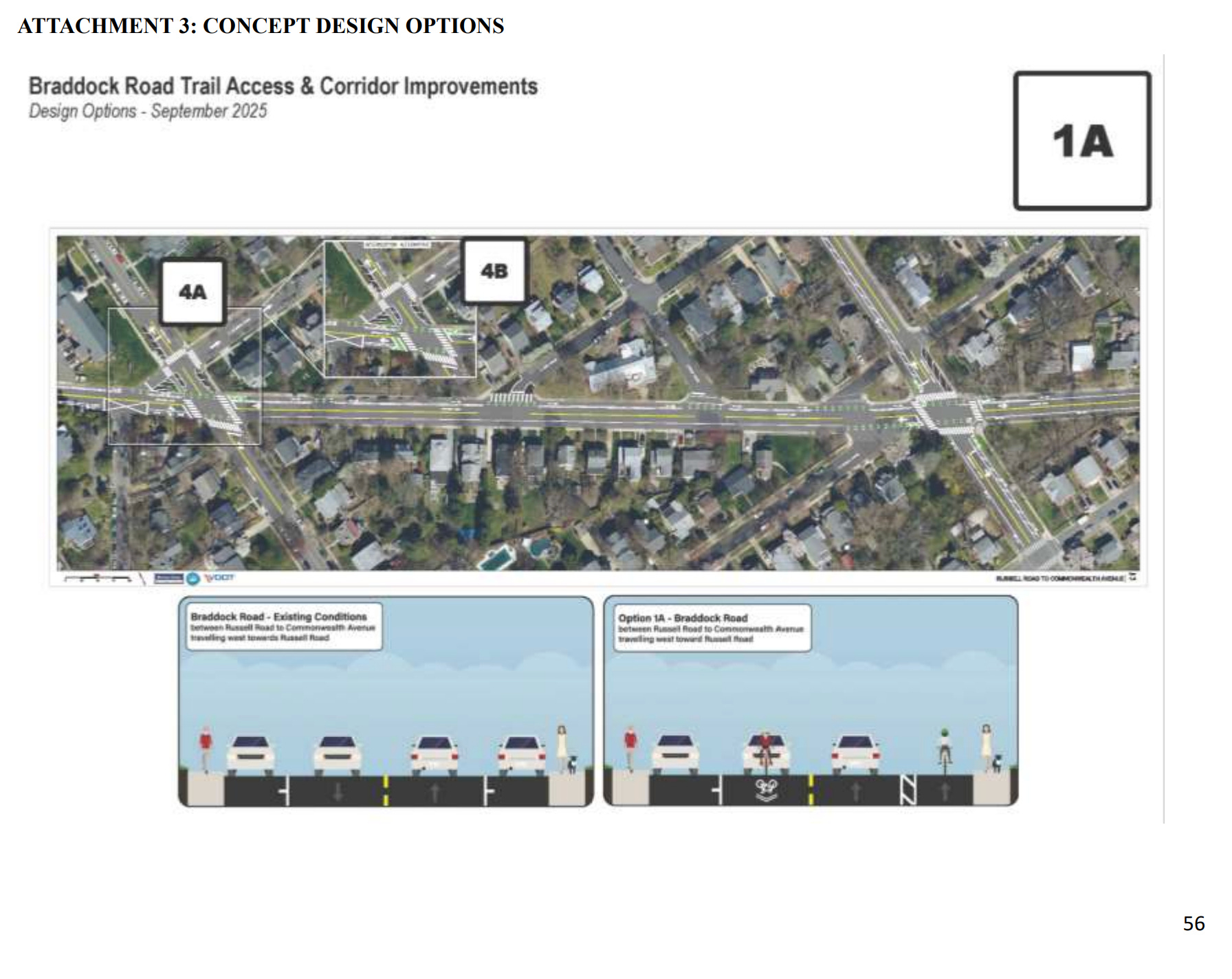
The staff recommendation includes:
Bike lanes:
Protected bike lanes along the entire corridor (Russell to West Street).
Two-way protected bike lane on the north side between the Metro and trails.
One-way separated bike lane on the south side.
Parking removal:
Remove most on-street parking between Mount Vernon and Russell (with small exceptions for about 100 feet on the unit block of East Braddock Road and 60 feet on the 200 block).
Remove parking on Commonwealth Avenue between Braddock and Spring Street.
Relocate one disability parking space from Braddock Road; add two new disability spaces on Hancock Avenue at Braddock Road and on Luray Avenue at Braddock Road.
Traffic changes:
Remove one travel lane in each direction between Yates Corner and West Street (near Metro).
Consolidate turn lanes at Russell, Commonwealth, and Mount Vernon intersections.
Add a commercial loading zone near Yates Corner.
What did the RCA oppose?
The Rosemont Citizens Association, which says it represents all residents of Rosemont, has taken two votes:
November 19: Opposed parking removal on the Russell-Commonwealth segment (49-10 vote, 59 people).
January 22: Expanded opposition to the Commonwealth-Mount Vernon segment (61-12 vote, 76 people).
Combined, RCA has opposed: Mount Vernon to Russell Road.
RCA has NOT taken a position on: The Mount Vernon to West Street segment (Metro area, trails, Yates Corner).
What did Del Ray support?
The Del Ray Citizens Association, which only represents its members, voted 72% in favor (43 responses) of supporting the overall project.
All three segments of the project corridor span both the Del Ray and Rosemont neighborhoods. DRCA reported hearing mixed views from Braddock Road residents in Del Ray during outreach: some were concerned about losing street parking, while others felt the removal would make their off-street parking easier and safer to access.
What have City Council candidates said?
The five candidates competing for City Council in the February 21 Democratic firehouse primary initially all expressed support for the Braddock Road project in responses to a questionnaire from the Alexandria Bicycle and Pedestrian Advisory Committee.
However, at the Alexandria Federation of Civic Associations candidate forum Tuesday night, three candidates’ positions became less clear, according to BPAC.
Still support the project:
Sandy Marks: “Keeping Alexandrians safe and alive has to be the primary goal”
Tim Laderach: “Prioritize life over convenience. Approve the plan as proposed”
Withdrew support at forum, according to BPAC:
Cesar Madison Tapia
Charles Costen-Sumpter
Roberto Gomez - Gomez has contacted The Alexandria Brief by text, disputing this characterization. The Alexandria Brief has invited Gomez to email us clarifying his position. This story will be updated when a response is received.
Why is the city proposing this?
According to the docket, the project stems from:
The 2016 Pedestrian & Bicycle Master Plan calls for improved trail access.
VDOT designation of Braddock Road as a statewide priority for pedestrian/bicycle safety.
2023 Safe Routes to School audit at George Washington Middle School, citing safety needs.
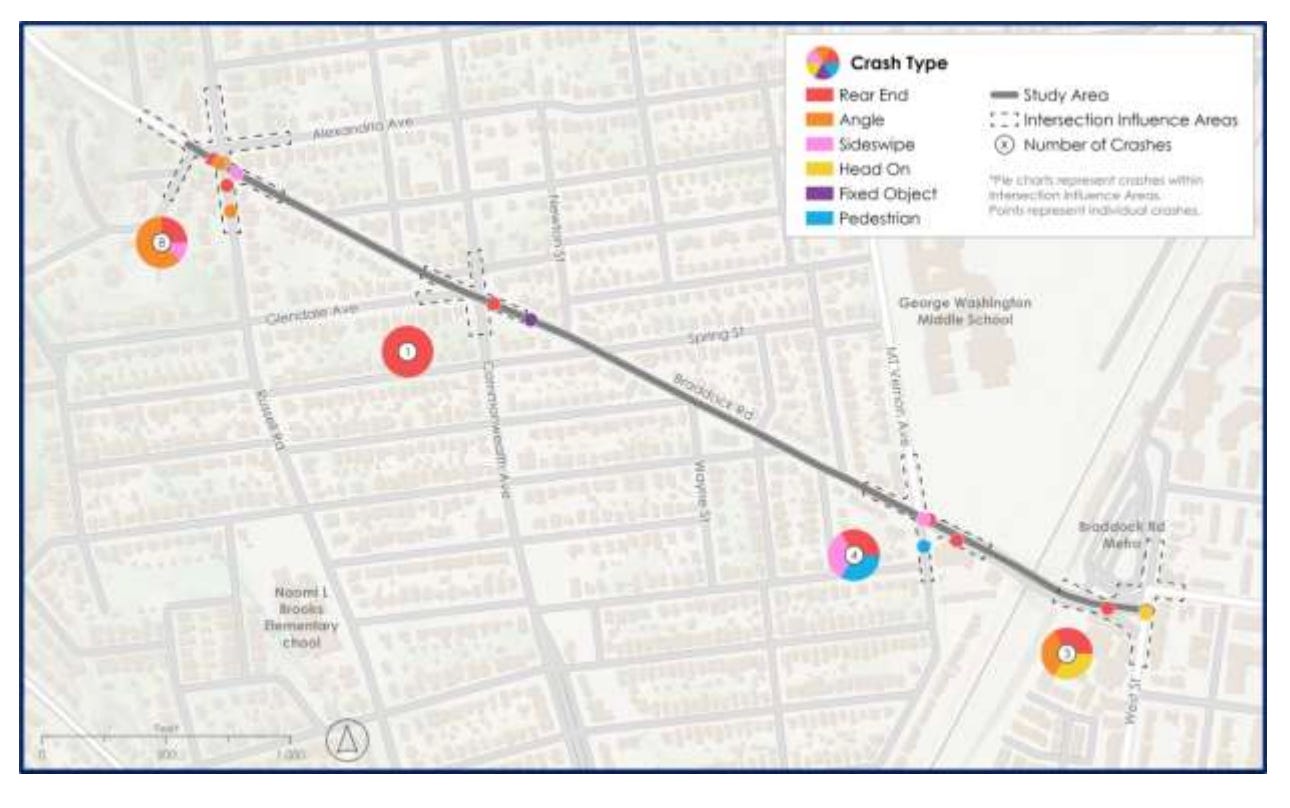
17 crashes between 2019-2023, including 8 injuries and one 2015 pedestrian fatality at Commonwealth/Braddock.
Community requests for crosswalk improvements have been made for many years.
What did community engagement show?
The city conducted extensive community outreach:
March 2025 (290 responses):
Top concerns: vehicle speeds (19%) and difficulty crossing the street (18%).
22% said “the street is unsafe for families walking and biking and for children traveling alone”.
Respondents appreciated connectivity to Metro and trails but requested protected bike lanes, traffic calming, safer crossings, and better lighting.
September-October 2025 (587 responses):
“The vast majority of respondents supported the project goals”.
73% feel positive or neutral about protected bike lanes near Metro.
65% feel positive or neutral about one travel lane in each direction.
Highest priority: reducing conflicts between turning drivers, pedestrians, and cyclists.
The city also held 10 community meetings with various groups, including RCA, Del Ray Citizens Association, Good Shepherd Lutheran Church, and residents.
Is this just about bikes?
No. While much of the debate has focused on bike lanes, the project includes significant improvements for all pedestrians:
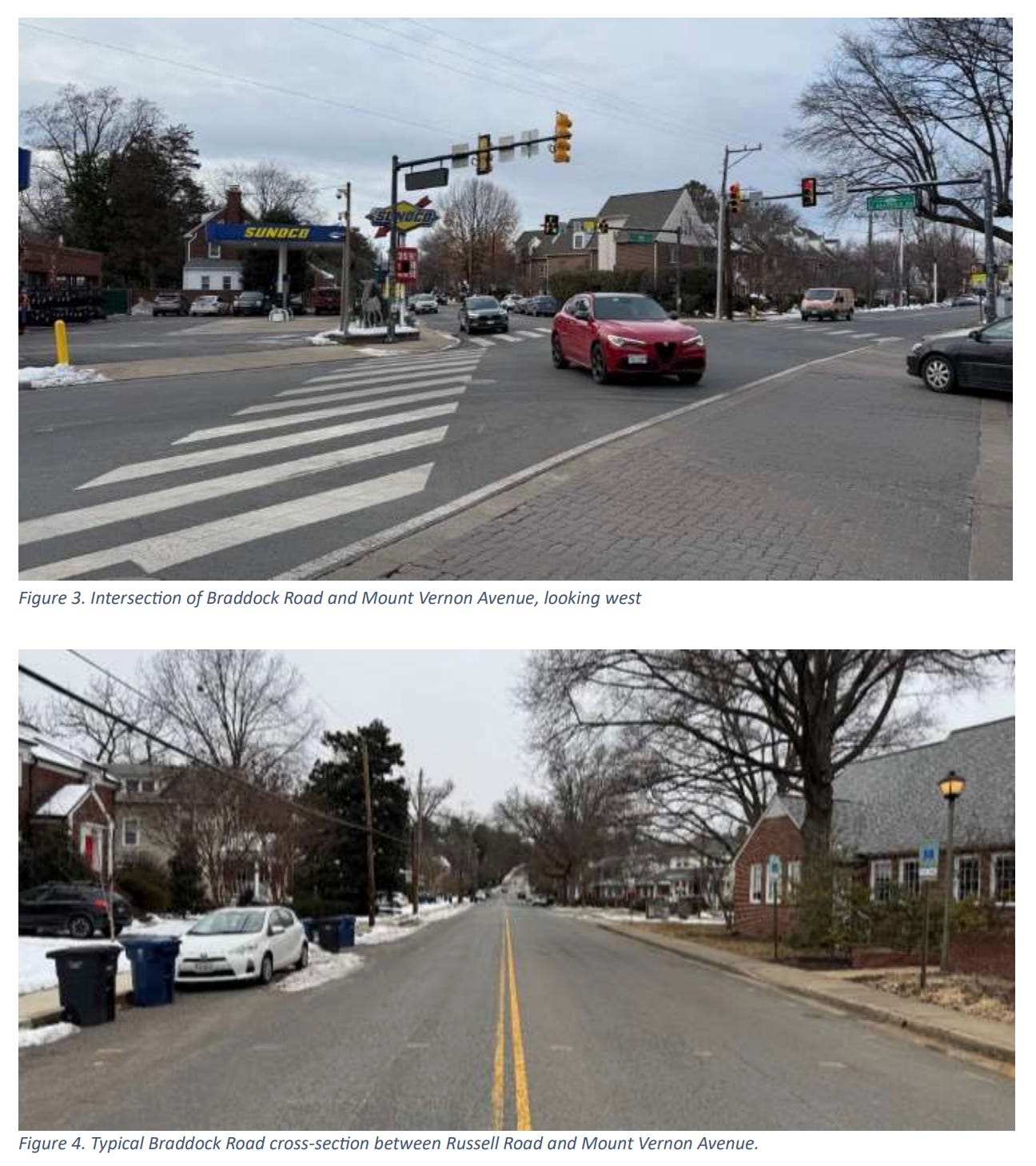
Shorter crossing distances at intersections (currently up to 95 feet).
Protected crosswalks with better visibility.
Safer connections between George Washington Middle School, the Metro station, and two major trails.
Improved sidewalk buffers and accessibility.
The city’s docket notes that between 2019 and 2023, there were 17 crashes in the project area, resulting in 8 injuries, including one involving a pedestrian. A woman was killed while walking at the intersection of Braddock Road and Commonwealth Avenue in 2015.
Why build bike lanes if not many people bike there now?
A common argument against the project is that “we don’t see many bikes now, so why build bike lanes?” But transportation planners note that protected bike infrastructure creates demand—people won’t bike where they don’t feel safe.
The city’s docket cites Federal Highway Administration guidance: “Nearly 1/3 of fatal/severe crashes occur when motorists are overtaking bicyclists. Many people are not comfortable riding a bicycle because of their fear that this type of crash may occur.”
Mayor Alyia Gaskins noted in her Wednesday video update that she has received emails from residents on all sides, including “a family who’s lived on Braddock Road for 20 years and bikes to and from for most of their daily trips.”
What about residents who live along Braddock Road?
In her Wednesday video update, Mayor Gaskins acknowledged receiving emails from all sides of the debate—supporters, opponents, and those seeking more information.
The city’s docket notes that “some residents, particularly those with homes facing Braddock Road, have expressed major concern about on-street parking being eliminated.” Not all residents along the corridor oppose the changes—some Del Ray residents on Braddock Road have told the Del Ray Citizens Association that removing street parking would actually make it easier and safer to access their driveways. However, the Traffic and Parking Board and the city must make decisions based on what’s best for safety and accessibility for all residents—not just those whose property directly fronts Braddock Road. The corridor serves as a key connection for thousands of residents traveling to the Metro, schools, trails, and between neighborhoods.
As the Mayor noted, “Anytime someone tells you that everyone is for something or everyone is against something, they’re probably wrong. Because nobody knows everyone, and we are a community that has many different views.”
Should we wait for more crashes before acting?
The city’s approach, outlined in its 2017 Vision Zero Action Plan, is to take preventative action rather than wait for tragedies. With 17 crashes in five years (2019-2023), including 8 injuries and a 2015 pedestrian fatality, the city argues the data justifies improvements now.
The docket states the city “employs a safe system approach when planning and engineering for traffic safety, which aligns with the U.S. Department of Transportation’s National Roadway Safety Strategy and involves taking preventative action to minimize crashes.”
What about parking?
The city conducted parking studies in March and October 2025:
105 parking spaces exist on Braddock between Russell and Mount Vernon.
Peak weekday use: 28 cars parked (Wednesday evening).
Peak weekend use: 47 cars parked (Sunday morning, largely due to Good Shepherd Lutheran Church services).
Available nearby: 300+ spaces on streets within 1-2 blocks during peak times.
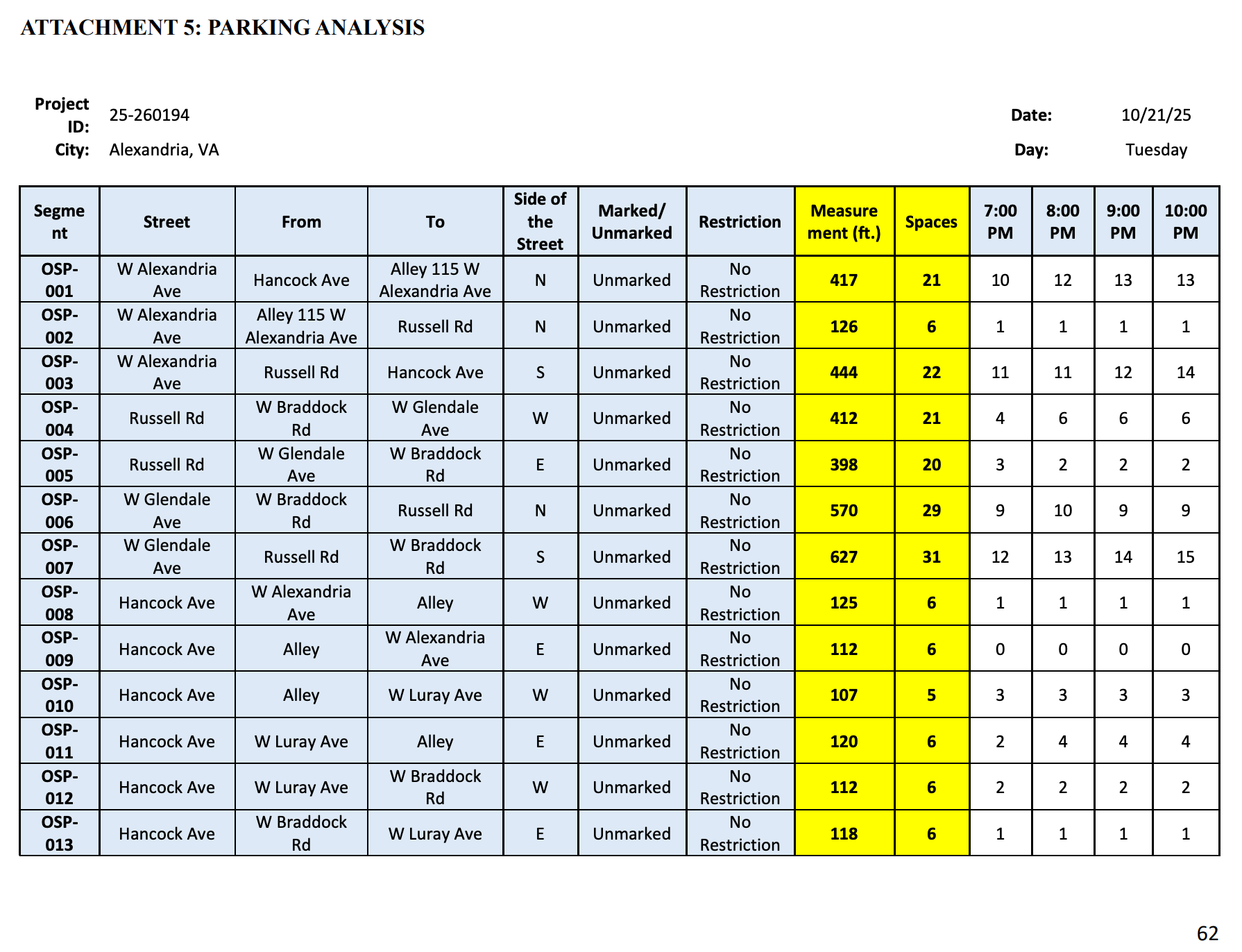
Most homes on Braddock have off-street parking (driveways or lots). One home does not have off-street parking, and the city says that it has worked to retain several parking spaces near that home.
Good Shepherd Lutheran Church does not have off-street parking and relies entirely on street parking. The city says that it has worked with the church and offered to relocate and augment the existing disability parking space on Braddock Road.
What changes did the city make based on feedback?
The city made several changes in response to community feedback:
Did not reverse West Alexandria Avenue after hearing resident concerns.
Retained several parking spaces near a home on East Braddock Road that has no off-street parking.
Worked with Good Shepherd Lutheran Church to relocate and augment disability parking.
What about emergency vehicles?
The docket does not specify detailed plans for emergency vehicle navigation through the bike lanes. Protected bike lanes typically use flexible bollards that can be driven over if needed. This has been a concern raised by residents in neighborhood discussions.
What about traffic delays?
The city conducted traffic operations analysis to evaluate how the different design options would affect delays at intersections. The analysis uses “Level of Service” (LOS) ratings from A (free flow) to F (breakdown).
According to the city’s analysis:
Most intersections currently operate at LOS C or D during peak hours (acceptable for urban areas).
The proposed changes would maintain similar levels of service at most intersections.
Mount Vernon Avenue at Braddock Road experiences the most congestion, particularly westbound during PM peak hours, but “drivers were typically observed to make it through the intersection in one signal cycle”.
Future projections to 2042 show minimal change in delay times with the proposed improvements.
The city notes: “Most urban roadways are not designed to provide LOS A conditions during peak periods in order to balance other society imperatives like managing cost, right-of-way, and accommodation of other desired roadway features, such as sidewalks and trees.”
The full traffic operations analysis is available in the project docket.
What questions remain unanswered?
While the city’s 271-page docket provides extensive detail, some concerns raised by residents are not fully addressed in the documentation:
Detailed plans for how emergency vehicles will navigate protected bike lanes.
Specific logistics for Good Shepherd Lutheran Church events and blood drives.
Traffic modeling for how consolidated turn lanes will affect backups at intersections.
Long-term plans if parking demand on side streets increases.
A note on community discourse
As this debate intensifies, on neighborhood listservs, Nextdoor, social media, in letters, and at Monday’s hearing, it’s worth remembering that we all live in this community together.
Whether you support protected bike lanes, oppose parking removal, or are still trying to understand the tradeoffs, we all share a common goal: making Alexandria safer for everyone who travels through it, whether walking, biking, taking transit, or driving.
Reasonable people can disagree about how to achieve that goal. Some prioritize parking access for homes and churches. Others prioritize safer crossings for children walking to school. Many residents want both.
Those who support the project should recognize that this does mean real changes for residents who live directly along Braddock Road, changes to parking access, traffic patterns, and the character of their street. These concerns deserve empathy and consideration, not dismissal.
At the same time, those who live along the corridor should remember that the Traffic and Parking Board and the city must make decisions based on what’s best for safety and accessibility for all residents, not just those whose property directly fronts Braddock Road. The corridor serves as a key connection for thousands of residents traveling to the Metro, schools, trails, and between neighborhoods.
As we engage in this discussion, let’s think about the whole community, not just our own block or our own preferred mode of transportation. Let’s ask: What can we do to make our community safer? How do we balance competing needs? What compromises might serve the greater good?
These are difficult questions with no perfect answers. But they’re questions worth asking with respect for our neighbors and a genuine desire to make Alexandria work for all of us.
What happens on Monday?
The Traffic and Parking Board votes at 7 p.m. Monday, February 23. The project is item #9 on the agenda: “Travel Lane and Parking Modifications for the Braddock Road Corridor Improvements Project.”
Mayor Gaskins has said the project is unlikely to come before the Council unless appealed.
The board meets in person at Del Pepper Community Resource Center (Room 1305, 4850 Mark Center Drive) and via Zoom. Registration for Zoom is required in advance. Written comments are due by 3 p.m. Monday to TrafficandParkingBoard@alexandriava.gov.
The full 271-page docket, including all community feedback and letters from civic groups, is available here.
The Alexandria Brief will cover Monday’s hearing and report the Traffic and Parking Board’s decision.
Update, Wednesday, February 18, 2026: This publisher’s note has been updated to include statements from City Council candidates, traffic operations analysis data, and clarification that all three project segments span both Del Ray and Rosemont and that some Braddock Road residents support parking removal.
Excellent piece. Just wanted to note that in the DRCA's outreach to our membership, we heard both from Braddock Road residents who were concerned about the loss of street parking and from Braddock Road residents who felt the removal of that street parking was going to make their off street parking easier and safer to access - it was absolutely a mix, which we tried to capture in our letter. Also all three segments are in Del Ray in addition to Rosemont, for what it's worth!
I wonder that why in surveys - the “Neutral are lump with the “Favorable” owners who are not directly on Braddock and Commonwealth - will actually see their street parking impacted, driveways blocked as there are four churches on weekends and evening with non-local members seeking parking and those with a will be trolling the neighborhood street along either the current creative Metro destination parkers non local parker’s. Anecdotally, was told that is quite convenient for one to two day flights out of Regan National.
I noted in the last Alexandria Parking and Traffic Board survey, many 57 was the high mark. There are many bikers not even in the corridor that voted.
The intersection at Russell and Braddock is crazy already - and of course no Alexandria homeowner could possibly have handicapped friends or relatives who might come to visit!!
I am sure Ed they all will arrive by bikes! All then add racks!!?!!