
Regional survey finds commuting patterns returning to pre-pandemic norms
Alexandria-area residents walk, bike to work at far higher rates than outer suburbs; transit satisfaction surges while solo drivers grow frustrated

Commuting in the Washington region is shifting back toward pre-pandemic patterns, with telework declining from its pandemic peak and more workers returning to roads and transit lines, according to a new survey released Wednesday.
The 2025 State of the Commute Survey from Commuter Connections, a program of the Metropolitan Washington Council of Governments, found that 48% of regional workers teleworked regularly last year, down from 65% in 2022. Full-time remote work dropped sharply, from 37% to 13%, while hybrid arrangements grew to 35% of workers.
Among hybrid workers, only 35% teleworked three or more days per week in 2025, down from 75% in 2022 — though that’s still above the pre-pandemic level of 14%.
For Alexandria and other “core” jurisdictions — which include Arlington and the District — residents commuted by walking, biking and scootering at significantly higher rates than those living in outer areas: 14% compared to just 2%.
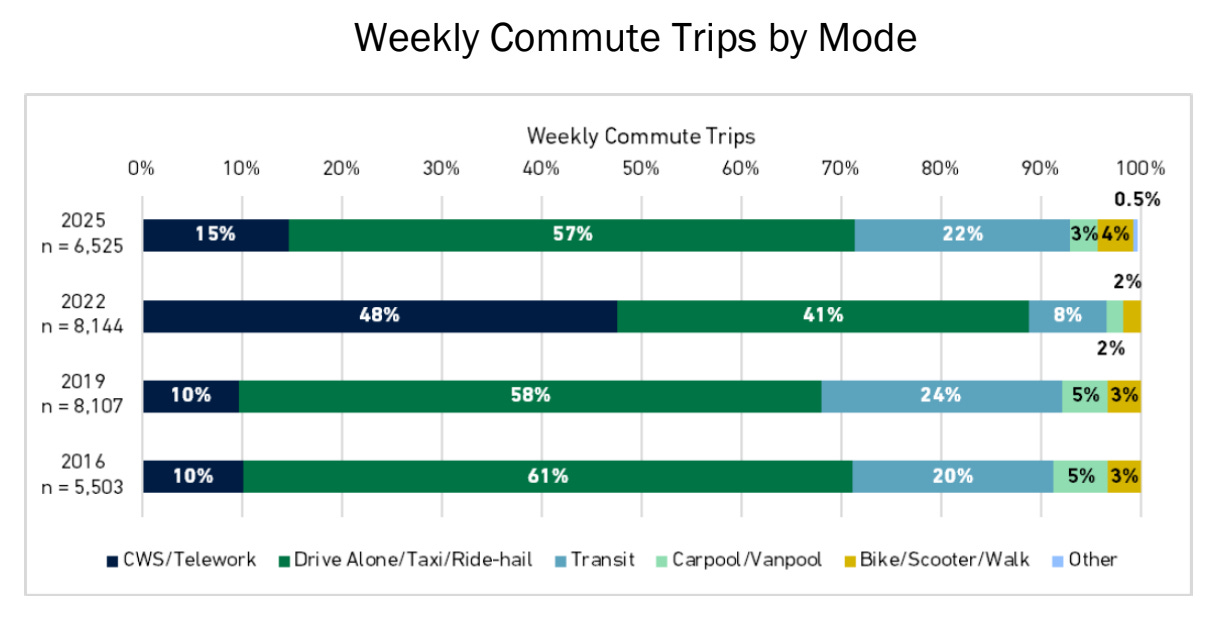
The survey of more than 7,500 workers, conducted between April and June 2025, found that driving alone remained the most common commute mode at 57% of weekly trips, followed by transit at 22%.
But commuter satisfaction told a more nuanced story. Solo drivers reported a seven percentage point drop in satisfaction compared to 2022, with only 44% saying they were satisfied or very satisfied with their commute. Travel times increased across the region compared to 2022 as more commuters returned to the roads, though they remain below 2019 averages.
Meanwhile, Metrorail riders saw a 16 percentage point increase in satisfaction over the same period. Commuter rail and bus services also saw gains of nine and six percentage points, respectively.
“Solo drivers reported feeling less satisfied with their commute, while transit riders felt much more positive,” said Daniel Sheehan, Commuter Connections director at COG. “With traffic increasing and fewer opportunities to work from home, now is the perfect time to explore better options.”
Federal workers, who reported the highest telework rates from 2019 through 2022, had the lowest rates in 2025 — even lower than before the pandemic — reflecting return-to-office mandates.
The average regional commute remained steady at 17 miles and 40 minutes. Transit riders had the longest commutes at 52 minutes on average.
Free employer-provided parking continued to influence commute choices: 77% of solo drivers had free parking, compared to just 24% of transit riders.
Among workers who changed home or work locations, commute length, ease of travel and proximity to Metro stations or bus stops were the top factors considered.
COG also launched a new interactive dashboard featuring regional and local commute data at the county and city level.
See the full report here.
Solid data anaylsis here. The satisfaction paradox really stands out—solo drivers getting more miserable while transit riders happier even with longer commutes (52 min avg). Dunno if this is obvious to everyone, but that 77% free parking stat basically reveals thesubsidy keeping car commutes viable. Alexandria's 14% walk/bike rate versus 2% in suburbs isn't just preference but infrastructure revealing itself through behavior.