
Thousands line Old Town streets to welcome Buddhist monks on Walk for Peace
Mayor Gaskins presents proclamation; monk tells crowd of thousands to practice mindfulness, 'react with kindness only'

Thousands of people packed the sidewalks of Old Town Alexandria on Monday, braving 33-degree temperatures to welcome a group of Buddhist monks nearing the end of a 2,300-mile pilgrimage from Fort Worth, Texas, to Washington, D.C.
The monks, walking in saffron and maroon robes, made their way north along South Washington Street under sunshine mixing with clouds as spectators lined the route, many holding flowers. At one point, at least two bald eagles circled overhead, drawing cheers from the crowd.
At Christ Church, Mayor Alyia Gaskins presented Venerable Bhikkhu Paññākāra, the group’s leader, with a city proclamation recognizing the Walk for Peace and its message of compassion and unity. She also gave the monks a handmade tapestry created by women at Mother of Light, an Alexandria nonprofit that brings together immigrant women who learn to sew while sharing their stories.
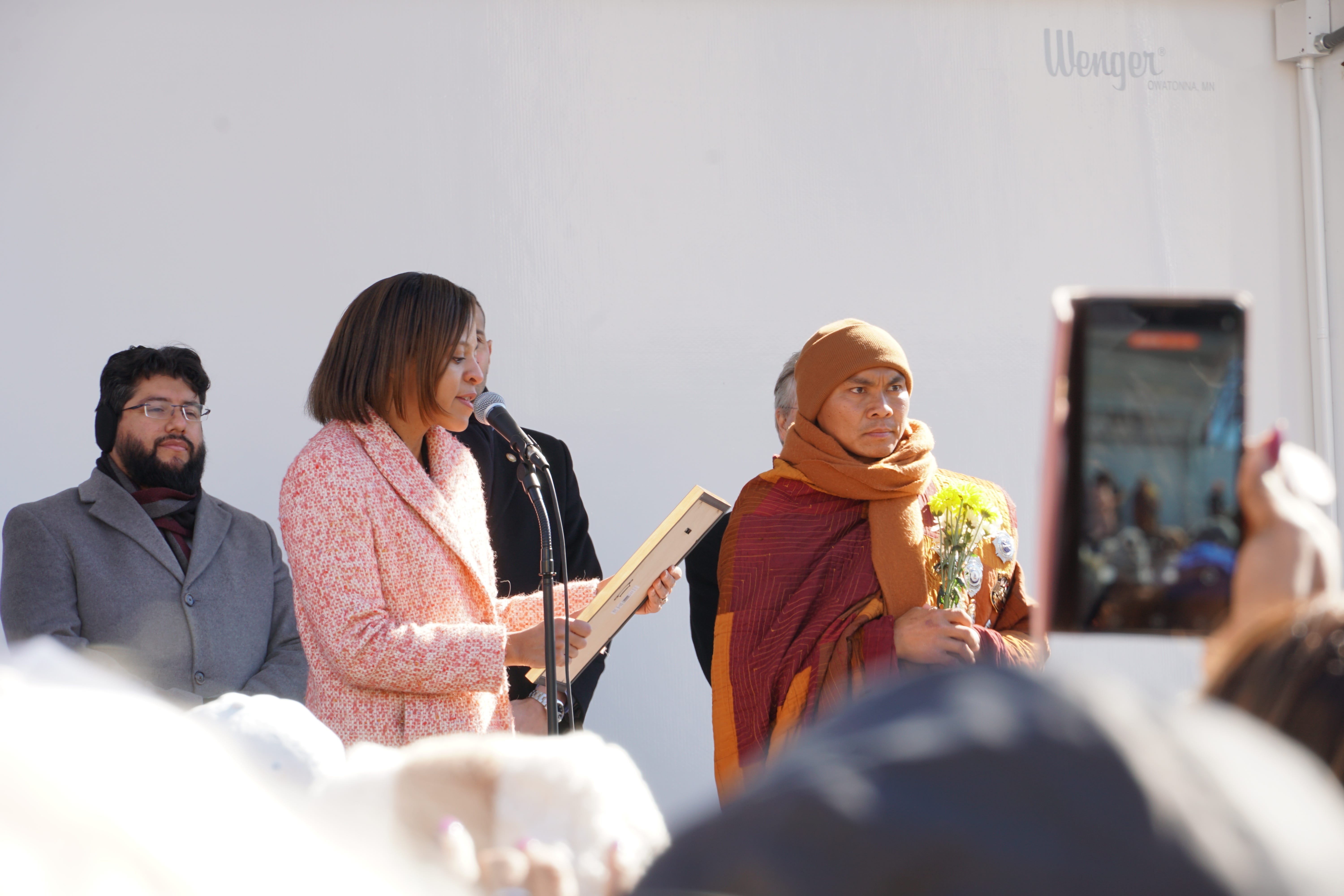
“Love is not simply an emotion, it is an action that we have to take,” Gaskins told the crowd. “Peace is not a destination. Peace is a practice.”
Congressman Don Beyer also addressed the gathering, calling the monks “ambassadors of peace” and connecting their message to the current political moment.
“America’s in great turmoil today,” Beyer said. “And yet the monks come with us today to talk to us about what it means to look for peace, to have that faith in the larger picture.”
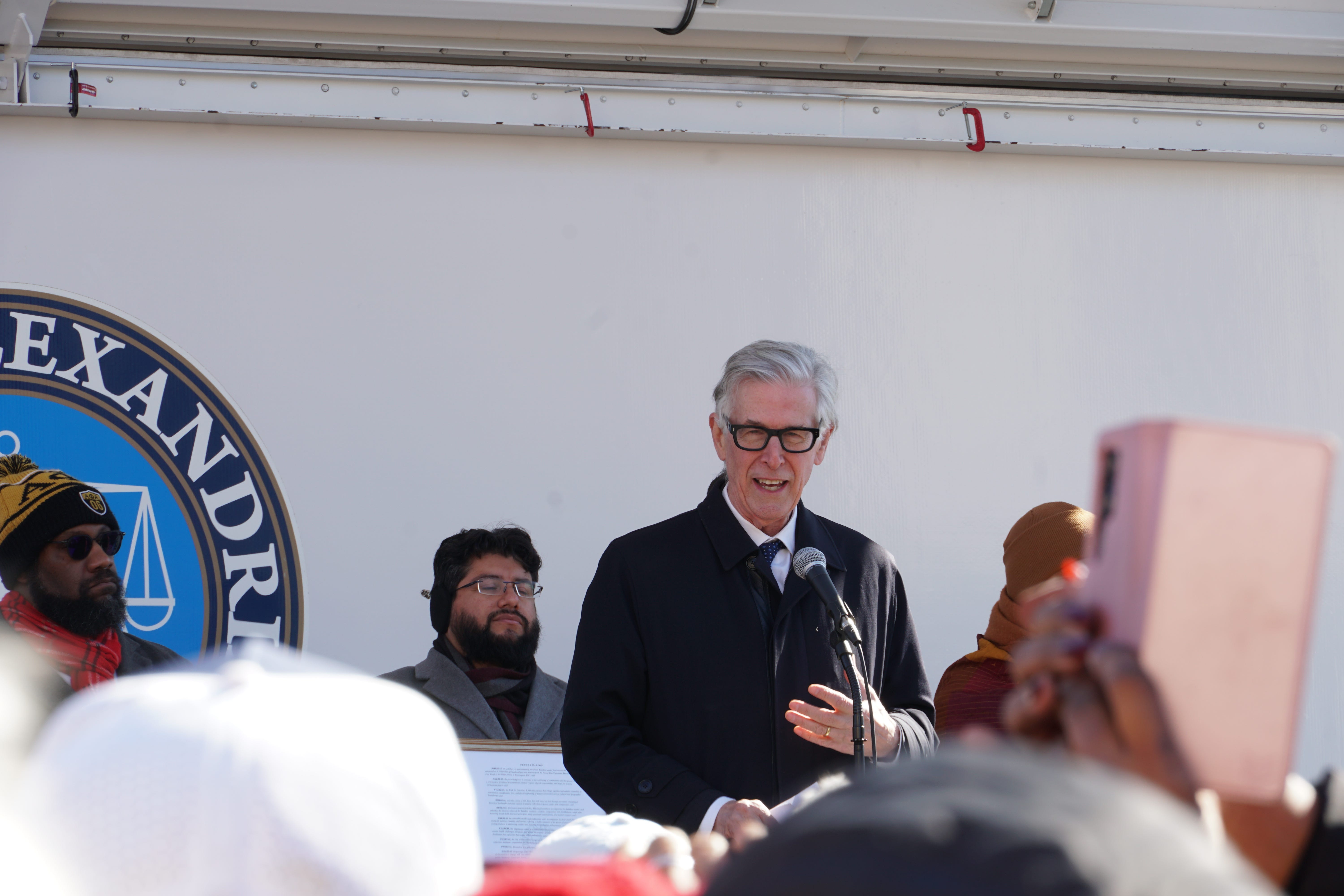
Their walk, he said, “sends us a profound message that peace is possible, that hope endures, that each step taken with intention can move us closer to understanding.”
Paññākāra then spoke for nearly an hour, mixing humor with Buddhist teachings on mindfulness. He told the crowd that Monday marked day 107 of the journey and that the monks had handed out more than 100,000 peace bracelets since leaving Fort Worth on Oct. 26 — far beyond the 1,000 he originally packed, expecting only a few onlookers along the way.
“When I started out in Fort Worth, Texas, all I was hoping is there will be some people along the road who will stop to look at the monks,” Paññākāra said. “Just some, not many people.”
He was blunt about what actually changed that. The walk drew little notice in its early days crossing Texas. It was a November car crash — which injured two monks and cost one, Bhante Dam Phommasan, his leg — that first brought widespread attention to the pilgrimage.
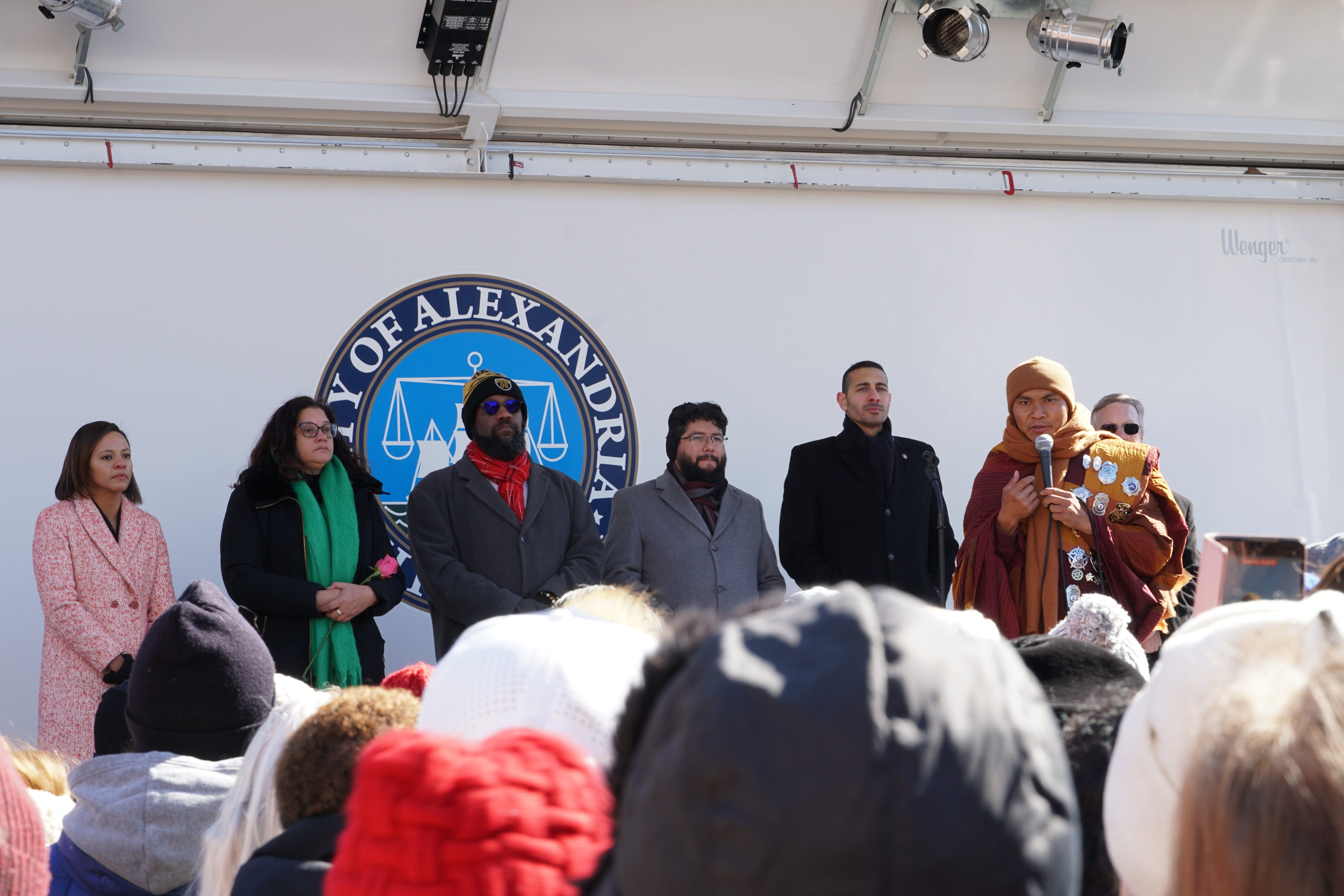
“When we walk for peace, not many people pay attention to it,” Paññākāra said. “But when we run into an accident, something that is not nice at all, then people start to know much more about it.”
From there, he said, the crowds kept growing — “regardless of weekdays or weekend” — until the monks could barely find room to walk.
Paññākāra told the crowd that mindfulness was the central message of the entire journey and that it was urgently needed. He spoke about young people coming to his temple in Fort Worth struggling with depression and anxiety, some dependent on medication.
“I have seen so much suffering surround me nowadays,” he said. “A lot of teenagers beside the adults. They are suffering deeply and they come to the temple and look for help.”
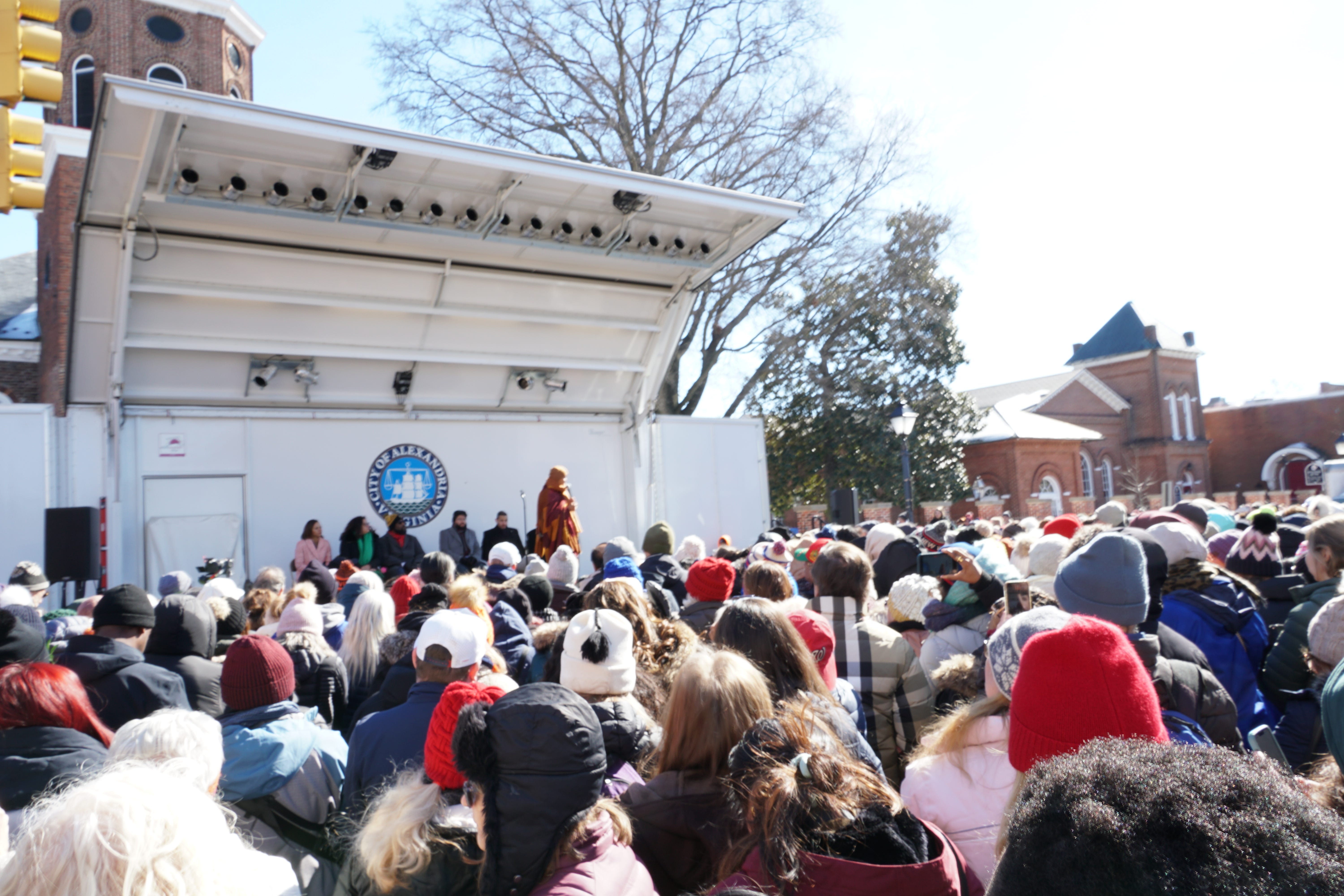
Mindfulness practice, he said, can help treat stress, anxiety and depression — not as a replacement for medical care, but as a discipline that brings people back to the present moment.
“We’ve been living in this world without seeing our breath,” he said. “We’re chasing the material. We are way too busy chasing because this world is spinning so fast.”
He illustrated the point with a story. During the walk, a woman sitting on a bench with her grandchildren followed him after seeing the book he was carrying. When he offered it to her as a gift, she began to cry — not over the book, but over her life. She told him she was too poor to see a doctor when she was in pain at night and asked whether she would live and die that way.
Paññākāra said he asked her whether she would be satisfied holding a handful of sticky rice, or whether she would want more. She said she would always want more.
“That is the reason why you suffer,” he told her. “If you're happy with what you have within your hand with that much sticky rice, you’ll be the richest person in this world. But if you hold this much in your hand and you still not knowing that it’s enough, you are the poorest person in this world.”
He urged the audience to begin each morning by writing the words “today is going to be my peaceful day” and reading them aloud. He cautioned against reaching for cellphones first thing — which he called “your lover” — drawing laughs from the crowd.
“Don’t grab your lover,” he said. “Lock him or her up within the drawer.”
At one point during his talk, a spectator in the crowd needed medical attention. Paññākāra paused and asked the audience to place their left hand over their heart, close their eyes and focus on their heartbeat — turning the moment into a meditation exercise.
“We cannot do anything to help besides letting the medic and the doctor do their job,” he said. “The only thing that we should do is cultivate, generate that energy to support the victim.”
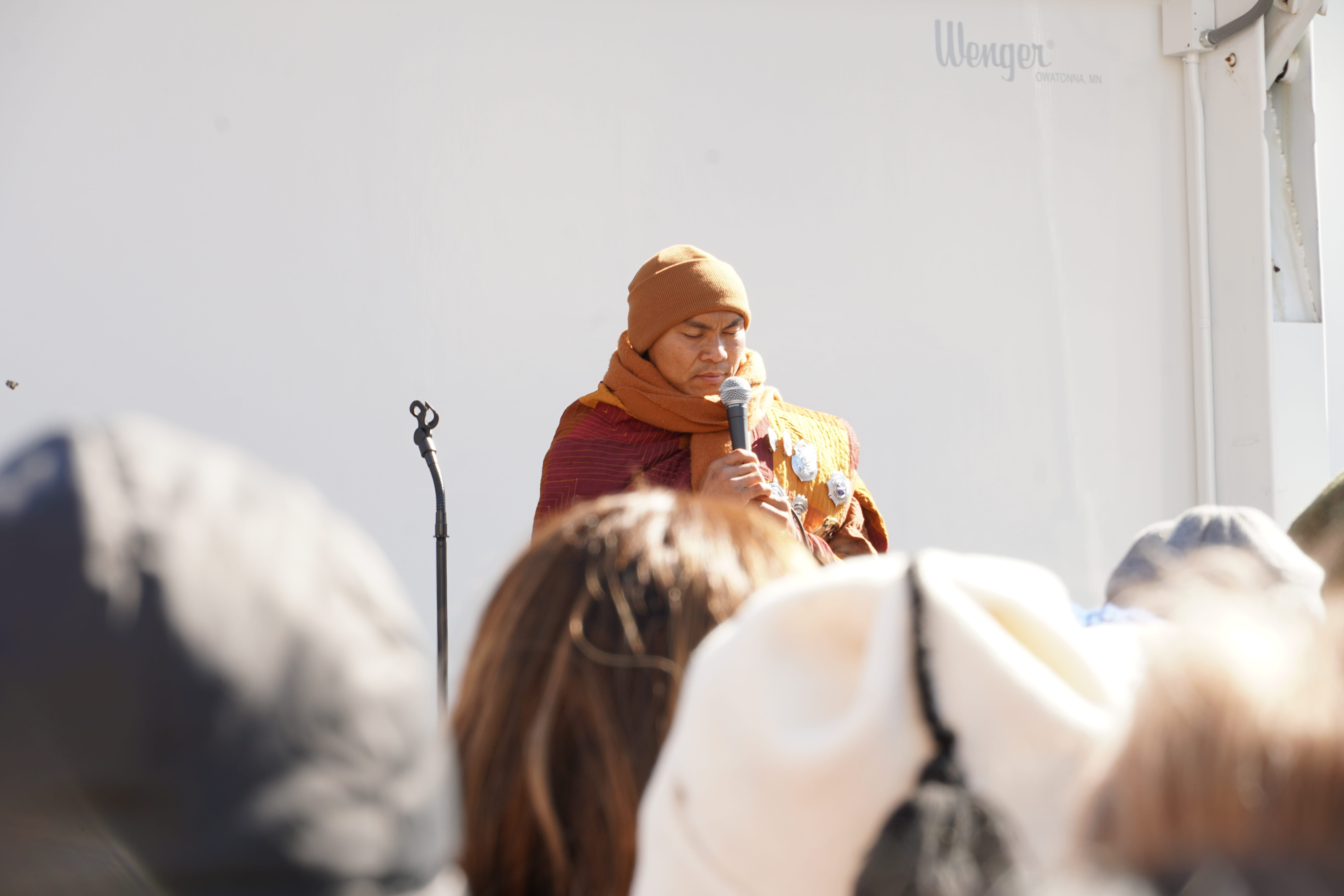
The monk also spoke candidly about the hostility the group has encountered on its journey, describing people who cursed at them and drivers who accelerated to blow exhaust on the monks as they walked.
“Toxic people always love it when you react,” Paññākāra said. “If you have to react, please react with kindness only.”
He told the crowd that when the world throws lemons at you, make lemonade. When it throws rocks, use them to decorate your garden. And when it throws bitter melons — “it’s bitter, but it can cure your diabetes. Cook it, consume it.”
The roughly 19 monks are on a pilgrimage organized by the Huong Dao Vipassana Bhavana Center, a Buddhist temple in Fort Worth’s Historic Stop Six neighborhood that has served a predominantly Vietnamese-American community for more than 26 years. The temple is the future site of the $200 million Dhammacetiya Project, a 14-acre complex that will feature 840 stupas, or shrines, each inscribed with sacred Buddhist scriptures.
The walk has gained national attention as it has moved through 10 states. A Facebook community dedicated to the pilgrimage has nearly 340,000 members. Gov. Abigail Spanberger met the monks in Richmond on Feb. 2 — their 100th day — and declared it “Walk for Peace Day” in Virginia, her first proclamation as governor.
In Alexandria, the monks were also greeted by Alexandria Sheriff Sean Casey, who presented Paññākāra with a sheriff’s office badge.
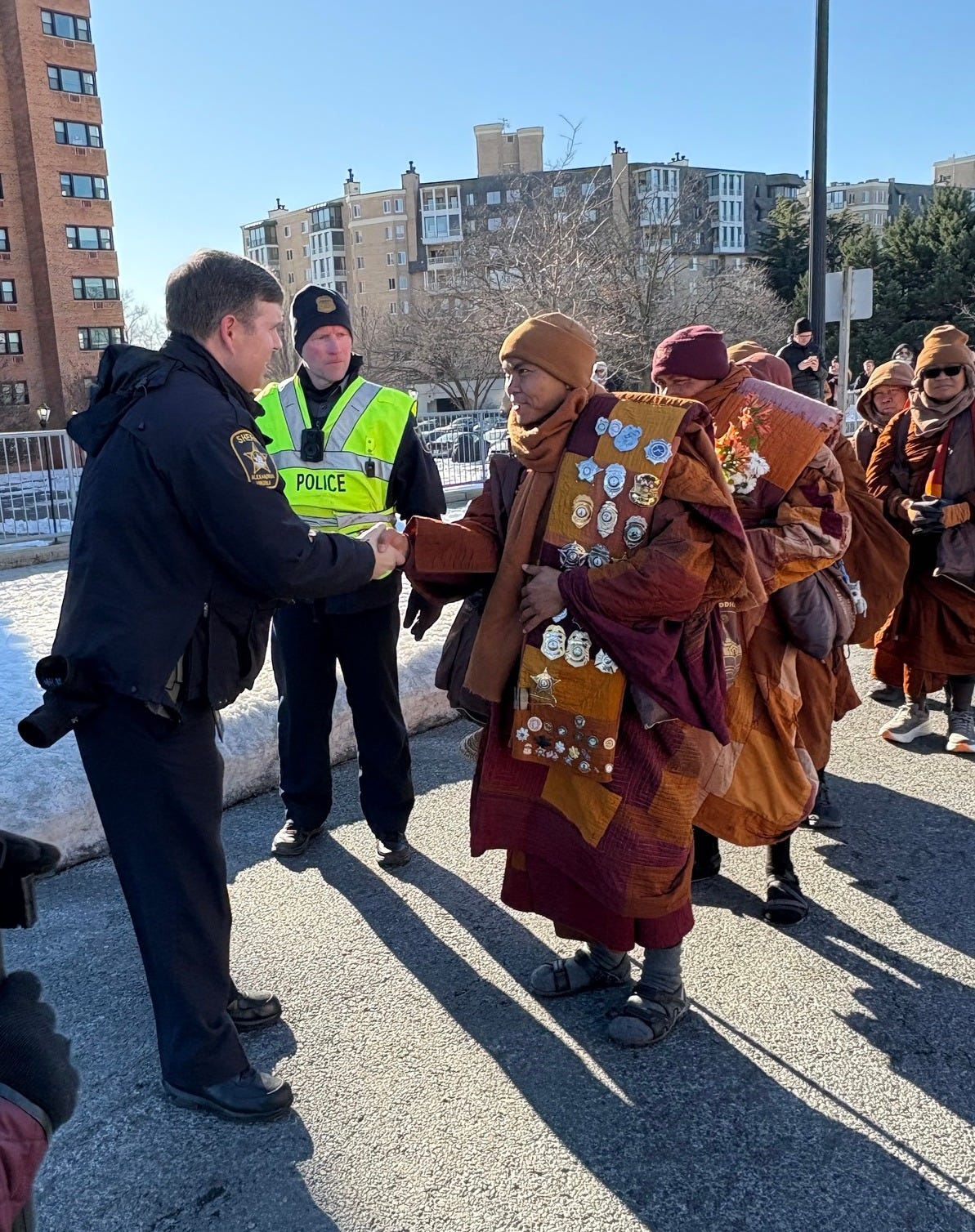
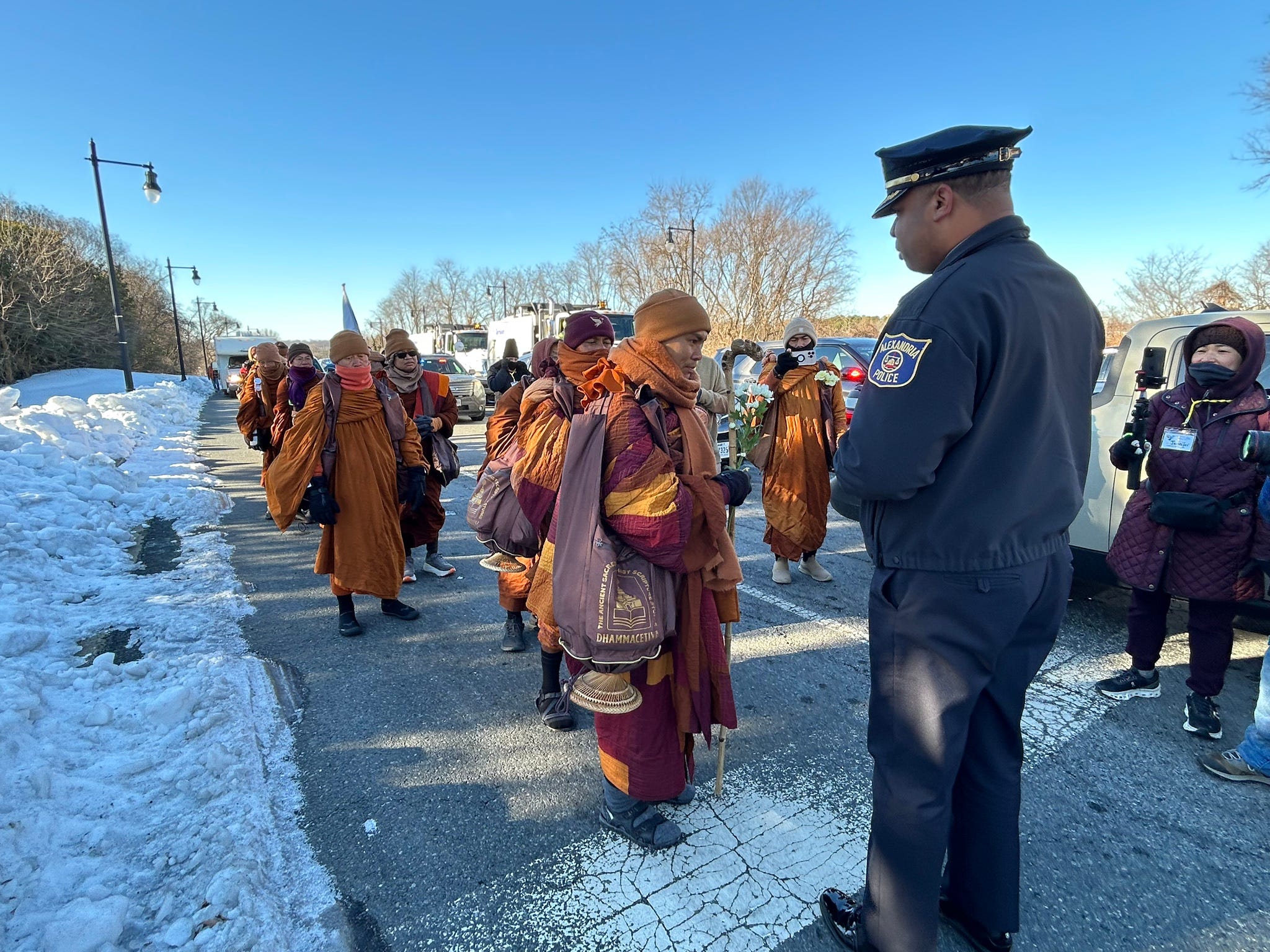
City council members Jacinta Greene, John Taylor Chapman, Canek Aguirre and Abdel Elnoubi attended, along with City Manager Jim Parajon. Alexandria Police Chief Tarrick McGuire helped escort the monks through the city.
The monks are also accompanied by Aloka, a rescue dog who originally joined monks during a prior peace walk in India. Aloka, whose name means “enlightenment” in Sanskrit, had leg surgery last month but continues to walk with the group when he is able.
After leaving Christ Church, the procession continued north through Alexandria and into Arlington County, where the monks will travel along Crystal Drive, Columbia Pike, and Washington Boulevard to Marymount University. They are expected to arrive at American University in Washington on Tuesday and will spend two days in the capital before returning to Fort Worth by bus for a homecoming walk on the morning of Feb. 14.