Table of Contents
ALEXANDRIA, Va. — For a city that has watched more than two centuries of American history unfold within its borders, Alexandria has an unusual concentration of civic anniversaries on July 7. Four separate moments — spanning federal architecture, military occupation, public education, and the arrival of the automobile — all took place on this date between 1838 and 1925.
The oldest of them is the courthouse.
1838: Congress funds a new federal courthouse
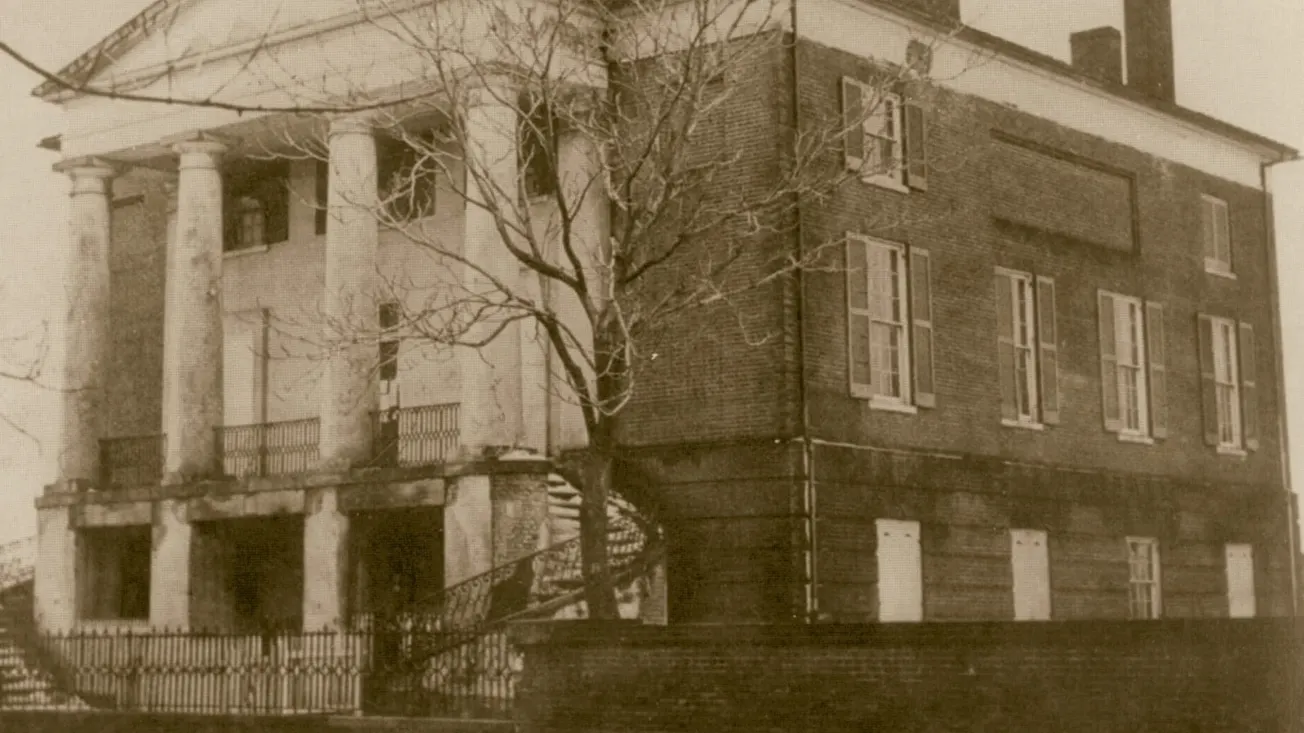
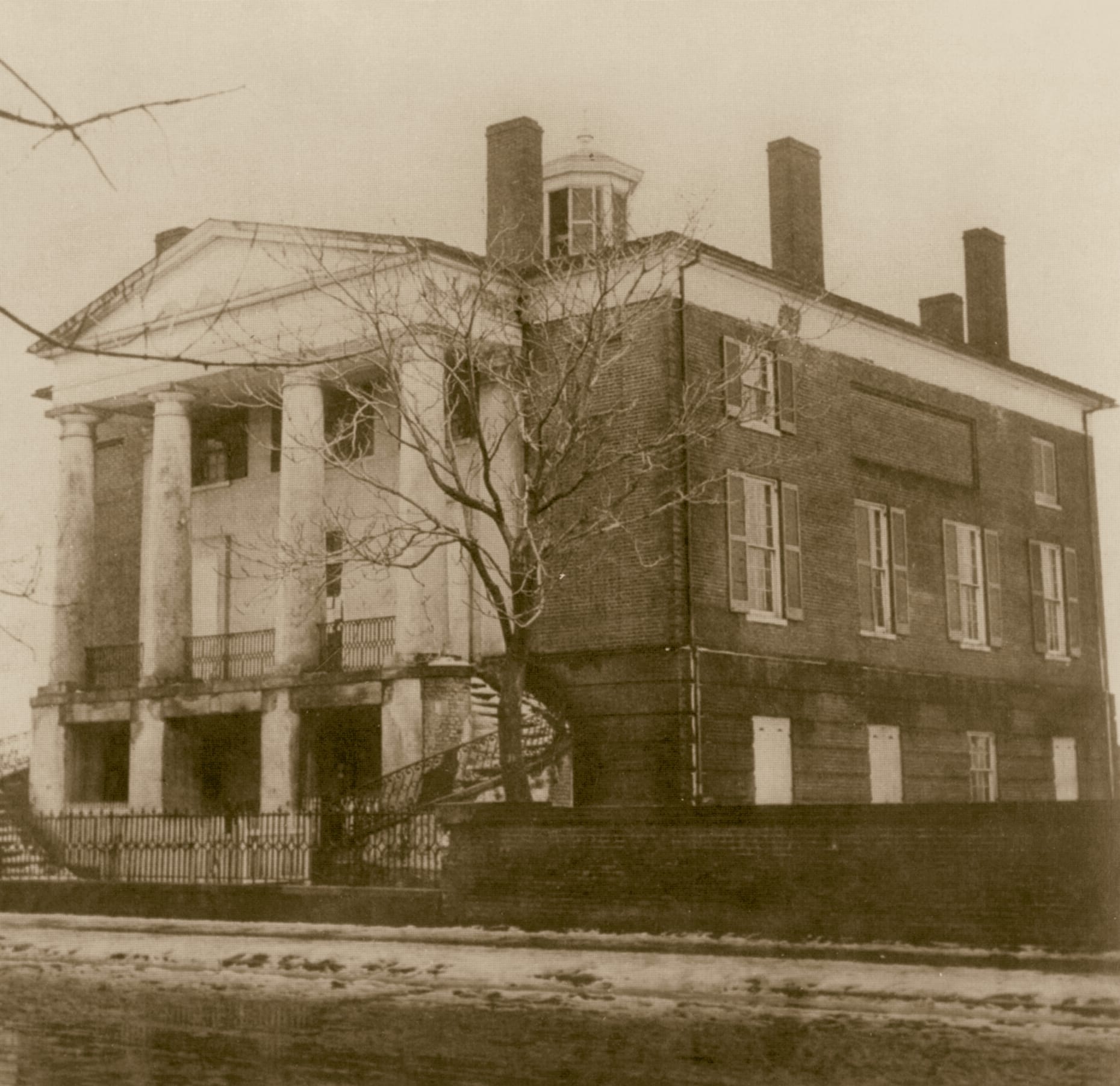
On July 7, 1838, Congress appropriated funds for a new district courthouse to be built in Alexandria. The building was designed by Robert Mills — the architect best known nationally for the Washington Monument, the U.S. Treasury Building, and the Old Patent Office in Washington. Mills's design for the Alexandria courthouse featured a two-story Doric portico and an octagonal cupola, and it stood in the 300 block of North Columbus Street until it was demolished in 1906.
The courthouse's disappearance from Alexandria's built landscape is a small loss with a familiar shape — a substantial 19th-century civic building giving way to whatever came next. Mills's architectural fingerprints are still visible across the region; his Alexandria work is not.
1865: The end of Alexandria's Civil War occupation
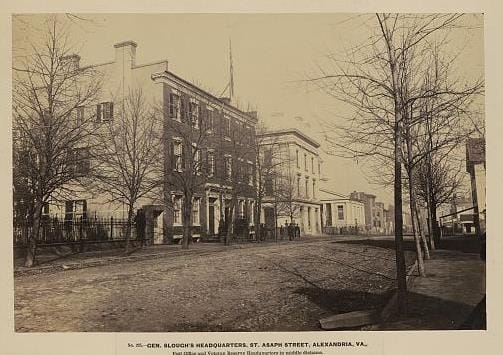
Twenty-seven years later, on July 7, 1865, the War Department abolished the position of military governor of Alexandria — effectively ending the longest continuous federal occupation of any American city during the Civil War. Union Gov. John Slough, who had led the Military District of Alexandria, requested to be relieved of his duties so he could travel west to take command of a territorial governorship in Colorado. His departure dismantled the district and returned management of the city to civilian control.
The occupation had lasted four years. Federal troops had first arrived on May 24, 1861 — hours after Virginia's secession vote took effect — and remained through the war's end. Alexandria witnessed no major battles during the conflict, but its strategic location made it a critical transportation, warehousing, medical, and troop-staging center throughout the war.
In the weeks following Slough's departure, former military supplies, equipment, horses and livestock were sold or auctioned to locals for pennies on the dollar. The city that emerged from occupation was profoundly changed. According to Historic Alexandria, the city was in tatters, its once-prosperous economy in ruins, and its population diminished from pre-war levels. Residents who had fled the thriving city at the start of the war returned to find homes and property destroyed or damaged.
The four-year federal presence had transformed Alexandria physically, economically, and demographically. Its consequences would shape the city for decades.
1915: The cornerstone of Alexandria High School
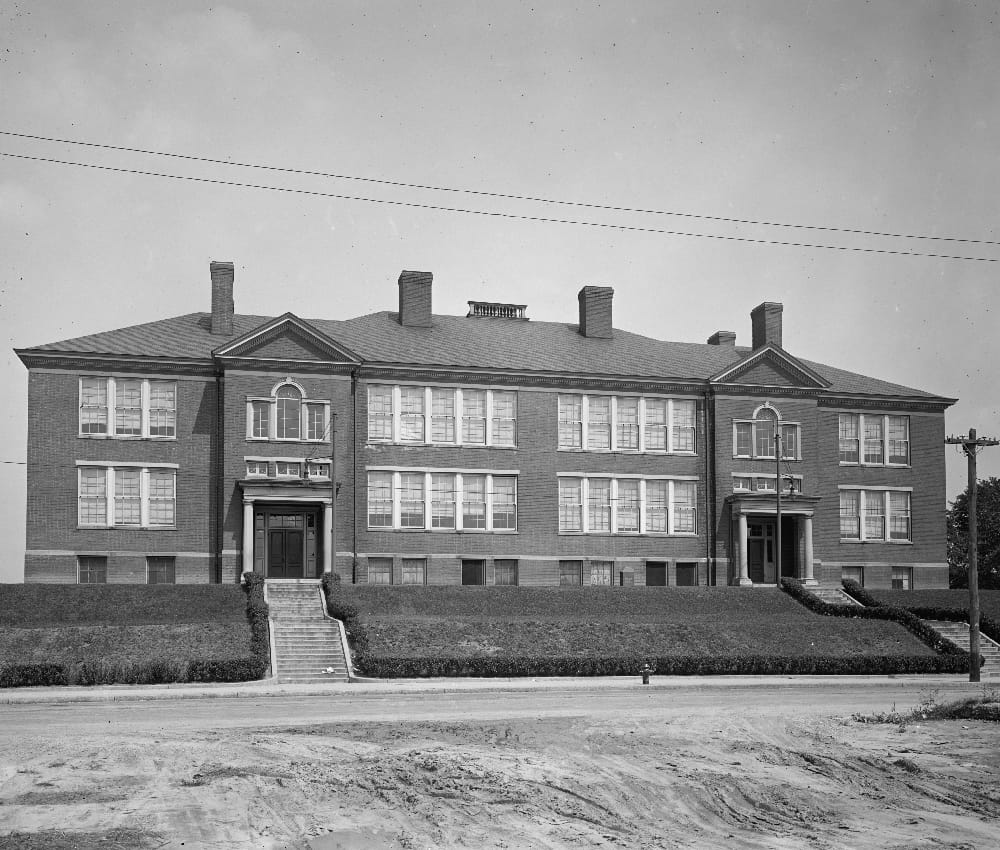
Fifty years after the Civil War's end, on July 7, 1915, members of Alexandria-Washington Masonic Lodge No. 22 set the cornerstone for a new Alexandria High School at Cameron and West streets — on the site where Jefferson-Houston PK-8 School stands today. City and school officials attended the evening ceremony. The Masons used the historic trowel that had also been used to set the cornerstones of the U.S. Capitol and the Washington Monument.
The trowel's history is a distinctive piece of Masonic and American civic memory. It had been used by George Washington himself when he set the U.S. Capitol's cornerstone on September 18, 1793, and returned decades later for the Washington Monument's cornerstone in 1848. Its use at Alexandria High School in 1915 connected the city's new school to the broader Federal-era tradition of civic ritual.
The 1915 Georgian-style school building — described in city records as "two stories with a raised basement stately school ... located significantly above the street on a raised terrace" — did not remain Alexandria's high school for long. In 1935, its students merged with the smaller George Mason High School to form George Washington High School at 1005 Mount Vernon Avenue. The Cameron Street building was subsequently renamed the "Jefferson Annex," serving the neighboring Jefferson School until it was eventually replaced by a mid-century Jefferson-Houston building and, in 2014, the current state-of-the-art Jefferson-Houston PK-8 IB School facility.
George Washington High School served the city until 1971, when it closed as a four-year high school and consolidated into T.C. Williams High School on King Street — the school made nationally famous by the desegregation story portrayed in "Remember the Titans." T.C. Williams was renamed Alexandria City High School in 2021, restoring the city-forward naming tradition begun in 1915.
The direct line from that 1915 cornerstone to today's ACHS runs through three institutional generations and three campuses — while the Cameron Street site itself has continuously served as a school for 111 years.
1925: Alexandria's first traffic light
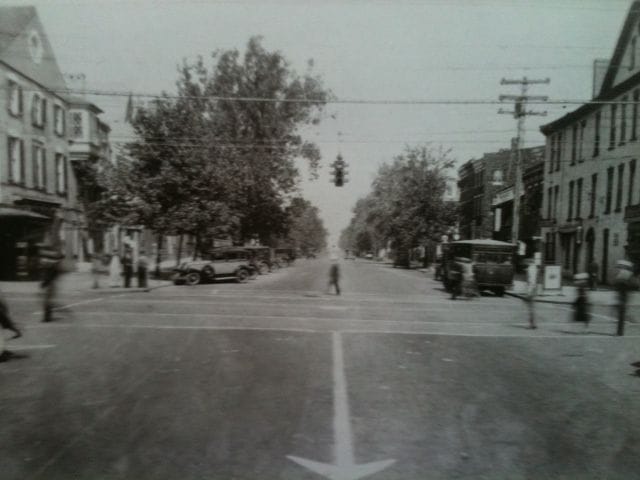
Ten years later, on July 7, 1925, Alexandria's first traffic light became operational at King and Washington Streets. Historic Alexandria describes the installation as a response to "the ever increasing flow of automobile traffic through the heart of downtown Alexandria."
The scene at the intersection was almost unrecognizable from today's Washington Street. Despite the street's considerable width, it still had only one lane in each direction, with the four-lane George Washington Memorial Parkway yet to be constructed at either end of the city. Angled parking, not parallel, was accommodated on both sides. The traffic light was installed less to speed cars along than to prevent them from colliding with one another in a downtown crossing where automobiles were still novel enough to require civic management.
A century of change on a single date
Four moments on the same date, across 87 years. Read together, they trace a small arc: A city that was expanding federal footprint in 1838, that had been utterly transformed by federal occupation by 1865, that was building institutions of its own after fifty years of recovery in 1915, and that was already adjusting to the automobile era by 1925.
For a city founded in 1749, the concentration of anniversaries on July 7 is coincidence — but the arc they trace across not-quite-a-century is Alexandria's own story of survival, transformation, and steady civic renewal.