
Federal job losses, rising inflation straining Alexandria residents, City Manager reports
Economic update shows Northern Virginia lost 6,600 federal jobs and 10,300 professional services positions over past year; tax payment plan requests up 34 percent since November

Federal workforce reductions and rising inflation are straining Alexandria residents, City Manager James Parajon reported Tuesday night, with more households seeking help paying their taxes and key regional job sectors continuing to shrink.
“There’s a pretty high level of stress that is occurring,” Parajon told the City Council during his monthly State of the Economy report.
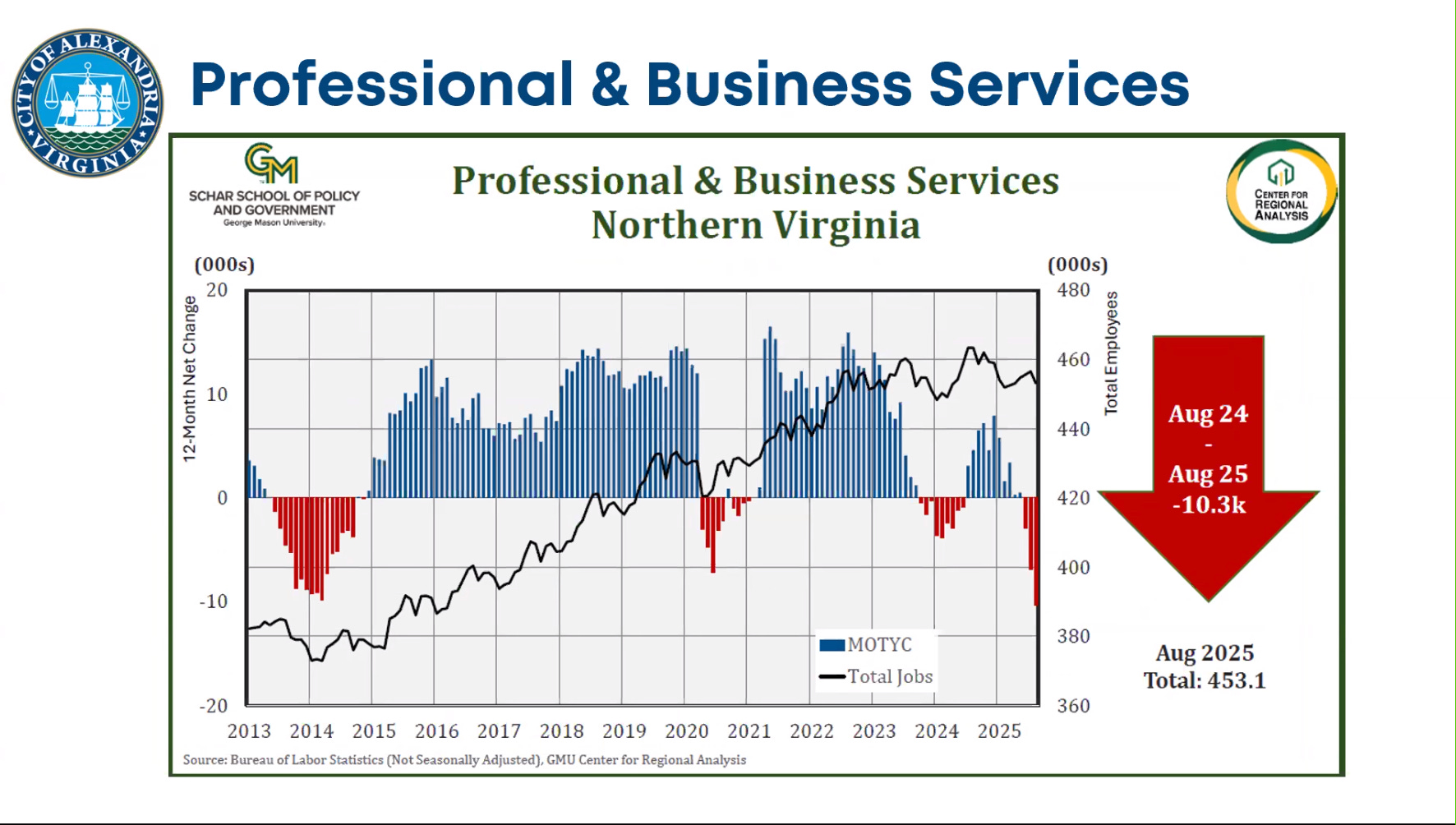
The Northern Virginia region has lost more than 6,000 federal jobs over the past year, with total federal employment falling to 87,900 in August — a 6,600-job decline from the same month in 2024. The professional and business services sector, a major driver of the region’s higher incomes, shed approximately 10,300 positions over the same period.
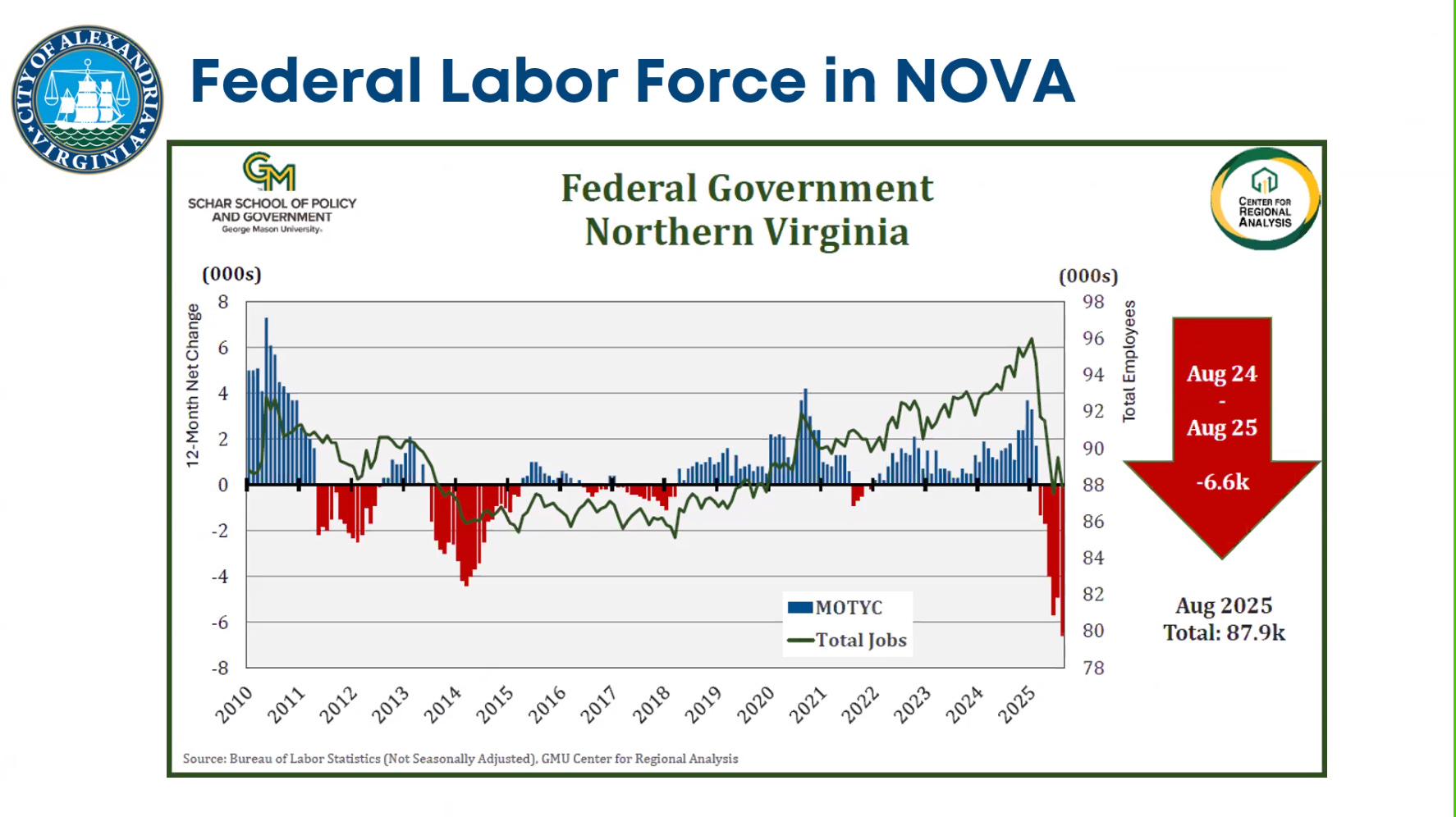
“The economy. Sluggish, costs are rising and there’s less job opportunities in many sectors,” Parajon said.
National indicators reflect similar headwinds. Unemployment has climbed to 4.4 percent as of September, while inflation rose to 3 percent — the highest since January. The economy added just 119,000 jobs in September, showing little change since April.
Payment plan requests growing
The pressure is showing up at City Hall. The city has established 95 car tax payment plans averaging about $1,053 each and 12 real estate tax payment plans averaging roughly $4,189. The number of car tax payment plans has grown from 71 when Parajon last updated the council in early November — a 34 percent increase in roughly a month.
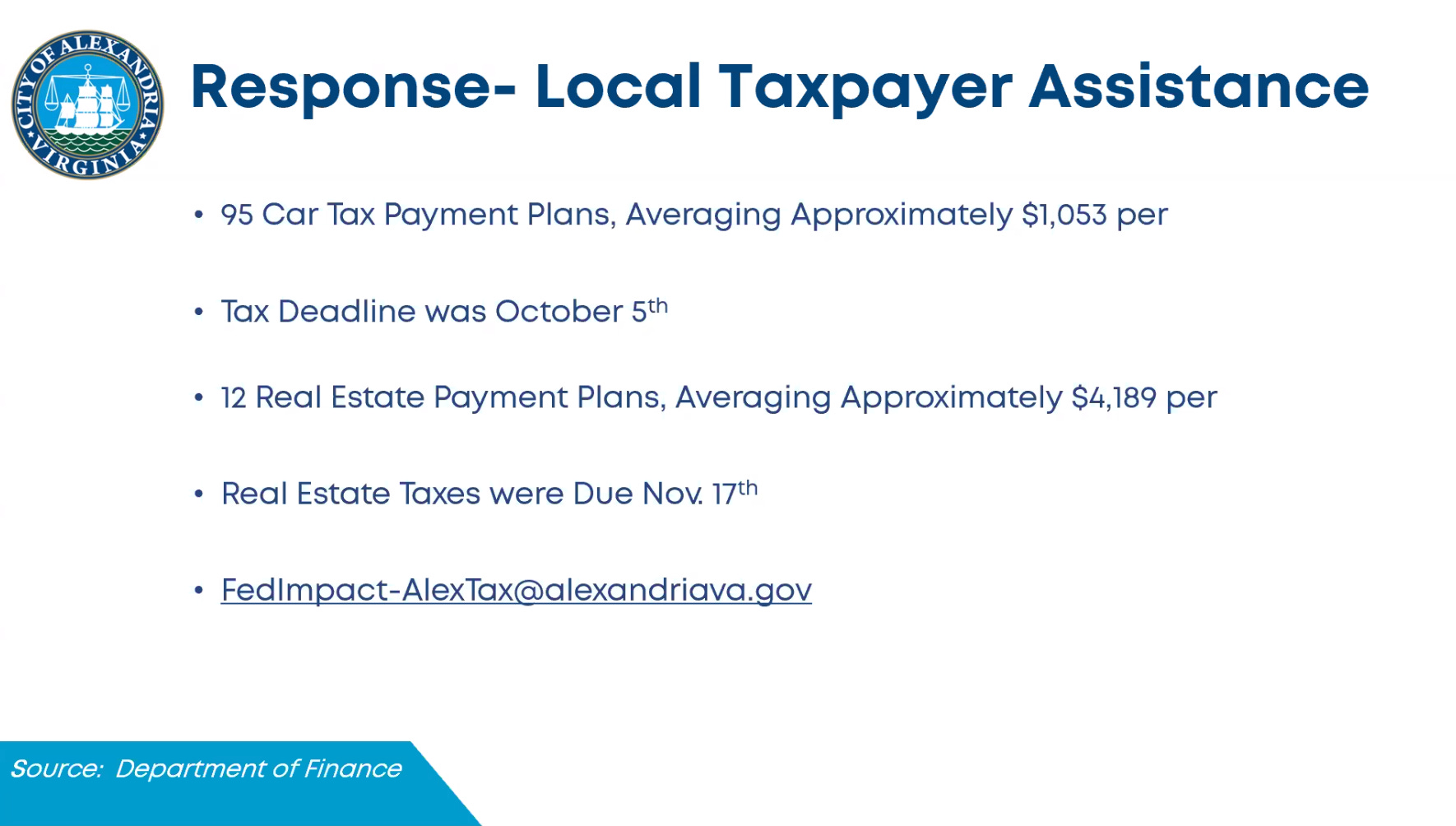
“It really is representing some pressure and stress on our residents,” Parajon said, calling the uptick in payment plan requests an indicator that more households are “living paycheck to paycheck.”
Housing market shows mixed signals
The residential real estate market offered some positive news. Sales in October reached 172, up nearly 11 percent from 155 a year ago. Active listings jumped 51 percent to 367 homes, giving buyers more options. Average 30-year fixed mortgage rates are around 6.18 percent.
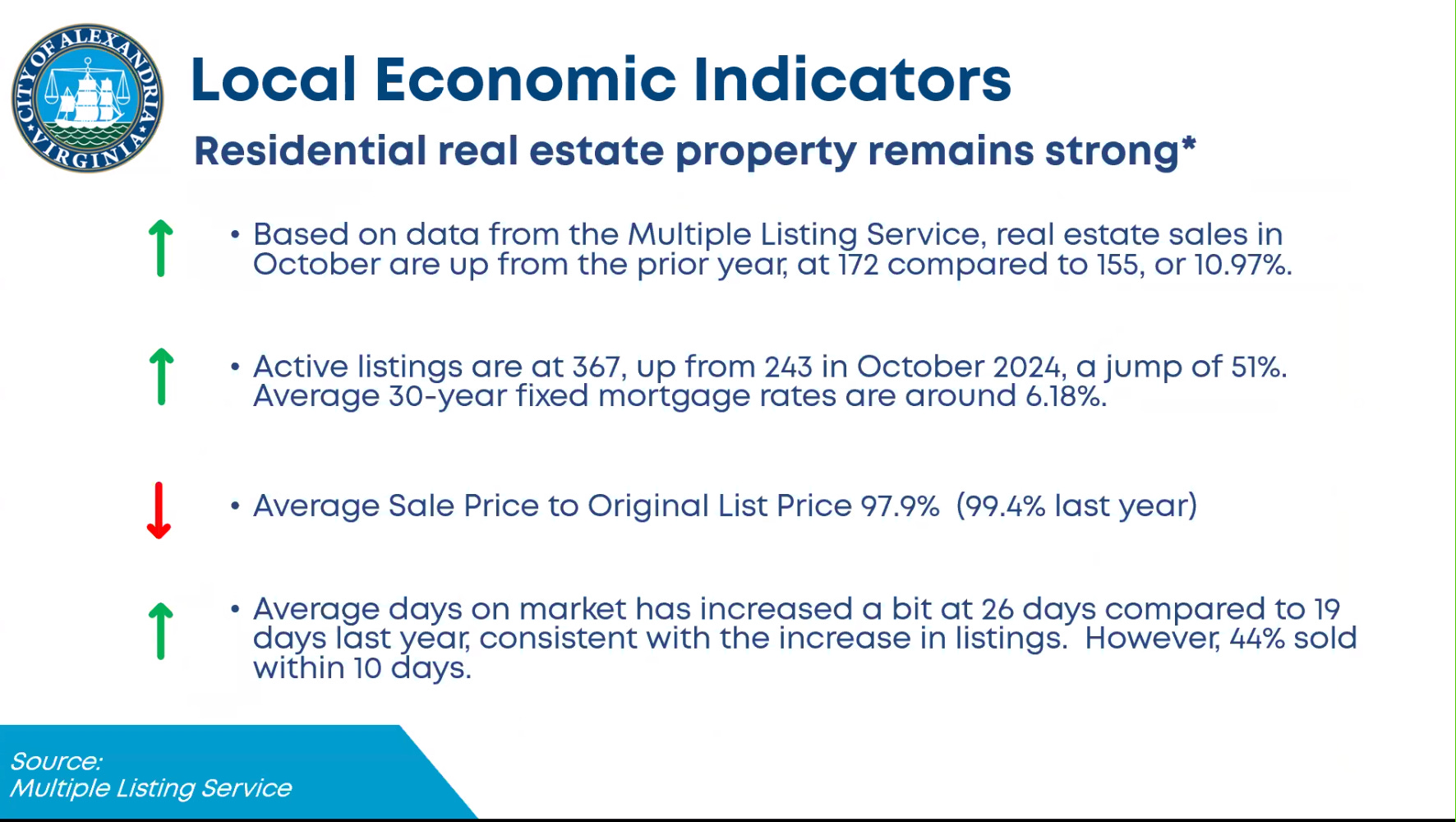
However, other indicators suggest cooling demand. The average sale price has dropped to 97.9 percent of the original list price, down from 99.4 percent a year ago. Average days on market increased to 26 from 19, though 44 percent of homes still sold within 10 days.
“I think some of that is related to the loss of federal employment,” Parajon said.
SNAP changes add pressure
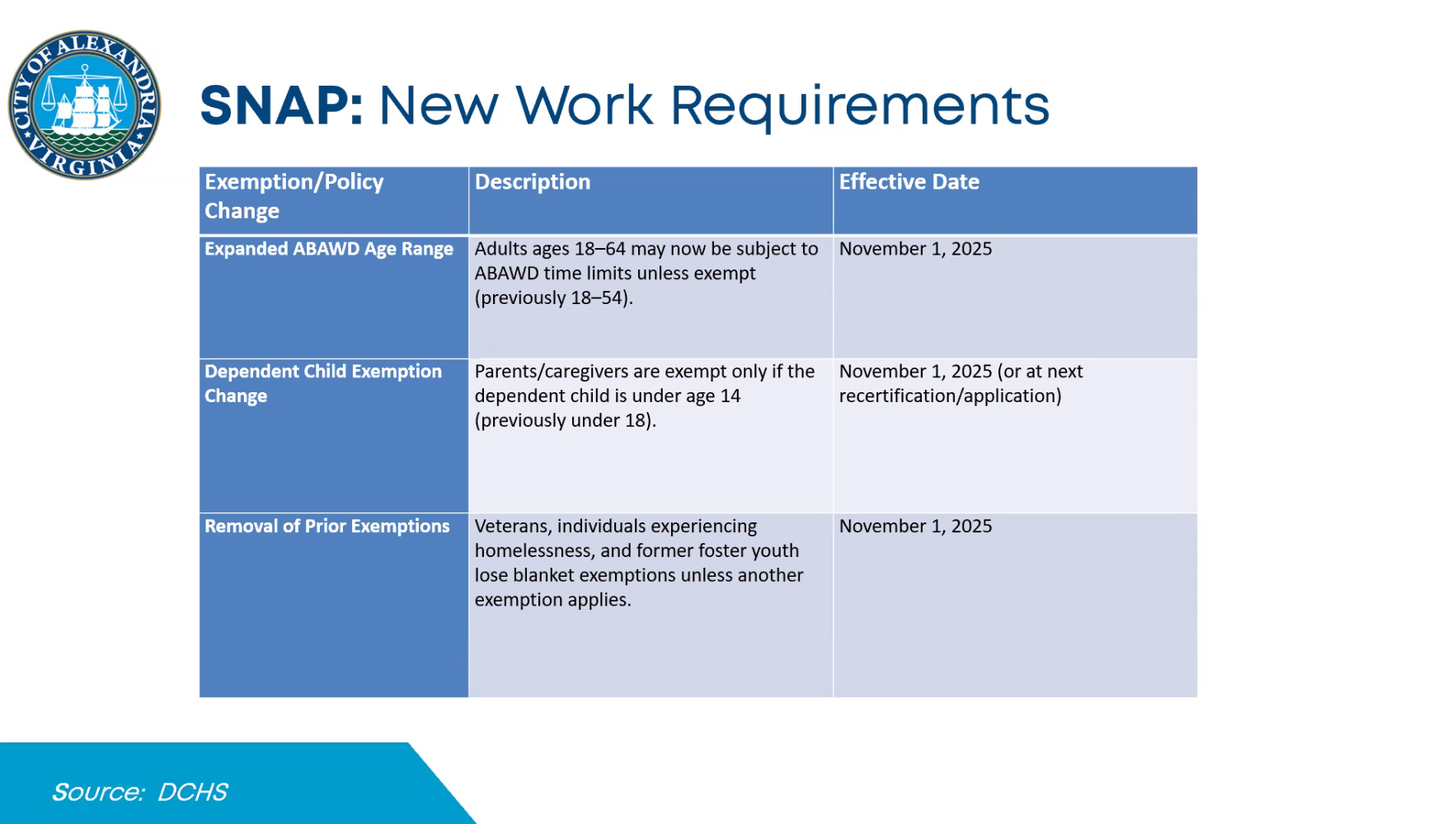
New federal SNAP requirements are adding pressure on low-income residents. Work requirements that took effect Nov. 1 expanded the age range for time-limited benefits from 18-54 to 18-64 and tightened exemptions for parents with dependent children. Veterans, individuals experiencing homelessness and former foster youth also lost blanket exemptions.
The federal government is also shifting 25 percent of SNAP administrative costs to states, effective late October. The local share remains to be determined.
SNAP enrollment in Alexandria has declined from 12,300 in October 2024 to 11,589 in October 2025.
Budget implications
The economic trends carry significant implications for the city’s finances. More than 60 percent of operational revenue comes from property taxes, with roughly 80 percent of that from residential properties, meaning any softening in the housing market directly affects city coffers.
The fiscal pressures loomed over a later agenda item Tuesday night, when the council held an impasse hearing on collective bargaining negotiations with the police union. Council ultimately sided with the union on wages in a 7-0 vote, approving approximately $10.2 million in salary increases over three years, about $2.2 million more than city management recommended. However, the council also directed staff to evaluate potential savings from reducing the police department’s authorized force to help offset the higher costs.
During that discussion, Budget Director Morgan Rout warned that the city’s revenue outlook is “extremely weak for the foreseeable future,” and Parajon noted that approximately 26,000 Alexandria households, about 35 percent of the city’s total, are housing cost-burdened.
The city has established a dedicated email address — FedImpact-AlexTax@alexandriava.gov — for residents affected by federal workforce changes who need assistance with their tax obligations.
Parajon is scheduled to deliver his next economic update in January.