
What happens next after Bennett-Parker's primary win
Feb. 10 special election, possible House vacancy, and a potential April ballot

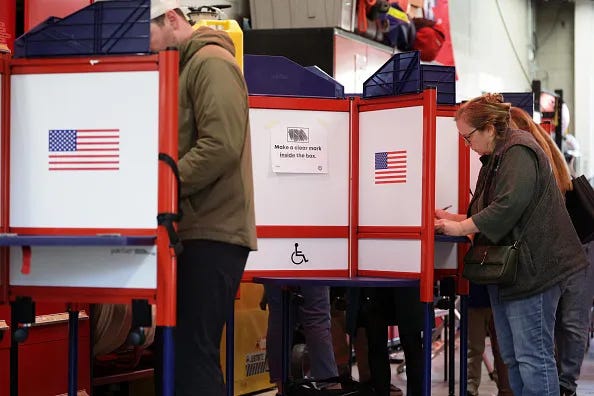
Del. Elizabeth Bennett-Parker’s commanding Senate primary win on Tuesday puts her on track to join the Virginia Senate — but first, she must win the Feb. 10 special election against Republican Julie Robbens Lineberry.
If she does, it could set off a chain of events that sees Alexandria voters heading to the polls multiple times in 2026.
Here’s what we know about the path ahead.
A transition in Richmond
The political backdrop is shifting rapidly. Gov. Glenn Youngkin delivers his final State of the Commonwealth address this evening. Gov.-elect Abigail Spanberger will be sworn in Saturday, ushering in Virginia’s first Democratic trifecta since 2021.
Feb. 10: Senate District 39 special election
Bennett-Parker will face Lineberry in the special election to fill Adam Ebbin’s seat. Early voting begins Jan. 31.
Ebbin’s resignation doesn’t take effect until Feb. 18 — he announced last week he would remain in office through “crossover,” the midpoint of the legislative session, before joining Spanberger’s administration as senior adviser at the Virginia Cannabis Control Authority.
The stakes are high: Democrats hold a one-seat majority in the Virginia Senate. Until a Democrat is seated in District 39, the party will be operating with a 20-19 margin.
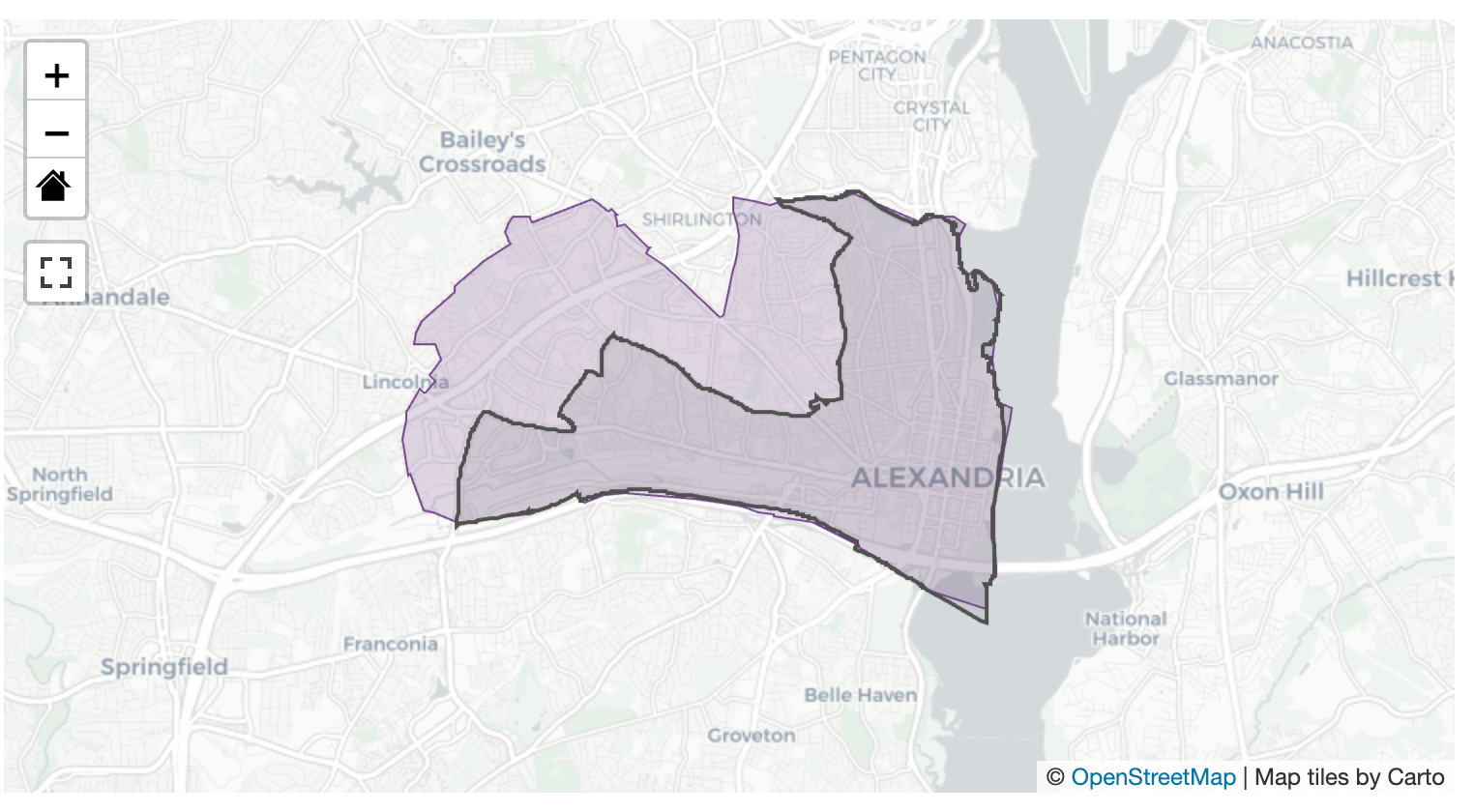
District 39 — which includes all of Alexandria and portions of Arlington and Fairfax County — leans heavily Democratic. Ebbin ran unopposed in his last two elections.


House District 5: Another special election if Bennett-Parker wins
If Bennett-Parker wins on Feb. 10, she would be sworn into the Senate after Ebbin’s Feb. 18 resignation takes effect, and her House of Delegates seat would become vacant. (If she loses, she remains in the House and no vacancy occurs.)
House District 5 is entirely within Alexandria, stretching from Old Town through Del Ray and Carlyle to the Eisenhower Valley corridor.
Because the General Assembly will still be in session, House Speaker Don Scott — not the Governor — would issue the writ of election. Under Virginia law, if a vacancy occurs between Dec. 10 and March 1, the writ must declare a special election date within 30 days of the vacancy.
That timeline could place a House District 5 election in late March or April. Virginia law prohibits special elections within 55 days of a primary or general election, but allows them to coincide with other elections on the same day — meaning a House District 5 vote could potentially land on the same ballot as the constitutional amendments Democrats are advancing.
Could it land on an April constitutional amendment ballot?
Virginia Democrats say that they are advancing four constitutional amendments this session — all of which already passed once last year and need a second vote this session before going to voters:
Redistricting: Would allow the General Assembly to redraw congressional maps mid-decade in response to gerrymandering in other states
Reproductive freedom: Would enshrine abortion rights, contraception access and IVF protections
Voting rights: Would automatically restore voting rights to felons after completing their sentences (Bennett-Parker is the House patron)
Marriage equality: Would remove the unconstitutional same-sex marriage ban from Virginia’s constitution (Ebbin is the Senate patron)
The redistricting amendment is the most time-sensitive. If Democrats want new congressional maps in place for the 2026 midterms, voters must approve the amendment before the June 16 primary filing deadline. That means holding a referendum as early as possible.
Under Virginia law, a referendum can occur no earlier than 90 days after final passage. If the General Assembly approves the amendments when the session convenes Wednesday, the earliest possible vote would be mid-April — Virginia’s first special ballot measure election since 1956, according to Ballotpedia.
At Monday’s debate, the three candidates split on timing. Bennett-Parker expressed caution about rushing all four amendments to an April ballot.
“I have the honor of carrying the amendment to provide a fundamental right to vote, as well as to automatically restore voting rights after incarceration,” she said. “I want them to get done as quickly as possible. I also want them to get done. We need to make sure that the voters are informed.”
Levine and Costen-Sumpter favored the earliest possible timeline.
If Democrats do schedule an April referendum, a House District 5 special election could potentially be placed on the same ballot — boosting turnout for both.

Who might run for House District 5?
Former Alexandria School Board member Eileen Cassidy Rivera announced Tuesday morning — before the firehouse primary results were in — that she plans to run for House District 5 if Bennett-Parker wins the Senate seat.
“Should Elizabeth win her race for the State Senate, I am excited to share that I plan to run to be your next Delegate for the 5th District—ensuring that a woman’s voice remains strong in representing our shared values and priorities in Richmond,” Rivera wrote in an email to supporters.
Rivera served in the Clinton Administration at the Commerce Department and Small Business Administration. She cited affordable housing, school funding, climate protection and support for the federal workforce as priorities.
Alexandria City Councilman Kirk McPike has also said he is “strongly considering” a run. McPike has deep ties to this seat’s lineage — he came to Alexandria in 2010 to run Adam Ebbin’s first Senate campaign. If McPike runs and wins, his departure would trigger yet another special election — under Alexandria’s charter, in-term council vacancies are filled by special election.
Alexandria Democratic Committee Chair Jon DeNunzio said when the writ of election for House District 5 comes down — “which is of course not guaranteed, but overwhelmingly likely” — the party will hold another firehouse primary to select a nominee.
The bottom line
Depending on how events unfold, Alexandria voters could head to the polls as many as six times in 2026:
Jan. 13: Senate District 39 firehouse primary
Feb. 10: Senate District 39 special election
April (potential): House District 5 special election + constitutional amendments
June 17: Primary elections
Summer or Nov. 3 (potential): City Council special election
Nov. 3: General election — including U.S. Sen. Mark Warner’s re-election bid and all 11 U.S. House seats, potentially with redrawn maps if the redistricting amendment passes
The compressed timeline that candidates criticized as a “travesty of democracy” at Monday’s debate may be far from over.
This story will be updated as the timeline becomes clearer.