Table of Contents
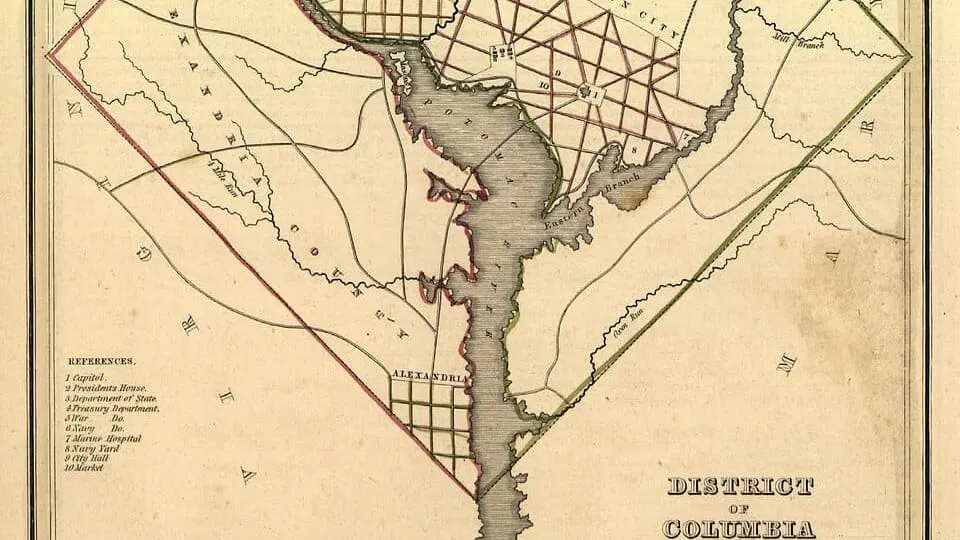
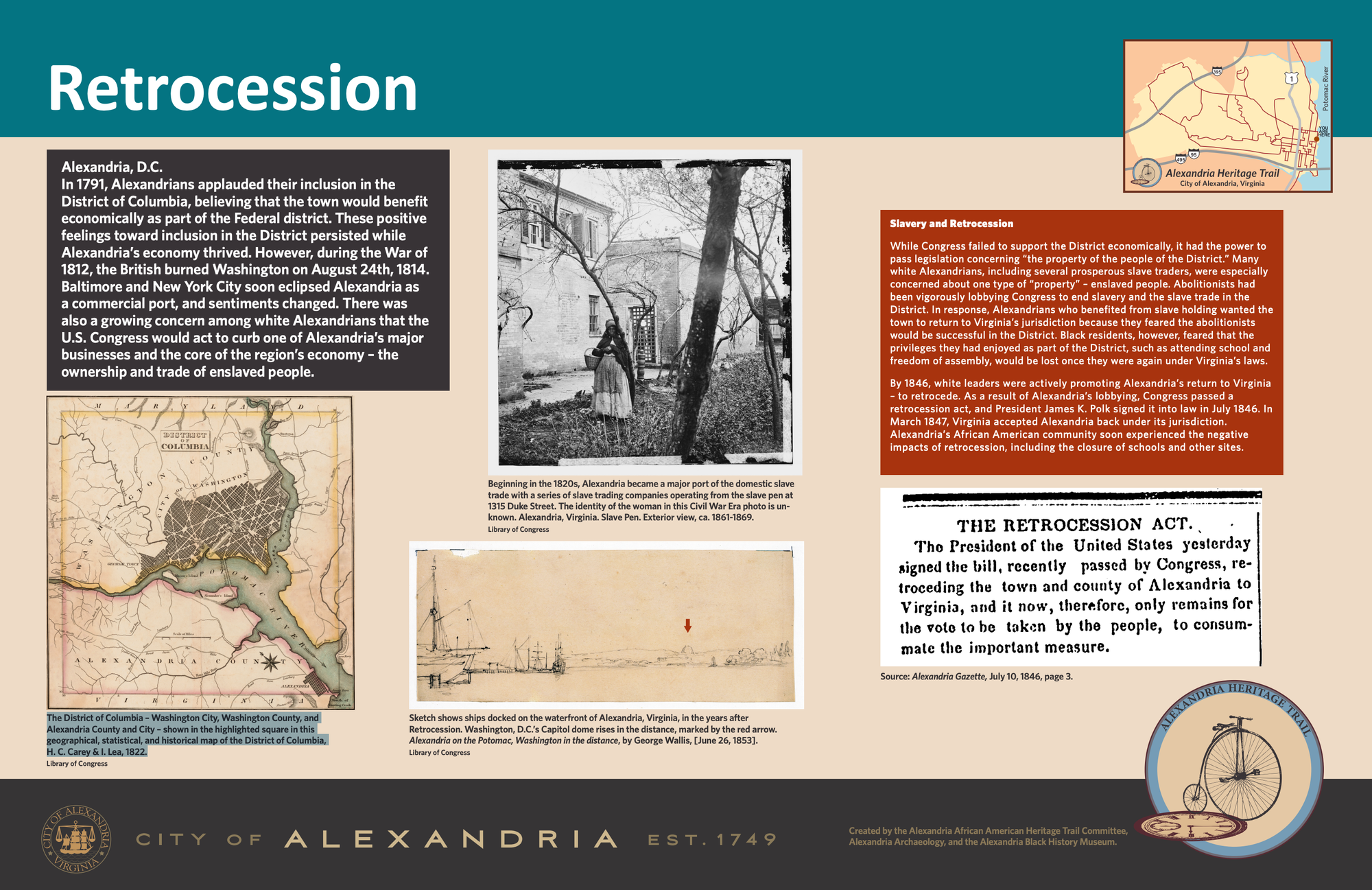
ALEXANDRIA, Va. - In 1791, Alexandrians welcomed their inclusion in the new District of Columbia, expecting the federal district to bring economic benefit. For a time, it did. But the War of 1812 changed the city's fortunes — the British burned Washington in 1814, and Baltimore and New York soon eclipsed Alexandria as a commercial port. Resentment toward Congress grew, and so did a more urgent fear: that federal legislators might act to abolish slavery and the slave trade in the District.
That fear was not abstract. Beginning in the 1820s, Alexandria had become a major hub of the domestic slave trade, with slave trading companies operating from a pen at 1315 Duke Street. Many of the city's most prosperous white residents — slave traders among them — were especially alarmed as abolitionists lobbied Congress to end the trade in the District. Returning to Virginia's jurisdiction, they believed, would protect their interests.
On July 9, 1846, Congress voted to permit Alexandria and Alexandria County to retrocede to Virginia, upon referendum. The vote was held September 1–2 at the Alexandria Courthouse. Of 985 ballots cast, 763 favored retrocession and 222 opposed. On September 7, President James Polk declared the result in full force and effect.
Virginia formally accepted the territory on March 13, 1847, and white Alexandrians celebrated with a parade the city had not seen in some time. National salutes were fired at sunrise, noon and sunset. Ships in port flew their flags. A procession marched through the principal streets, arriving at the Public Square where George Washington Parke Custis — Martha Washington's grandson — delivered an address. "Business was suspended through the day," the Alexandria Gazette reported. "Everything passed off in the happiest manner."
But not everyone celebrated. Black residents had feared what retrocession would mean — and they were right. The privileges they had enjoyed as part of the District, including the ability to attend school and gather freely, were stripped away under Virginia's laws. Alexandria's African American community experienced the consequences almost immediately, including the closure of schools and other sites.
Congress had given Alexandria back to Virginia. For some, it was a victory. For others, it was the beginning of something much harder.
Today, stone boundary markers still stand at various points throughout Alexandria, remnants of the original borders of the District of Columbia. They serve as quiet reminders of the 45 years the city spent on the other side of that line.
The Alexandria Brief is free for everyone. It stays that way because readers fund it directly. When you become a member, you're not donating — you're buying original Alexandria reporting that shows up every day.