Table of Contents
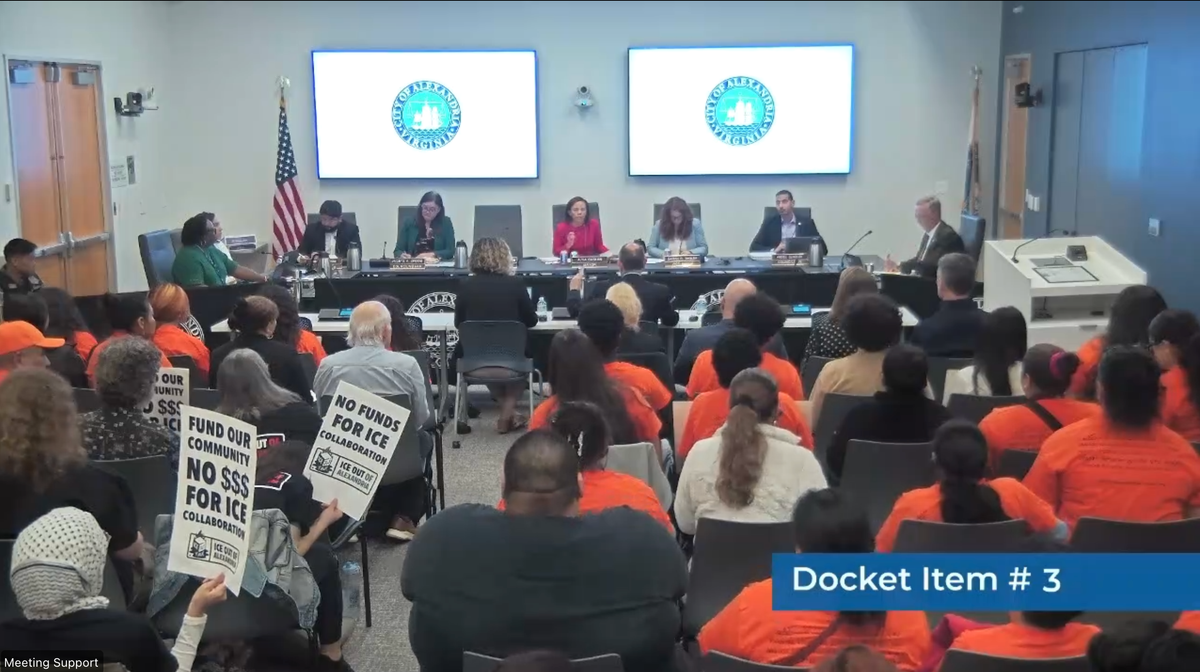
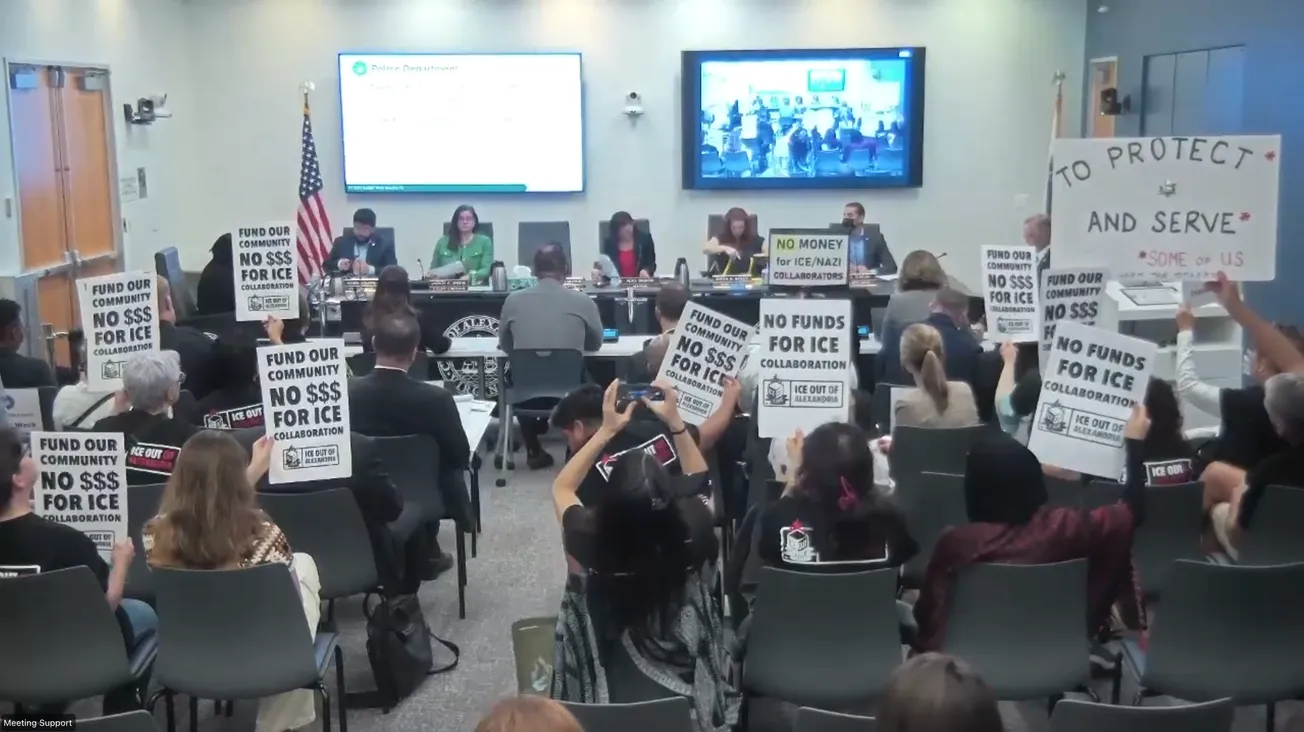
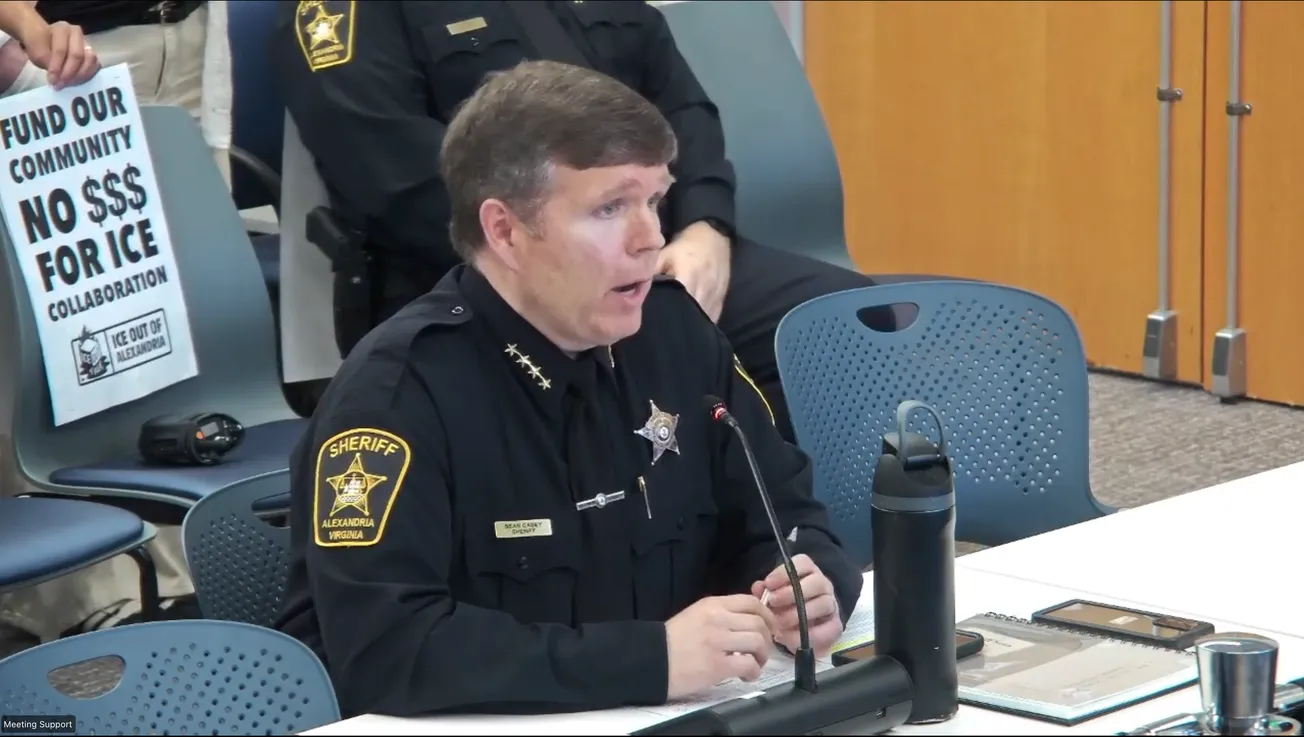
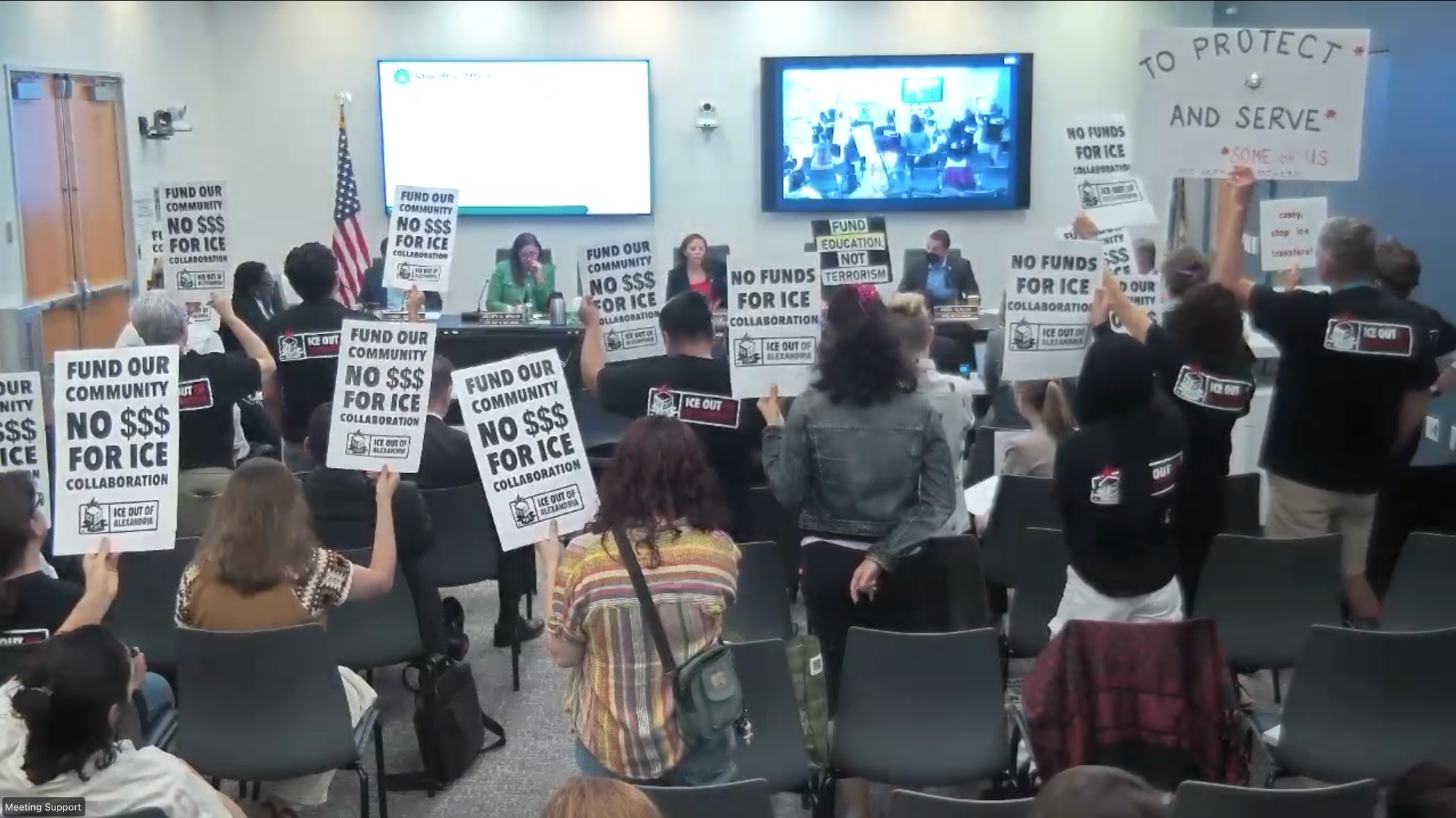
Sheriff Sean Casey spent 36 minutes before five members of City Council on Wednesday night answering detailed questions about the cost of running the jail, the status of an unfinished agreement with the city, and why his office has no performance indicators in the proposed budget — while dozens of ICE Out of Alexandria protesters filled the chambers holding signs calling for an end to ICE transfers.
Neither Casey nor any council member mentioned ICE specifically during the session.
The crowd arrived early and stayed through the entire Safe, Secure & Just work session, holding signs reading "No $$$ for ICE Collaboration," "No Funds for ICE Collaboration," "Fund Education Not Terrorism," and "Casey, Stop ICE Transfers" — as well as at least one handmade sign reading "To Protect and Serve* *Some of Us." The demonstration was silent and sustained, stretching from the police department presentation through the fire department.
The federal contract question
The most direct exchange of the evening came from Councilman Abdel Elnoubi and Councilman Canek Aguirre, who drilled into the jail's cost structure and what options the city has to change it.
Elnoubi calculated that at current population levels the city is paying more per inmate than it would at full capacity. "Where we are right now, that's not the optimal number. We're essentially wasting money," he said, asking staff for a budget memo laying out all available options.
Aguirre then asked what would happen specifically if the city canceled its federal contract to house inmates and drove the jail population below 150.
Casey's answer put a dollar figure on it publicly for the first time: $7.4 million.
"Getting rid of that $7.4 million would not offset the cost of the staff reductions and the reductions we could make," Casey said. "We might be able to make up maybe half of it. Maybe a little bit more than half, but not the whole amount."
Of approximately 255 inmates currently housed in the jail, 127 — nearly half — are federal inmates. The city funds 57.92% of total jail operating costs, approximately $18 million, with the state covering 19.91% and the federal government 21.41%.
Aguirre asked staff to prepare a budget memo exploring what it would cost to either bring the jail to full capacity of 340 inmates or reduce it to 150. Casey agreed to provide the analysis.
It is worth noting that Casey is a constitutional officer — independently elected and not directly accountable to the city manager or council. Council sets the appropriation; Casey determines how it is spent. What the budget memo would ultimately yield in terms of policy options remains to be seen.
The federal contract is the same one Casey removed ICE from in his November policy statement — a step that advocates acknowledged but said did not go far enough. ICE transfers from the Alexandria jail have been rising: 33 in 2023, 43 in 2024, 54 in 2025. Casey has consistently cited state law, which requires the sheriff to notify ICE when someone charged with a felony is in custody and to transfer inmates to ICE custody on their scheduled release date when ICE has obtained a lawful federal arrest warrant. City Council called on Casey last November to stop the transfers; he has not changed his practice.
No performance indicators
Vice Mayor Sarah Bagley raised an absence that The Alexandria Brief reported on Tuesday: the sheriff's office is the only major department in the Safe, Secure & Just portfolio without performance indicators in the proposed budget.
"I noticed that there wasn't a performance indicator in the sheriff section," Bagley said. "What metrics are you using to evaluate whether the department is continuing to improve year over year?"
Casey said the office tracks in-custody deaths, suicides, assaults on staff and inmates, grievances, and workload metrics including transports and court appearances. He said the office has a "work productivity performance indicators" document and offered to share it with council.
Mayor Alyia Gaskins asked that the document — along with the annual jail cost report and a jail staffing study Casey had previously provided to the city manager's office — be circulated to council on a regular cycle going forward.
MOU still unfinished
Mayor Gaskins pressed Casey on the status of a memorandum of understanding between the sheriff's office and the city — part of a broader effort to define the relationship between council and quasi-independent agencies during budget deliberations.
"We're still working on it with the city manager's office," Casey said.
When Gaskins asked for a completion timeline, Casey said he was "not sure."
"I think some of that needs to be defined before we continue to move forward," Gaskins said. "It feels like we're about to enter into another budget without having the clarity of that relationship."
Budget overview
City Manager James Parajon has proposed a FY 2027 sheriff's budget of $36,116,994 — an increase of $263,453, or 0.7%, over the current approved budget. The single proposed cut: eliminating one vacant deputy sheriff position in Judicial Services, saving $93,523.
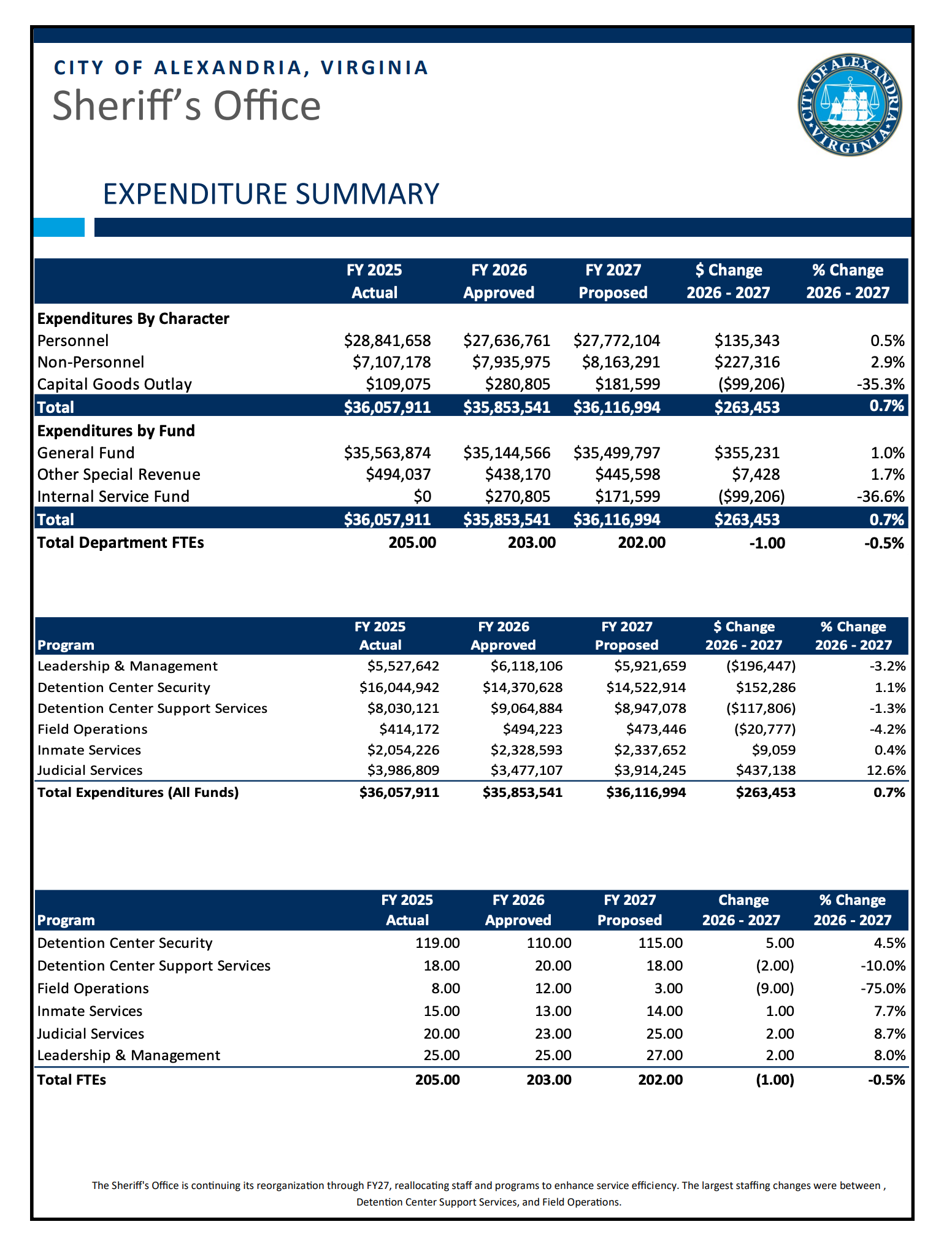
Casey said the office currently has seven deputy vacancies, down from 17 a year ago, all being backfilled through overtime and part-time staff. He said filling those positions would reduce but not eliminate overtime costs.
Casey specifically thanked Parajon for preserving the GED program, which had been identified as a potential cut. "There's no law that obligates us to have a GED program," Casey said, "but I appreciate him not taking it."
Councilwoman Jacinta Greene asked Casey whether the proposed budget included any cuts to inmate programming. Casey said no, and confirmed the office brings in approximately $270,000 to $280,000 annually in inmate fees, all of which is directed back to programming — including GED, ESL, mental health services, and the Second Chance Unit. He said those fees are expected to decline due to FCC changes that have lowered commission rates.
Council asked Casey to provide several additional documents before the next budget session: the FY 2024 jail cost report, a year-over-year inmate breakdown by category from 2020 to present, a count of part-time staff hired to fill deputy vacancies, and a list of services the office provides that are not legally mandated.
FY 2027 Budget Calendar
- March 14 — Second budget public hearing, 9:30 a.m., City Hall
- March 16 — Work Session #4: Livable, Green & Prospering
- March 18 — Work Session #5: Healthy, Thriving & Equitable
- March 19 — Potomac Interceptor Town Hall, 7–9 p.m., Lee Center
- March 25 — Work Session #6: Accountable & Effective Government
- April 18 — Add/Delete and tax rate public hearings, 9:30 a.m.
- April 29 — Budget and tax rate adoption, 6 p.m.
More reporting on this
 Ryan Belmore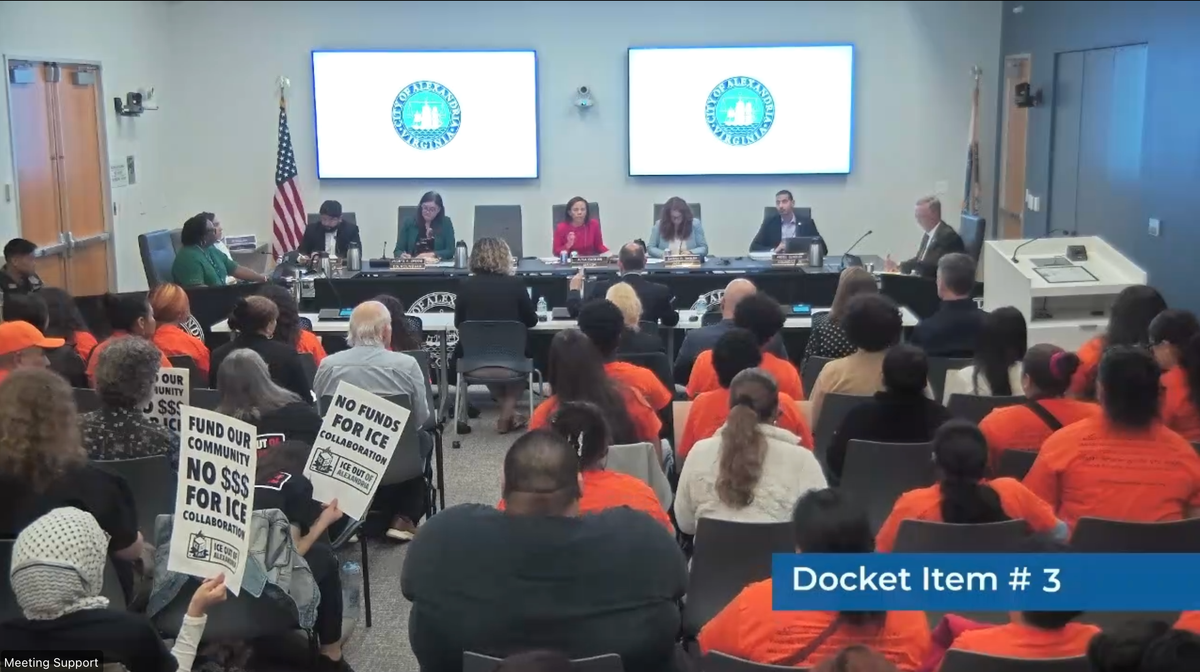
 Ryan Belmore
 Ryan Belmore