Table of Contents
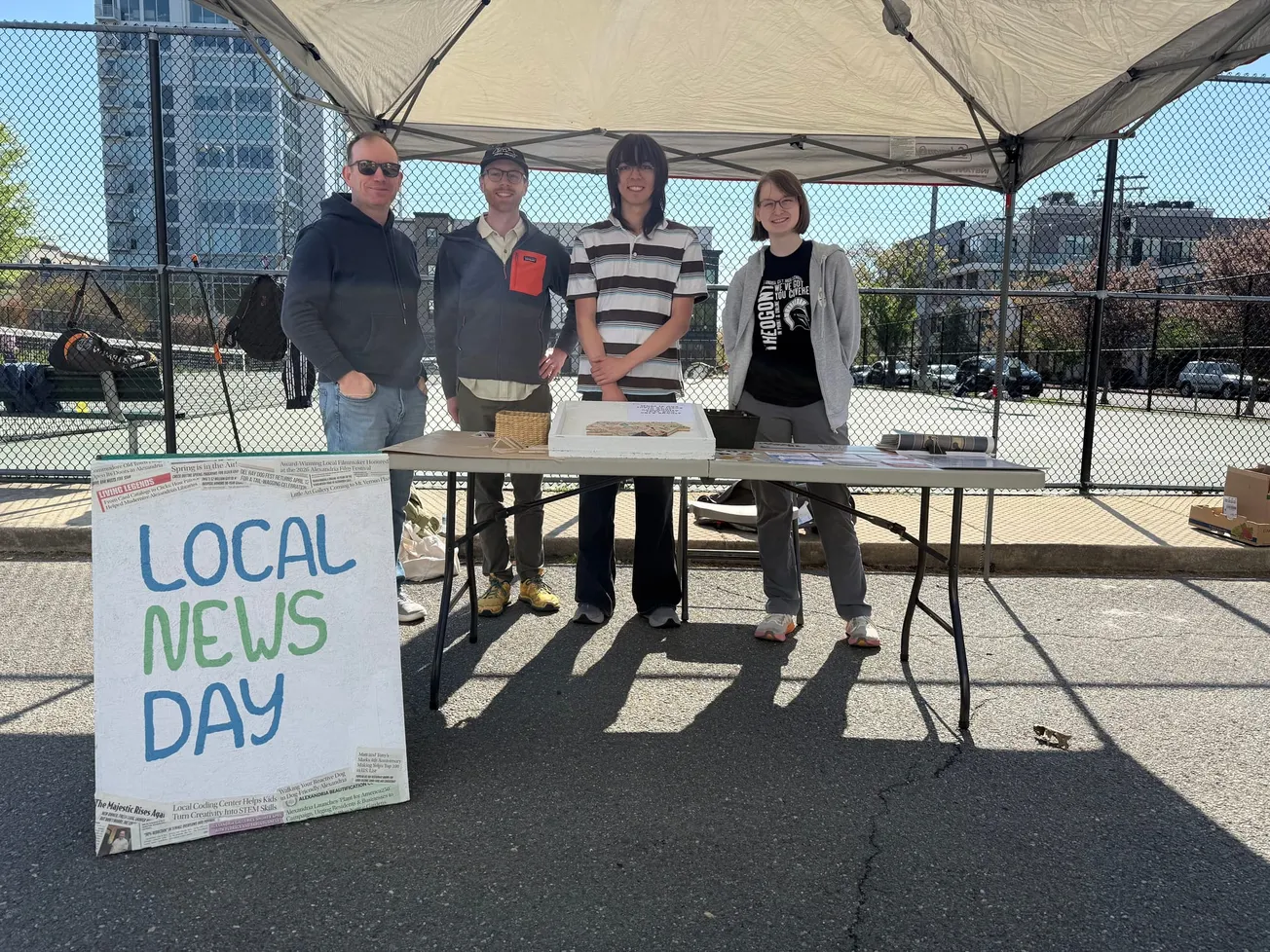
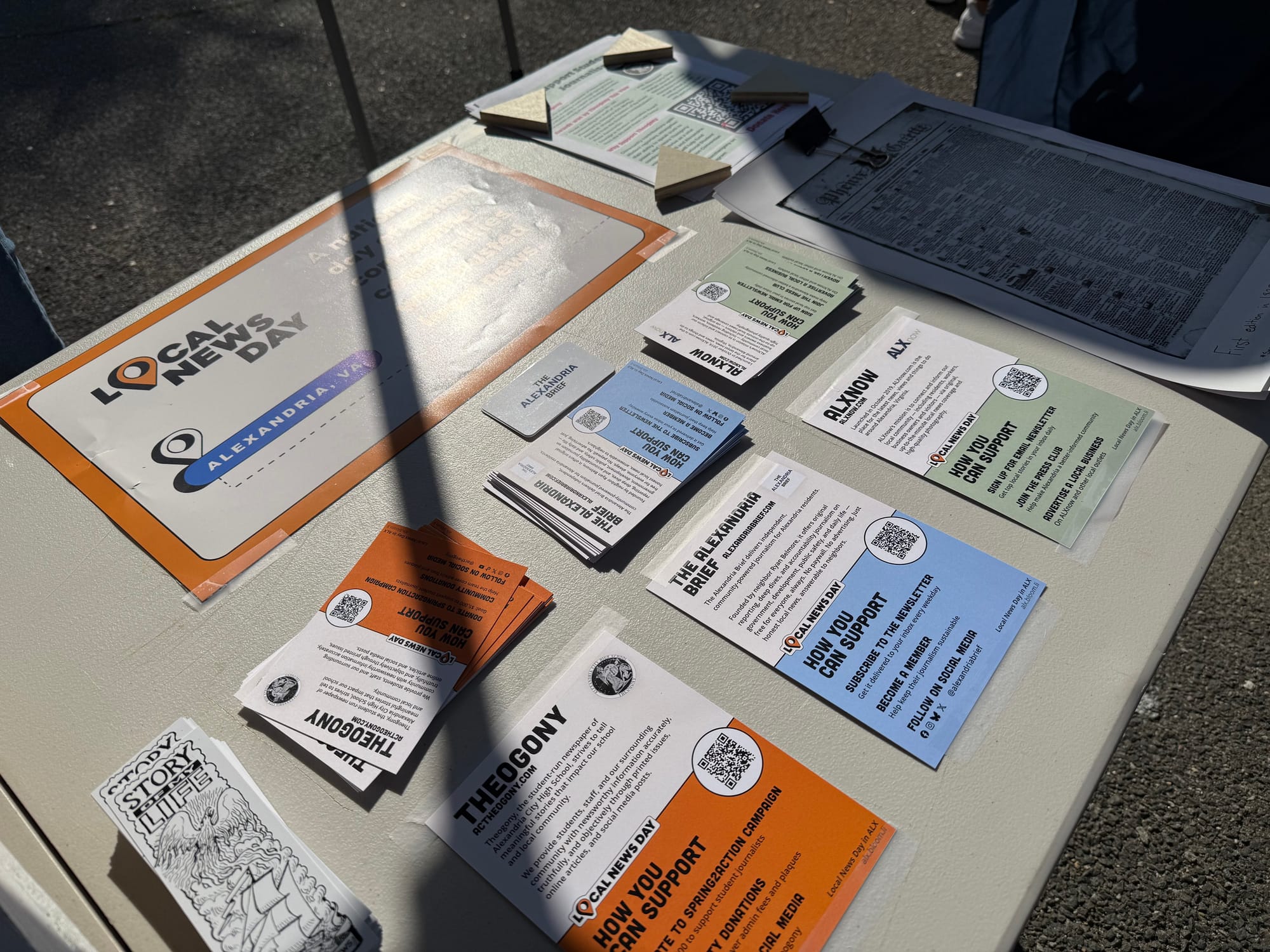
The table was simple: a folding tent, a Local News Day sign, a spread of cards for three local newsrooms, and a handmade bookmark telling the 200-year history of journalism in this city. What happened around it was anything but ordinary.
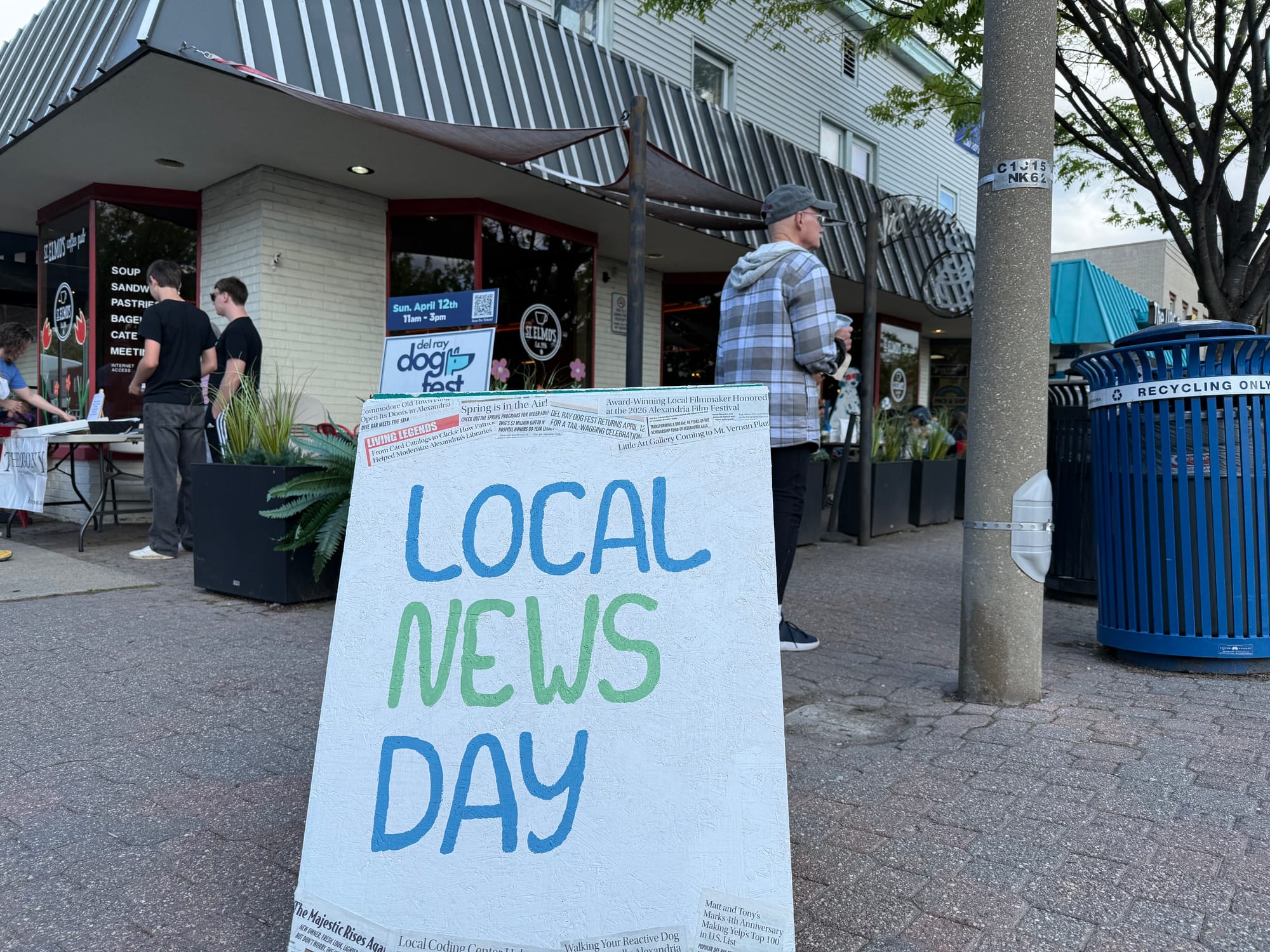
Over the weekend of April 11 and 12, Bloom Labs founder Stephen Jefferson and students from Theogony, the student newspaper of Alexandria City High School, staffed three Local News Day pop-up events across Alexandria — Saturday morning at St. Elmo's Coffee Pub in Del Ray, and Sunday at both the Old Town North Farmers Market and the Four Mile Run Farmers Market. The Alexandria Brief stopped by all three.
 Ryan Belmore
The events were organized as a belated, in-person extension of the inaugural Local News Day on April 9, the national day of action that drew more than 1,300 newsrooms and 200 partner organizations across all 50 states. Jefferson, who has spent more than a decade working in the journalism ecosystem through Bloom Labs, said farmers markets felt like the right venue from the start.
"They are already embedded in the community, already a resource, an accessible resource for any walk of life," Jefferson told The Alexandria Brief. "Folks can walk up into a farmers market and they're also dispersed around Alexandria."
Vendors at all three locations donated their space at no cost.
After stopping by St. Elmo's Saturday morning, I served as the guest speaker at the Brookville-Seminary Valley Civic Association meeting at Patrick Henry Recreation Center, where I spoke to neighbors about The Alexandria Brief, the role of local independent journalism in Alexandria, and why local independent news matters.
That kind of community investment matters because local journalism itself depends on it. The decisions that most directly affect Alexandria residents' daily lives — who sits on the school board, what gets built in a neighborhood, how public safety resources are allocated — are made locally. They are covered locally, too, by reporters who attend the meetings, read the budgets and knock on the doors. When those reporters disappear, accountability disappears with them. No national outlet or algorithm fills that gap.
At each pop-up, passersby could pick up profile cards for The Alexandria Brief, ALXnow and Theogony — all three official Local News Day newsroom partners — each with a QR code linking directly to the outlet's website, newsletter or support page. The table also featured historic Alexandria newspaper front pages and bookmarks designed by local artist Chris Bonnell — a striking hand-drawn illustration of a tall ship and phoenix, printed alongside the story of Samuel Snowden, who founded the Phenix Gazette, the predecessor to today's Alexandria Gazette Packet, on the first day of 1825. The bookmark's motto, drawn from the original paper's masthead, reads: "He does what he must, what will be, will be."
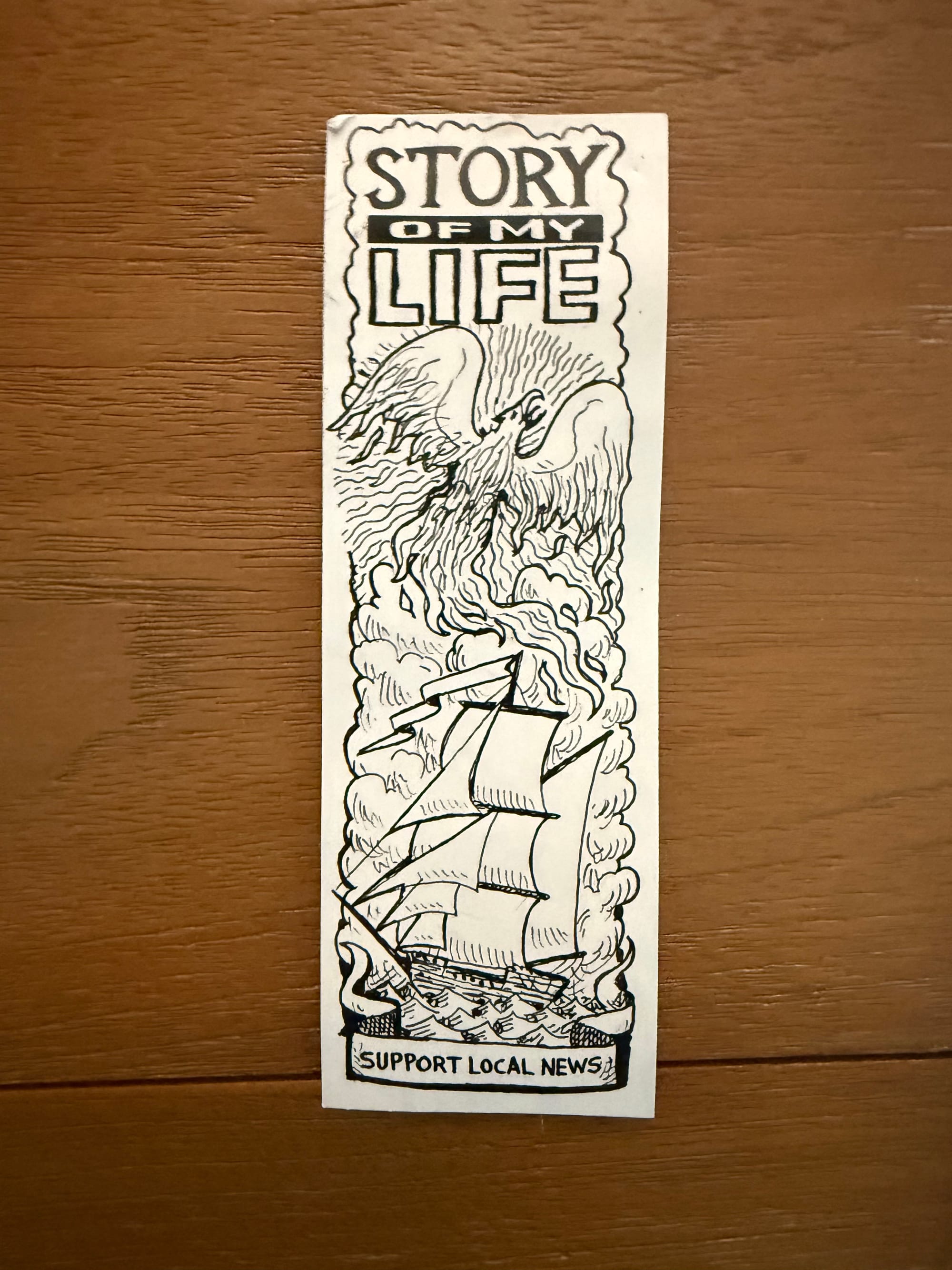
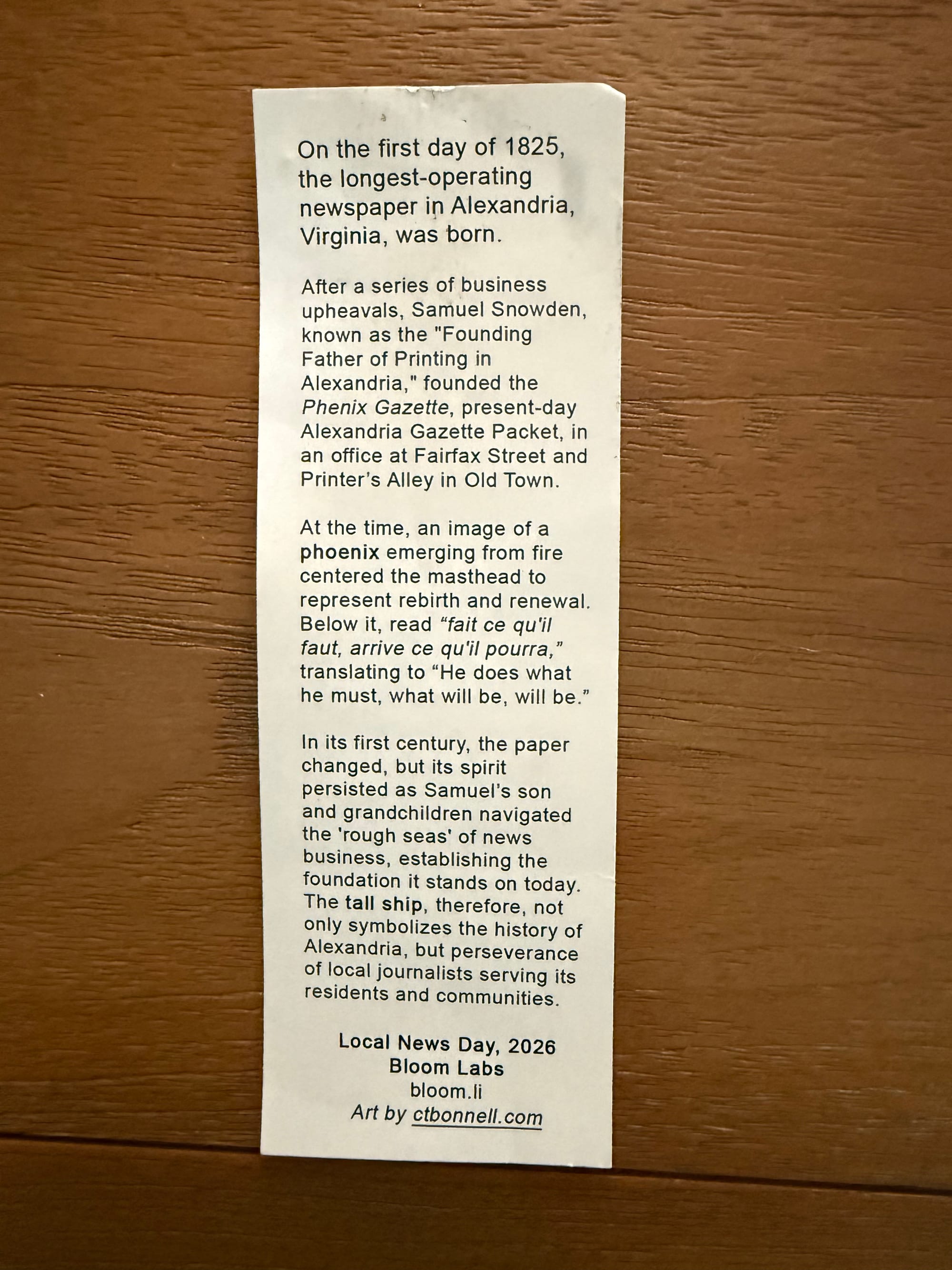
Bookmark designed by local artist Chris Bonnell (Ryan Belmore/The Alexandria Brief)
Two hundred years later, three independent Alexandria newsrooms were being championed at a table in a parking lot on a Saturday morning, making sure their neighbors knew they existed. The spirit holds.
Jefferson said the reception over the two days was varied and meaningful. Some visitors already followed one of the three outlets being promoted and left knowing all three. Others stopped because they recognized Theogony from the attention it received in 2025, or because they had children at Alexandria City High School who knew the student journalists volunteering at the table.
"People stop by and they see Theogony and they know about some of the attention that newspaper got," Jefferson said. "Some people know the student journalists because they have kids in the high school. There was sharing of experiences and getting to meet those student journalists in person, which was really special."
Theogony, which is raising funds through Spring2Action with a $5,000 goal to support its student journalists, brought its own remarkable story to the weekend — one that includes a House Joint Resolution from Delegate Kirk McPike, a Freedom of the Press Award from the Southern Interscholastic Press Association, a Courage in Student Journalism Award from the Student Press Law Center and multiple honors from the National Student Press Association Convention. Student journalists are not a pipeline to professional media. They are the press, right now, covering their school and their city with the same seriousness the work demands.
The pop-ups also featured a participatory art board, sponsored by the Art League, where community members could write on individual triangular tiles about topics or issues important to them. The tiles from Saturday's stop at St. Elmo's painted a vivid picture of what is on Alexandria residents' minds: the library, splash parks and playgrounds, Del Ray development, food insecurity, education, the arts, animal shelters, green spaces, native plants, veterans, connection and empathy, and — more than once — democracy itself.
Jefferson said the tiles from all three events will be assembled into a larger community artwork, which the Art League has offered to display in a temporary exhibit at the Torpedo Factory later this spring.
"We're combining all of these tiles together after this weekend to help understand the perspective of the community and what they need — what issues might either be covered well or might need to be covered better," Jefferson said. "At least, what is the community talking about that is important to them that should be on the mind of local journalism."
That question is exactly the right one to be asking. Local news is not just about informing people — it is about reflecting a community back to itself, celebrating what makes a place distinct, and creating the shared set of facts that allows neighbors to disagree without disconnecting. Independent local newsrooms are the ones best positioned to do that work honestly.
Looking ahead, Jefferson said the 2026 events were intentionally experimental — pulled together in about a month — and that he sees significant room to grow in future years.
"I'm curious how we can bring together more of the city's resources, more organizations that want to support local news, more newsrooms and newspapers," he said. "Trying to embed ourselves in the community and reach people who might not have the information right now or might not know news outlets that are covering their neighborhood — that would be very central to whatever is happening."
Jefferson credited the partnerships that made the weekend possible. "I appreciate the openness from The Alexandria Brief and the other volunteers and the other outlets, and the farmers markets especially, who trusted me and Bloom Labs to do these pop-ups and help promote their work," he said.
For The Alexandria Brief, the weekend was a reminder of what this work is really about — not pageviews or open rates, but neighbors stopping at a table on a sunny Saturday morning because they want to know what is happening in their city and who is covering it.
They deserve an answer. We are here to give them one.
Support The Alexandria Brief
The Alexandria Brief is independent, community-powered journalism covering Alexandria — free for everyone, always, with no paywall and no advertising. Here is how you can help keep it that way:
Become a paid supporter. The Alexandria Brief is free for everyone, always — and that's only possible because some readers choose to invest in it. If that's you, today is a great day to make it official.
Subscribe. If someone forwarded you this and you're not yet on our list, welcome. Sign up and get Alexandria's news delivered to your inbox every weekday.
Follow us on social media. Find us at @alexandriabrief on Facebook, Instagram, Bluesky, and X.
Find local newsrooms near you at localnewsday.org | #LocalNewsDay