Table of Contents
Originally published at 10:55 a.m. Updated at 12:50 p.m. with the name of the grazing operator, the contract value and confirmation that sheep will also graze the site.
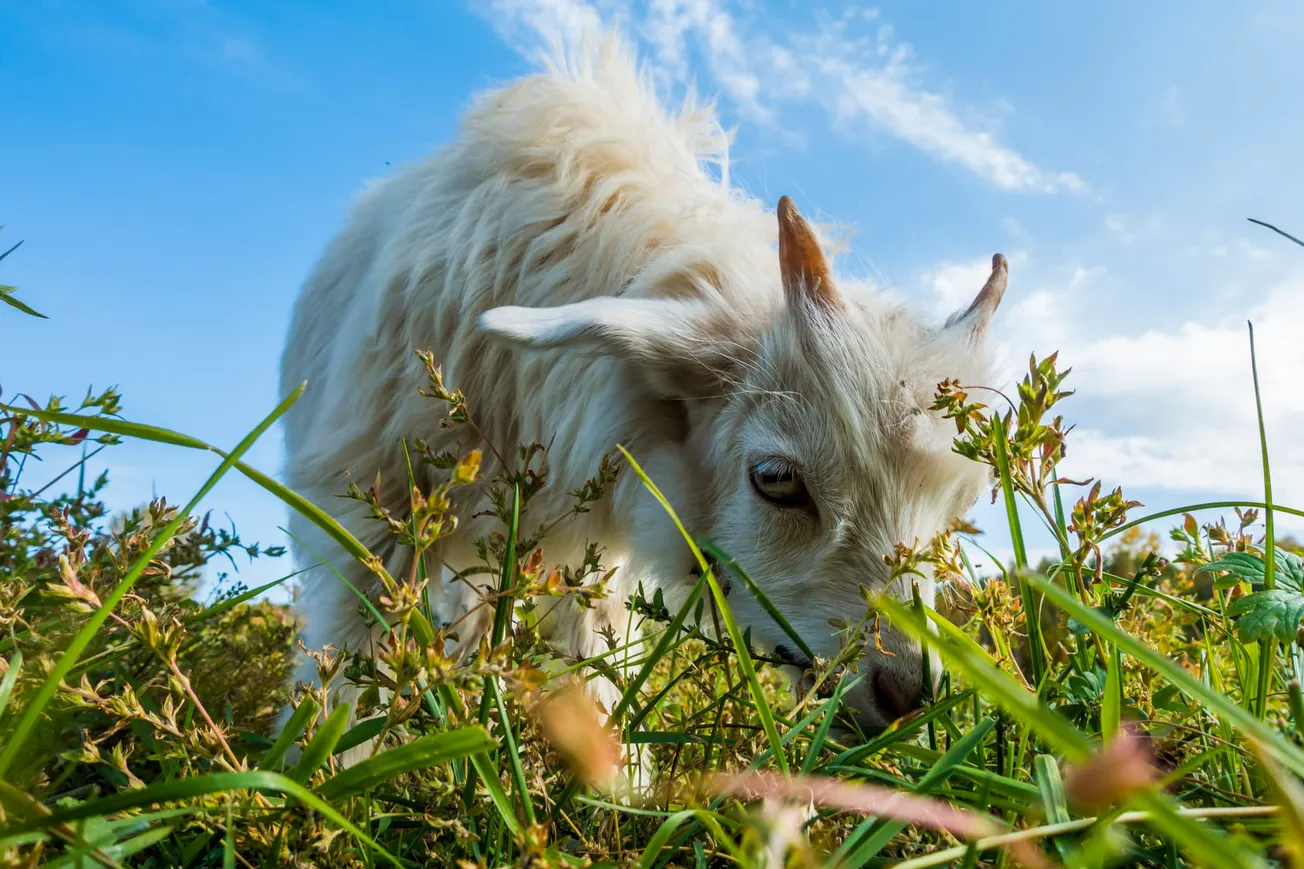
ALEXANDRIA, Va. — Between 35 and 40 goats and sheep will spend up to 10 days eating their way through a kudzu-covered slope at James Marx All Veterans Park beginning Sept. 8, in a city pilot testing whether livestock can do work that crews and machines cannot.
The city announcement referred mostly to goats, but Natural Resources Manager Katrina Napora confirmed Friday that both goats and sheep will graze the site.
The slope, alongside Holmes Run at the West End park, was chosen for two reasons, the Department of Recreation, Parks and Cultural Activities said: it is thick with leafy invasives, and it is dangerous to clear by hand. Large rocks hidden under the vegetation make footing treacherous for people, and the uneven ground defeats autonomous mowers. Goats handle it easily.
The dominant plants on the site are kudzu, garlic mustard and multiflora rose — all invasive. Goats eat the leafy growth of nearly anything, which is why the city said grazing sites have to be chosen carefully, with no rare native plants within reach.
Timing matters too. RPCA said scheduling the grazing in late summer, before the plants set seed, reduces the chance the animals spread the invasion through their manure. Any seeds that do pass through, the department said, have low survival rates.
The animals will not finish the job. Because they strip only the greenery, a human crew will follow one to two weeks later to clear woody stems and roots and spread native seed.
A recommendation from 2014
Clearing invasive species from the park is not a new idea. It was the first of six recommendations the Parks and Recreation Commission endorsed in 2014, drawn from a plan for Holmes Run Park that grew out of community input the year before. The others included connecting the park to the Holmes Run trail and the Duke Street Dog Park, moving the James Marx memorial for better visibility from the street, building a bridge to the Charles Beatley Library and adding a stormwater site with an educational component.
Twelve years on, most of that remains unbuilt. The city has said current funding covers only initial planning studies. A separate improvements project for the park finished its planning phase in June and is scheduled for design through December, with construction procurement in 2027 and work starting late that year. Survey crews have been in the park since last fall.
Whether grazing continues depends on the results
RPCA framed the grazing pilot as a test with two measures: whether the site has fewer invasives afterward, and whether it delivers benefits conventional methods do not, such as community interest and reduced chemical use. The department said it will decide after this site whether to fold grazing into its broader invasive plant strategy.
The pilot is costing the city $9,500. The operator is Mary T. Bowen of Browsing Green Goats, which runs through Prosperity Acres LLC, Natural Resources Manager Katrina Napora said Friday. The city has said grazing typically costs less than heavy machinery or manual crews.
The approach has been used along the W&OD Trail, at a national cemetery and in Loudoun County, and previously on private property in Alexandria.
Browsing Green Goats has done targeted grazing in Maryland and Virginia for more than 16 years, according to the company, working for municipalities, parks, schools, cemeteries, homeowners associations and federal agencies, often on creek banks, steep slopes and other ground where machinery is impractical. Bowen was named a 2026 Calvert County, Maryland, honoree for the International Year of the Woman Farmer, recognizing work in sustainable agriculture and agricultural education.
The company supplies the temporary electric fencing, shelter, water trough and labor. It also warns clients what grazing does not do: the result looks like vegetation that has been eaten, not mowed, which is why a follow-up crew is generally needed for a finished appearance.
What to expect if you go
No properties border the grazing area. The animals will work behind a temporary electric fence that the operator will check daily, and they will stay on site overnight rather than being trucked in and out. A handler will provide fresh water and check on them daily.
Visitors are asked to watch rather than touch. The animals will not be accessible, and the city asked residents not to feed them, to keep children outside the fence and to keep dogs leashed and at a distance. That last point matters at a park with its own dog exercise area: RPCA said anyone whose dog reacts strongly to livestock should consider leaving it home.
Goats are quieter than landscaping crews, RPCA said, apart from occasional bleating and the noise of watering or moving the herd. Their droppings are dry and pellet-like, and their hooves aerate soil rather than compacting it the way machinery does.
Residents wondering whether they can hire goats for their own property may be able to, depending on the size of the site, its distance from neighboring properties, and whether the animals are removed within 24 hours under city code.
RPCA said it will release more details later this month. The department has posted a FAQ at alexandriava.gov/parks/program/goat-grazing-faqs, and its natural resources team can be reached at katrina.napora@alexandriava.gov.