Table of Contents
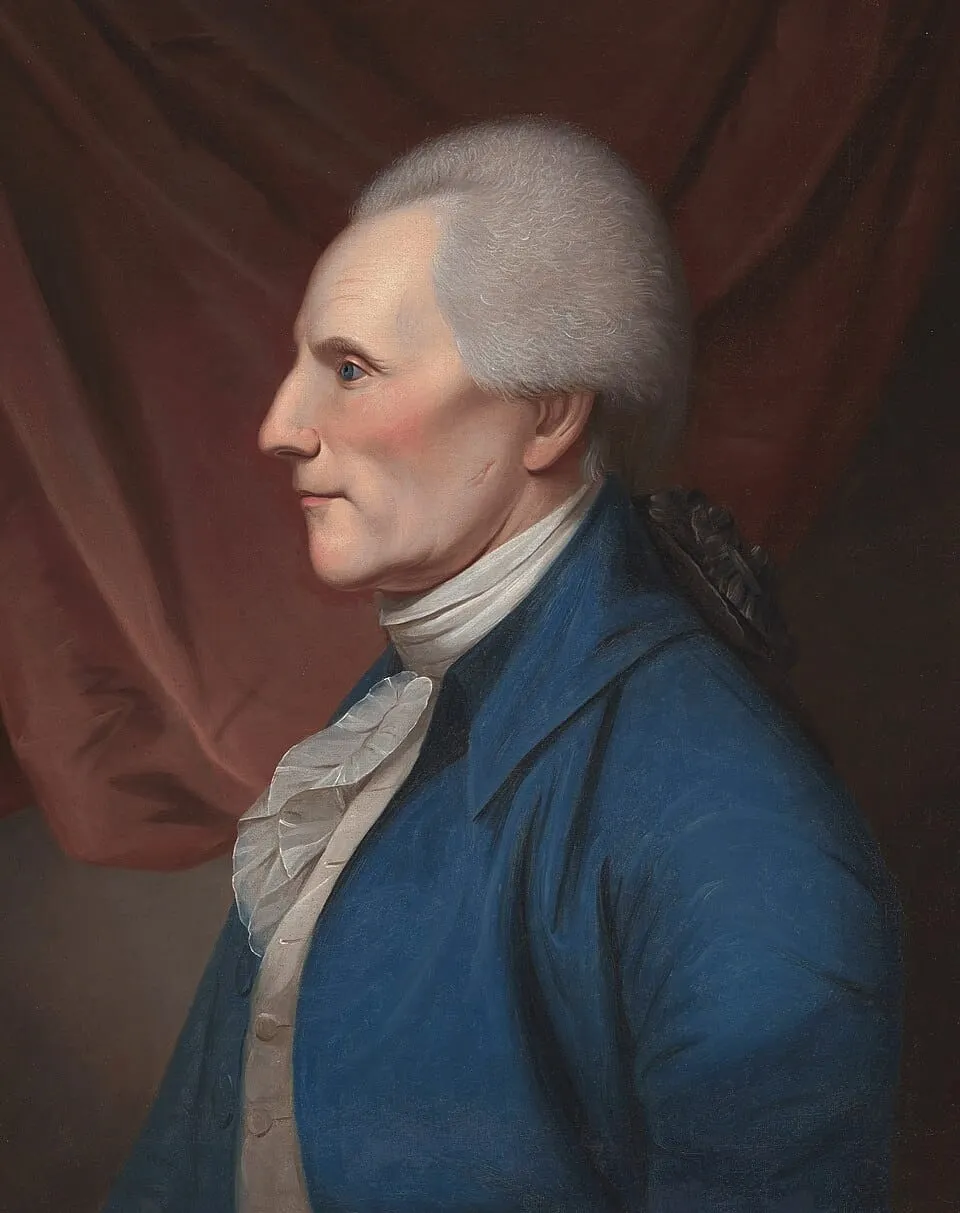
ALEXANDRIA, Va. — On June 7, 1776, Virginia delegate Richard Henry Lee rose in the Continental Congress in Philadelphia and proposed a resolution that would change history: "That these United Colonies are, and of right ought to be, free and independent States, that they are absolved from all allegiance to the British Crown, and that all political connection between them and the State of Great Britain is, and ought to be, totally dissolved."
The Lee Resolution, backed by instructions Virginia had issued to its delegates the month before, set the Second Continental Congress on the path to independence. Three weeks later, Thomas Jefferson — drawing on Lee's resolution — would present the draft Declaration of Independence. Congress formally adopted Lee's resolution on July 2, 1776, and adopted Jefferson's declaration two days later, on July 4. John Adams initially thought July 2 — the day Lee's resolution passed — would be remembered as the great American holiday.
While Richard Henry Lee himself lived at Chantilly plantation in Westmoreland County, Virginia, he was part of the prominent Lee family of Virginia, whose ties to Alexandria run deep. The Lees were among the most influential families in colonial and early federal Virginia, and several of Richard Henry's cousins, nephews, and grandnephews made Old Town Alexandria their home and helped shape it.
Lee family landmarks in Alexandria
Three Lee family sites still stand within walking distance of one another in Old Town:
The Lee-Fendall House, at 614 Oronoco Street, was built in 1785 by Philip Richard Fendall, who married into the Lee family. Over the next 118 years, 37 different members of the Lee family lived in the house. The Marquis de Lafayette was a guest in 1824. The home is now a museum operated as a public historic site. Edmund Jennings Lee I — Richard Henry's first cousin once removed, a former mayor of Alexandria, and a founder of Virginia Theological Seminary — died at the Lee-Fendall House on May 30, 1843.
The Boyhood Home of Robert E. Lee, at 607 Oronoco Street directly across the street, was rented by Light-Horse Harry Lee — Richard Henry Lee's first cousin — for his family in 1812. Robert E. Lee lived in the house from age 5 until he left for West Point in 1825. The home is privately owned.
Christ Church, at 118 N. Washington Street, was the place of worship for the Lee family, alongside the Washingtons, during the 18th century. George Washington's pew is still preserved inside the church. Both Light-Horse Harry Lee and his son Robert E. Lee worshiped there.
The Lee family and the founding generation
Richard Henry Lee was one of six Lee brothers who served in colonial and early federal Virginia government. Two of them — Richard Henry and his brother Francis Lightfoot Lee — signed the Declaration of Independence. Their brother Arthur Lee was a diplomat in France and Spain. Richard Henry Lee served as president of the Continental Congress in 1784-1785, and was one of Virginia's first two United States senators after ratification of the Constitution.
His extended family included Light-Horse Harry Lee, Revolutionary War cavalry officer and Virginia governor; Charles Lee, the second U.S. Attorney General under Washington and Adams; Richard Bland Lee, Northern Virginia's first U.S. congressman; and Edmund Jennings Lee I, Alexandria mayor and Christ Church warden.
A contested legacy
The Lee family's prominence in early Alexandria comes with a difficult inheritance. Richard Henry Lee, Light-Horse Harry Lee, and others in the family were enslavers. Richard Henry Lee voiced public criticism of the slave trade — he proposed restrictions on slave importation as early as 1759 — but he held people in bondage throughout his life, as did most of the founding generation of Virginia gentry. The Lee-Fendall House Museum's current programming explicitly engages with that history, including the ongoing "Lives Worth Celebrating: Stories of Resilience, Rebellion and Freedom" exhibit, which documents the lives of enslaved people who worked at the house alongside the family that owned them.
Light-Horse Harry's son Robert E. Lee carried that legacy forward in the most consequential way. He served as a U.S. Army officer for 32 years before resigning his commission in 1861 to lead Confederate forces in defense of slavery and Southern secession. Through his marriage to Mary Anna Custis, he managed the Arlington plantation and its enslaved workers; documented accounts describe his treatment of enslaved people there as harsh. After the Civil War, his elevation to symbol of the "Lost Cause" produced statues, school names, and monuments across the South — including in Alexandria.
In recent years, Alexandria has reexamined and revised much of that public commemoration. T.C. Williams High School — named for a longtime superintendent who oversaw segregation — was renamed Alexandria City High School in 2021 after a community-led campaign supported by Alexandria City Public Schools. The Confederate statue "Appomattox" that stood at the intersection of Washington and Prince streets for 131 years was removed in June 2020 by the United Daughters of the Confederacy, the organization that had erected and owned it, amid the national reckoning that followed George Floyd's murder. In 2023, the city renamed Jefferson Davis Highway through Alexandria to Richmond Highway, dropping the name of the Confederate president from the major commuter corridor. Multiple Alexandria streets and schools have been the subject of community petitions and city-led reviews of their names.
The Lee-Fendall House and the Boyhood Home of Robert E. Lee remain. Both sites continue to operate as historic properties — the Lee-Fendall as a public museum that explicitly engages with its full history including the lives of the enslaved, the Boyhood Home as a private residence. The houses tell a story that includes both the architects of American independence and the inheritors of its deepest contradiction.
Information via Encyclopedia Virginia, the Lee-Fendall House Museum, the Alexandria Black History Museum, Historic Alexandria, the City of Alexandria, and Alexandria City Public Schools.