Table of Contents
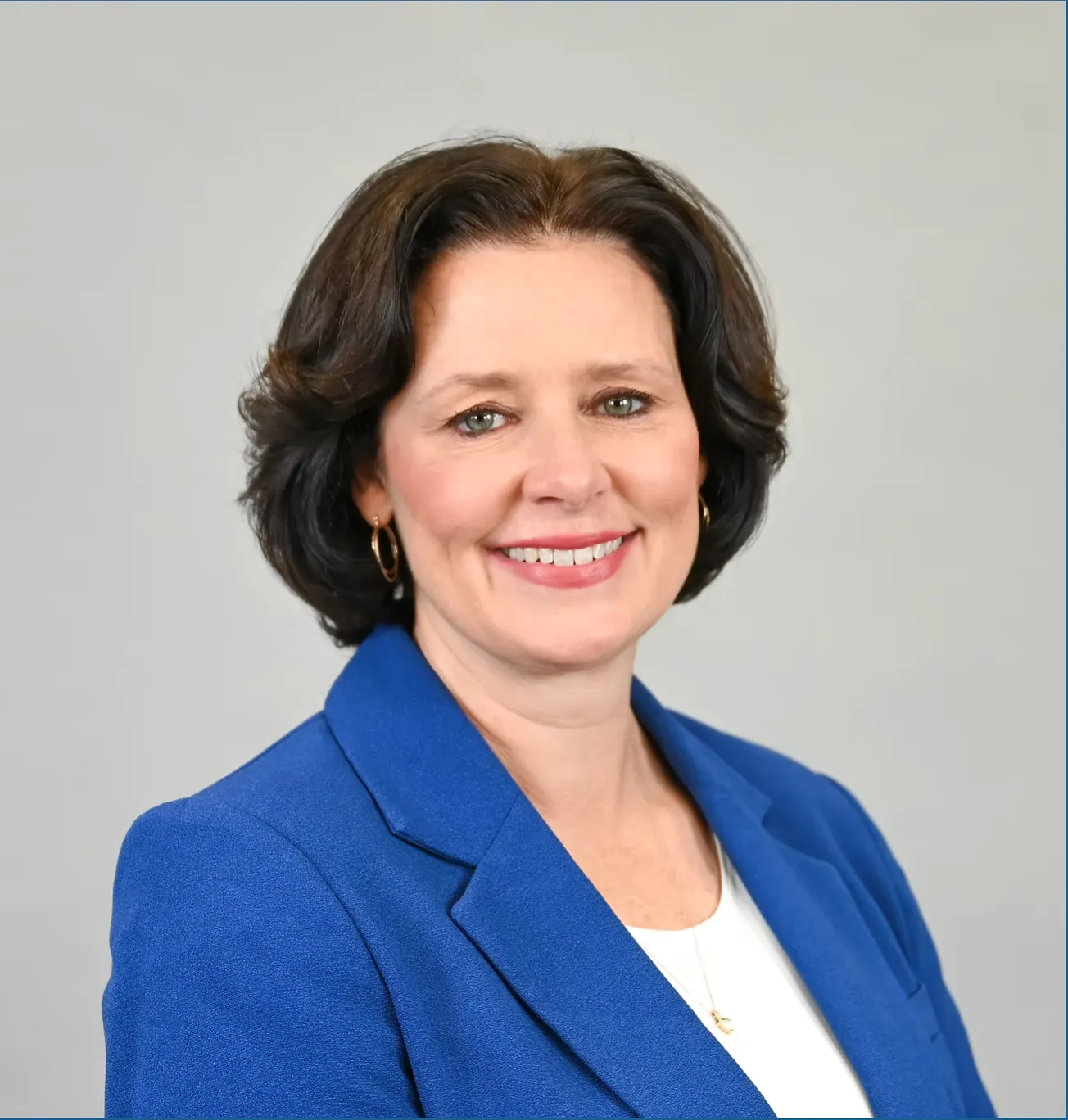
ALEXANDRIA, Va. — Alexandria's first-ever collective bargaining agreement with its teachers and staff has not been ratified and remains unfinished, School Board Chair Dr. Michelle Rief said, confirming the status of a deal that was a defining and contentious feature of the past school year.
In written responses to questions from The Alexandria Brief, Rief said the two sides reached a tentative agreement on the economic portions of a proposed contract but "have not yet reached a final agreement on the non-economic portions." She said ACPS expects to engage with the Education Association of Alexandria's newly elected leadership — the union is currently holding a leadership election — before negotiations continue.
The confirmation clarifies a question that had lingered since the spring, when ACPS and the EAA announced what was widely described as the division's first collective bargaining agreement. As Rief's response makes clear, what was reached was a tentative agreement contingent on funding and still incomplete on non-economic terms — not a finalized, ratified contract.
 Ryan Belmore
Grace Taylor leading the division
Rief also identified who is running ACPS day to day during Superintendent Dr. Melanie Kay-Wyatt's leave, which the board announced June 24. Chief of Staff Dr. Grace Taylor "is serving as the primary designee of the superintendent," Rief said, working with the senior leadership team on daily operations and preparations for the coming school year, including the rollout of new attendance boundaries this fall. The board had appointed three designees — Taylor, Chief Academic Officer Dr. Pierrette Finney, and Chief Accountability Officer Dr. Clinton Page — at a June 23 special meeting; Rief's response is the first to identify Taylor as the primary one.
Kay-Wyatt, who is retiring effective Oct. 1, went on leave for what Rief earlier described as "a matter that arose unexpectedly." On the superintendent search, Rief said the board's search firm, Hazard, Young, Attea & Associates, has completed a leadership profile drawn from community input, and that the board is seeking a leader who can "build trust while maintaining a steadfast focus on student achievement," with priorities including a student-first vision, a commitment to diversity, community engagement, and financial expertise.
 Ryan Belmore
The budget question
Much of Rief's response was a defense of how ACPS budgets, in answer to a recurring criticism — heard from some on City Council and residents — that the division asks for more than the city can fund or returns later for more.
Rief framed the gap as structural rather than a matter of local overreach. Virginia school divisions have no independent taxing authority and depend on local governments to cover the difference between state funding and what Rief called the actual cost of a high-quality education. She pointed to Alexandria's student population — more than 15,900 students, 38 percent of them English learners and 46.5 percent eligible for free or reduced-price meals — as a driver of cost, and argued that the state's funding formula assumes Alexandria can pay more locally than it can, leaving the division with "among the lowest levels of state funding in Virginia."
Asked directly whether the division is living within its means, Rief said yes, noting ACPS is legally required to adopt a balanced budget each year, but argued that "living within our means does not mean our funding is sufficient to meet our needs."
Rief's account is the board's side of a dispute that ran through the spring budget season. City Manager James Parajon has noted that city support for ACPS grew about 20 percent from FY2023 through the current year while enrollment rose about 1.5 percent, and some council members said during budget deliberations that they lacked clear information about the scope of the collective bargaining agreement — a characterization ACPS disputed, with Rief pointing council to data the division said it had already presented. The council ultimately raised the city's operating transfer 1.5 percent, less than the board sought, and ACPS closed a gap of more than $13 million by cutting or reducing 56 positions and other spending.
 Ryan Belmore
What the state budget does — and doesn't — do
Rief offered a specific illustration of the funding formula's limits using the recently adopted state budget, which includes money toward a 4 percent raise for teachers and support staff. That figure, she cautioned, does not translate into a 4 percent raise funded by the state.
For ACPS, Rief said, the state funds about 20 percent of the cost of the increase, and only for the roughly 68 percent of ACPS positions recognized under the state's Standards of Quality formula. The local budget must cover the rest — both the remaining share for state-recognized positions and the full cost of raises for employees the formula does not fund. Rief said the state budget's late arrival in the local process "complicated the Board's deliberations," and that the board has said it prefers to direct additional state money toward compensation, a decision it will revisit at a future meeting.
On student outcomes
Asked whether Alexandria's students are learning, Rief pointed to the division's Data Digest, citing improvement between the 2020-21 and 2024-25 school years. She said Standards of Learning pass rates rose across most student groups in 2024-25, that reading pass rates for English learners and students with disabilities reached their highest levels since 2020-21, and that attendance and pre-K participation have grown. She acknowledged areas still falling short, specifically SAT performance and on-time graduation rates, both of which declined in 2024-25. Data for 2025-26 will be available this fall.
Asked for a single best measure of success, Rief pointed to graduation outcomes, citing the Class of 2026: 962 graduates, 414 of them (44 percent) earning an Advanced Studies Diploma, which she said was the highest percentage in Alexandria City High School history.
On trust and communication
Rief accepted, in part, a criticism that surfaced in the superintendent search — that families and staff want greater trust and clearer communication from the central office. She cited the division's own climate survey, in which 70 percent of families and staff said ACPS communicates effectively but only 58 percent believed it is transparent about decision-making, with staff more skeptical than families. She pointed to a School Board blog launched this year as one step toward more transparency.
The full exchange
The following are Chair Dr. Michelle Rief's complete written responses to questions from The Alexandria Brief, lightly edited only for formatting. Responses are attributed to Rief.
Some on City Council and in the community say ACPS routinely asks for more than the city can fund, or returns later for more. How do you respond, and what drives the gap between what ACPS budgets and what the city provides?
"This is a structural feature of Virginia's school finance system, in which school divisions lack independent taxing authority and rely on local governments to cover the difference between state funding and the actual cost of providing a high-quality education. Those costs are driven primarily by the needs of students and the staffing required to support them, along with state mandates, legal requirements, and rising compensation and benefit obligations, while local governments must balance school funding against other priorities within available revenue growth.
Alexandria faces many of the same structural funding challenges as school divisions across Virginia while serving one of the Commonwealth's most diverse student populations. Alexandria City Public Schools (ACPS) educates more than 15,900 students representing over 118 countries and speaking 127 languages. Thirty-eight percent of students are English Learners (ELs), and 46.5% are eligible for free or reduced-price meals (FARM). These demographics reflect the broad range of academic, language, and support services our students need to succeed.
As a result, the difference between what ACPS budgets and what the City ultimately funds reflects the gap between the actual cost of educating our students and the City's fiscal capacity and competing budget priorities. The School Board's responsibility is to advocate for the resources our students need while serving as responsible stewards of taxpayer dollars".
What would you tell a resident who asks whether the division is living within its means?
"I would tell them yes. ACPS is required to adopt a balanced budget every year, and we take our responsibility to be good stewards of public funds very seriously. Each year, we make difficult decisions to align our spending with available revenue while meeting our legal obligations and supporting student learning.
At the same time, living within our means does not mean our funding is sufficient to meet our needs. The General Assembly's recent review of Virginia's K-12 funding formula found that the state systematically underestimates the true cost of educating students by understating compensation costs, regional labor markets, and the resources needed to support students with greater needs. As a result, localities across Virginia are investing billions more each year than the state formula recognizes.
Our FY 2027 budget reflects those realities. To provide an average 4.2% salary increase for teachers and support staff while maintaining a balanced budget, we reduced non-personnel spending, eliminated positions, adjusted healthcare cost sharing, and made other difficult reductions. Even with those trade-offs, we know we remain less competitive than neighboring school divisions. That is why I believe the conversation should not be whether ACPS is living within its means, but whether the resources available are sufficient to provide the education our students and community deserve".
What is the current status of the agreement with the EAA — has it been ratified — and how is the board approaching future budgets now that a growing share of spending is contractually committed?
"At this time, the collective bargaining agreement (CBA) has not yet been ratified. While the parties were able to reach a tentative agreement on the economic portions of a proposed collective bargaining agreement, the parties have not yet reached a final agreement on the non-economic portions of a proposed CBA.
We are aware that the Education Association of Alexandria (EAA) is currently conducting a leadership election. Once that process is complete, I expect ACPS to engage with the newly elected leadership on the status of the current negotiations.
ACPS will continue to develop its budget based on the division's long-term fiscal forecast and projected revenues, consistent with standard public-sector budgeting practices. Looking ahead, the School Board and City Council could also reconsider a revenue-sharing agreement, similar to those used in neighboring jurisdictions, to provide greater predictability and support long-term financial planning".
Put budget and politics aside: are Alexandria's students learning? Where can you point to measurable improvement this year — in math, attendance, graduation, or services for English learners and students with disabilities — and where are results still falling short?
"Each year, ACPS publishes a Data Digest that tracks the division's performance across key measures of student success. The most recent report shows encouraging progress over the past five years, with overall academic achievement improving between the 2020-21 and 2024-25 school years. Student attendance continues to improve, pre-K participation has grown significantly, and performance on the Standards of Learning (SOL) assessments increased across most student groups in reading, mathematics, and science during 2024-25. Reading pass rates for English Learners and students with disabilities reached their highest levels since 2020-21, and a greater share of students across multiple student groups are taking Advanced Placement (AP) exams and earning scores of three or higher. At the same time, the data highlight areas where additional improvement is needed, including SAT performance and on-time graduation rates, both of which declined in 2024-25.
Data for the 2025-26 school year will be available this fall. Those data will continue to inform the Board's future policy, budgetary, and strategic decision-making".
What single metric best indicates whether ACPS is succeeding, and what does the latest data show?
"There is no single metric that fully captures the success of a school division. Student achievement, academic growth, graduation outcomes, college and career readiness, attendance, and school climate all matter. If I had to choose one indicator, however, I would point to graduation outcomes because they reflect the cumulative impact of years of teaching, learning, and student support.
The accomplishments of the Class of 2026 demonstrate that impact. This year, 962 students graduated, and 414 students (44%) earned an Advanced Studies Diploma—the highest percentage in Alexandria City High School history. Graduates received more than 2,180 acceptance offers from 700 colleges and universities, while others chose trade schools, military service, or entered the workforce. Students also earned at least $2.5 million in merit scholarships, and 215 students received scholarships from the Scholarship Fund of Alexandria with a combined four-year value of $2.9 million.
These outcomes reflect the hard work of our students, the dedication of our educators, and the support of families and our community. Most importantly, they demonstrate that ACPS is preparing students for success across a range of postsecondary pathways, including college, careers, military service, and the skilled trades".
With Dr. Kay-Wyatt on leave and retiring Oct. 1, who is leading the division day to day, and how is the board ensuring continuity through the start of the school year and the new attendance boundaries this fall?
"Dr. Grace Taylor, ACPS Chief of Staff, is serving as the primary designee of the superintendent while Dr. Kay-Wyatt is on leave. She continues to work closely with the senior leadership team to ensure continuity in the division's day-to-day operations and preparations for the upcoming school year, including the implementation of new attendance boundaries this fall. We are grateful for the leadership, professionalism, and unwavering commitment that Dr. Taylor and the senior leadership team bring to serving our students, staff, and families".
Where does the superintendent search stand, and what qualities matter most in the next leader given the past year's challenges?
"The Board is looking for a leader who can build trust while maintaining a steadfast focus on student achievement. Hazard, Young, Attea & Associates (HYA), the executive search firm facilitating the Superintendent search, recently developed the Superintendent Search Leadership Profile. It reflects feedback from students, staff, families, and community members through the online community survey, stakeholder interviews, and community engagement sessions held throughout June. Based on this input, the desired characteristics for the new Superintendent center around a unifying student-first vision, commitment to diversity, community engagement, and sound operational and financial expertise. HYA will use the profile to identify candidates who meet ACPS criteria for the next Superintendent. More information about the search process and timeline is available on the ACPS Superintendent Search webpage".
The search process surfaced a recurring call for greater trust and clearer communication between the central office and families. Is that a fair criticism, and what is the board doing about it?
"We are already taking steps to improve transparency while continuing to learn from community feedback. This input is consistent with the findings of the 2025-26 ACPS 2030 Climate Survey, which identified communication and transparency as areas for continued improvement. While 70% of families and staff reported that ACPS communicates effectively, only 58% believe the division is transparent about its decision-making. Perceptions also differed by stakeholder group, with 68% of families reporting confidence in the division's transparency compared with 48% of staff. ACPS leadership is examining these results to better understand the factors driving these perceptions and identify strategies to strengthen areas of concern. This work aligns with the 2030 Strategic Plan, and the School Board will continue to receive quarterly updates on the division's progress.
This year, the School Board also launched a blog to provide greater transparency into its work and decision-making, giving residents regular updates on Board priorities, actions, and the rationale behind key decisions. During the 2026-27 school year, the Board will continue to expand the blog with regular updates and additional content to help the community better understand its work and the decisions that shape ACPS".
Where is ACPS measurably better off than a year ago, and where is the most work left to do?
"ACPS is measurably stronger in several areas than it was just a year ago. At Alexandria City High School, we've continued to strengthen the academies model, and students are telling us they feel a greater sense of belonging within their academies. We've also made campus transitions fewer and more seamless, helping students spend more time focused on learning. On the 2025-26 Climate Survey, secondary students reported a 22% increase in their perceptions of safety at school. In line with those improvements, students also reported feeling much more welcome. Secondary students' agreement that they feel welcome at school jumped from 66% last year to 87% this year.
The School Board also adopted new attendance boundaries that will take effect this fall, helping to reduce overcrowding and create more balanced learning environments across the division.
Beyond our schools, we've worked to raise awareness of how Virginia's K-12 funding formula falls short for communities like Alexandria with high concentrations of students who need additional support. We're advocating alongside others across the Commonwealth for a student-based funding model that better meets the needs of today's students.
Our most important work will always be helping every student succeed. That means staying focused on improving student achievement and well-being by recruiting and retaining great teachers, supporting strong instruction in every classroom, and making sure each student is engaged, challenged, and supported every day.
We are also committed to getting our first collective bargaining agreement across the finish line. This is the first time our division has undertaken collective bargaining, and with any new process, there have been lessons learned along the way. Even so, we've remained committed to working in good faith because we believe our employees deserve a meaningful voice in the workplace. When teachers and staff feel valued, supported, and heard, we're better able to attract and retain talented educators. That creates stronger schools and, ultimately, better outcomes for our students".
What do you most want the community to understand about how the division actually operates that you think is misunderstood today?
"One of the things I most want our community to understand is that many of the challenges facing ACPS are structural, not simply the result of local decisions. Like every school division in Virginia, we operate within a state funding formula that significantly shapes both our resources and our costs.
Labor costs and student needs are the two primary drivers of any school division's budget. Alexandria has some of the highest labor costs in the Commonwealth because of our region's cost of living, while also serving one of Virginia's highest percentages of English Learners and a student population with significant and diverse needs. Yet because the state's funding formula assumes Alexandria has a strong local ability to pay, ACPS receives among the lowest levels of state funding in Virginia. Locally, we also receive one of the smallest shares of the City's general fund among neighboring school divisions.
It is also important to understand where our budget goes. Approximately 87% of our operating budget is invested in salaries and benefits because teaching and learning depend on talented, dedicated people. Higher per-pupil spending in Alexandria largely reflects the higher cost of recruiting and retaining the teachers and staff our students need in a high-cost region. At the same time, growing revenues in other Northern Virginia school divisions—particularly from data center development—are allowing them to increase teacher pay more rapidly, making it even more challenging for ACPS to remain competitive.
Despite these challenges, ACPS is an extraordinary school division. Our dedicated educators and staff work every day to help students succeed, and our talented, diverse students have access to exceptional opportunities in academics, the arts, athletics, career and technical education, world languages, and extracurricular activities. Those strengths are what define ACPS, and they are why I remain optimistic about our future".
Can you provide any insight into what the passed Virginia budget means for education in Alexandria?
"We are pleased that a state budget has been adopted and that state legislators continue to prioritize investments in public education. In recent years, state funding for Alexandria City Public Schools has increased at a faster rate than local funding. While we are grateful for the budget's adoption, its timing late in our local budget process complicated the Board's deliberations and limited our ability to fully incorporate its impacts into our planning. Throughout those deliberations, the Board expressed a strong preference to direct any additional state funding toward staff compensation. The Board will revisit the additional funding at a future meeting to determine its final allocation and use.
It may be helpful to explain how Virginia's school funding formula works by using the state's recently adopted budget as an example. The new state budget provides important additional support, but it does not fully cover the costs of salary increases or the staffing needed to operate our schools. Importantly, while the state budget includes funding to support a 4% salary increase for teachers and school support staff, that does not mean school divisions receive enough state funding to provide a full 4% raise to all employees".