Table of Contents
ALEXANDRIA, Va. - A proposed pedestrian safety overhaul along Russell Road near Naomi Brooks Elementary School goes before the Alexandria Traffic and Parking Board on Monday — but the plan heading to the board looks significantly different from what the city first presented to the public in May.
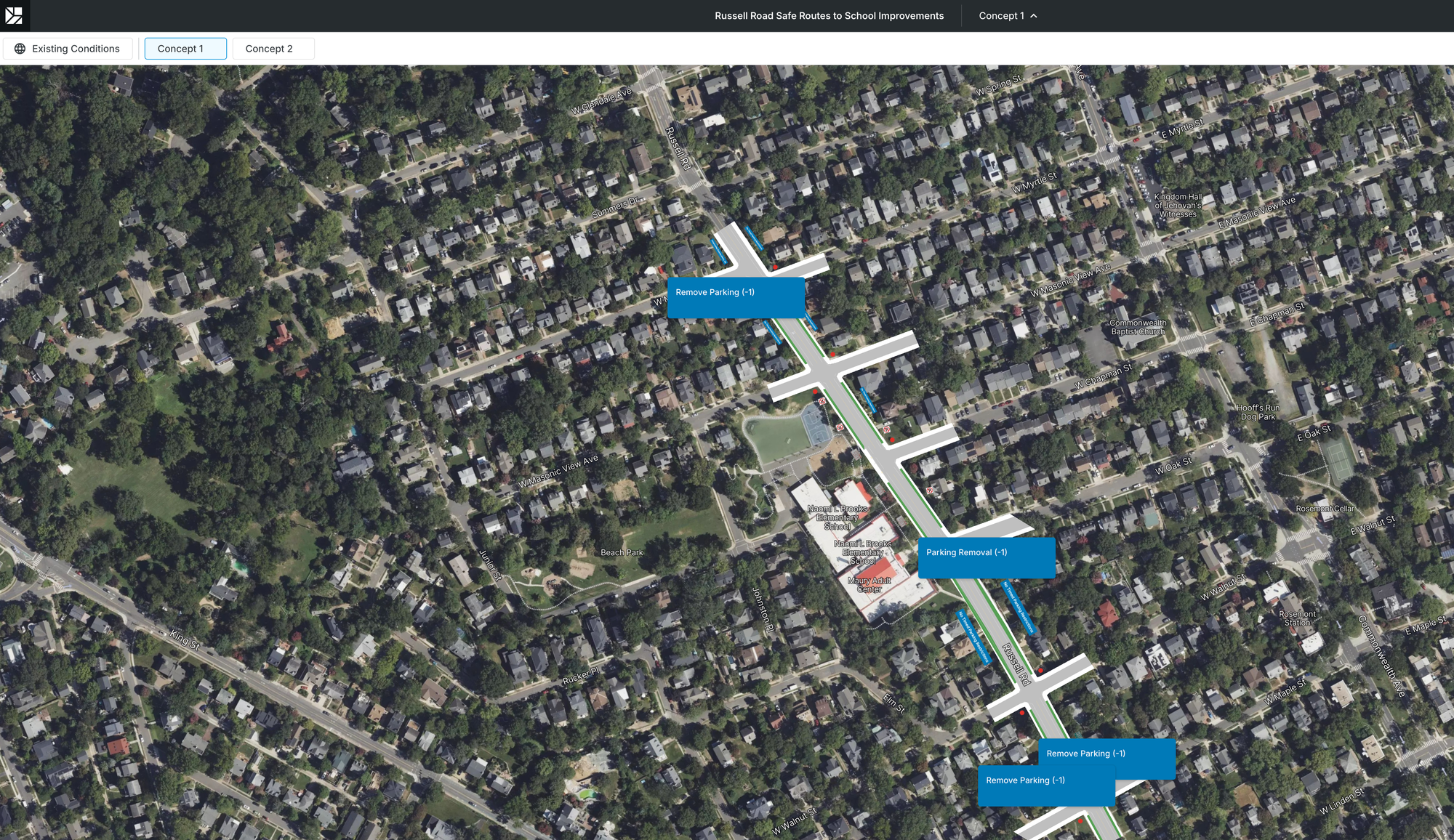
After receiving 170 comments during a community engagement period, city staff scaled back their parking removal proposal and added two parking spaces on the 600 block of Russell Road, resulting in a net loss of two parking spaces — a significant reduction from the original proposals. The revision reflects what staff described as a deliberate effort to ensure the project "does not result in a loss of available on-street parking for Brooks Elementary staff and faculty."
The board meets at 7 p.m. Monday, July 27, at the Department of Transportation and Environmental Services, 2900 Business Center Drive. The meeting is also available via Zoom. The full docket and meeting details are available here.
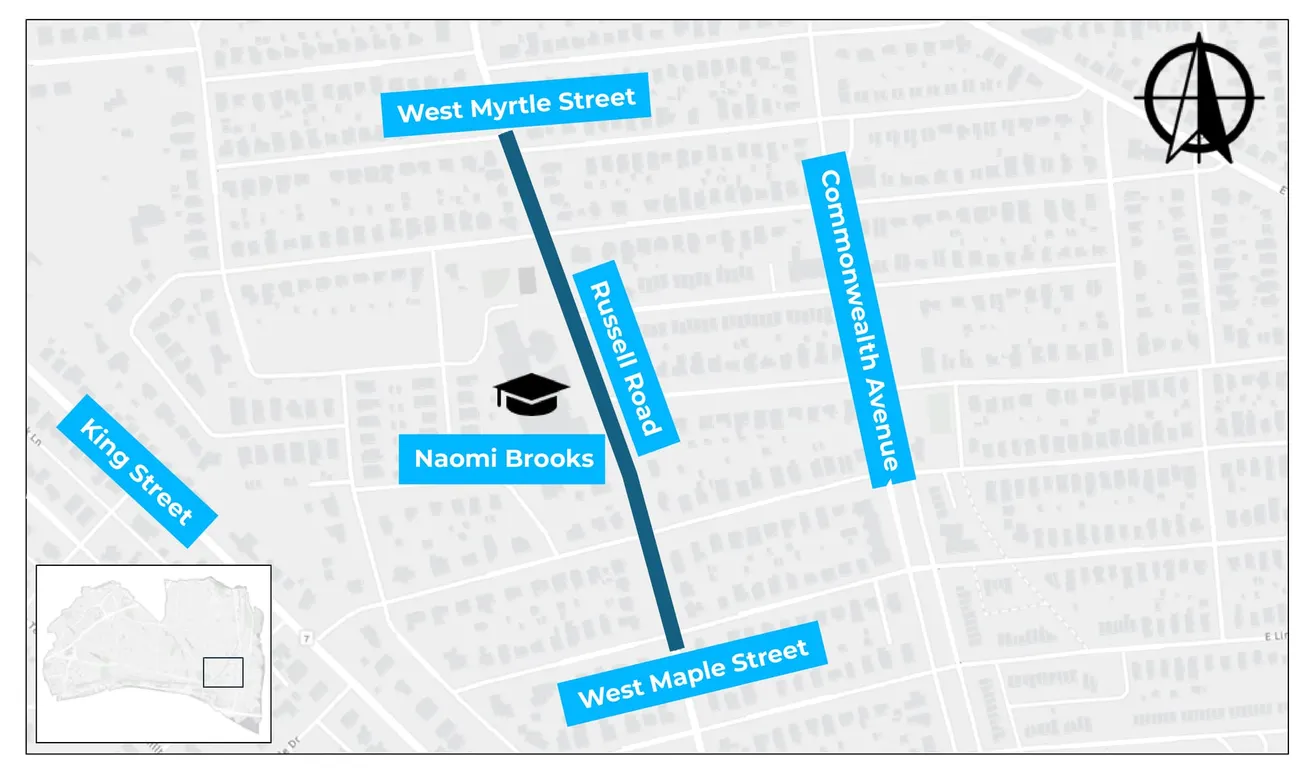
The project, which The Alexandria Brief first reported in June, focuses on Russell Road between West Myrtle and West Maple streets — a stretch the city has identified as a safety priority following a 2017 Safe Routes to School walk audit. According to city data, eight crashes have occurred on the corridor since 2017, two resulting in injuries. One resident wrote that this year alone, three vehicles struck a school bus stopped in front of Naomi Brooks while trying to pass it. The Alexandria Brief has not been able to independently verify that claim.
What the city is actually recommending
The staff recommendation going to the board Monday is a revised version of Concept 1 — the more conservative of the two options originally presented. The median refuge islands proposed under Concept 2 are not included.
The specific parking modifications staff are recommending:
- Removal of one on-street parking space on the 800 block of Russell Road
- Addition of two on-street parking spaces on the 600 block of Russell Road
- Removal of one on-street parking space on the 500 block of Russell Road
- Removal of two on-street parking spaces on the 400 block of Russell Road
That is a net removal of four spaces and a net addition of two spaces — a net loss of two spaces — significantly fewer than the four to 19.5 spaces originally proposed. Staff said they identified the opportunity to add parking on the 600 block after reviewing community feedback.
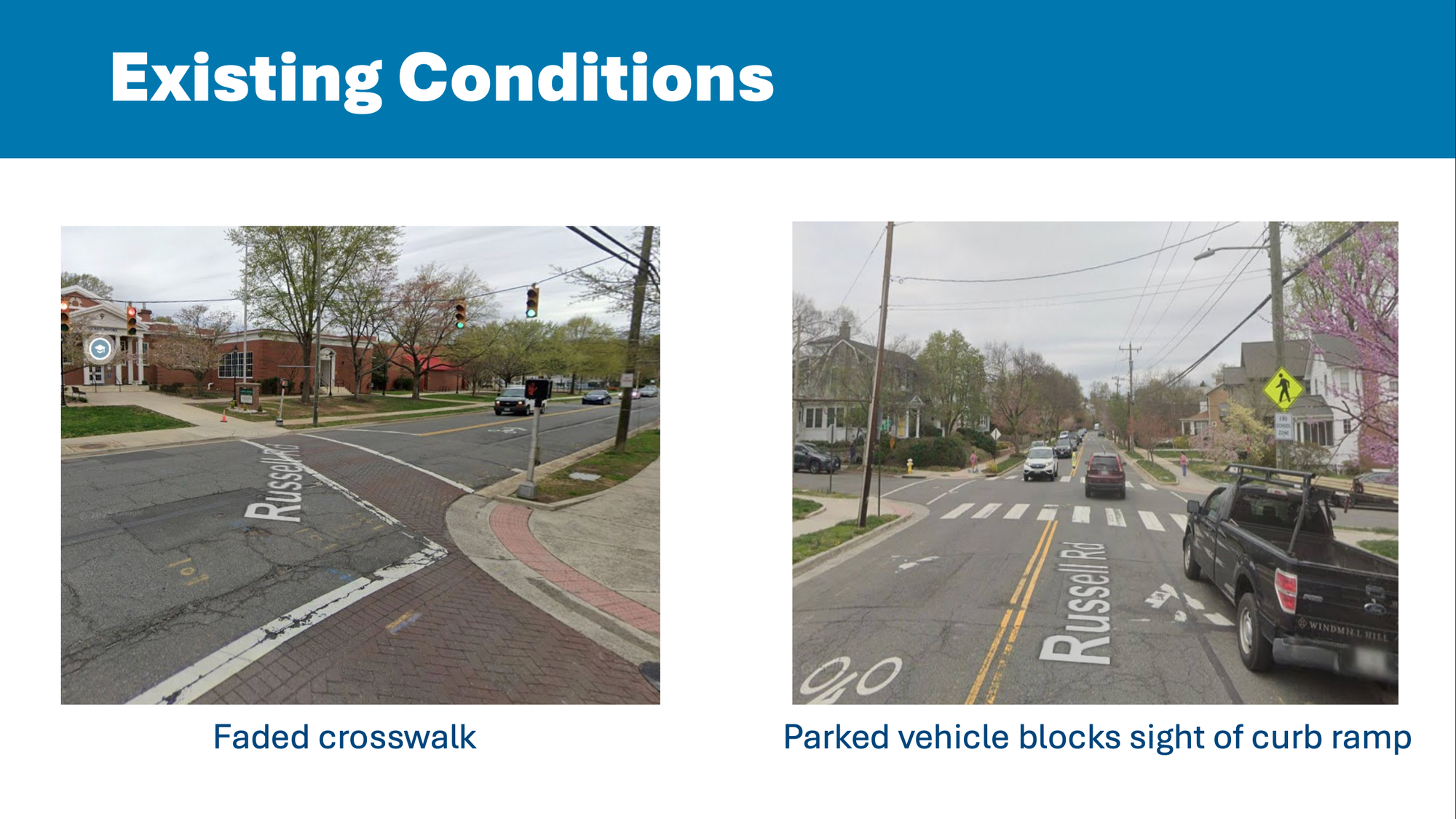
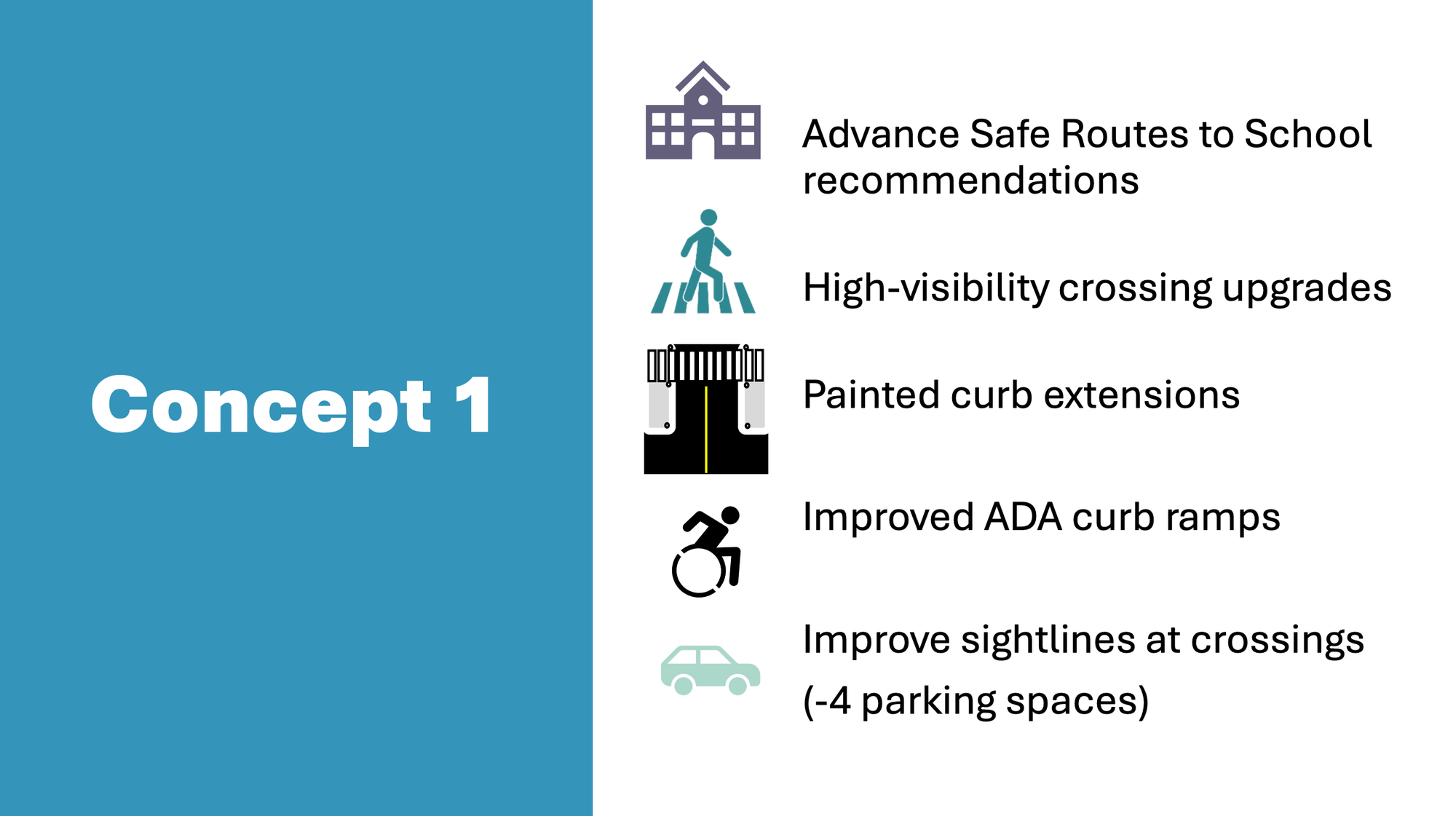
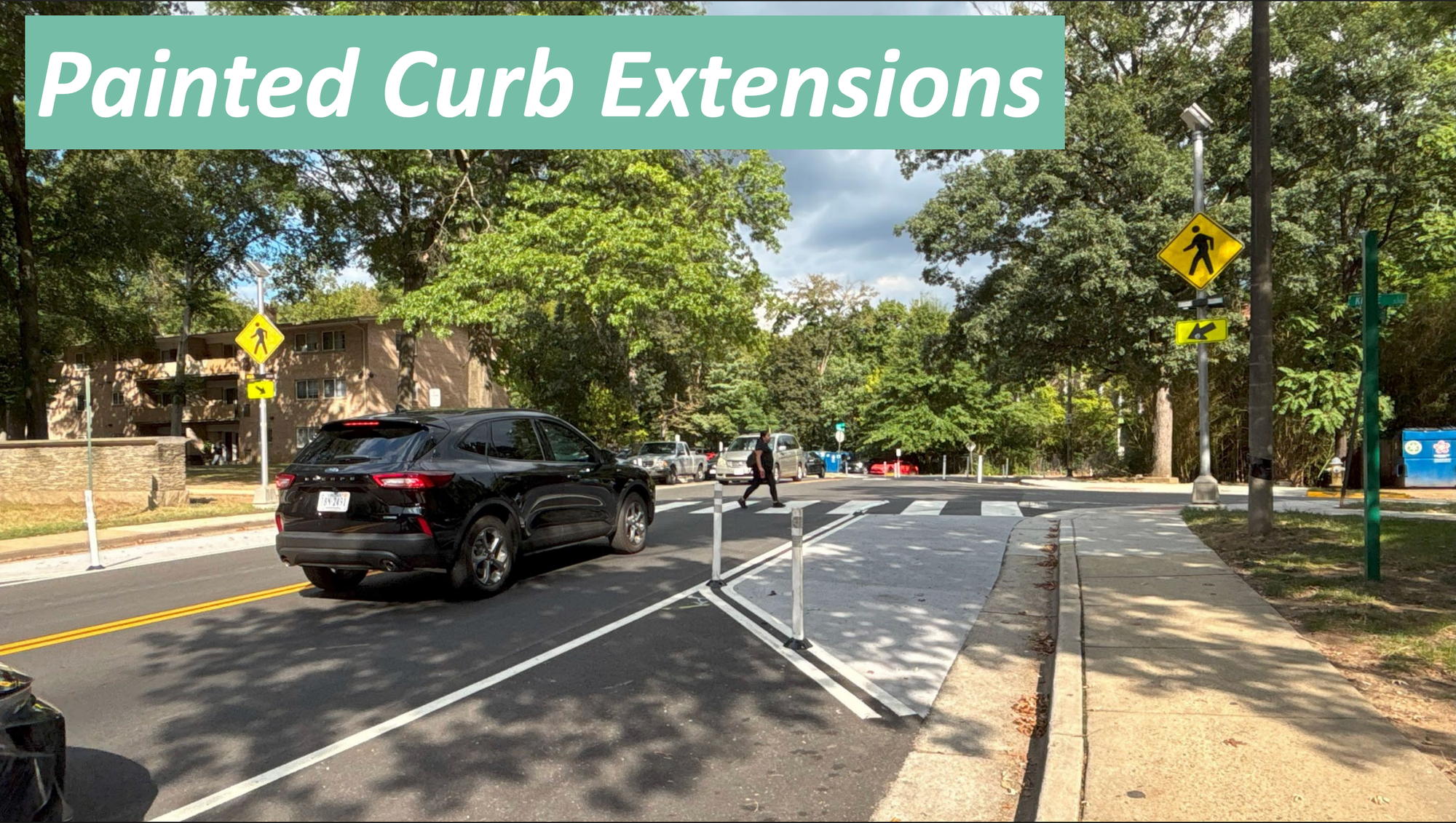
The parking modifications are needed to create space for pedestrian crossing enhancements. According to the docket, the recommendation covers painted curb extensions, high-visibility crosswalk markings and improved ADA curb ramps at six intersections along Russell Road, plus a new pedestrian crossing at West Chapman Street — a crossing residents requested during the comment period.
Raised crosswalks, which the 2017 walk audit recommended at West Masonic View Avenue, remain unfunded and may be considered in the future as funding allows.
What the city's data shows
Before the comment period opened, the city presented the following data at a June 8 meeting with the Rosemont Planning, Environment, Land-Use and Transportation Committee:
- Average daily traffic: 7,327 vehicles
- 85th percentile speed: 25 mph — meaning 85% of drivers travel at or below that speed, which is within the posted limit
- Highest recorded speed: 45-49 mph, nearly double the school zone limit
- Available parking spaces: 122
- Highest observed parking occupancy: 34%
- Crash history: 8 total, 2 with injuries, since 2017
The city also conducted a parking occupancy study on midweek school days, surveying morning, evening and nighttime periods. Parking utilization peaked at 34% — meaning roughly two-thirds of spaces remained empty even during the busiest periods. Most observation periods showed occupancy between 15% and 28%.
Notably, the city's own stated project goals include maintaining parking where needed for residents and teachers — acknowledging the parking concern as a design objective, not merely a community complaint.
Two original concepts, a clear divide — and a revised recommendation
Staff originally presented two design concepts during the public comment period, which closed June 17.
Concept 1 would have removed four parking spaces and added painted curb extensions with flexible posts at intersections. Concept 2 would have removed 19.5 spaces and added raised concrete median refuge islands at intersections.
The comment period generated 170 responses via email and the city's interactive online mapping tool. Of those who took an official position, roughly seven in 10 expressed support for the project. Staff said the primary feedback they heard included broad community support for Safe Routes to School recommendations, concern from teachers about maintaining parking, requests for traffic calming in addition to speed cushions, and a request for a new crossing at Russell Road and West Chapman Street.
After reviewing that feedback, staff identified the opportunity to add parking on the 600 block and recommended a revised Concept 1 — dropping the median islands entirely and restructuring the parking modifications to achieve a net loss of two spaces impact on the corridor's parking supply.
The divide in the community was not simply pro-safety versus anti-safety. Nearly every letter expressed support for improving pedestrian conditions near Naomi Brooks. The disagreement centered on how much parking to remove, whether the speed tables should stay and whether the city's nearly decade-old underlying data justifies permanent infrastructure changes.
Voices in support
Several residents and advocacy groups urged the board to approve robust safety changes.
Becky Hammer, a Rosemont parent whose daughter attends Naomi Brooks and who walks and bikes through the project area daily, said visibility at intersections is a genuine safety problem. "When cars are parked right up to the corner, it can be hard to see whether there's a car coming down Russell until you're already out in the crosswalk," she wrote. "By then, it's hard for drivers to slow down fast enough." Hammer said she and her daughter have had to jump back to avoid being hit multiple times.
Jacquelyn Kittredge, a 29-year Alexandria resident, echoed that concern. "Parked cars near these intersections made visibility very difficult as a driver, pedestrian and cyclist," she wrote in support of Concept 2.
Jordan Eccles, a West Oak Street resident whose daughters walk to Naomi Brooks, cited the city's own parking study. "The parking on this road is underutilized per your survey and the increased visibility for the crossings is critical for safety," he wrote.
The Washington Area Bicyclist Association and the Alexandria Bicycle and Pedestrian Advisory Committee both submitted formal letters supporting Concept 2, recommending the city add dashed green bike lanes across Russell Road at Walnut Street. WABA noted that the Walnut Street intersection is identified in Alexandria's Pedestrian and Bicycle Master Plan for sharrows.
Marta Schantz, an East Chapman Street resident whose son bikes to Brooks daily, supported Concept 2 and requested additional bike racks at the school — noting that on Fridays the racks are so full that children lock their bikes to trees.
Tom Zichelli, a Maple Street resident, described watching his son nearly get hit crossing Russell during afternoon rush hour. "Traffic is completely stopped one direction while the oncoming lane is full speed," he wrote. "You have to cross halfway and stick your neck out to see the traffic." He also called for a weight limit on Russell Road to restrict large commercial trucks from cutting through the neighborhood.
Voices opposing or seeking modifications
Opponents raised a consistent set of concerns: the crash data doesn't clearly connect to school-time pedestrian safety, the 2017 walk audit is nearly a decade old, teachers at Naomi Brooks depend on street parking because the school has no dedicated lot, and removing parking could push overflow onto already stressed side streets.
Tim Peterson, a Russell Road resident, questioned the entire premise. "7 crashes in 9 years — but no mention of whether any of these crashes were around school time or posed a danger to any kids," he wrote. "Less than one crash a year is not a crisis that requires disadvantaging your residents." Peterson forwarded his letter directly to all seven members of City Council. He proposed renaming the project the "Russell Road Parking Removal Project" as a more neutral description. The staff report puts the crash count at eight.
Lisa Falleroni submitted a detailed seven-point opposition letter focused squarely on school staff. "Naomi Brooks ES is one of the few schools in the city without a staff parking lot," she wrote. "Removing all on-street parking within immediate proximity leaves teachers and support staff with no viable place to park within a three-block radius. This is not a minor inconvenience. It is a functional barrier to accessing the workplace."
Falleroni's letter was submitted during the comment period, when Concept 2 would have removed 19.5 spaces. The staff recommendation now before the board would remove four and add two.
Deanna Rohrer, a kindergarten teacher at Naomi Brooks who commutes from Washington, D.C., submitted a similar letter. "A plan that makes it materially harder for teachers to access their workplace will discourage applicants, increase turnover, and create inequitable burdens on staff who cannot walk, bike, or take transit," she wrote.
Robert Haralson, who has owned his home on Russell Road since 2007, directed his letter to City Council members and called the project "a shocking lack of rigor," arguing the 2017 walk audit relied on outdated data and that the city had not accounted for the cumulative impact of parking removal on both Russell Road and nearby Braddock Road.
Nancy Lopez, a West Oak Street resident, said she has never felt unsafe crossing Russell Road as a pedestrian and raised concern about Concept 2's effect on rush-hour traffic. "Cars routinely back up from King Street past Oak Street between 3:30 and 6 p.m.," she wrote. "Installing a median on Russell Road at intersections will further gridlock."
David Marsh, a 28-year Rosemont resident who has walked Russell Road thousands of times including daily trips with his own children to Naomi Brooks, said he has not personally observed recurring crossing problems at the locations where parking removal was proposed. "I believe the city should exhaust all reasonable safety alternatives before removing additional residential parking," he wrote.
The speed table question
Across the comment letters — from supporters and opponents alike — the single most consistent concern was what happens to the speed tables currently installed on Russell Road.
Armita Cohen, a Linden Street resident whose children walk to Naomi Brooks and George Washington Middle School daily, argued the speed tables are doing exactly what they are supposed to do. "The speed tables are effective at getting cars to slow down and let us pass," she wrote. "Removing speed tables will only allow cars to drive faster."
Diana Heath, a West Myrtle Street resident with two children at Brooks who walk to school, raised a specific problem: cars are already swerving around the speed tables. "During most times of day when traffic is light, cars often swerve around the speed humps into the EMS openings, creating unsafe conditions," she wrote.
John Hatton, a Russell Road resident, said removing speed tables would be "the exact opposite" of improving safety. "Some cars already drive dangerously fast at times, and the speed lumps are the only thing keeping speeds at a reasonable level," he wrote.
In response to a direct question from a resident in June, city staff confirmed that both original concepts proposed to remove speed tables, with the new treatments intended to replace their traffic-calming effect. However, staff added that the treatments "do not need to be exchanged for one another" and that after the comment period closed, they would explore retaining speed humps alongside the new treatments. That clarification was not reflected in the original public-facing materials, leading several residents to raise it as a transparency concern. The staff recommendation going to the board Monday does not explicitly address the speed table question.
A question of data and process
Several residents — including some who support the project's goals — raised concerns about the age of the underlying data and whether the engagement process was adequate.
Ben McGinnis, a Rosemont parent, submitted a series of technical questions asking whether the city had collected current speed and volume data, whether crosswalks would be raised, and whether the city planned to measure outcomes before and after construction. City staff answered each question in writing, confirming that speed data had been collected and that post-construction data collection is standard practice.
John Leary, a 403 Russell Road resident whose family has lived there since the house was built in 1928 and who served as PTA president when his sons attended Naomi Brooks, asked staff to extend the comment period and hold an in-person walking tour before making permanent changes. He also raised the question of whether the 2017 walk audit's short-term recommendations — including school-zone beacon repair and crosswalk restriping — had ever been implemented. The staff report notes that Commonwealth Avenue recommendations from the same audit were implemented in Fall 2021.
The Rosemont PELT committee, which met with city staff on June 8, suggested two ideas for addressing teacher parking: giving teachers "resident" stickers allowing all-day parking in zones currently limited to three hours, and opening two vacant lots on East Linden Street near a culvert for staff use.
How the proposal evolved
The project shifted significantly between its initial rollout and what the board will consider Monday.
The original comment deadline of June 10 was extended to June 17 after residents complained they had received notice too late and that the interactive online mapping tool was too difficult to navigate.
Staff originally presented two concepts that would have removed between four and 19.5 parking spaces. After 170 comments and strong feedback about teacher parking, staff refined the recommendation to a net loss of two spaces — removing spaces at three locations but adding two on the 600 block, where the opportunity was identified during the review process.
On speed tables, the original public-facing materials implied removal. After a resident asked directly in writing, staff clarified the tables do not need to be exchanged for new treatments and could potentially be retained alongside them.
The city also published its parking occupancy study after residents demanded access to the underlying data, with some saying they should not have to file a FOIA request to comment on a public project.
What comes next
If the Traffic and Parking Board approves the parking modifications Monday, the project would move into final design refinement. Construction is anticipated in spring 2027 as part of a planned repaving of Russell Road. The city has said it will collect before-and-after data on vehicle speeds and, if post-implementation data shows conditions have not improved, will explore reinstalling the speed tables.
The board meeting is open to the public. Comments can be submitted in advance to trafficandparkingboard@alexandriava.gov by noon Monday. The Zoom registration link is available at alexandriava.gov.
The Alexandria Brief previously reported on this project on June 2, 2026. More information on the Russell Road Safe Routes to School project is available at alexandriava.gov/transportation-planning/project/russell-road-safe-routes-to-school-improvements.