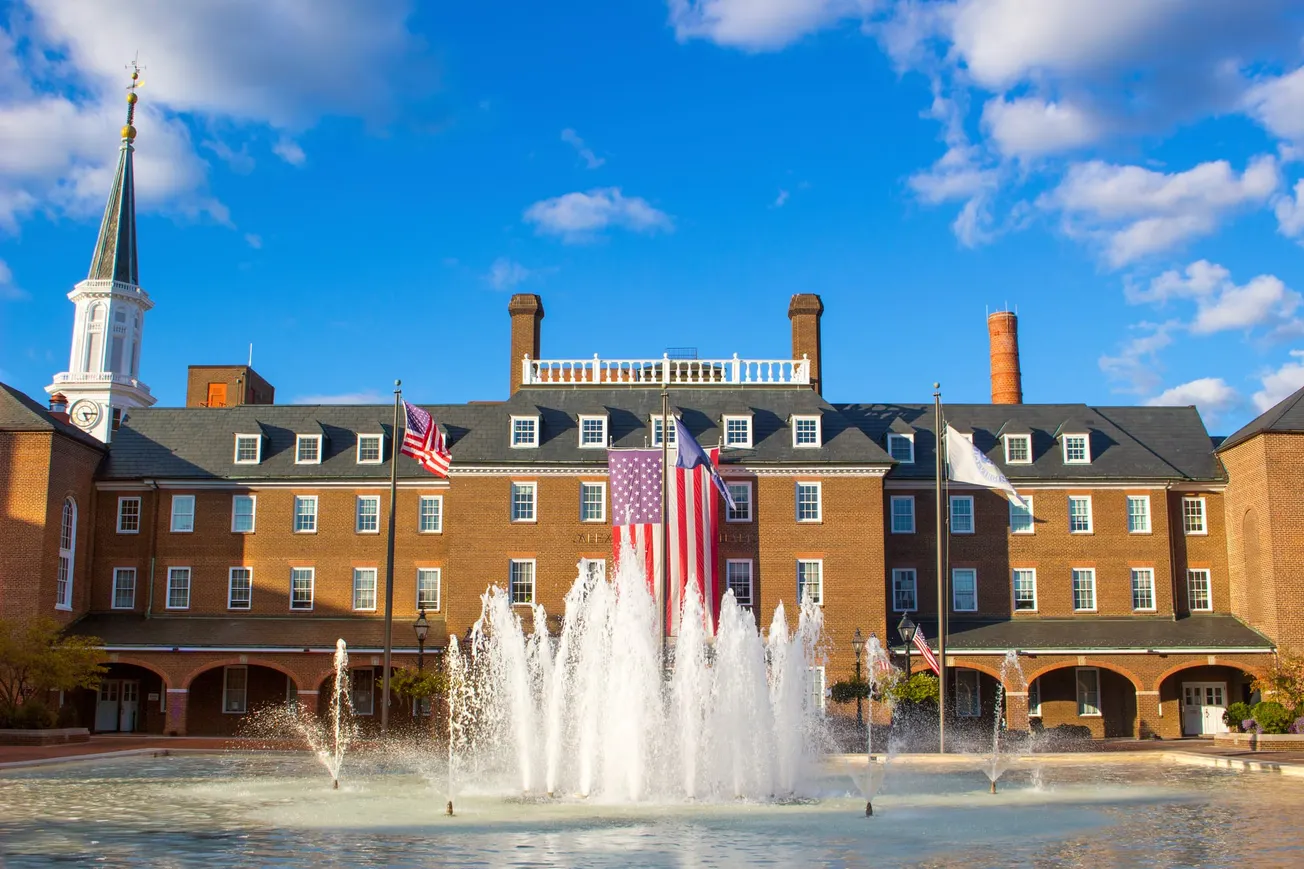
ALEXANDRIA, Va. - On July 14, 1965, the Board of Architectural Review for the Old and Historic Alexandria District approved the design for the plaza, fountain and subterranean garage at Market Square. The decision was part of a sweeping urban renewal project aimed at revitalizing six deteriorated commercial blocks in the downtown area — and it came at a cost.
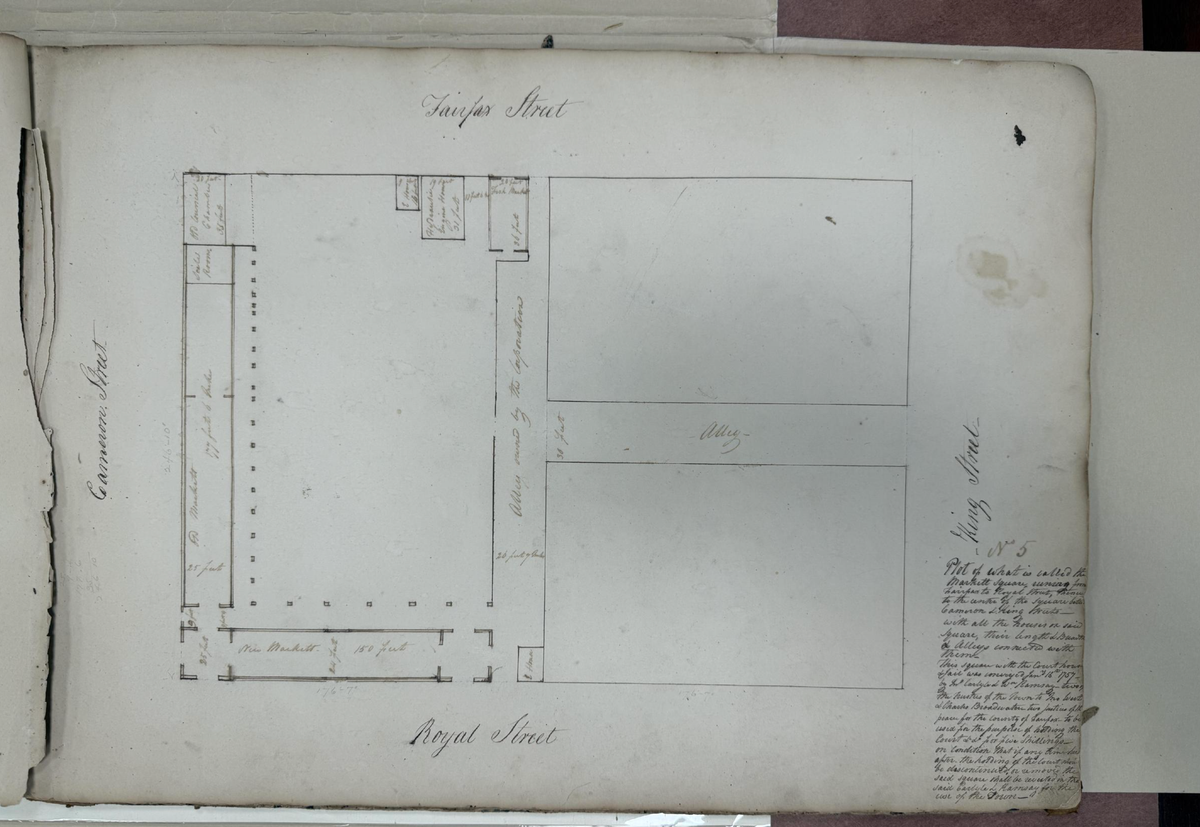
Dozens of early buildings fronting King, North Royal and North Fairfax Streets were demolished. So were the structures and market stalls that had clustered near City Hall for two centuries, a jumbled, layered marketplace that had grown largely invisible to the surrounding streets. In their place came the open civic plaza that Alexandrians recognize today — clean lines, a fountain, a parking garage beneath.
It was controversial even then. Critics questioned what was being sacrificed in the name of renewal. Supporters argued the city needed an open gathering space, not a deteriorating commercial block. The Board approved the design. The buildings came down.
Sixty years later, the consequences of that decision are still being sorted through. A 242-page documentary study published last month by the Office of Historic Alexandria — funded by a Commonwealth History Fund grant — documented what Market Square looked like before urban renewal erased it. Researchers identified at least 50 slave sales that took place on that block between 1749 and the Civil War. Much of the physical evidence of those transactions, and of the buildings where they occurred, is gone — cleared in the years following the 1965 approval.
Now the block is under construction again. The current renovation of City Hall and Market Square is the first major work on the site since the urban renewal era, and the new documentary study was commissioned specifically to shape how the city interprets and presents the space going forward. The history that 1965 buried, the city is now trying to recover.
 Ryan Belmore