Table of Contents
ALEXANDRIA, Va. - A sweeping new documentary study of Alexandria's Market Square traces the block's history from its founding in 1749 through the urban renewal era, with extensive new research into its role as a site where enslaved people were bought, sold and punished — findings that will shape how the city interprets the space during the current renovation of City Hall.
The 242-page report, written by Dr. Greg A. Beaman and published as Alexandria Archaeology Publication No. 149, was funded by a Commonwealth History Fund grant from the Virginia Museum of History & Culture awarded to the Office of Historic Alexandria in February 2025.
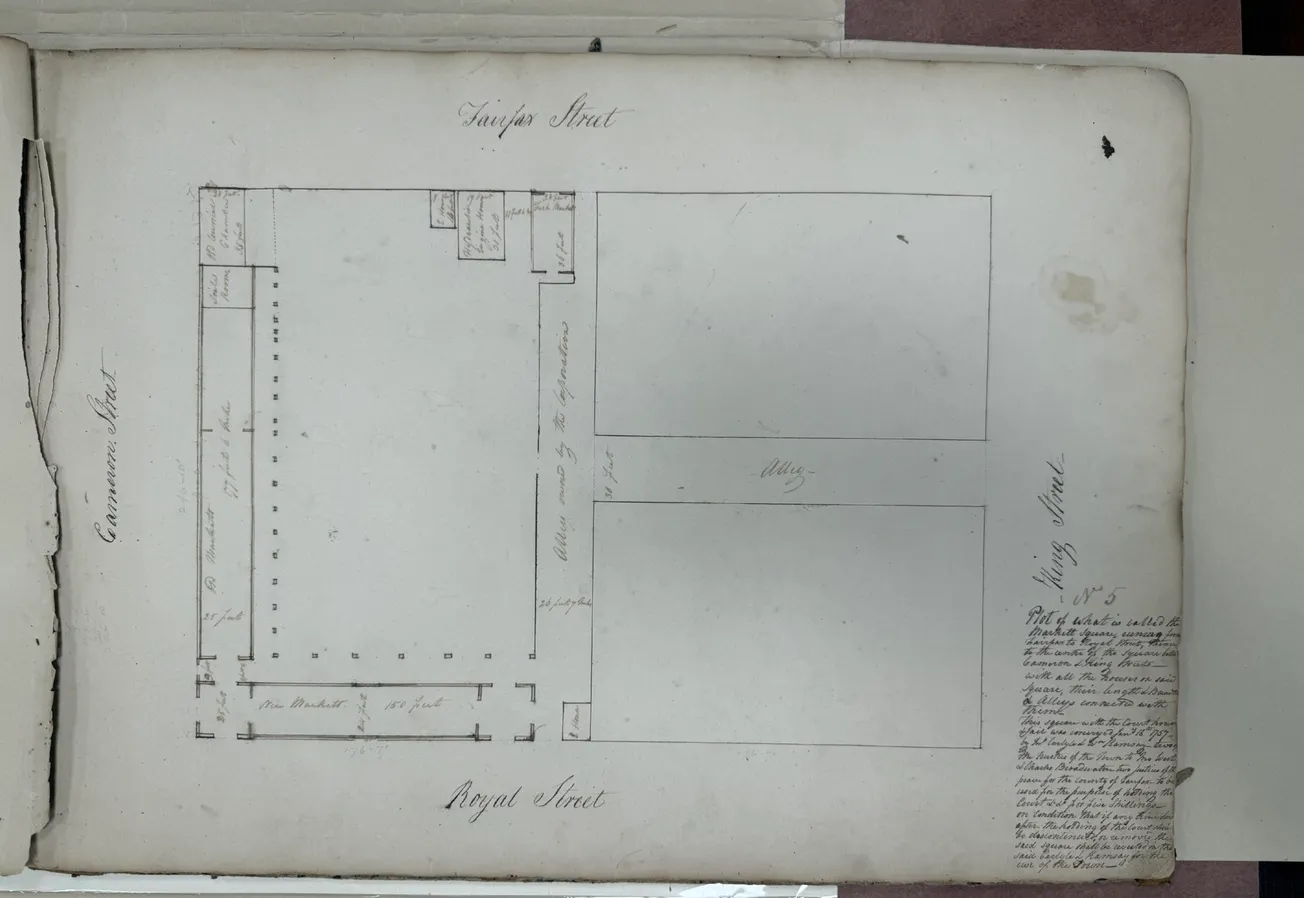
Market Square has served as the seat of Alexandria's local government and a key economic hub for more than 275 years. The study documents the block's built history — including the Market House, the Fairfax County Courthouse, a jail with a pillory and whipping post, a schoolhouse, fire companies, a fish house, taverns and horse markets — and traces how the block was subdivided over time through chains of title recorded in GIS.
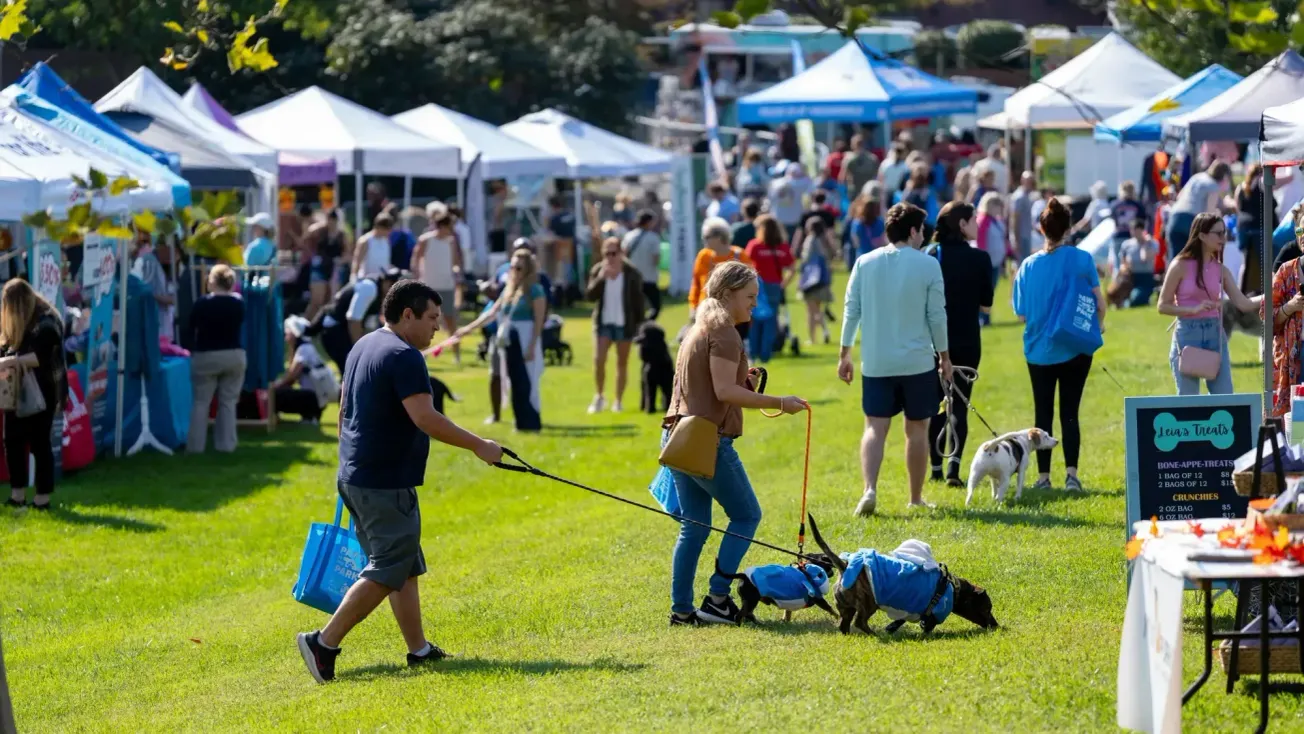
But the study goes well beyond architectural history. Its most significant contribution is documenting the block's role in slavery. Research uncovered at least 50 sale events involving as many as 150 individuals at Market Square — and with widespread loss of records, the actual number is likely much higher. The report traces that history from Alexandria's founding through Emancipation, Reconstruction and the emergence of Jim Crow, and into the twentieth century, when the Gadsby Urban Renewal Program of the 1960s demolished 25 historic structures to create the wide open plaza that Alexandrians know today as the site of the Saturday Farmers Market.
The report includes historical sketches of individual people whose lives intersected with the square. Among them are Amy and Strephon, two enslaved people sold at one of the largest known public auctions at Market Square in November 1789, when sixty men, women and children were auctioned in front of the Fairfax County Courthouse. Strephon was later publicly whipped at the town whipping post on the square after being convicted of theft, then transported to an iron furnace — only to jump from the wagon and flee. Amy had a legal right to freedom under Scottish law while living in Glasgow with her enslavers, but was returned to Virginia and sold at the same 1789 auction.
The report also documents how, alongside the violence of slavery, a sizable and increasingly prosperous Black community — both free and enslaved — used Market Square as a space to exercise economic liberty, building their own futures and working toward buying their freedom or that of loved ones.
The full report is available at alexandriava.gov/go/7216, accompanied by a collection of StoryMaps — including "Between Revolutions," "Enslaved on the Market Block," and "Black Marketers at Alexandria's Market Square" — that use historical maps and images to tell the stories of enslaved and free Black people whose lives intersected with the square.
The research will also be presented at the 2026 Alexandria Forum, "Nothing But Independence: Alexandria and the Revolutionary War," on Sept. 18 at the Alexandria History Museum at The Lyceum. Beaman will present on City Hall and Market Square during the afternoon research highlights session. Tickets are $60, or $40 for Office of Historic Alexandria members and students. More information is available at alexandriava.gov/go/4896.