
Table of Contents
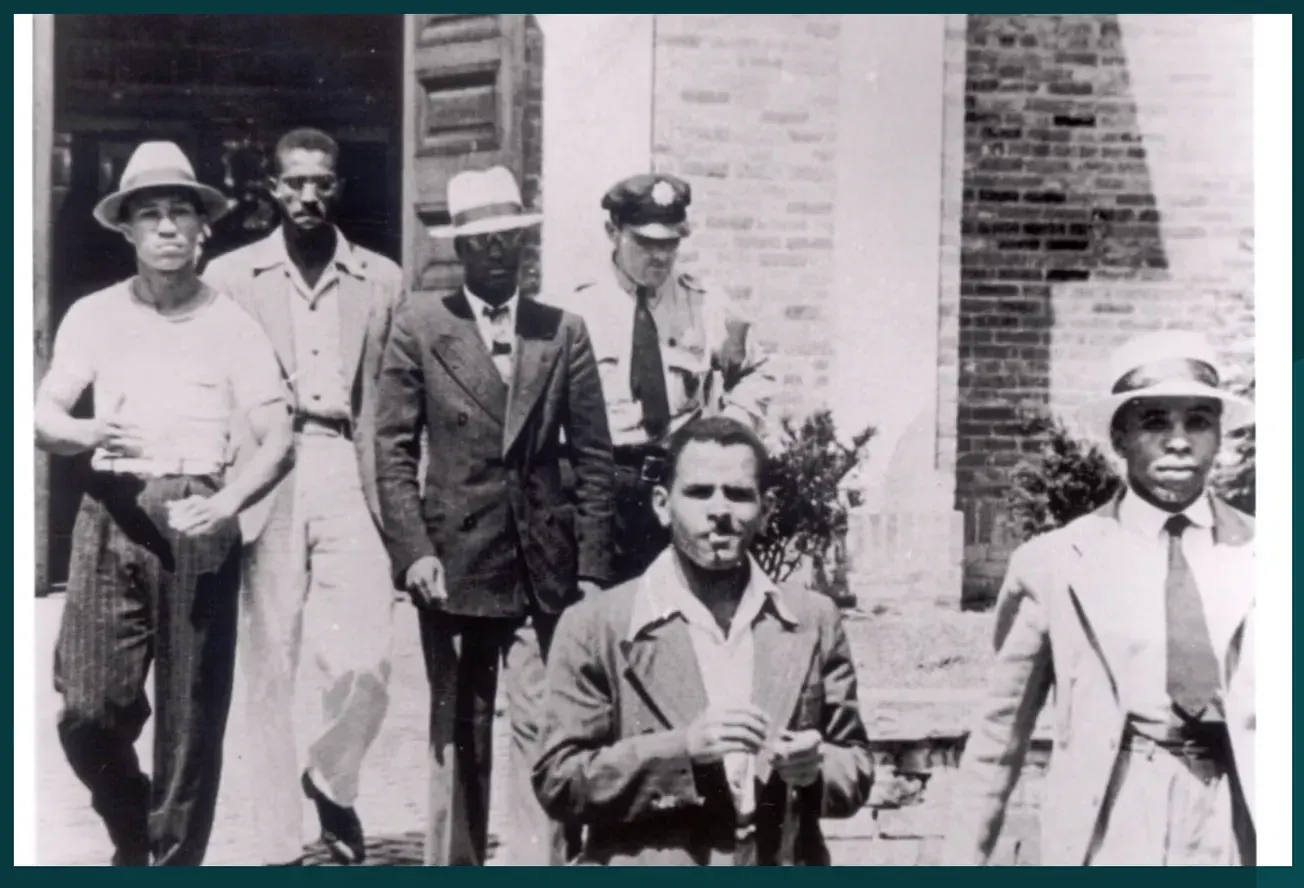
ALEXANDRIA, Va. — On Aug. 21, 1939, five young Black men walked into the Alexandria Library at 717 Queen St., asked for library cards, were refused, and sat down to read. All five were arrested.
The date was not an accident. It was the second anniversary of the library's opening — a building paid for with public money that Black residents were barred from using.
The demonstration is the earliest recorded sit-in protesting segregated access to a public library in the United States, predating the lunch counter protests of the 1950s and '60s by roughly two decades. Most Americans have never heard of it.
The lawsuit came first
Attorney Samuel Wilbert Tucker organized the protest, but he tried the courts before the sidewalk.
Tucker passed the new library daily. As a Black man in Alexandria, he had to travel to Washington to use one. On March 17, 1939, he and retired Army Sgt. George Wilson walked into the Queen Street building and requested a library card application. Library policy was not to issue cards to Black residents.
Tucker filed suit in local court, arguing that Wilson, as a taxpaying citizen of Alexandria, was entitled to one. The case was not heard until Jan. 10, 1940. The judge rejected the petition on technical grounds — but wrote that there were no legal grounds for refusing the plaintiff, or any other bona fide citizen, the use of the library.
The Virginia Public Assemblages Act of 1926 required the races to be segregated within the same facility. By the letter of that law, Black residents had been barred from the Alexandria Library unlawfully.
What the city did instead
Within two days of the ruling, two Black residents applied for cards. They were told a new colored branch was under construction and their applications were under consideration.
That branch opened later in 1940 as the Robert H. Robinson Library — a one-room building. The city built a separate library rather than open the one it already had.
The Robinson Library is now the Alexandria Black History Museum. The Queen Street building is now the library's Kate Waller Barrett Branch.
The anniversary
New America won a two-year, $250,000 grant from the Andrew W. Mellon Foundation this month to build a free digital exhibit on the sit-in, due to launch in 2027 on the Alexandria Library's website. It is being developed with the library and the African American History division of the Office of Historic Alexandria, and built by Reingold, an Alexandria firm.
The exhibit will follow the events through the perspectives of the young people who organized the protest, with oral history videos, photographs, meeting minutes and scanned correspondence from the 1930s.
"Alexandria's 1939 sit-in is an important story that most Americans don't know," said Audrey Davis, who directs the African American History division at the Office of Historic Alexandria.
Rose Dawson, the library's executive director, has been direct about the institution's own role. "The Library has not always been on the right side of history," she said.
A free virtual panel, "Learning from a 1939 Library Protest," runs from noon to 1 p.m. today. Scheduled speakers include Davis, Dawson, New America's Lisa Guernsey and Ted Johnson, Annie Evans of New American History at the University of Richmond, Jennifer Over of Reingold, project consultant Jazmyne Owens, and Nancy Noyes Silcox, who wrote a biography of Tucker. Registration is through the library's website.