Table of Contents
The Alexandria City Council unanimously adopted a new Age Friendly Plan on Tuesday night, approving a five-year roadmap for senior services that city staff say was deliberately designed to flex in response to shifting federal policy.
The plan, prepared by the Alexandria Commission on Aging, spans housing, health, transportation, civic engagement, and outreach — and was crafted, according to a staff memo, to allow the city "to pivot as needed given the upheaval on the Federal level that may affect the implementation of its provisions."
Council members and commissioners raised particular concern on Tuesday night about proposed federal Medicaid work requirements, which, as written, could affect elderly residents who rely on the program. Councilman Canek Aguirre noted the requirements would be "a little ridiculous" for retirees and children. City staff said they are already working with Volunteer Alexandria and other partners to ensure seniors can meet any requirements in a dignified way, should they take effect.
The plan's health goals include protecting Medicaid eligibility for all older adults, promoting wellness and dementia-friendly supports, and expanding access to dental services — a gap advocates have flagged in recent years.
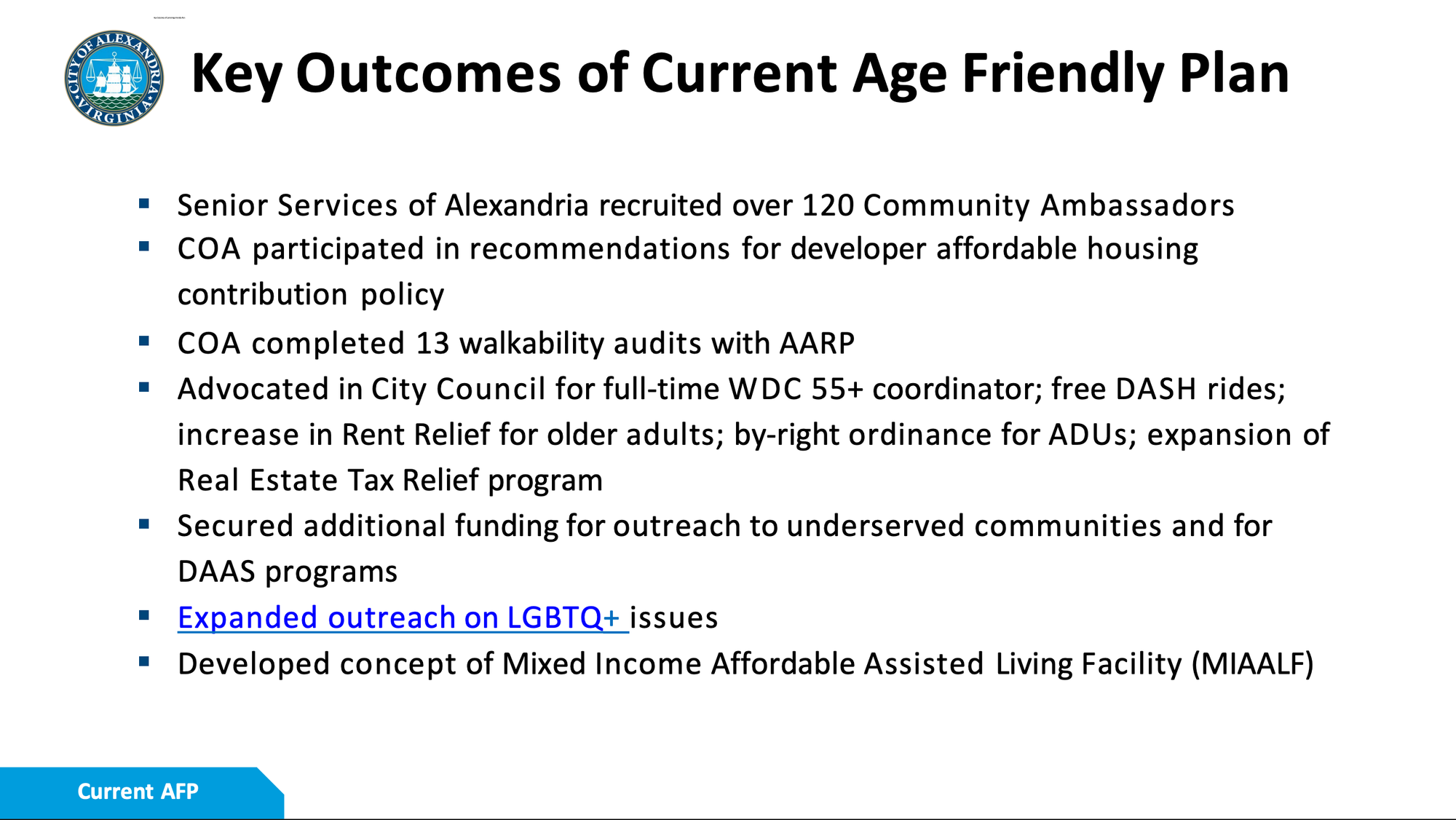
On housing, the plan calls for advocating for a mixed-income affordable assisted living facility, expanding housing affordability options for older Alexandrians, and supporting the ability of older adults to remain in their homes and communities as long as possible. The Commission on Aging also helped shape the city's developer affordable housing contribution policy and has pushed for expansion of the Real Estate Tax Relief program.
The plan was developed through an extensive community engagement process that began with a January 2025 kickoff at Lee Center and included group meetings at Ladrey, Claridge Towers, and the Charles Houston Community Center, as well as a 500-person phone survey and a July town hall.
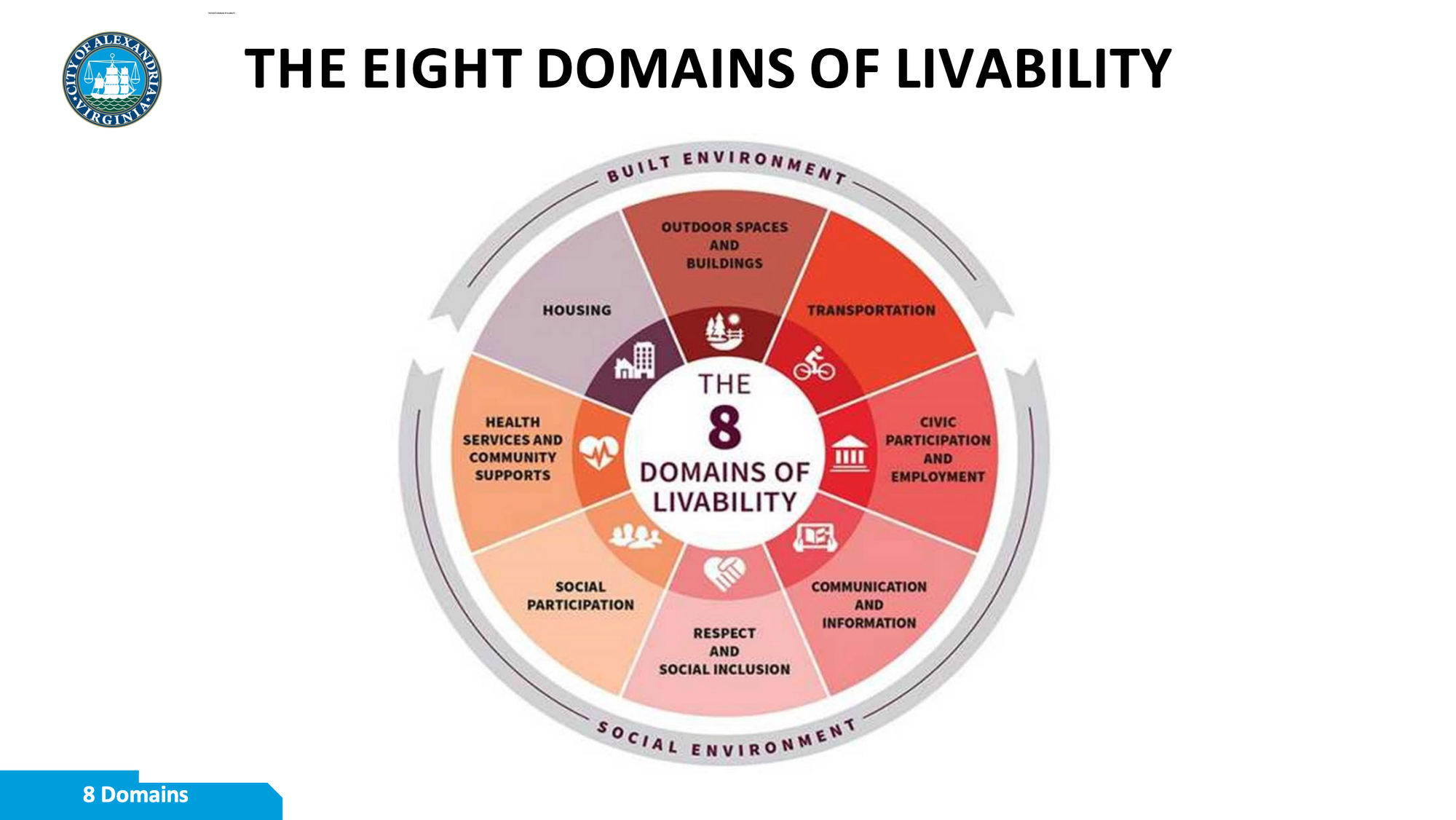
The Commission also noted that Alexandria has received recognition from AARP for its age-friendly work — a designation tied to the WHO's Global Network of Age-Friendly Cities and Communities, which uses eight livability domains to assess community needs.
The plan will be submitted to AARP this spring.