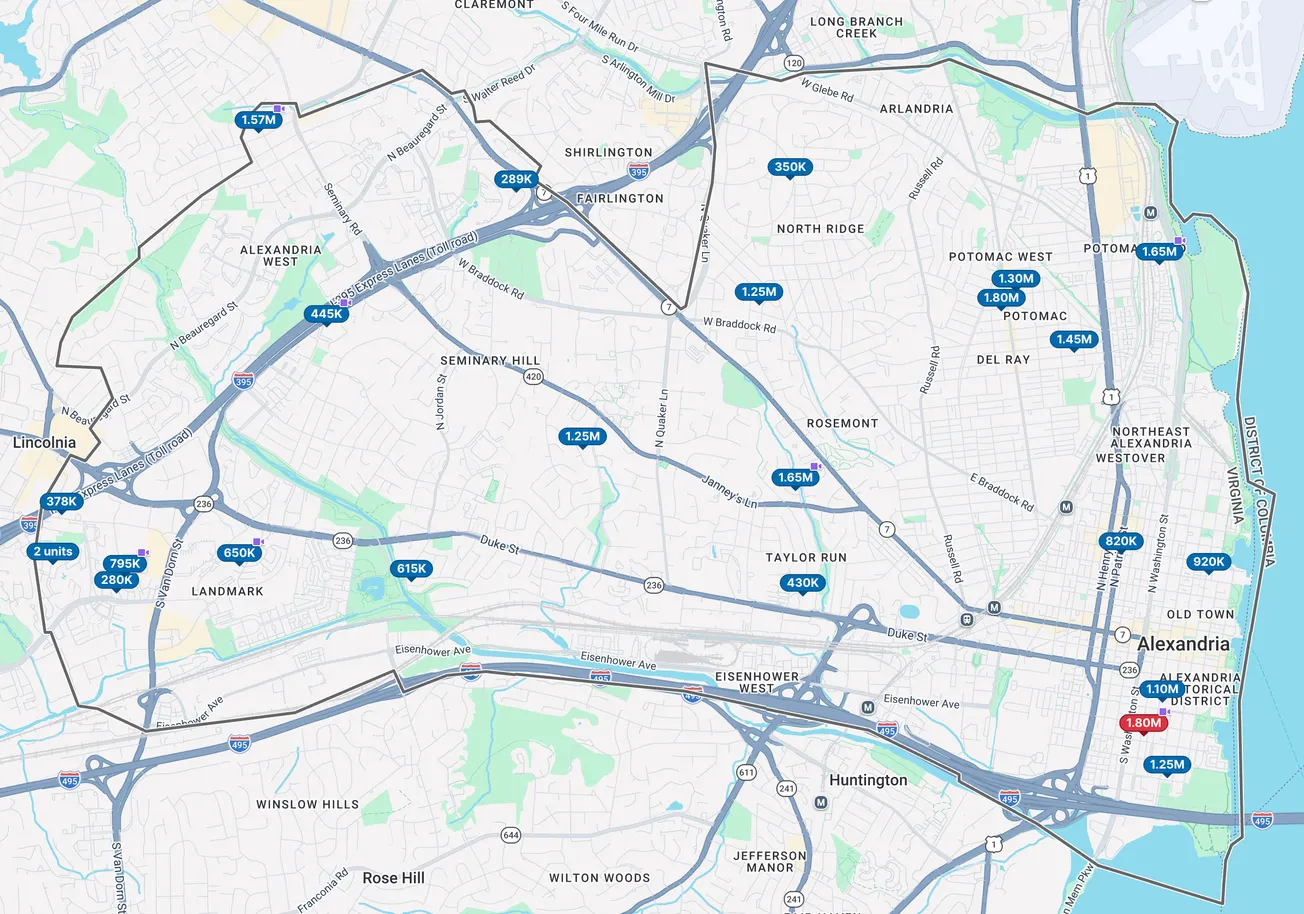
ALEXANDRIA, Va. — Alexandria tenants facing eviction for unpaid rent now have a path to stay in their homes while they pay off what they owe, under a program the city's General District Court adopted July 1.
The Eviction Diversion Program lets an eligible tenant who appears at the first hearing ask the judge for a court-ordered payment plan. If the tenant makes every payment, the judge dismisses the case.
The program operates under a section of Virginia code amended by the General Assembly this year. Chief Judge Donald M. Haddock Jr. notified the local bar of the court's adoption. The city says Alexandria joins a small but growing number of Virginia localities implementing it.
How the payment plan works
A tenant pays at least 10% of the total owed at the first hearing. The rest comes in three installments of 30%, each due by the fifth day of the following three months.
Payments must be made by cashier's check, certified check, money order or electronic funds transfer — not cash or a personal check — and must reach the landlord by the fifth of the month.
Throughout the plan, the tenant must also keep paying regular monthly rent, within five days of its normal due date.
Two protections apply while a tenant is in compliance: late fees cannot be charged, and attorney's fees cannot be passed along until a court finds them reasonable. Attorney's fees also cannot be built into the 10% figure a tenant must bring to the first hearing.
What the plan would require in practice
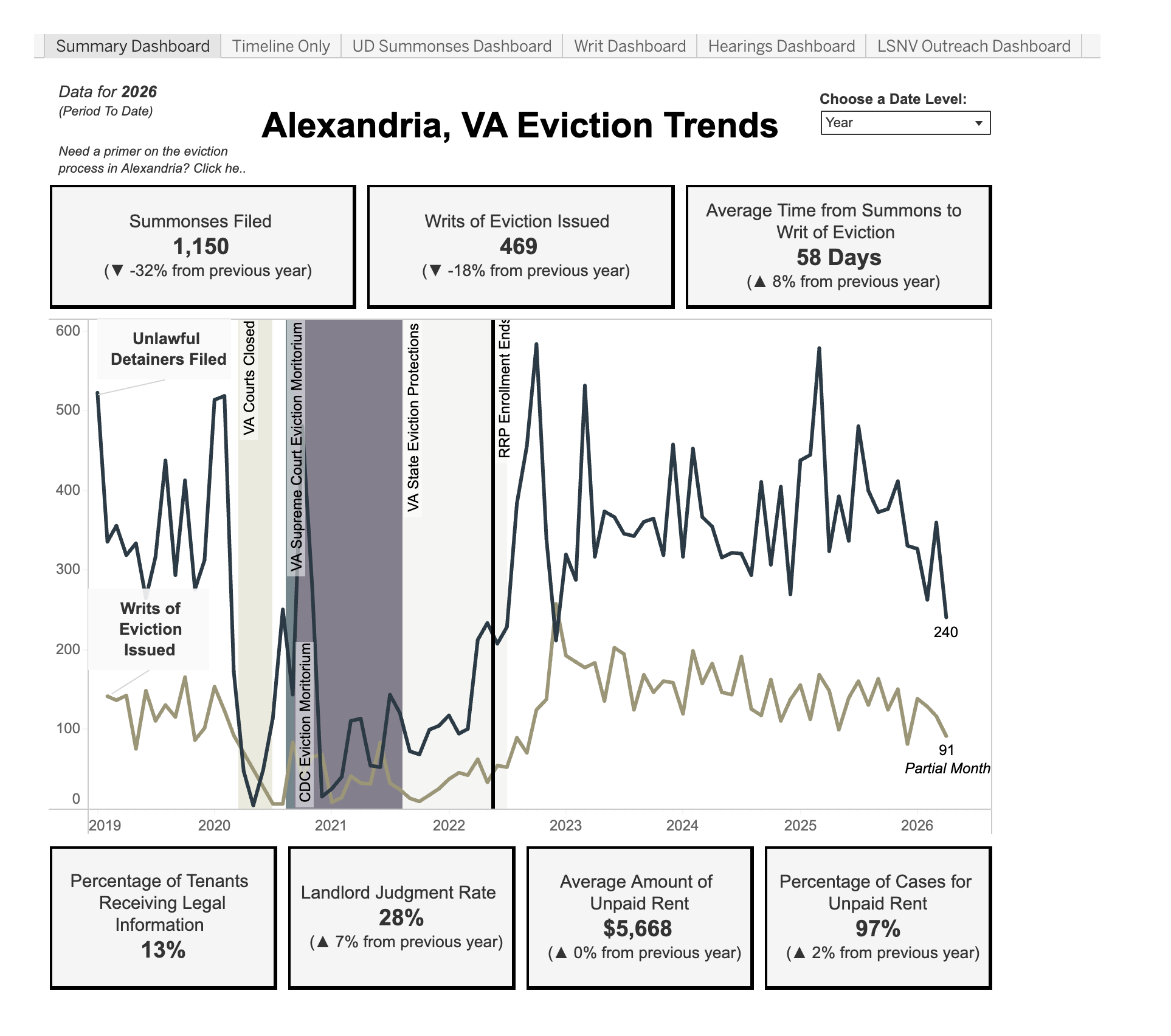
City eviction data give a sense of the numbers involved. The average unpaid rent in an Alexandria eviction case is $5,668, and 97% of the city's eviction cases are filed over unpaid rent — meaning nearly every case on the docket falls into the category the program is designed for.
At that average, a tenant would need about $567 at the first hearing, then roughly $1,700 a month for three months on top of regular monthly rent.
The same data show 13% of tenants received legal information about their case, and landlords obtained judgments in 28% of cases, up seven percentage points from the prior year.
The figures cover 2026 to date and have not been updated since April 1, so they predate the program's July 1 start and cannot yet show its effect. Over that period the city recorded 1,150 unlawful detainer summonses, down 32% year over year, and 469 writs of eviction, down 18%.
The part tenants most need to understand
If a tenant misses a plan payment or falls behind on monthly rent, the landlord files a notice with the court. From the date the landlord signs it, the tenant has 10 days to file a sworn affidavit — and the only thing that affidavit can say is that the payment was in fact made and the landlord failed to acknowledge it. Hardship is not a defense at that stage.
If no affidavit is filed within 10 days, the court enters an order of possession without another hearing.
A tenant has 10 days from entry of that order to appeal. The court does not send formal notice that the order has been entered; the tenant is responsible for confirming the date with the clerk and counting the appeal window from there.
Who qualifies
Under the statute, a tenant must:
- Appear in court at the first docket call
- Pay at least 10% of the amount due, to the landlord or into the court
- Give sworn testimony of income or sufficient funds to complete the plan
- Give sworn testimony explaining why they were unable to pay rent
- Not owe outstanding rent under a payment plan from the last 12 months
- Not have defaulted on a rent payment plan in the last 12 months
- Not have participated in an eviction diversion program in the last 12 months
The timing is unforgiving. The request must be made at the first docket call — the court's notice states it cannot be made beforehand or at a later hearing. A tenant who does not appear cannot be referred.
The sworn statements go on a referral form, either the state's Form DC-4101 or a version adopted by the Alexandria court. Landlords are now required to serve program information with every unlawful detainer summons, and their attorneys must be ready to tell the tenant the exact amount due at the first docket call so the tenant can bring the 10%.
What the program does not stop
A landlord may still seek a money judgment for final rent and damages, and may file a separate unlawful detainer for a lease violation unrelated to rent while the tenant is in the program. Nothing prevents a landlord and tenant from reaching a voluntary payment agreement outside the program entirely.
Where to get help
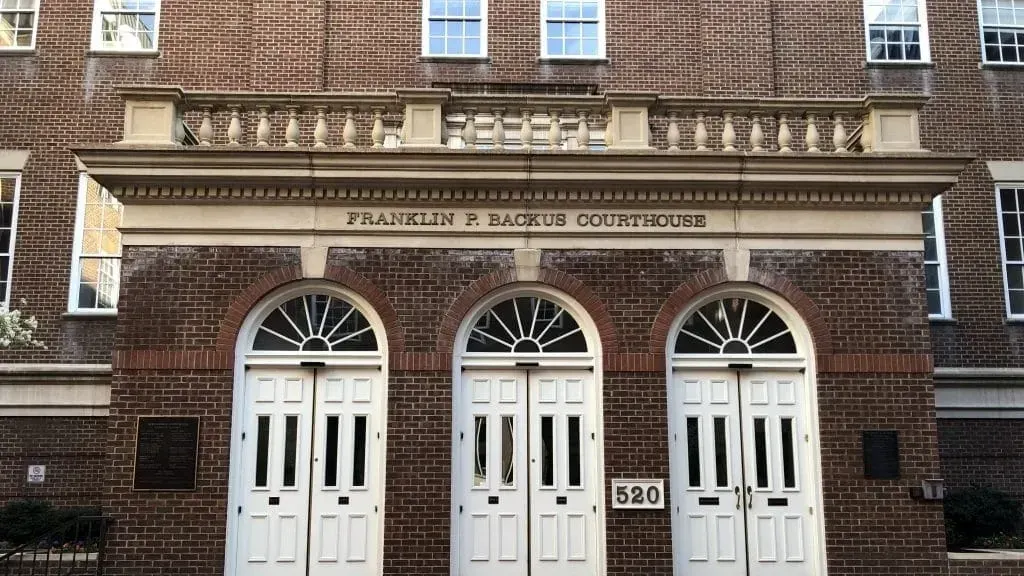
The court clerk's office, at 520 King St. Suite 201, answers questions about court procedure and is open 8 a.m. to 4 p.m. The number is 703-746-4030. Forms are posted at vacourts.gov.
For rental assistance, the city's Department of Community and Human Services can be reached at 703-746-5700, by text at 703-346-5599, or in person at 4850 Mark Center Drive.
The Virginia Poverty Law Center runs an online self-help resource for tenants facing eviction, the Eviction Defense Center, at fightmyeviction.org, with a Spanish version at nodesalojo.org. Local legal aid offices can be reached at 1-866-LEGL-AID.
Where diversion fits in the eviction process
The Virginia Poverty Law Center describes eviction in Virginia as a nine-step process: a notice of default or termination, a summons for unlawful detainer, a court date, a judgment for possession, a 10-day appeal period, a writ of eviction, an eviction notice from the sheriff, a period of extended redemption, and finally eviction by the sheriff.
The Eviction Diversion Program operates at step three. A tenant must ask for it at the first court date — before a judgment for possession is entered. Once the judge rules for the landlord, that window has closed.
Two other off-ramps exist elsewhere in the process, according to VPLC. At the court date, a tenant in a case filed only over unpaid rent may have the right to pay everything owed and avoid a judgment outright. And up until two business days before a scheduled eviction, a tenant may have an extended right of redemption — paying the full amount owed and staying. VPLC notes both depend on the facts of the case.
If a tenant in the diversion program defaults and an order of possession is entered, the appeal route is narrow: 10 days to file appeal papers and to pay the court all rent owed, in an amount the judge sets.
Correction, Aug. 12: An earlier version of this story listed a Virginia Poverty Law Center eviction legal helpline at 1-833-NoEvict. VPLC closed that helpline three years ago and the number is not active. Tenants can use VPLC's Eviction Defense Center at fightmyeviction.org, or nodesalojo.org in Spanish.