Table of Contents
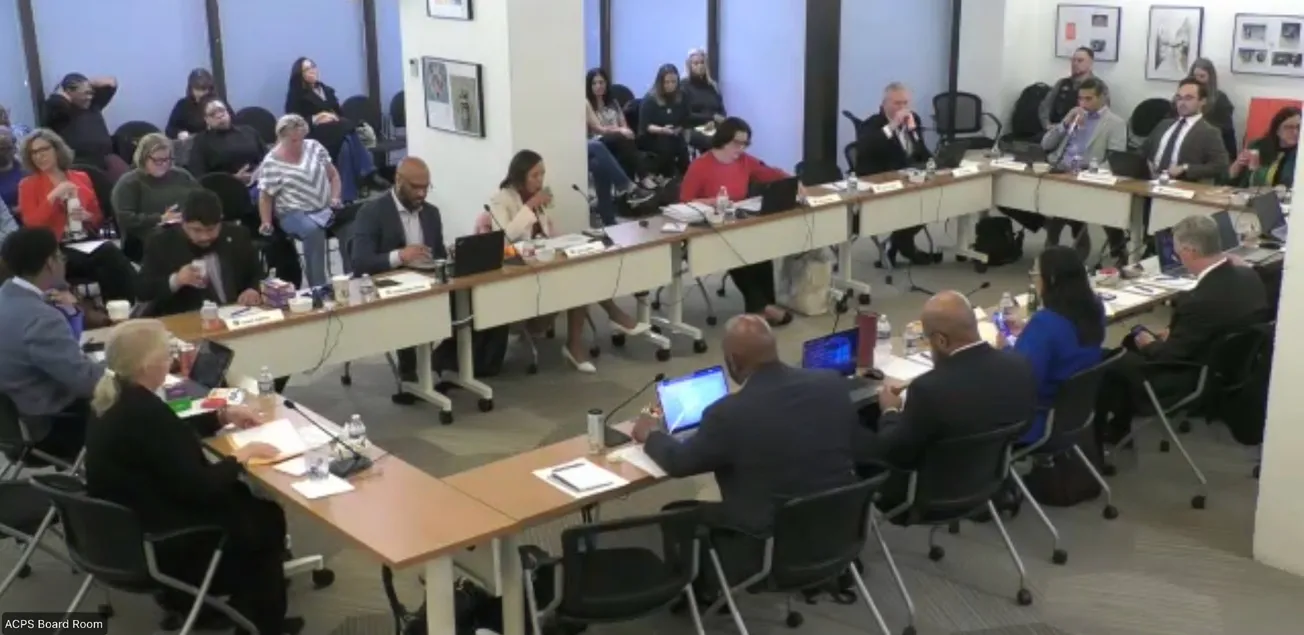
Mayor Alyia Gaskins told a joint City Council and School Board work session Wednesday night that the city learned about Alexandria City Public Schools' tentative collective bargaining agreement with its teachers union from a press release — issued the same day as the meeting — and said the two bodies need to do better at sharing information as they navigate an increasingly constrained budget.
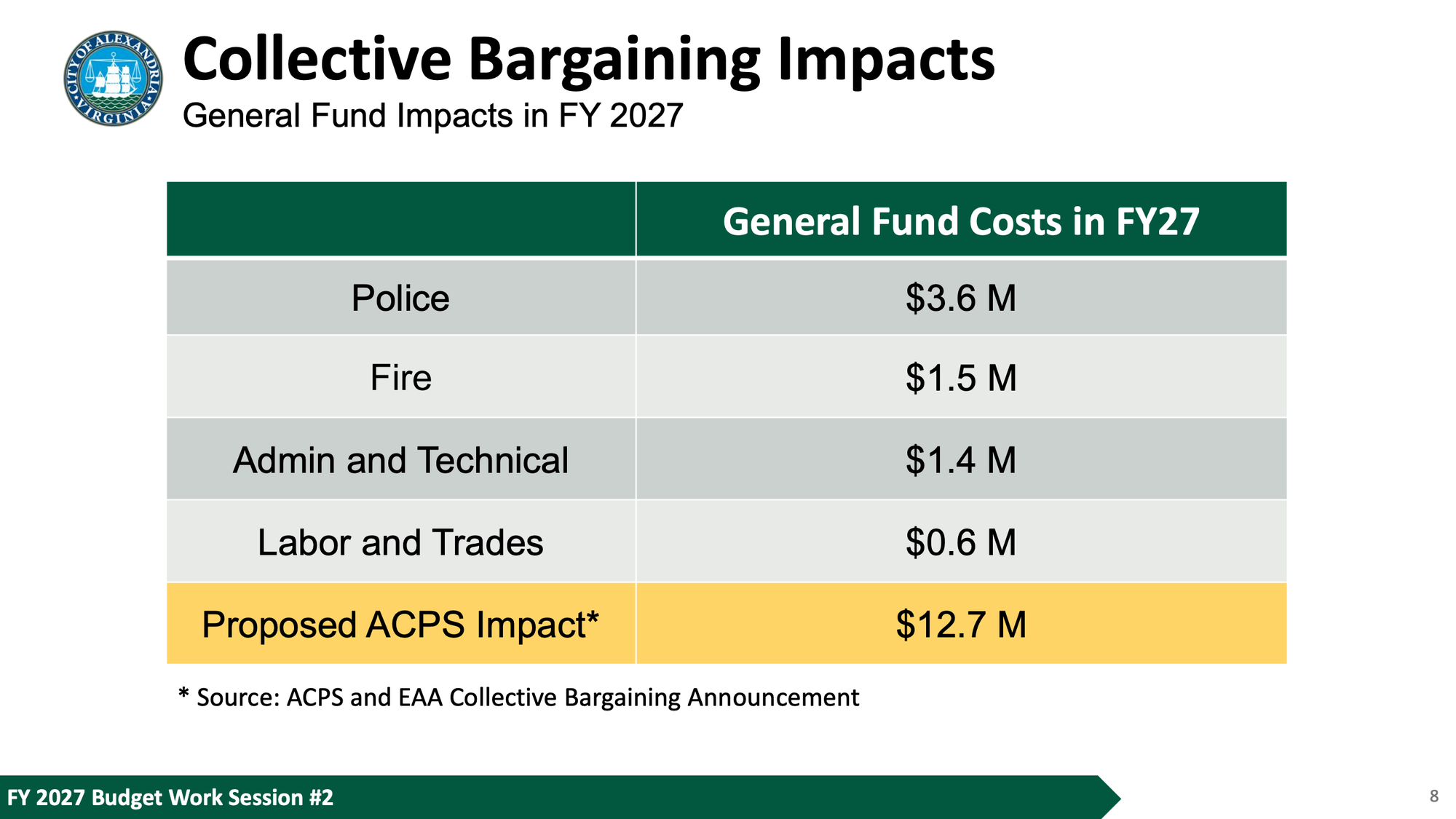
"We received the information today, so we pulled this number from the press release," Gaskins said, referring to the $12.7 million cost of the proposed agreement between ACPS and the Education Association of Alexandria. "I think today, you know, many of us found out, and now we are kind of working through what that means."
She framed the timing as a test of the partnership that both bodies have said they want to build. "I know (the) council put forth a proposal to not be at the table or making those decisions, but how could we be sharing information as we build our contracts? Make sure that we are in alignment about the fiscal pressures we're facing," Gaskins said. "Partners have to be direct or else you're not building a good partnership."
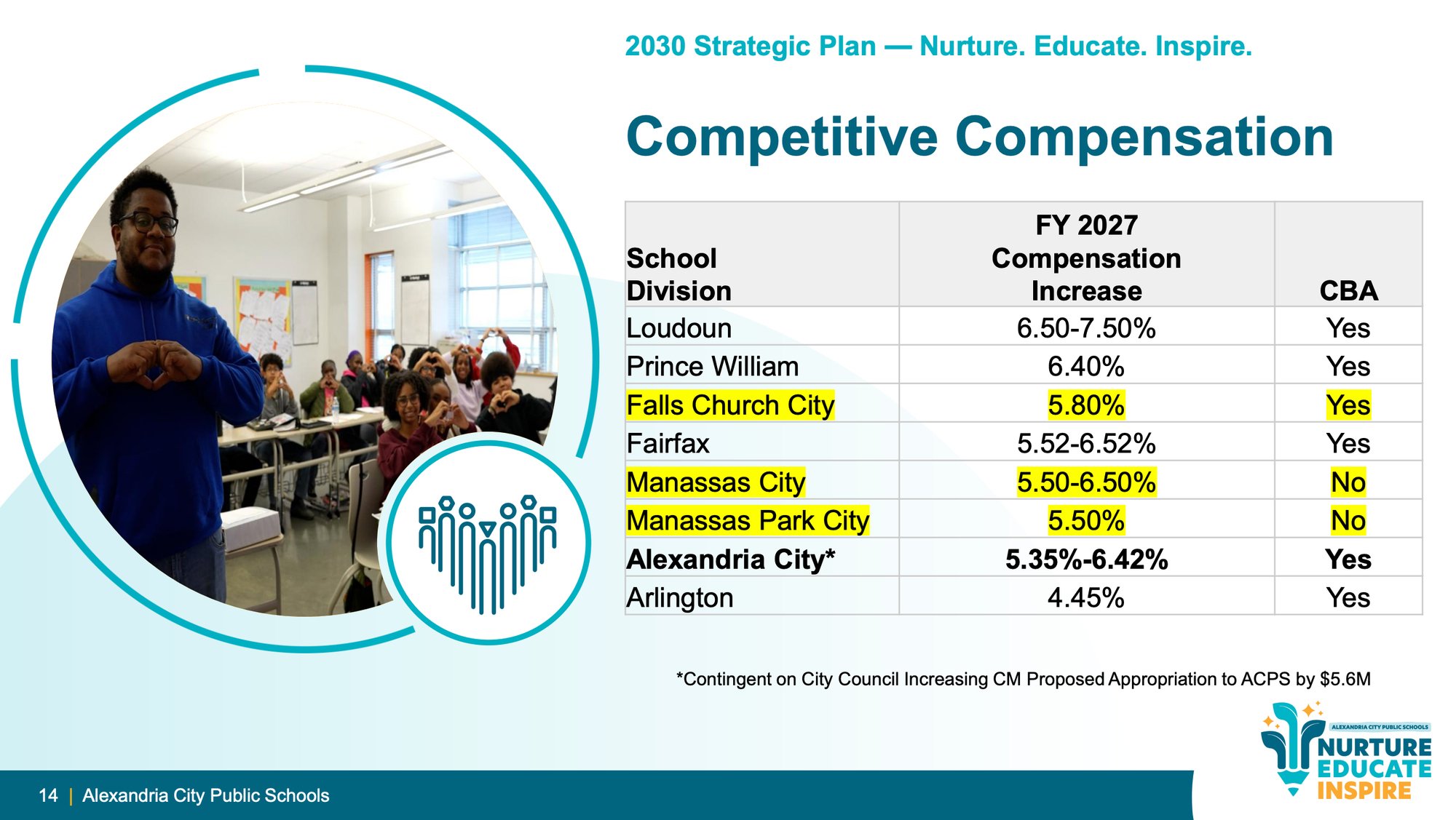
The ACPS and EAA joint statement, released Tuesday afternoon, announced Alexandria's first-ever collective bargaining agreement covering roughly 2,530 licensed staff and education support professionals. Under Virginia law, collective bargaining agreements in public schools are contingent on the governing body appropriating sufficient funds — making the announcement a public statement of what ACPS needs from Council, issued at the start of the budget process rather than at its end. The agreement is contingent on City Council increasing the city manager's proposed appropriation to ACPS by $5.6 million, a condition Council has not agreed to and that City Manager Jim Parajon's proposed budget does not currently fund.
The two-hour session, held in the School Board room, did not resolve that gap.
The budget math
Gaskins laid out the fiscal tension explicitly. The city's total new general fund revenue growth for FY2027 is approximately $20 million, she said. The proposed ACPS collective bargaining agreement alone would cost $12.7 million. Funding it at that level, she said, would consume the bulk of the city's entire new growth, leaving little for debt service obligations or investments across the city's more than 30 other departments.
"Should we put it all to collective bargaining, we would not have the money that we have allocated for your debt service payments as well as some of the other new programs and initiatives in the city," Gaskins said.
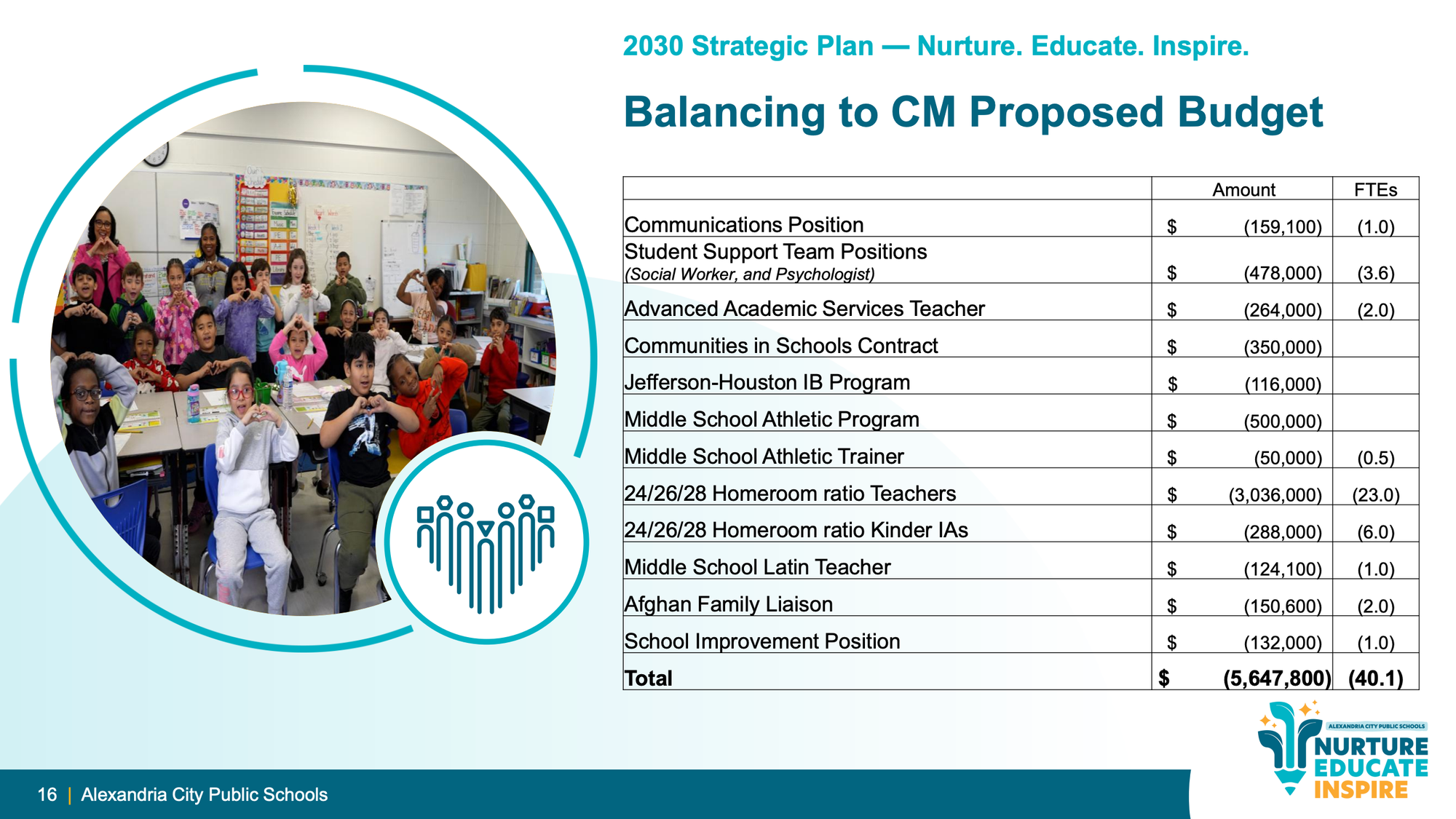
The city's proposed $977 million general fund budget already includes a $4.2 million increase — 1.5% — in the ACPS operating transfer, which Parajon built in ahead of collective bargaining negotiations. The school board's approved budget requests $292.3 million from the city; the city manager proposed $286.6 million, leaving a gap of $5,647,771.
School Board Chair Michelle Rief, presenting immediately after Gaskins, told the joint session the gap leaves ACPS with three paths forward: Council funds the full request, allowing the CBA to take effect; ACPS honors the tentative agreement and makes deep cuts to programs and staff to close the difference; or negotiations reopen, risking the collapse of the agreement entirely. She said that without additional reductions beyond what the school board has already approved, ACPS cannot afford even a single step increase for its employees.
If Council does not provide the additional $5.6 million, ACPS presented a detailed accounting of what would have to be eliminated: 23 homeroom teachers, social workers and psychologists, the middle school athletic program, Communities in Schools wraparound services, the Jefferson-Houston IB program, an Afghan family liaison, and other positions — totaling 40.1 FTEs and $5.6 million.
School Board member Ryan Reyna acknowledged the difficulty on both sides. "There's clearly a combined sense of trying to find a solution," he said, "but it feels like we maybe haven't moved past those three options."
The compensation argument
Rief devoted significant time to explaining why the school board believes the full appropriation is necessary regardless of the collective bargaining agreement. Alexandria receives the lowest state Standards of Quality funding per pupil of any school division in Virginia — $3,731 per student in FY2025 — because its Local Composite Index, a measure of local wealth, is capped at the state maximum of 0.8000. That means the state assumes Alexandria can afford to pay 80% of the cost of educating its students, even as the city serves the third-highest percentage of English learner students in Virginia and an economically disadvantaged student population nearly 10 percentage points above the state average.
In FY2025, Alexandria ranked first in the region in starting pay for teachers with master's degrees. In FY2026 — the year ACPS was unable to offer a cost-of-living adjustment because of budget constraints — it fell to seventh. Several outer jurisdictions, including Loudoun and Prince William counties, buoyed by data center tax revenue unavailable to Alexandria, are now offering larger compensation increases.
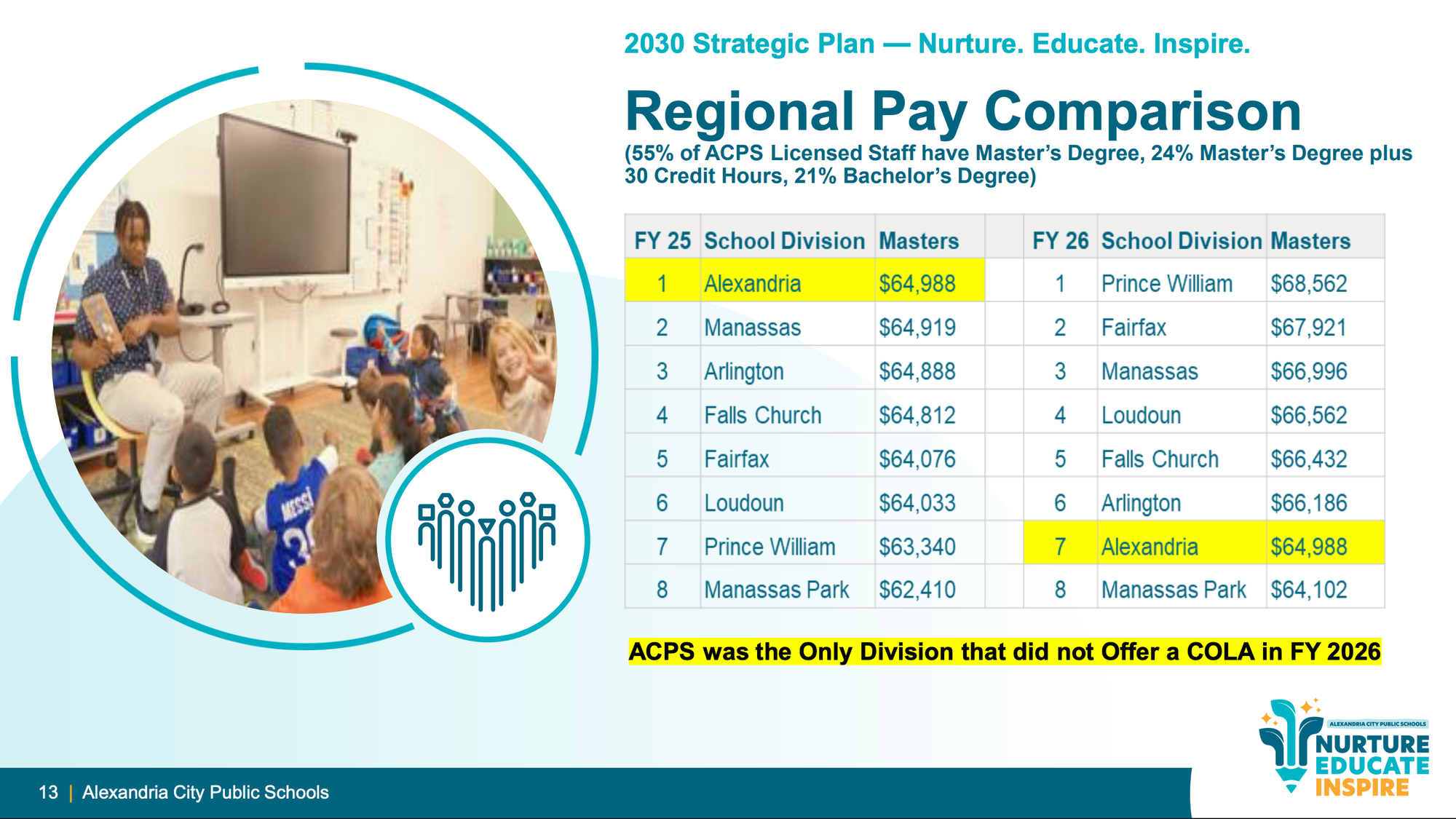
School Board member Tim Beatty put it plainly: even without a collective bargaining agreement, ACPS was likely going to have to approach these compensation numbers to remain competitive. "If we weren't in the 5% range that we're talking about here, we would fall further behind," he said. "We're already seventh out of eight in the region."
No agreement on taxes, limited options
When Reyna asked directly whether a property tax increase was under discussion, Gaskins was unequivocal. "There is not agreement among the full body on a tax increase," she said. "There's, I think, one person who's eager to pursue that." She added that even if the council were to pursue an increase, any new revenue would be divided across all city departments, not directed solely to ACPS, and that Parajon has proposed that a significant portion of any increase go toward paying down debt.
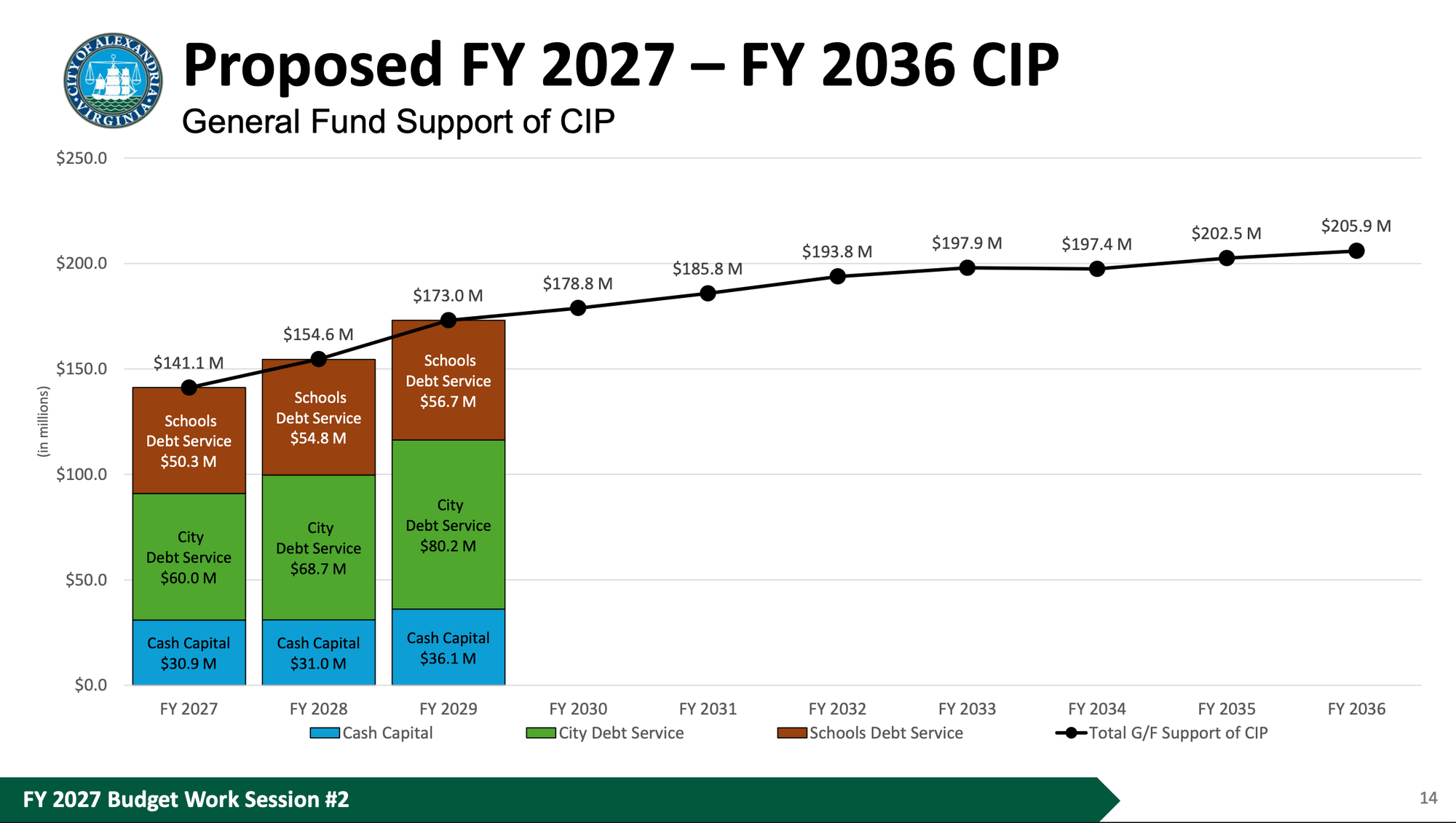
School Board member Dr. Ashley Simpson Baird pressed city staff on several potential revenue levers — use of fund balance, pulling back on cash capital contributions to the capital improvement program, and state revenue projections. Budget Director Morgan Routt said the city is already projecting use of approximately $14 million in fund balance for FY27 operations, near the upper range of what the city's fiscal policies allow without risking its AAA bond rating. Redirecting $5.6 million from cash capital, he said, would translate to roughly $50 million in capital project reductions over the 10-year plan.
Academic outcomes and investment
Councilman Abdel-Rahman Elnoubi raised the question of whether increased city investment in ACPS had produced measurable improvement in student outcomes, noting that city funding has grown roughly 20% over five years while enrollment increased about 1.5%. "It really becomes really hard for me as a council member to go out and defend these decisions," he said. "I would love to see clear connections between those needs, the investments, and the outcomes."
Rief responded that at a November budget retreat, the school board had prepared outcome data but was asked to move quickly past it to focus on budget figures. She invited Elnoubi to a private meeting to review ACPS's strategic plan. "Reducing our funding is not going to improve outcomes for our school system," she said. "I feel very confident in saying that." She attributed flat outcomes in part to structural factors including high labor costs, high-need student demographics, and the lowest state per-pupil funding in Virginia — conditions the JLARC study found are not unique to Alexandria but reflect a statewide underfunding of public education.
Councilman John Chapman offered a pointed correction when Elnoubi suggested the city had "found money" last year and directed it to ACPS. "We didn't find money last year," Chapman said. "We broke a promise to another partner to fund them. That's what we did. There wasn't money to find." He did not identify the partner.
A new approach for FY28
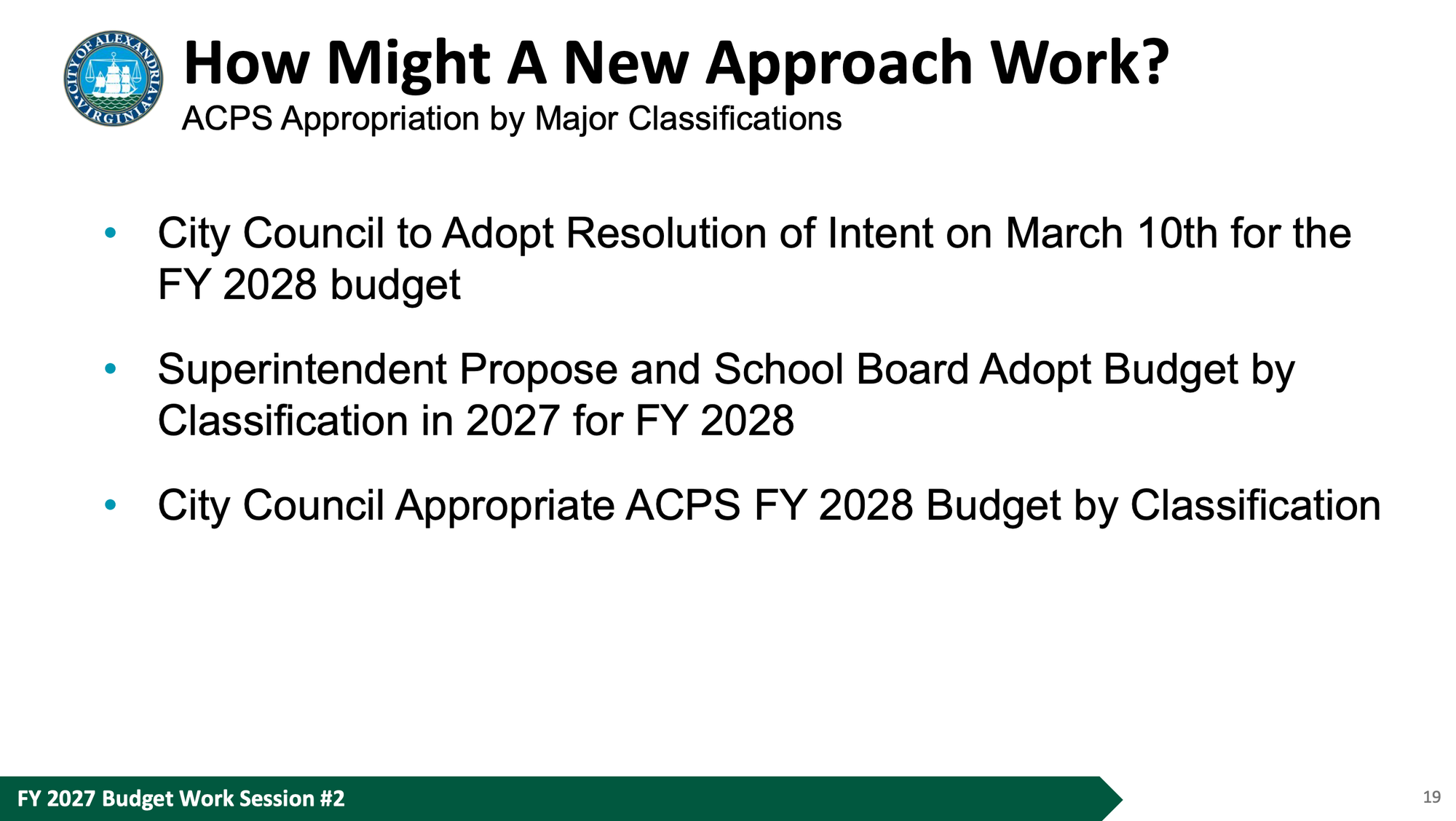
One of the most significant policy proposals of the evening drew relatively little debate. Gaskins announced that on March 10, Council will consider a resolution of intent to begin appropriating ACPS funding by major classifications — instruction, transportation, facilities, and other categories defined by state code — starting with the FY2028 budget, rather than as a lump sum as has been the practice historically.
The shift would give Council significantly more visibility into how ACPS allocates city funds. Gaskins framed it explicitly in the context of the evening's central tension. "If someone says, well, council, you need to fund collective bargaining, well, there's a way that the category can say collective bargaining," she said. "And you would see either we're funding it or we're not funding it."
Rief noted that ACPS's budget book already breaks down spending by those categories and cautioned that implementing the new structure would require additional central office staff time at a moment when ACPS is already cutting administrative positions. She did not oppose the direction.
Where things stand
The meeting ended without a resolution or any concrete commitments. Rief closed by encouraging both bodies to stay in communication and keep looking for solutions as the budget process continues.
The budget calendar gives both bodies until April 29. Between now and then, Gaskins said, the answer has to come from somewhere. "We have similar options around either cut more or raise taxes," she told the room. "We have to wrestle with that as a council, and we will continue to do that."