ALEXANDRIA, Va. - City planners will present a draft proposal Aug. 11 that is expected to loosen the rules governing construction on Alexandria's undersized residential lots — a process that has required City Council approval for more than 50 years.
The virtual community meeting is at 7 p.m. on Zoom, with registration through the city's project page. Staff will share research findings and discuss the draft.
Staff signaled the direction in April. A slide in their April 28 community meeting presentation, headed "Draft Policy Recommendation," called for allowing by-right development of most substandard lots while keeping the existing lot requirements themselves.
"Based on our research and experience, staff believes the SUP process may no longer reflect current City housing goals and may no longer be necessary to ensure compatible infill development," the presentation states.
What staff left open in April was the detail. They said remaining work included whether any elements of the existing approval process should be retained, whether some substandard lots warrant different approval pathways, and whether further changes are needed to make infill development more compatible — along with a parcel-by-parcel inventory of affected properties, which staff described as time-intensive.
Those answers are what Tuesday's meeting should supply.
What a substandard lot is, and where they are
A substandard lot is a residential lot that falls short of the minimum size, width or street frontage its zone requires. These lots did not shrink — the rules grew around them. They were recorded before the current requirements took effect, or before later amendments, rezonings or annexations.
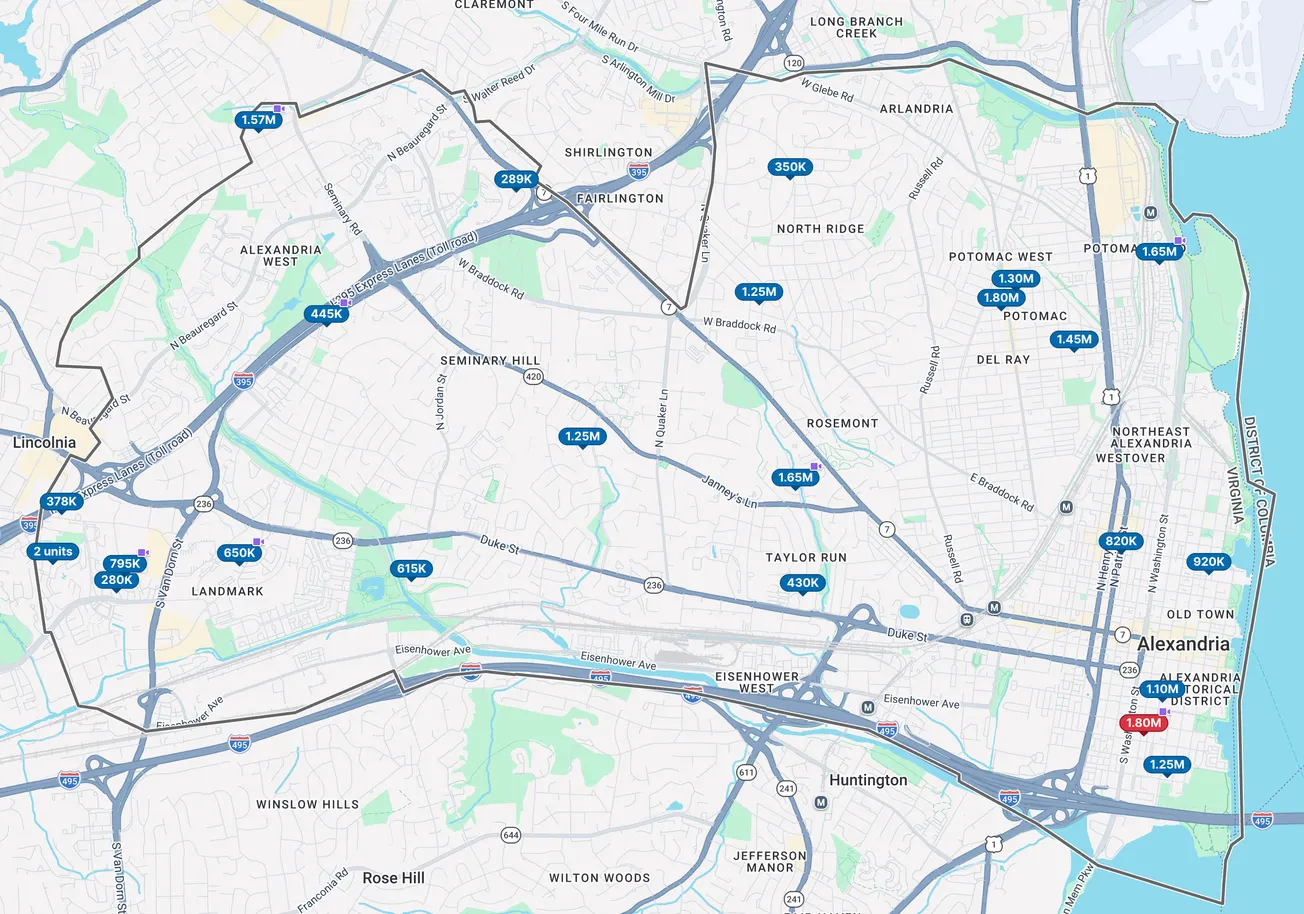
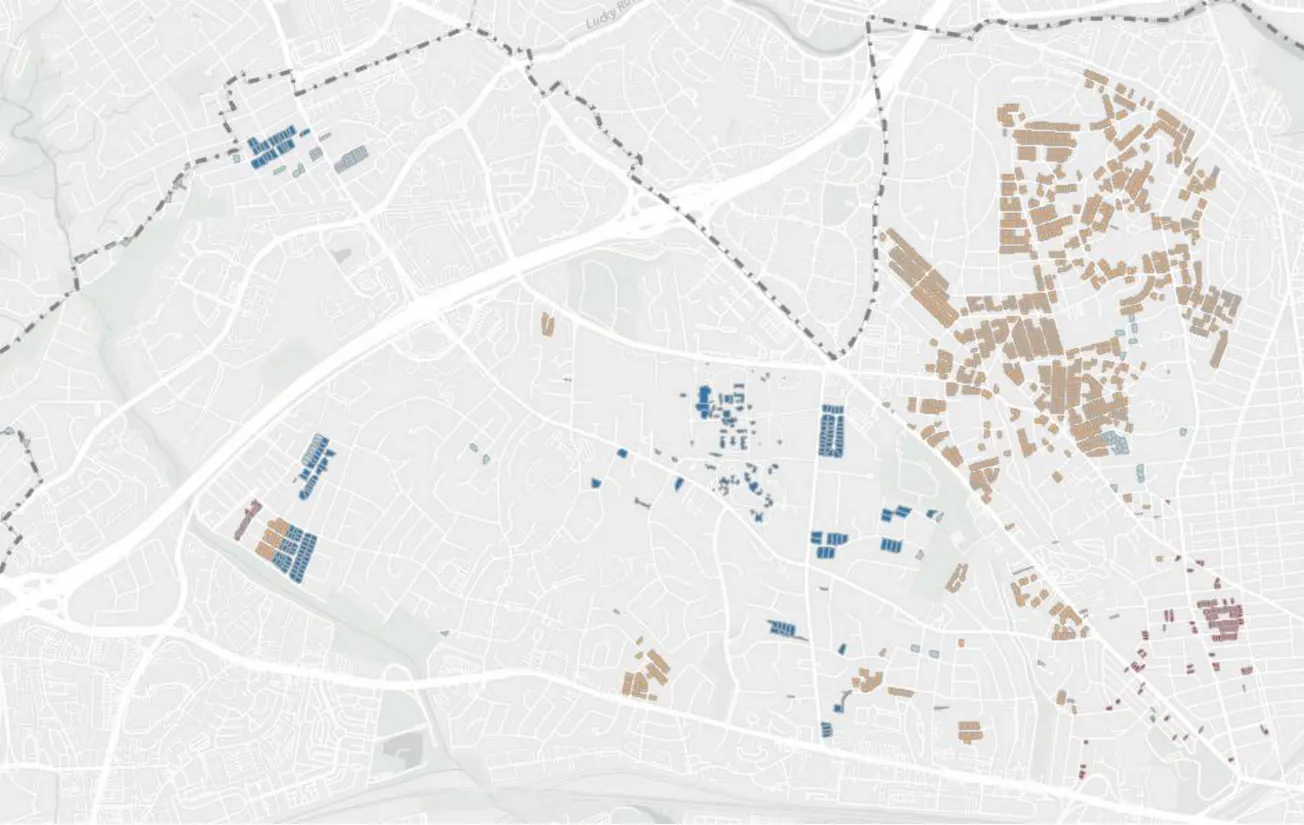
They exist throughout Alexandria but are concentrated in areas the city annexed from neighboring jurisdictions, particularly North Ridge and Rosemont, according to the presentation.
The permit requirement applies only in the R-2-5, R-5, R-8, R-12 and R-20 zones. Substandard lots elsewhere, including Old Town, can generally be developed without it.
Most substandard lots already have houses and are unaffected unless the owner wants to make significant changes.
How often the permit process has actually been used
Staff's own case history is central to their argument.
Since 1973, 36 special use permit cases involving vacant substandard lots have come before the city. Council approved 28 and denied eight — roughly one case every year and a half, with about one in five denied.
For developed substandard lots, where the permit requirement took effect in 2008, staff counted 35 cases. All 35 were approved. None were denied.
Across both categories, 71 cases have come forward and 63 were approved.
Why staff say the requirement may not be needed
The April presentation lays out several observations.
The line between a complying lot and a substandard one is often imperceptible, staff wrote, with many lots falling just below the minimum. Substandard lots are also self-limiting: their smaller dimensions require smaller and shorter houses than would be allowed on a conforming lot.
Staff also point to zoning changes Council adopted in 2008 alongside the developed-lot permit requirement, aimed at making infill development more compatible citywide. Those rules apply to all residential lots, and staff say they have years of experience applying and refining them.
Two other arguments are about cost and policy drift. A permit application takes time and money — fees, legal costs and uncertainty — and staff say those costs may end up in the final sale price of the home. And the rules themselves, staff wrote, were created in 1974 and amended in 2008, each time in response to the concerns of that moment, while the city's housing goals have since changed.
How the rules developed
Alexandria first set minimum lot sizes in 1931, requiring 5,000 square feet and 50 feet of frontage for a single-unit home. A comprehensive zoning rewrite in 1951 added zones and raised those minimums, and lots recorded earlier became substandard.
Owners could still build on them by right until 1974, when Council imposed the permit requirement after concerns that two houses built on substandard lots were too small and too narrow. Amendments in 1987 and 1989 loosened eligibility. In 2008, Council extended the requirement to teardown-and-rebuild projects on lots that already had houses.
What happens next
Staff is targeting a Planning Commission public hearing Tuesday, Oct. 6, and a City Council public hearing Saturday, Oct. 17.
Those dates have moved. The April presentation listed target hearings of June 23 before the Planning Commission and July 1 before Council — roughly three months earlier than the current schedule.
The Planning Commission discussed the review as an item May 5. No vote was taken.
The zoning text amendment is filed as ZTA #2026-00002. Sam Shelby, principal planner, and Catherine McDonald, urban planner, are the staff contacts.