
Table of Contents
Updated May 22 at 3:30 p.m. with the city's response confirming the contractor's $6.9 million estimate. This story originally reported that the figure was unverified and that the city had not answered questions about it.
If you've scrolled Instagram, Facebook, or YouTube in Alexandria lately, you've probably met the orange ad: a board-game graphic, tumbling dice, and a warning that city officials are "playing games with your money." It's part of a campaign called "Don't Get PLAyed Alexandria!" One version features City Manager James Parajon and says officials hid "$7 million in costs from the public." Another names Mayor Alyia Gaskins. Both push viewers to a website where they can "take action" by telling elected officials to oppose project labor agreements.
Here's what the fight is actually about — and what's been established versus alleged.
Who is behind the ads
The ads are paid for by the Virginia Coalition for Fair Contracting & Employee Protection — "Virginians for Fairness" — a 501(c)(4) advocacy group that says it represents more than 1,000 Virginia construction firms opposed to government-mandated PLAs. Its members, listed on its website, are construction-industry trade associations, including the Associated Builders and Contractors of Virginia and the Associated General Contractors of Virginia, along with highway, asphalt and transportation-contractor groups and the Loudoun County Chamber of Commerce. Most member firms are non-union, or "merit shop." As a 501(c)(4), the coalition lists its member organizations but is not required to disclose its donors. It launched the Alexandria campaign on May 1.
What a project labor agreement is
A PLA is a pre-hire deal between a project's contractors and one or more unions that sets wages, benefits, work rules and dispute-resolution procedures for a specific public construction job; every contractor and subcontractor on the project agrees to its terms. Virginia law has authorized localities to require PLAs since 2020, when the General Assembly reversed an earlier prohibition.
Supporters — including the city and building-trades unions — say PLAs guarantee a skilled workforce, fair wages and benefits, apprenticeships and local hiring, and fewer delays through built-in dispute resolution. Opponents argue they raise costs, shrink competition by discouraging non-union firms from bidding, and steer work to union labor. National research has reached conflicting conclusions.
What Alexandria did
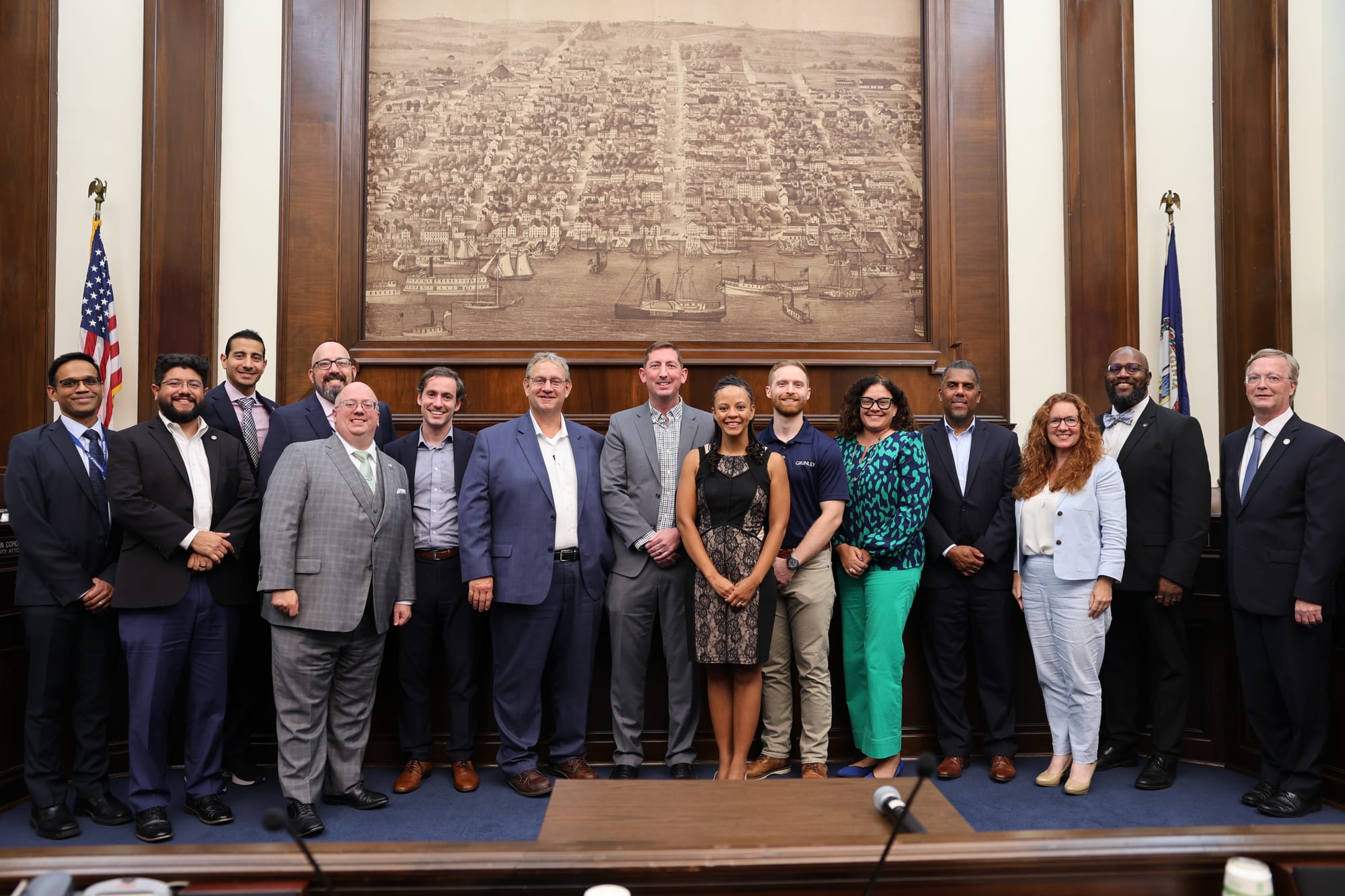
Under what the city manager has described as City Council policy and budget guidance, Alexandria requires a project labor agreement on construction projects with a construction value above $35 million. The first to trigger it was the renovation of City Hall, Market Square Plaza and the underground parking garage — a project budgeted at $123.6 million in the city's 2025-2034 Capital Improvement Program, with an $85 million construction contract awarded to Grunley Construction.
The city signed the PLA in September 2025 with the Baltimore-DC Metro Building and Construction Trades Council, which represents 22 unions; construction mobilization began in January. The city issued a separate solicitation in October requiring a PLA on the Duke Street Transitway, and its capital plan flags up to five projects above $35 million for possible PLAs.
The city, the contractor, and the trades council all framed the deal around workforce and quality when it was announced. Parajon called it "a major milestone in the history of the city of Alexandria." Chip Scott, president of Grunley Construction, said the firm was "proud to have been a part of the negotiations" and could "champion a highly skilled workforce" under the agreement, while Greg Ackerman, president of the Baltimore-DC Metro Building and Construction Trades Council, said the deal "ensures that skilled union labor will play a central role" and "promotes apprenticeship programs."
The $7 million claim: what's alleged

This is the core of the campaign. The coalition says a Freedom of Information Act request turned up internal records showing that on May 5, 2025, the project's general contractor estimated the PLA would add about $6.9 million — which the group rounds to $7 million and describes as roughly a 10% increase. It says city staff did not disclose that estimate to the City Council or the public during the approval process, and it quotes an internal email in which it says a city capital-projects official wrote that a planned public presentation had "not included ... any financial impact related to the PLA." The coalition laid out the allegation in a March letter to the mayor and council, then built the May ad campaign around it, according to its "Don't Get PLAyed Alexandria" materials.
The city has now confirmed the estimate exists. In response to questions from The Alexandria Brief, a city spokesperson said that on May 5, 2025, the project's general contractor responded to a city request about the PLA's potential cost impact and "provided an estimate of $6.9 million," drawn from the firm's historical data on similar projects and the project's design. The city characterized it as a "Rough Order of Magnitude (ROM) estimate based solely on the project budget, for planning purposes," and put it at "approximately 5.5% of the construction budget" — lower than the coalition's "10%" and well below the "as much as 20%" that has circulated in earlier estimates. The Brief has not yet independently reviewed the estimate document itself, which it has requested under public-records law.
On disclosure, the city does not say it showed council the specific $6.9 million figure. Instead, it points to the 2022 budget process: in a fiscal 2023 budget question, city staff told both then-Mayor Justin Wilson and then-Councilwoman Alyia Gaskins that requiring PLAs "would likely result in increased costs for projects," citing a Fairfax County analysis that forecast an increase of "as much as 20%." The spokesperson noted that 2022 response "was not based on any design of the City Hall and Market Square Renovation project." As for the September announcement, the city said its purpose "was to announce the City's first PLA agreement" and that the project budget "had previously been approved" through the Capital Improvement Program process.
The city also pushed back on the coalition's competition argument, saying "nearly a dozen general contractors" bid on the City Hall project despite the PLA requirement, and that the agreement includes negotiated provisions requiring three to five bids per subcontractor scope to keep pricing competitive. The coalition's headline cost authority, a RAND study it says found PLAs raise costs about 21%, examined affordable-housing production in Los Angeles rather than historic-building renovations; the cost effect of PLAs remains contested among researchers. The coalition did not respond to questions from The Alexandria Brief, including a request to provide the records underlying its claim.
The agreement was presented publicly, not adopted in secret. Parajon announced it during the City Council's Sept. 9, 2025 meeting, calling it "a major milestone in the history of the city of Alexandria," and council members praised it — Gaskins, citing the council's responsibility to be "good fiscal stewards," said the project would be "done on time and done on budget." But the announcement was not a council vote; the PLA was an executed agreement between Grunley and the trades council, and the meeting's docket shows no action item on it. No cost figure was presented at that meeting. The city has not said whether the $6.9 million estimate was shared with the council in any other setting, and the Brief has not been able to establish that it was. The dispute that remains is narrower than the ads suggest: not whether the estimate existed — the city now confirms it did — but how much weight a rough planning figure of that kind deserves, and whether it should have been put before the council and public as a specific number.
The campaign-finance angle
The campaign pairs the cost claim with a "pay-to-play" argument, alleging Gaskins and the City Council together accepted more than $300,000 from labor unions — about $142,000 of it to Gaskins, which the group says was mostly from out of state. The coalition's per-member figures add up to roughly $309,000; The Alexandria Brief independently reviewed only Gaskins's filings, which on closer examination tell a more complicated story than the ads suggest.
A review of Gaskins's state campaign-finance filings by The Alexandria Brief shows labor was a major source of her 2024 mayoral fundraising. In the first half of 2024 alone, her committee reported roughly $105,000 from unions and labor organizations — consistent with the coalition's larger cycle figure. The biggest single source was about $75,000 tied to the hospitality union UNITE HERE, including a roughly $65,000 in-kind contribution of staff and field work from an affiliated group, Workers Vote. Building-trades unions — the kind that work on project labor agreements — gave less: $10,000 from the Greater Virginia Carpenters' political committee, $7,500 from the IBEW's political fund, and $1,000 each from a steamfitters local and the Mid-Atlantic Pipe Trades Association. Several of the largest donations came from out-of-state PACs in New York, Washington and Maryland, though others, including $10,000 from the Northern Virginia Labor Federation, were in-state.
Two things complicate the "pay-to-play" framing. The records reviewed by the Brief show no contribution from the Baltimore-DC Metro Building and Construction Trades Council, which signed the City Hall PLA, or from Grunley Construction, the contractor — and the largest union backer was a hospitality union whose members do not work construction jobs. Union support for a Democratic mayor who campaigned openly on a pro-labor record is legal and common, and the filings establish contributions and timing, not a quid pro quo. The donations are also a separate matter from the cost allegation. Gaskins has said the city pursued the PLA because it is "aligned with our values."
What the city and unions say

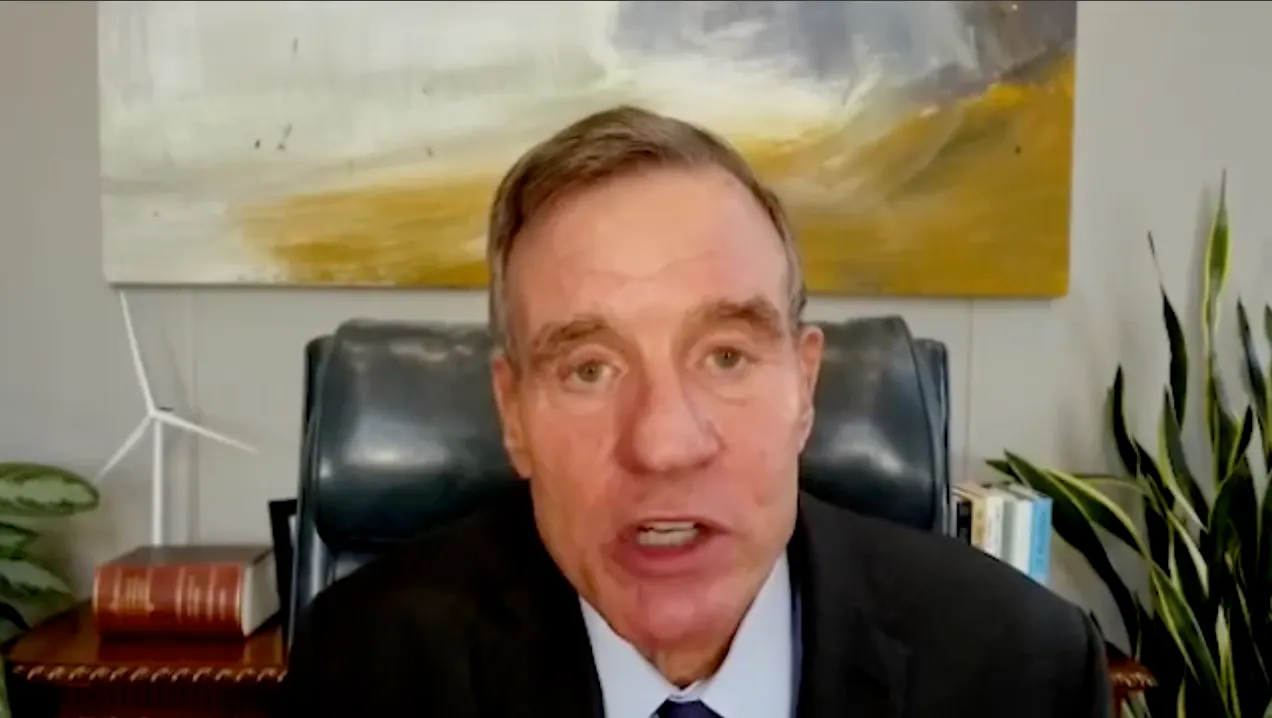
Gaskins responded in a video posted to her social media accounts on May 13, which the city said reporters were free to quote. She called the group "an anti-union group that is ironically called Virginians for Fair Contracting and Employee Protection" and said its ads, focused on the City Hall PLA, are "not only negative, they're false."
She argued the PLA makes costs more predictable rather than hidden: because it spells out "wages, benefits and other labor protections" up front, she said, it helps the city "protect against uncertain labor cost or budget uncertainties" on a project that has to be "delivered on time and on budget." Gaskins, who noted Alexandria was "the first jurisdiction in the commonwealth to adopt collective bargaining," cited apprenticeships, partnerships with small, minority- and women-owned businesses, and worker protections including "family sustaining wages" and a safeguard "against wage theft." "We pursued a project labor agreement because it's aligned with our values," she said.
The building trades that stand to benefit have also defended the deal. In a statement provided to The Alexandria Brief by the union, Nelson Aguilar, a Northern Virginia member of the Eastern Atlantic States Regional Council of Carpenters' Volunteer Organizing Committee, called the agreement "a worker-first decision that will protect taxpayer money and provide good paying jobs for local skilled labor." Aguilar said PLAs "help create a cohesive plan for construction projects ensuring that projects are completed on time and within budget" and protect workers "from wage theft," adding that the union is "proud to have local workers build this historic project under this PLA." The council's Virginia political committee was among Gaskins's 2024 campaign donors, giving $10,000.
The Alexandria Brief submitted questions to the city manager's office on Wednesday; a city spokesperson responded Friday afternoon with the confirmation of the contractor's estimate and the explanations described above. The Brief has also filed a Freedom of Information Act request for the contractor's estimate and the city's internal communications about the PLA's cost, and will update this story when those records are released.
A statewide campaign
Alexandria is one front in a broader effort. The coalition maintains a statewide "PLA tracker" and has fought proposals in several jurisdictions. By its own account, Arlington withdrew a bridge PLA after industry pushback — and, the group says, drew lower bids without it — while Loudoun canceled a procurement last fall after the ABC of Virginia and two contractors sued over its PLA requirement. The coalition's tracker also lists campaigns in Fairfax and Prince William counties.
The bottom line
The ads are advocacy from one side of a national labor fight, but they carry two distinct claims. On campaign finance, Gaskins did take substantial union money — but the largest donor was a hospitality union with no stake in construction, and neither the contractor nor the trades council on this deal is among her donors, so the "pay-to-play" framing is thinner than the ads suggest. On cost, the central fact the ads assert is now confirmed: a $6.9 million estimate existed. What is contested is what that number means and how it was handled — the city calls it a rough planning estimate of about 5.5%, prepared for internal use, and says the general prospect of higher PLA costs was disclosed back in 2022; the coalition casts it as a hidden $7 million, roughly 10%, that taxpayers were entitled to see. The city has not said whether the specific figure was shared with the council, and it was not presented at the September announcement. The records the Brief has requested — the estimate itself and the internal emails around it — should show how solid the number was and how the city handled it.
Editor's note: The city confirmed the contractor's $6.9 million estimate in response to questions from The Alexandria Brief; the characterizations of it as a "rough order of magnitude" estimate of about 5.5% are the city's. The coalition did not respond to a request to provide the underlying records. The Brief has filed a Freedom of Information Act request for the contractor's estimate and related internal communications and will update this story when those records are released.
The Alexandria Brief
Alexandria, Va., news and information you won't find anywhere else.
The Alexandria Brief has no ads, no paywall, and no corporate owner. Support this work with a monthly or annual subscription, or a one-time contribution.
Publisher: Ryan Belmore, an Alexandria resident and journalist. Send feedback, story ideas, news, and tips to ryan@alexandriabrief.com.
© 2026 Alexandria News, LLC / The Alexandria Brief. All rights reserved. This material may not be published, broadcast, rewritten, or redistributed without express written permission.