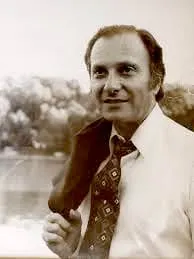
ALEXANDRIA, Va. — Fifty-nine years ago today, on June 12, 1967, the U.S. Supreme Court ruled unanimously in Loving v. Virginia, striking down Virginia's 1924 Racial Integrity Act and similar anti-miscegenation laws still on the books in 15 states. The case had been argued for the plaintiffs by Bernard Cohen — a 33-year-old attorney then practicing in Alexandria — and his co-counsel, fellow Virginian Philip Hirschkop, both volunteers for the American Civil Liberties Union.
The decision ended Virginia's ban on interracial marriage. Just two months later, in August 1967, Leona Eva Boyd, a white woman, and Romans Howard Johnson, a Black man, became the first mixed-race couple legally married in Virginia since the colonial era.
The Lovings and the Racial Integrity Act
Richard and Mildred Loving were a young couple from rural Caroline County, Virginia. Richard was white; Mildred was Black and of Indigenous descent. They had married in Washington, D.C., in June 1958 — the District being one of the few jurisdictions on the East Coast where interracial marriage was legal — and returned home to Virginia, where they were arrested in bed in their own home only weeks later.
They had violated the Racial Integrity Act, a 1924 Virginia law that defined any person with a single non-white ancestor as a person of color and made interracial marriage a felony. Facing one year in prison, the Lovings pleaded guilty in exchange for a suspended sentence and exile from the state for 25 years.
After years of living away from family and home, Mildred Loving wrote to U.S. Attorney General Robert F. Kennedy in 1963 asking for help. Kennedy referred the case to the American Civil Liberties Union. The ACLU brought it to Cohen, who was practicing in Alexandria and had volunteered as ACLU counsel.
Bernard Cohen, ACLU volunteer attorney
Cohen, the Brooklyn-born son of an immigrant Jewish fur worker, had been admitted to the bar only a few years earlier. He took the case alongside Hirschkop, then a recent Georgetown Law School graduate. Neither attorney was paid; both worked as ACLU volunteers.
Cohen later recalled that when he first met Richard Loving, the construction worker put the case in unforgettable terms: "Mr. Cohen, tell the court I love my wife, and it is just unfair that I can't live with her in Virginia."
Cohen presented oral argument before the Supreme Court on April 10, 1967. Two months and two days later, on June 12, the court ruled unanimously in his clients' favor. Chief Justice Earl Warren, writing for the court, found that the Virginia statute "directly subverts the principle of equality at the heart of the Fourteenth Amendment" and held that marriage is "one of the basic civil rights of man, fundamental to our very existence and survival."
Cohen's Alexandria career
Cohen continued practicing law in Alexandria for decades after Loving. In 1979, he ran for and was elected to the Virginia House of Delegates, where he served eight consecutive terms from 1980 to 1996, representing parts of Alexandria first as the delegate for the 21st District and later for the 46th.
During his 16 years in Richmond, Cohen ran as what he called "an unabashed liberal" and was known for legislation on indoor smoking restrictions, the rights of terminally ill patients to refuse life-prolonging treatment, and a nuclear freeze resolution that passed the House in 1983 but stalled in the Senate. He also introduced a bill to decriminalize same-sex marriage in Virginia that was unsuccessful at the time.
The legacy: Obergefell
Forty-eight years after Loving, the U.S. Supreme Court extended its logic. On June 26, 2015, in Obergefell v. Hodges, the court legalized same-sex marriage across the United States. The majority opinion cited Loving v. Virginia 13 times. Cohen, then 81, told the Richmond Times-Dispatch the connection was straightforward: "Because the constitutional principle involved is the same, the right to marry is a constitutionally protected right of liberty. I think it's that easy."
Bernard Cohen died Oct. 12, 2020, at age 86 in Fredericksburg, of complications from Parkinson's disease.
Loving Day
June 12 is observed today as Loving Day — an unofficial holiday celebrating the anniversary of the Loving decision. Events are held nationwide. The Loving family's story has been told in multiple films, including the 2016 feature Loving starring Ruth Negga and Joel Edgerton, and the 2011 HBO documentary The Loving Story.
The Loving decision remains one of the foundational civil rights rulings of the 20th century — and the Alexandria attorney who argued it spent the rest of his career working to expand the principles it established.
Information via the City of Alexandria's Office of Historic Alexandria, Encyclopedia Virginia, the Virginia State Bar, the U.S. Supreme Court opinion in Loving v. Virginia, and NPR.