Table of Contents
The Alexandria City School Board's public hearing on Thursday on the revised two-year agreement governing the role of police in city schools adjourned after one minute, with no members of the community signed up to speak.
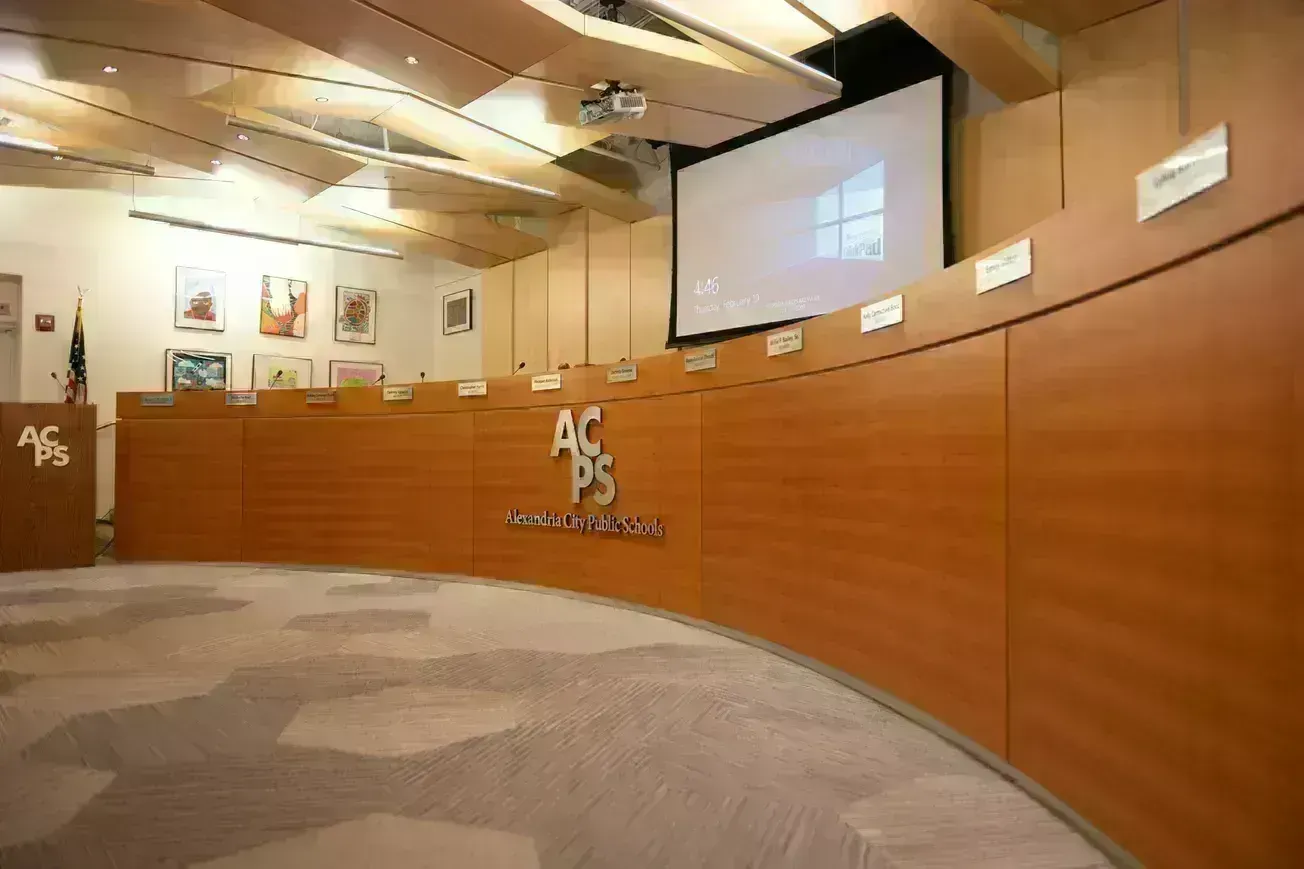
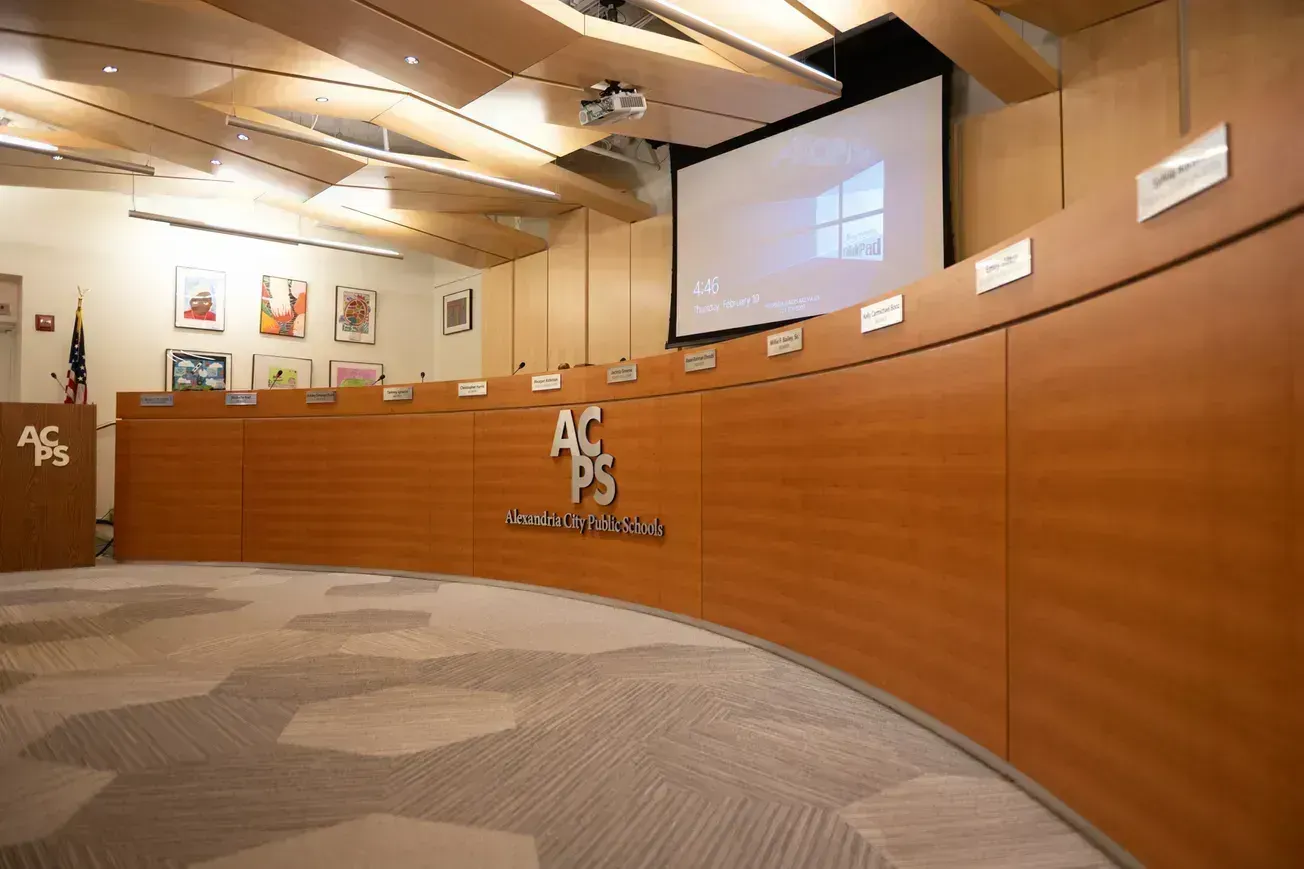
Board Chair Michelle Rief called the hearing to order at 5:04 p.m. in the School Board Meeting Room at 1340 Braddock Place and conducted a roll call. Board members Abdulahi Abdalla, Tim Beaty, Kelly Carmichael Booz, Ryan Reyna, and Rief were present, constituting a quorum. Vice Chair Chris Harris and board members Donna Kenley, Alexander Crider Scioscia and Ashley Simpson Baird were absent.
"I'm going to announce at this time that we do not have any speakers signed up for our public hearing," Rief said. She adjourned the hearing at 5:05 p.m.
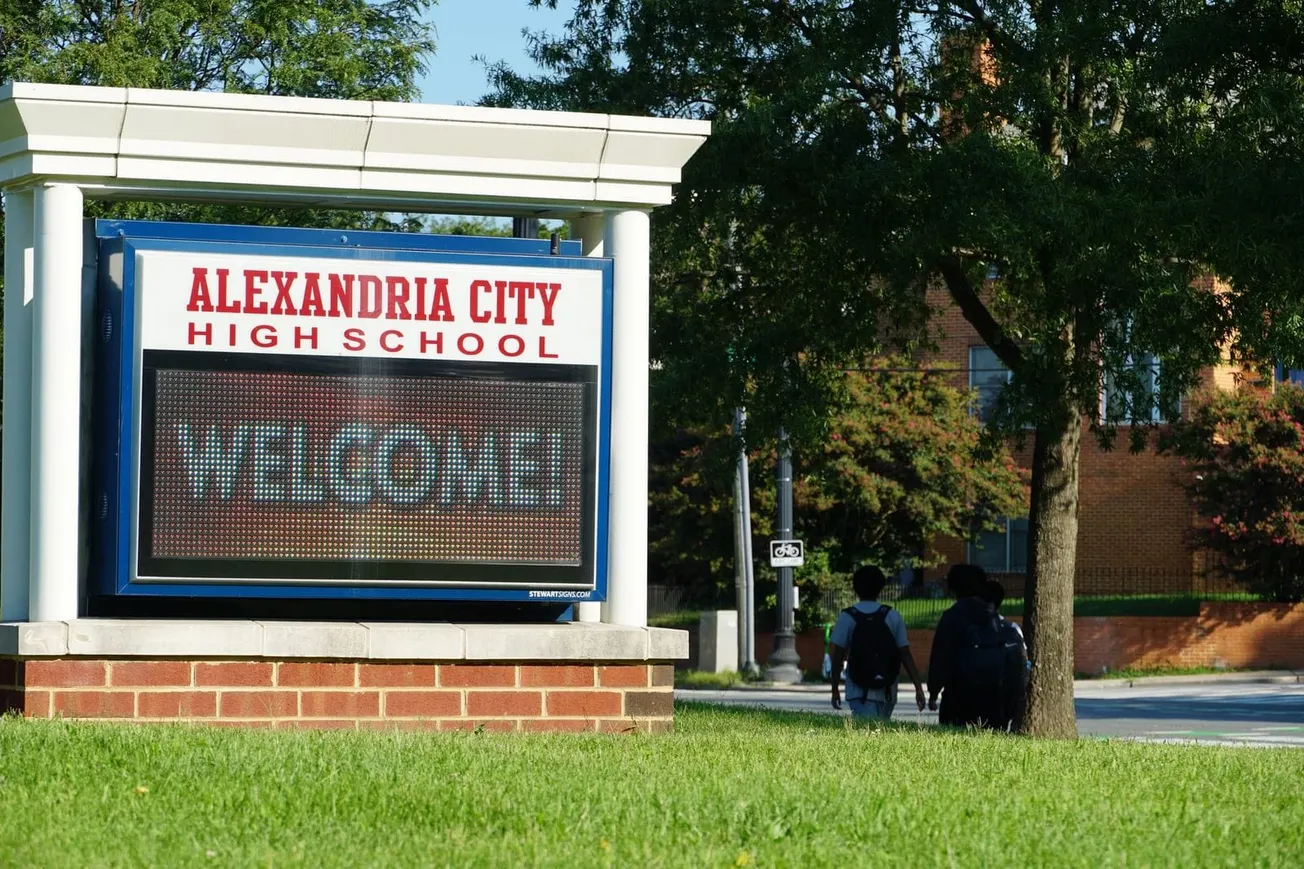
The hearing had been scheduled from 5 to 6 p.m. to take community input on the 2026-28 Memorandum of Understanding between Alexandria City Public Schools and the Alexandria Police Department — a document nearly a year in the making that outlines how School Resource Officers operate at Alexandria City High School and the division's middle schools, covering information sharing, student questioning, searches, arrests and physical interventions.
The empty speaker list stands in contrast to the May 2025 public hearing on the previous draft, where community opposition to a provision designating SROs as "school officials" under the federal Family Educational Rights and Privacy Act led the board to twice extend the current 2023 agreement rather than approve the proposed version. The Alexandria Police Department ultimately withdrew the records-access request, and the 2026 draft strips the designation and related language entirely.
The sign-up deadline for Thursday's hearing was noon on April 15. An additional five walk-in slots had been available between 4:15 and 4:45 p.m. at the meeting room for those who missed the deadline.
 Ryan Belmore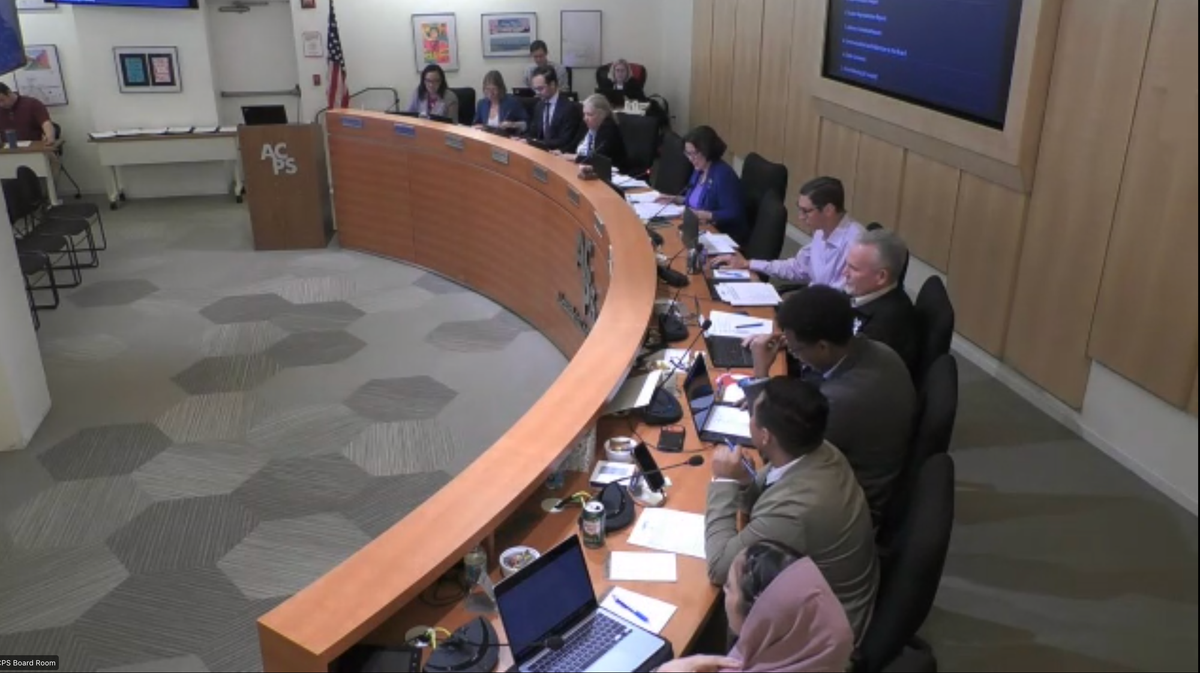
Written testimony fills the void
With no speakers at the podium, written comments submitted in advance become the public record of community input on the revised agreement.
Tenants and Workers United, a community organization founded in Alexandria in 1986, submitted a letter to the board through its youth organizer, Sindy Carballo. The group's youth chapter, Alexandria United Teens, is made up of ACPS students ages 12 to 18. Carballo credited the board for removing the student-records provision but flagged Section 3(d) of the new document as cause for alarm.
That section adopts the "SRO TRIAD Model," which defines three roles for officers assigned to schools: law enforcement officer, public safety educator, and informal counselor/mentor. The MOU commits ACPS and APD to "collaborate to implement these three components" to foster a positive school climate.
Carballo wrote that ACPS already employs trained professionals to serve in educator and counseling roles, and that expanding SROs into those functions risks embedding police in day-to-day school life. "The school climate should be something that is overseen and managed by school administrators and not by SROs, who should be of last resort, not used day to day as school personnel," she wrote.
The letter urged the board to invest in mental health centers at the high school and middle schools, pointing to ongoing disparities in discipline rates for students of color as evidence that proactive alternatives are needed. It was copied to Superintendent Dr. Melanie Kay-Wyatt and TWU Executive Director Evelin Urrutia.
What's in the draft
Beyond removing the FERPA designation, the 2026-28 draft adds language requiring that, in non-exigent circumstances, an SRO or other officer must verify that a student has had contact with a parent, guardian or legal custodian before questioning. If a parent asks to be present or requests that questioning occur off school premises, the officer "should accommodate, with few exceptions." The section also states that no non-exigent questioning may take place without a school administrator present, and that SROs "shall not be included in questioning students about student code of conduct violations that do not involve any criminal activity or risk of harm to self or others."
The draft formalizes a quarterly SRO Assessment Form completed by principals at schools with assigned officers. The form rates officers on dependability, availability, professionalism, communication, judgment, knowledge, performance and presentation skills. The MOU clarifies the form is "a tool to support improved collaboration" and not an official personnel evaluation, as SROs are not ACPS employees.
A new section on shared technology resources designates the SRO sergeant as the direct point of contact for emergency alerts and commits APD to include ACPS in discussions of any technology — such as body-worn cameras — that affects school operations.
Other changes include the removal of all references to the National Association of School Resource Officers, updated statutory citations and a correction of the review cycle from "biannually" to "biennially," consistent with state law.
The unresolved felony question
The concern that dominated board discussion on April 9 — how principals should handle suspected drug and alcohol offenses under state mandatory reporting law — remains unresolved in the text. The draft requires principals to be "generally aware" of conduct that would rise to a felony and to refer to ACPS legal counsel when in doubt.
Division Counsel Robert Falconi told the board last week the underlying state law is "very poorly written" and that administrators will receive a one-page reference document and training rather than bright-line rules in the MOU itself. Board members Ryan Reyna, Abdulahi Abdalla and Alexander Crider Scioscia all raised discomfort with the felony language at that meeting, particularly as it relates to alcohol possession.
What's next
Five SROs and one sergeant are currently assigned to ACPS middle and high schools. The division's first-semester safety report, presented in February, showed fights and assaults down nearly 50% from the same period a year earlier.
Falconi has cautioned that reopening the document to further changes at this stage would likely require another extension of the current MOU, which expires June 30. If adopted as written, the new agreement would run from July 1, 2026, through June 30, 2028, signed by Police Chief Tarrick McGuire and Kay-Wyatt on behalf of the board.
The Governance Committee takes up the MOU Friday, April 17, at 8 a.m. via Zoom, with the public hearing input listed as an information item on the agenda. The committee has the matter listed as information rather than action, meaning members can discuss public feedback but are not scheduled to take formal action before the full board votes April 23.