Table of Contents
The emergency bypass system installed days after the Potomac Interceptor collapse prevented nearly 2 billion gallons of sewage from reaching the Potomac River, DC Water's chief operating officer told a town hall Thursday night at the Lee Center — and the agency is now seeking a federal disaster declaration totaling just over $50 million to cover the costs of the crisis.
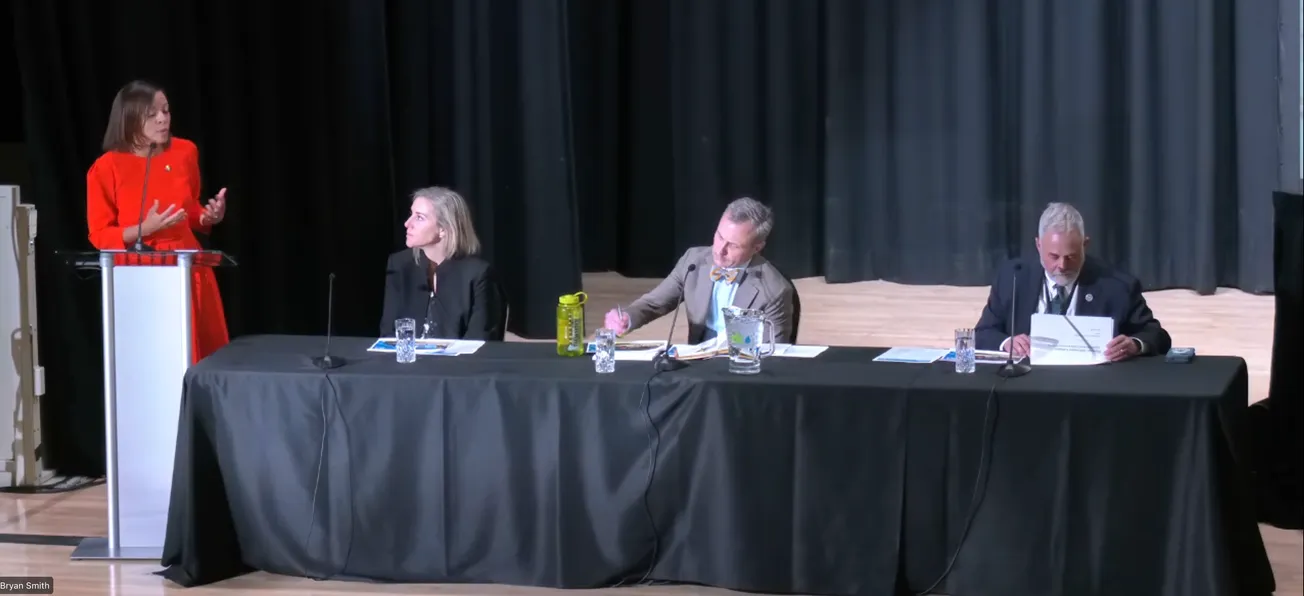
The event, hosted by Mayor Alyia Gaskins, was the first community hearing held by a Virginia jurisdiction since the Jan. 19 pipeline collapse triggered the region's largest sewage emergency in recent memory. DC Water, the Virginia Department of Environmental Quality, the Virginia Department of Health and other agencies fielded nearly two hours of questions from residents gathered in person and online.
The cost, and who pays
Matt Brown, DC Water's chief operating officer, said the total estimated cost of the emergency response and environmental cleanup work scoped so far runs about $20 million. Combined with a capital improvement project that was already planned for the site and is now being accelerated, the full figure climbs to roughly $50 million — the amount of the disaster declaration DC Water has requested from the federal government.
An initial presidential disaster declaration has already been approved, unlocking $5 million in direct federal assistance that funded Army Corps of Engineers and EPA contractors for early cleanup work. That funding is structured as 75% federal, 25% local match. A second, larger declaration covering the full $50 million has been requested but not yet approved.
Brown also disclosed that DC Water's 10-year capital improvement plan already includes more than $600 million in Potomac Interceptor work system-wide, with roughly $350 million allocated in the first five years. Slip-lining work — essentially inserting a new pipe inside the old one — is expected to begin at the collapse site within about a month, once pipe materials are manufactured.
DEQ: Spill was less than half a percent of annual pollution load
Virginia DEQ Director Mike Rolband offered some of the most striking context of the evening, telling the audience that despite the scale of the spill, the total pollution entering the river represented less than half of one percent of the Potomac's annual load of nitrogen, phosphorus and sediment.
"While it's disgusting what was in the river and we don't want that to happen, this actually happens every time there's a significant rain in this area," Rolband said, noting that combined sewer overflow events during heavy storms regularly send comparable loads into the river.
DEQ has concluded its emergency sampling program after finding no significant ongoing water quality problems. Virginia has no regulatory authority over the Potomac River, Rolband noted — the river falls under Maryland and D.C. jurisdiction — but DEQ conducted its own sampling of Virginia shorelines and embayments and is sharing that data publicly.
No fish or shellfish advisories
Lance Gregory, director of the Division of Onsite Sewage and Water Services at the Virginia Department of Health, confirmed that no new fish consumption advisories have been issued as a result of the spill. Existing PCB-related advisories for some Potomac tributaries predate the incident. Shellfish sampling has shown no impacts on Virginia growing areas, Gregory said, and Maryland lifted its precautionary shellfish advisory near the Route 301 bridge on March 10.
Riverkeeper report and the canal culvert
Amanda Zander, DC Water's environmental remediation lead, addressed a pointed question about a March 9 report from the Potomac Riverkeeper Network that identified what appeared to be sewage still leaking from a culvert beneath the C&O Canal into an unnamed tributary. She said DC Water was already planning to install a sandbag diversion and pumping system at that location as part of the cleanup plan, and that work went in around the same time the report was published. With the canal now draining, she said crews will be able to inspect the clay layer of the canal floor and determine what was happening there.
Alexandria's CSO work and what comes next
An AlexRenew representative noted that Alexandria has spent $615 million on its combined sewer overflow program and is on track to complete it this summer — meaning Alexandria will effectively stop discharging untreated overflow into the Potomac during rain events. DC Water is expected to reach the same milestone region-wide by 2030.
Gaskins opened the evening by framing the town hall as an accountability moment. "When many of us learned of the interceptor collapse back in January, we had questions," she said, adding that she wanted residents to leave with answers — or at least know who to follow up with.
DC Water CEO and General Manager David Gadis closed the event, calling the 57-day response "a herculean job" and committing to continue inspections of the aging Potomac Interceptor system to identify other sections at risk.
 Ryan Belmore