by Markus Schmidt and Charlotte Rene Woods, Virginia Mercury
April 15, 2026
Gov. Abigail Spanberger this week signed several immigration-related bills into law and proposed changes to others, clarifying how Virginia agencies can work with federal immigration authorities and setting up a clash with lawmakers ahead of next week’s reconvened session.
The Democrat’s actions come amid mounting Republican criticism following her decision earlier this year to unwind a key cooperation framework between state police and U.S. Immigration and Customs Enforcement, known as a 287(g) agreement.
Critics have argued the move weakened public safety, while Democrats say it restores trust between law enforcement and immigrant communities.
Speaking with reporters outside the Executive Mansion in Richmond last week, Spanberger forcefully rejected claims that Virginia is becoming a sanctuary state.
“Virginia is not a sanctuary state, full stop,” she said. “There’s a lot of misinformation out there, certainly everything that one might read on Twitter is not real.”
Spanberger said her executive action was narrowly tailored to end a specific type of formal arrangement that placed state officers under federal direction — not broader cooperation.
“When I came into office, I said with my executive orders that Virginia state agencies, and principally, state police as the largest of the state law enforcement agencies, would no longer put their police officers, their troopers, under the supervision and direction of ICE agents,” she said. “I feel very strongly about that … and I stand by it.”
She added that coordination between state and federal authorities remains intact when supported by warrants or task force operations, calling reports suggesting otherwise “an absolute lie.”
Her comments come as lawmakers prepare to weigh in on a series of amendments she proposed to legislation passed during the General Assembly session, including one of the most closely watched bills regulating when ICE can conduct arrests in sensitive public locations.
Dispute over courthouse arrest protections
At the center of the debate is Senate Bill 351 by Sen. Saddam Salim, D-Fairfax, and House Bill 650 by Del. Katrina Callsen, D-Charlottesville, which would prohibit ICE from making arrests at locations such as courthouses, schools, hospitals and polling places without a judicial warrant.
Rather than signing or vetoing the measure outright, Spanberger proposed amendments that would remove a provision allowing the state attorney general to sue on behalf of individuals if violations occur.
Her changes would instead require individuals to bring civil action themselves within a two-year window and clarify that “nothing in this section shall be construed to abrogate a claim of qualified immunity.”
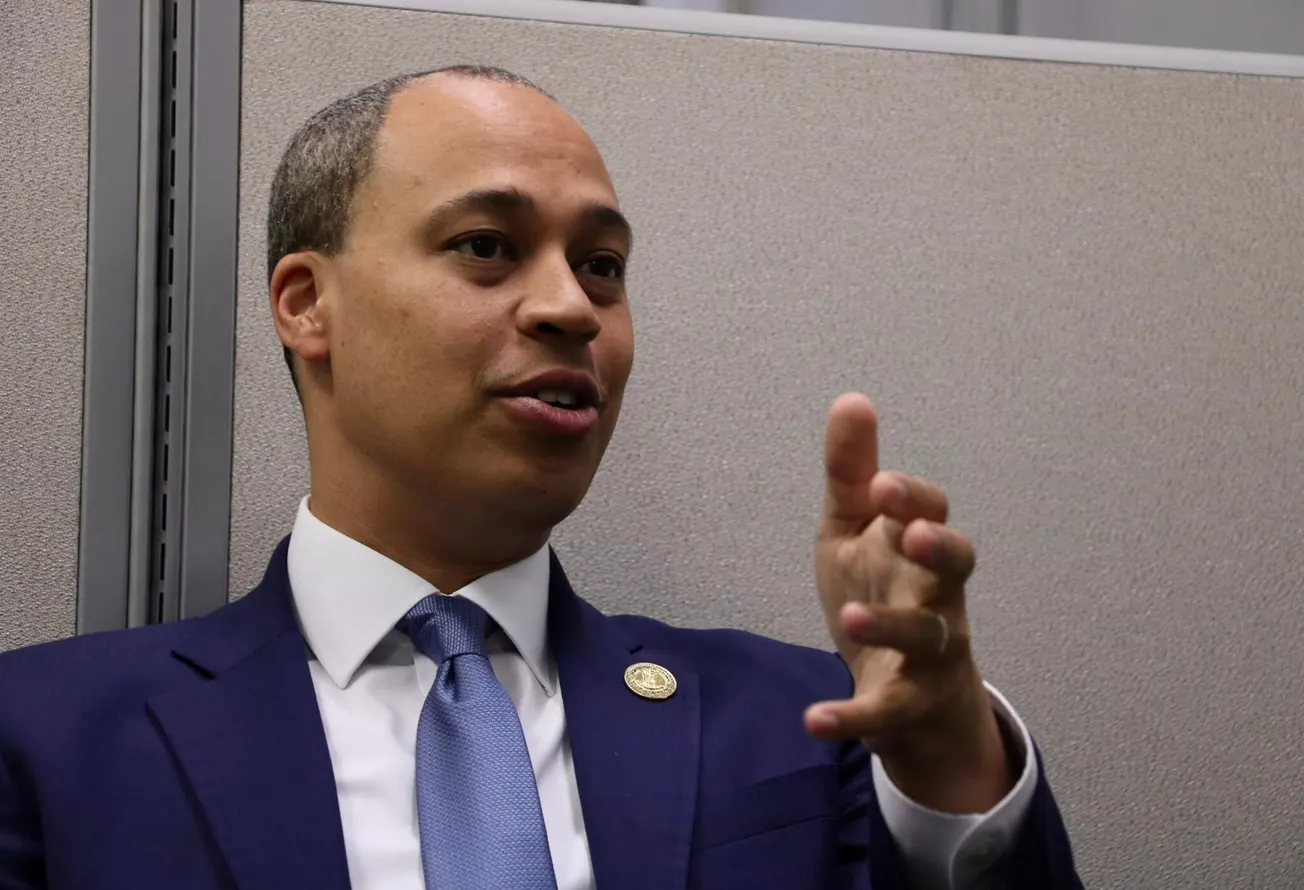
Salim sharply criticized the changes, saying they undermine the bill’s intent.
The amendments “are telling people they’re on their own,” he said, arguing that individuals detained or deported would face significant barriers to pursuing legal claims without state support.
He said the original language was designed to allow quicker legal intervention, particularly in cases where individuals might not be able to advocate for themselves.
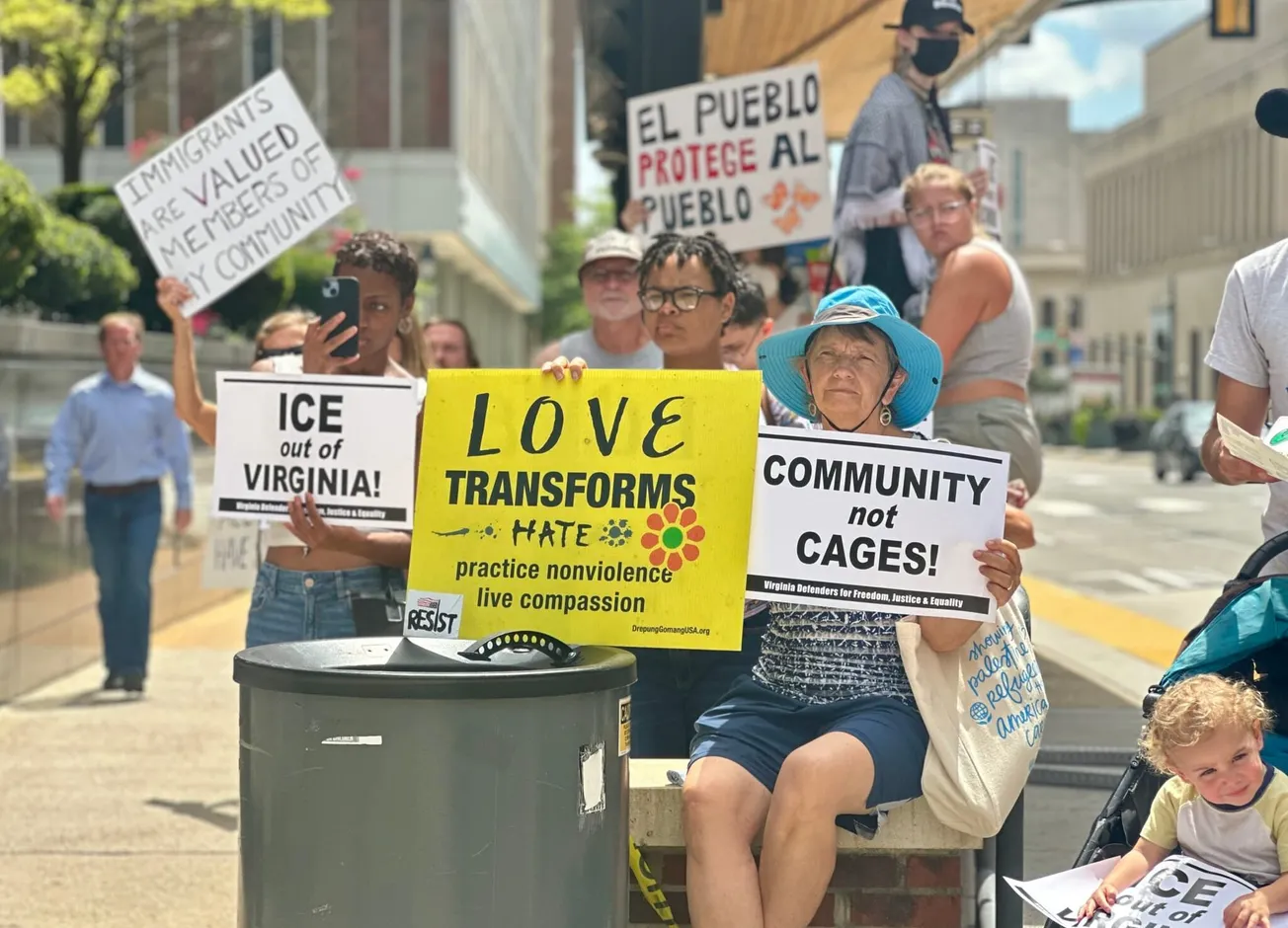
Tensions around ICE enforcement have intensified over the past year, particularly following reports of courthouse arrests in Chesterfield County, where immigrants appearing for minor traffic matters were detained upon exiting proceedings.
Salim said he expects lawmakers to revisit the bill when they reconvene and may attempt to send it back to the governor in its original form, setting up a potential veto showdown.
Meanwhile, House Minority Leader Terry Kilgore, R-Scott, criticized the measure, warning it could trigger immediate legal challenges from the federal government.
“I don’t think I’ve ever seen a bill more likely to draw an instant lawsuit from the Federal government,” Kilgore said.
“The Governor’s version doesn’t beat around the bush: it explicitly attempts to ban federal agents from enforcing federal law. Worse, it guts any agreement that local police have with ICE. More than anything, it proves that Governor Spanberger’s statements about Virginia not being a sanctuary state are flat out false.”
Broader limits on ICE cooperation advance
At the same time, Spanberger signaled support for legislation that would end formal cooperation agreements between local law enforcement and ICE, while still allowing collaboration when backed by judicial warrants.
The legislation — SB 783, pitched by Salim, and HB 1441, sponsored by Del. Alfonso Lopez, D-Alexandria — builds on Spanberger’s earlier executive order ending state-level 287(g) agreements and would extend similar restrictions to local agencies.
Under prior policy expanded by former Gov. Glenn Youngkin, some local law enforcement agencies participated in federal immigration enforcement through agreements that allowed officers to perform certain ICE functions.
According to the Commonwealth Institute for Fiscal Analysis, 27 such agreements remained active across 25 Virginia localities as of early February.
Spanberger emphasized that her changes do not prohibit local participation.
“My predecessor said they had to, but I simply said that I was not forcing them to,” she said, noting that some localities have chosen to maintain such arrangements.
Democrats backing the legislation argue that disentangling local policing from immigration enforcement improves public safety by encouraging residents to report crimes without fear of deportation.
Salim described it as a “surprise” that the governor left that measure largely intact.
Police, advocates cite trust concerns in immigrant communities
Richmond Police Chief Rick Edwards said his department does not participate in ICE agreements and has worked to reassure immigrant communities that they can safely seek help.
He noted a roughly 30% drop in 911 calls from neighborhoods with higher immigrant populations last year, though call volumes have since rebounded.
“I think the message is getting out that we are the police department for everyone here,” Edwards said. “They can call us and we’re not going to ask them about their immigration status.”
He said the biggest concern remains domestic violence, where victims may hesitate to seek protection if they fear immigration consequences.
Advocates echoed those concerns.
Courtenay Schwartz, policy director for the Virginia Sexual and Domestic Violence Action Alliance, said a hotline operated by the group has seen increased calls from individuals seeking help but reluctant to involve law enforcement.
She said some callers reported threats from abusers claiming they could have them deported regardless of their legal status.
“Coercive control is what undergirds domestic violence,” Schwartz said.
Chris Kaiser, policy director for the American Civil Liberties Union of Virginia, said clearer limits on ICE cooperation would improve transparency and public trust.
He called Spanberger’s earlier executive order ending most state agreements with ICE “fantastic” and said the pending legislation would help clarify what is — and is not — permitted for local departments, too.
New laws target officer impersonation, data sharing
Among the bills Spanberger signed without changes is HB 1492, sponsored by Del. Irene Shin, D-Fairfax, which increases penalties for impersonating a federal law enforcement officer, elevating the offense to a felony.
Lawmakers say the measure responds to concerns about individuals posing as immigration agents to exploit or intimidate vulnerable communities.
Spanberger also approved legislation aimed at protecting student data from being shared with federal immigration authorities without proper legal process.
HB 836 and SB 491, introduced by Del. Sam Rasoul, D-Roanoke, and Sen. Stella Pekarsky, D-Fairfax, reinforce that public schools cannot disclose personal information absent a valid warrant.
“Kids deserve to feel safe in school,” Rasoul said in a statement. “We trust our local law enforcement, (but) we do not trust the actions of ICE.”
The governor also proposed amendments to legislation focused on law enforcement transparency, including measures restricting officers from covering their faces while on duty except for health or safety reasons.
HB 1482, carried by Del. Charlie Schmidt, D-Richmond, and by Salim, reflects growing scrutiny of masked enforcement operations in immigration contexts and beyond.
Political backdrop and next steps
Spanberger’s actions unfold against a broader national backdrop, as federal immigration enforcement has ramped up under President Donald Trump’s administration, contributing to a surge in detentions and renewed debate over the role of state and local governments.
The governor has framed her approach as balancing public safety with constitutional protections and community trust.
“Task forces work together, all of that continues to be the case, and coordination with ICE also continues,” she said.
“If ICE comes to a state agency and says, ‘Here’s a warrant,’ they’re going to support them. We are simply not putting state officers under the auspices of the supervision and direction of ICE.”
Lawmakers will return to Richmond next week to consider her amendments and finalize the state budget, where the fate of several of these measures, particularly the courthouse arrest bill, remains uncertain.
YOU MAKE OUR WORK POSSIBLE.
Virginia Mercury is part of States Newsroom, a nonprofit news network supported by grants and a coalition of donors as a 501c(3) public charity. Virginia Mercury maintains editorial independence. Contact Editor Samantha Willis for questions: info@virginiamercury.com.