Table of Contents
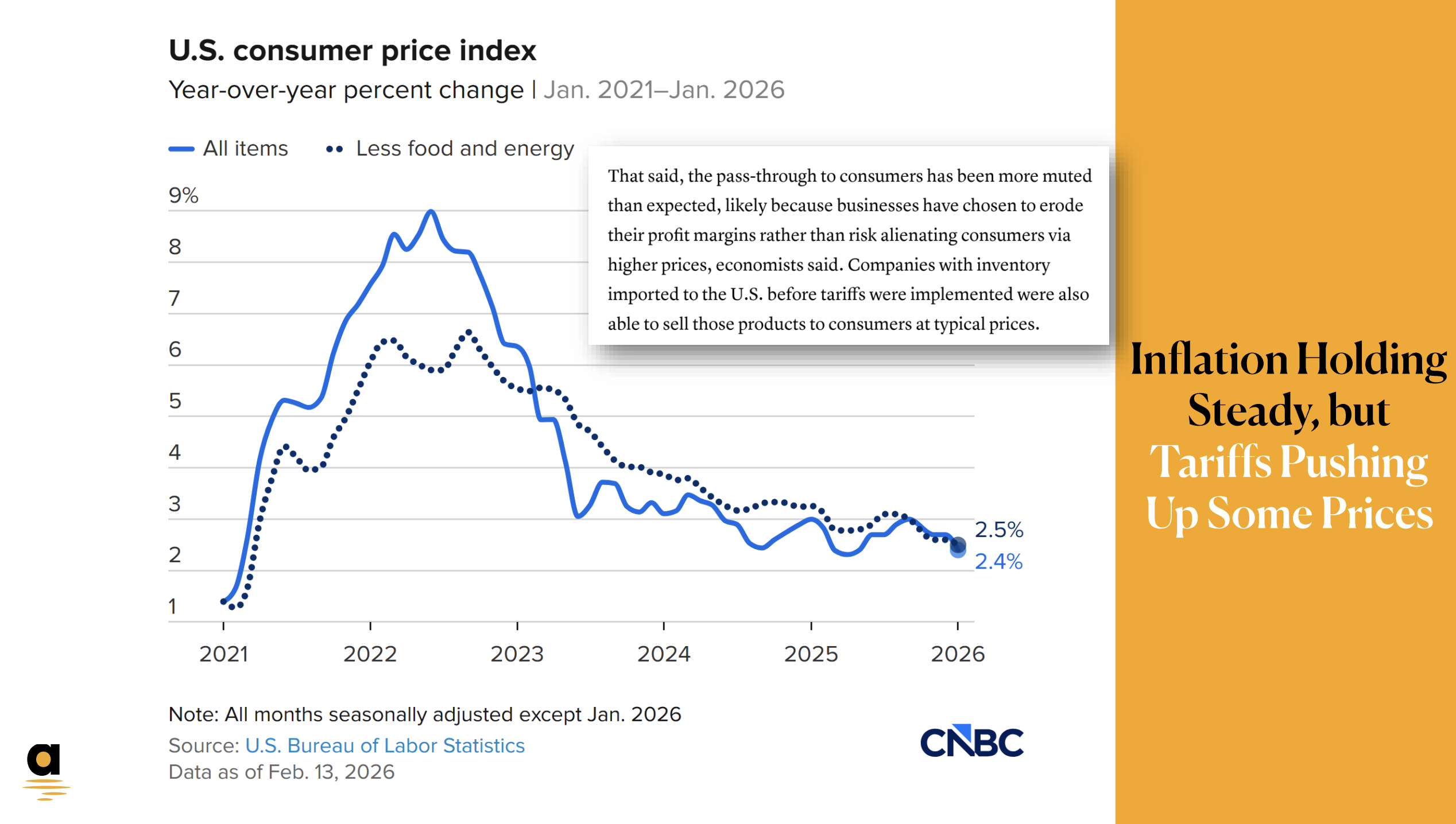
Alexandria’s tourism industry is navigating a complicated economic landscape heading into 2026, with officials citing stalled job growth, tariff-driven price pressures, and a steep drop in Canadian visitors as factors tempering an otherwise resilient travel market.
Visit Alexandria laid out the challenges Thursday morning during its annual What’s New event at the George Washington Masonic National Memorial, where marketing and research officials presented a mixed picture for the regional visitor economy — and introduced a new marketing campaign aimed squarely at addressing them.
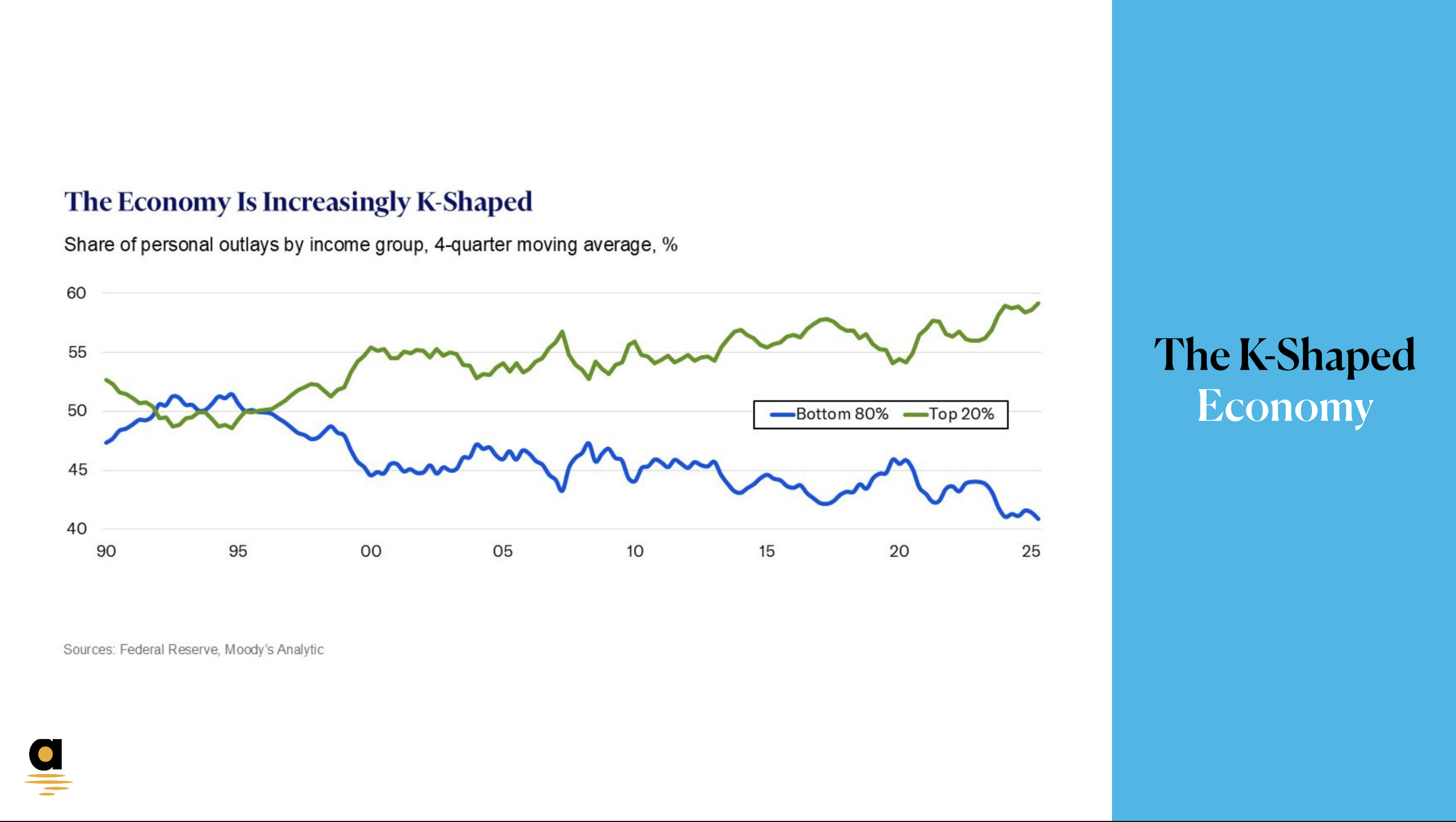
Vito Fiore, vice president of marketing and research, pointed to a “K-shaped economy” as a defining force — one in which high-income travelers continue to spend freely while budget-conscious visitors pull back. That dynamic is showing up in hotel data, where upper-tier properties are outperforming economy and midscale options, a trend officials described as hotel class bifurcation.
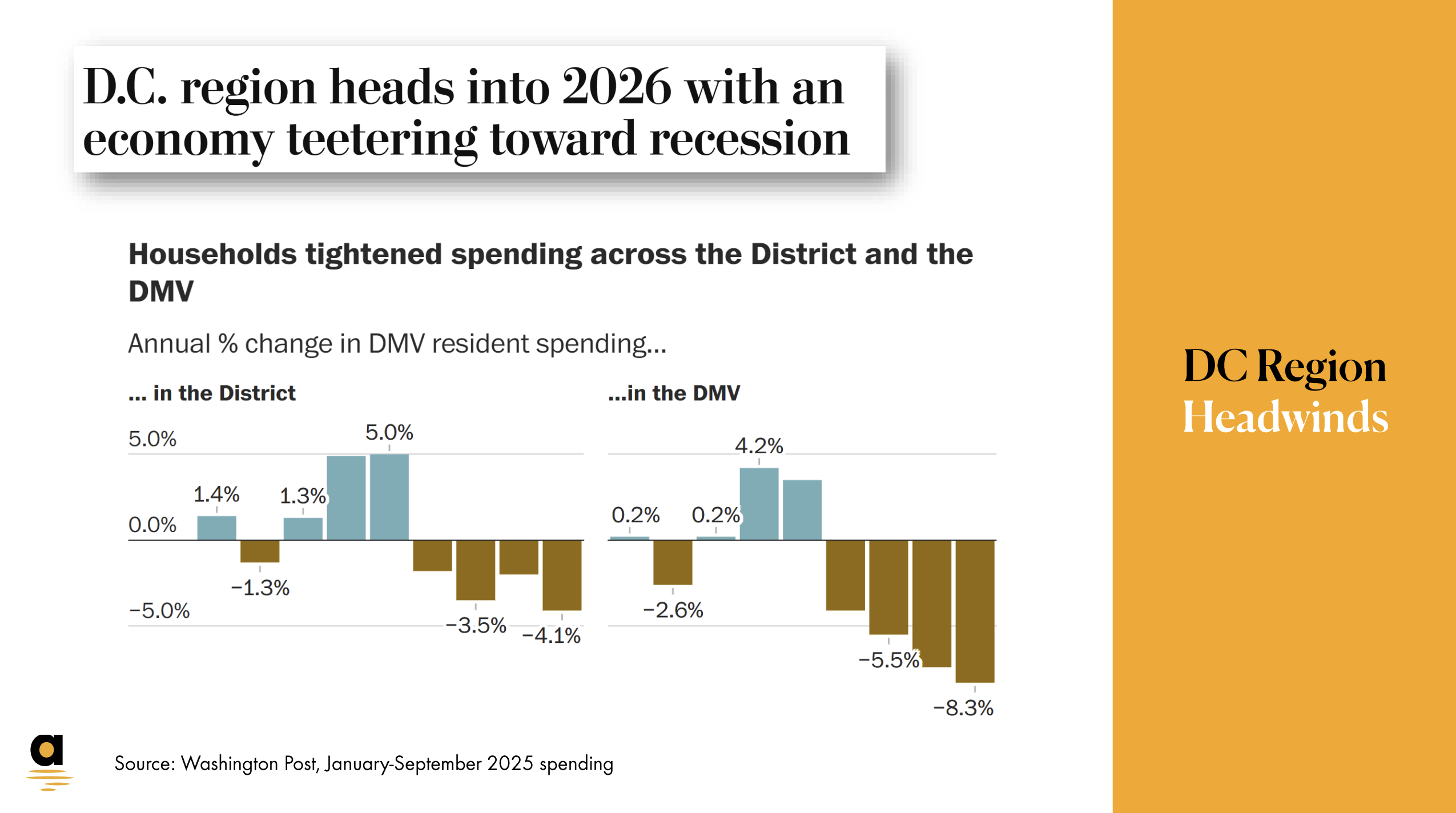
The DC region faces particular exposure to those pressures. A Washington Post analysis cited in the presentation showed DMV resident spending fell as much as 8.3% in recent months as households tightened budgets across the region.
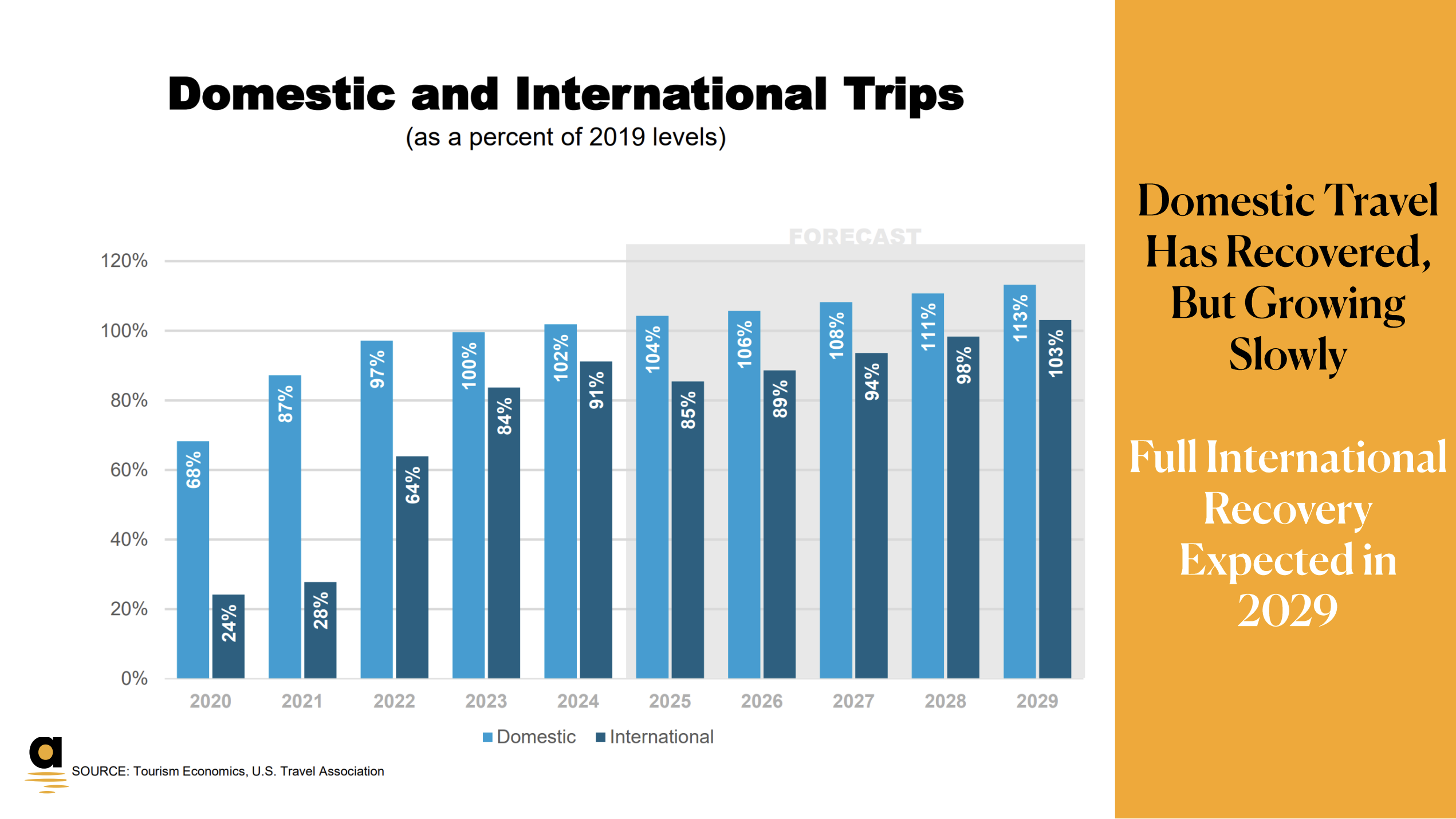
Nationally, domestic leisure travel has largely recovered from pandemic lows but is growing slowly. A full international recovery is not expected until 2029, according to data from U.S. Travel and Tourism Economics cited in the presentation.
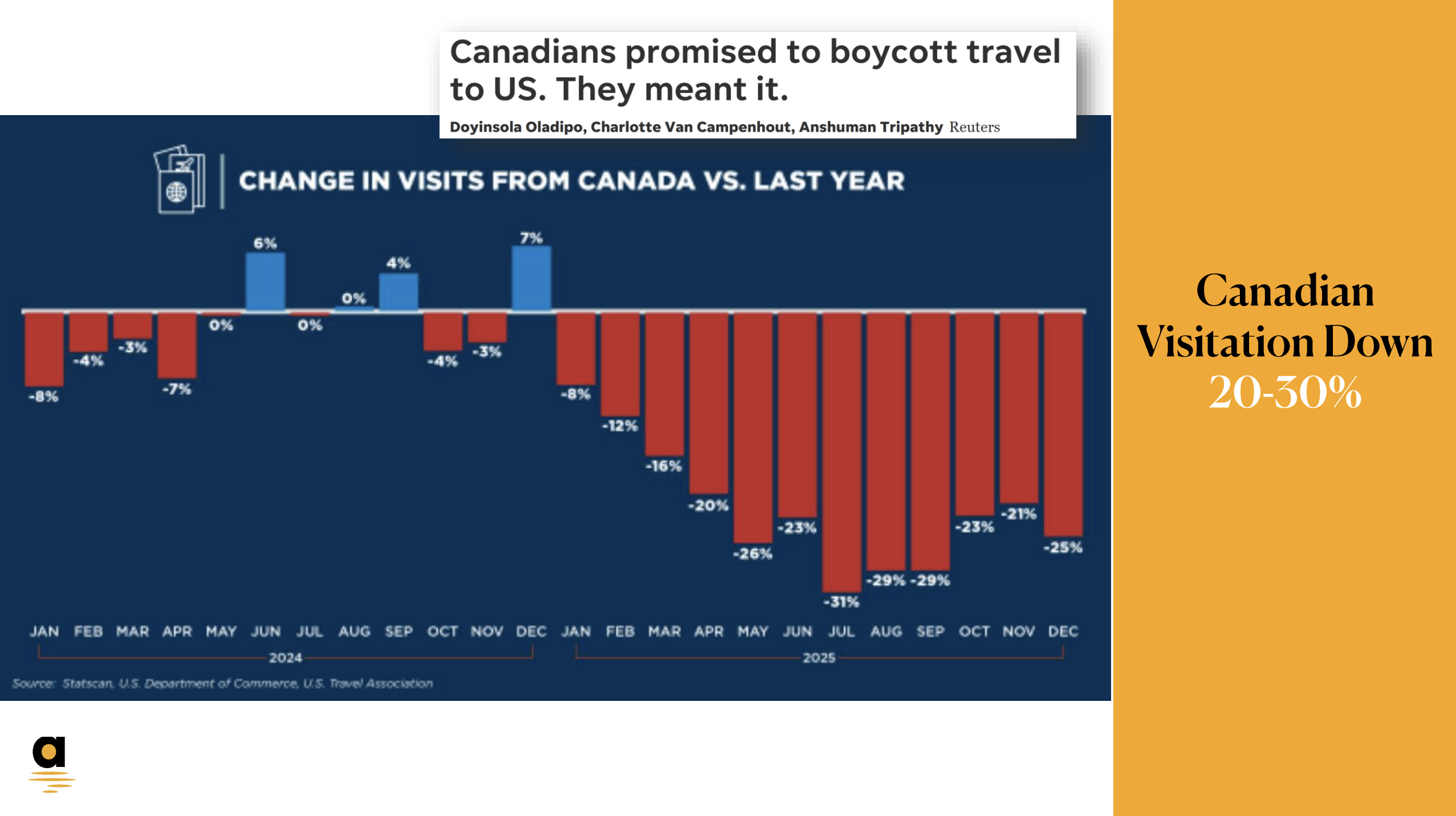
Among the sharper near-term concerns is a 20 to 30 percent decline in Canadian visitation — a drop officials attributed to the current political and trade climate between the United States and Canada. The DC region, which draws a significant share of Canadian tourists, faces particular exposure to that trend.
On the demand side, the picture is nuanced. While overall trip volume expectations remain strong, leisure travel intentions have dipped. Researchers also noted a growing trust gap around artificial intelligence trip planning tools, suggesting travelers remain skeptical of AI-generated itineraries — a potential opening for destination marketing organizations that invest in authentic, editorial-style content.
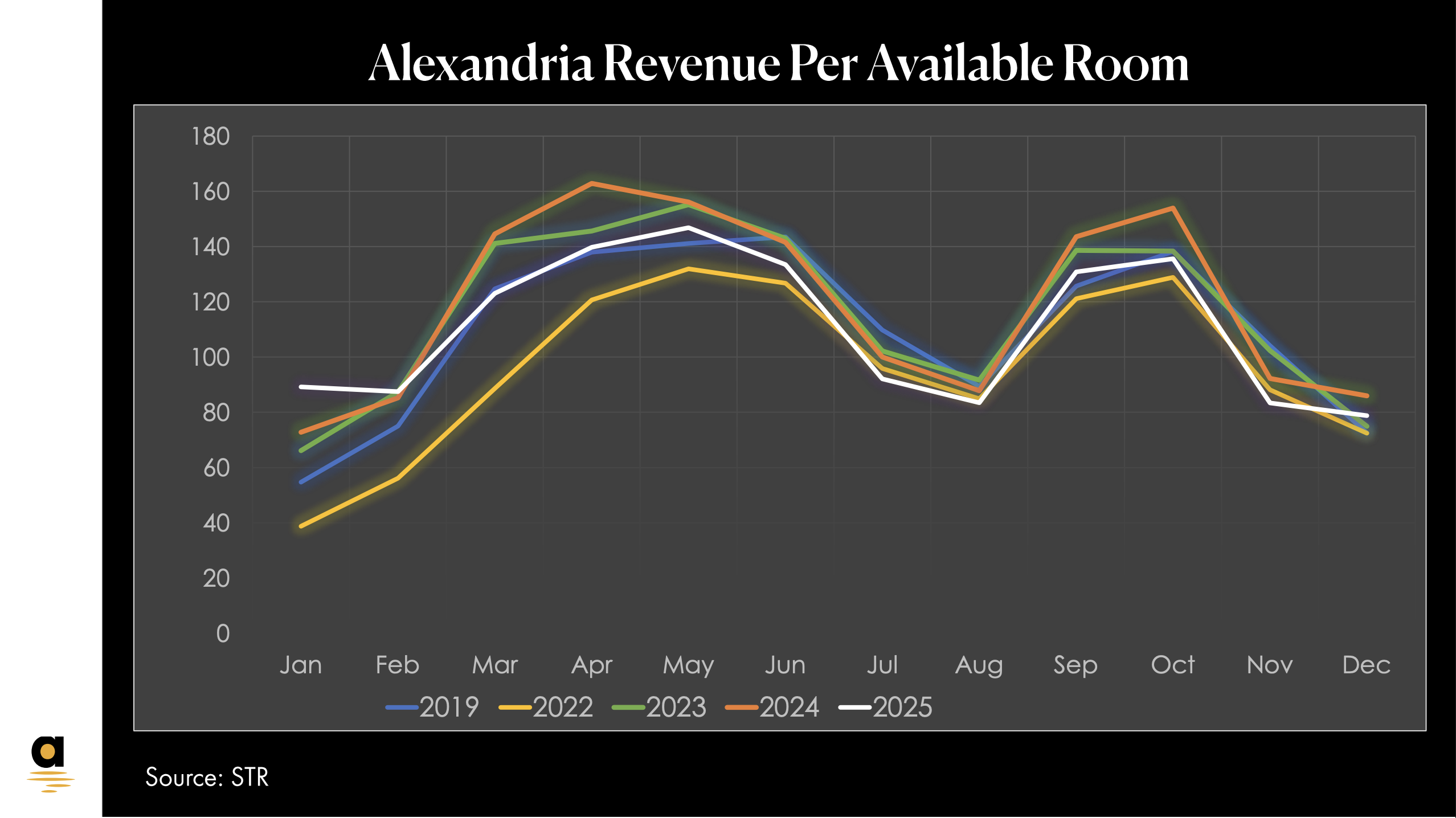
Alexandria’s own hotel performance data showed revenue per available room tracking below 2024 levels for much of last year, though still well above the pandemic-era lows of 2022.
One bright spot: 28 percent of U.S. travelers say they are interested in traveling specifically for America’s 250th anniversary commemorations, according to data from Future Partners. That audience skews male, tends to be younger families with high education and income levels, and represents a meaningful opportunity for destinations like Alexandria with deep Revolutionary-era roots.
Officials also flagged a broader behavioral shift reshaping how destinations should market themselves. Travelers increasingly prioritize experiences over purchases. That trend intersects with a notable generational data point: 73 percent of millennials say they want to take a foodie trip in 2026. Presenters urged tourism partners to move beyond selling activities and instead sell emotion, targeting travelers around their passions rather than their general interests.
“Travelers don’t just go where it’s convenient,” the presentation noted. “They want something that resonates.”
It is against that backdrop that Visit Alexandria on Thursday unveiled Unlock Your Story, a new destination marketing campaign designed to deepen visitor connections beyond Old Town’s well-known historic streetscape. The campaign, built around the idea that Alexandria’s stories haven’t all been told, is the organization’s direct response to what officials identified as its central challenge: limited perceptions lead to limited time — and limited spending — in the destination. Read more about the campaign below.
 Ryan Belmore