by Shannon Heckt, Virginia Mercury
September 16, 2026
Two members of Virginia’s congressional delegation have introduced bills designed to create standards for siting data centers in communities, amplify transparency about the facilities’ power and water use and protect nearby communities from international threats.
“As a country we built our power infrastructure, our internet infrastructure, and the national highway system…with strong federal components or the federal government was the lead. Our data centers are looking like they could be a similar project,” U.S. Rep. Suhas Subramanyam, D-Loudoun, said.
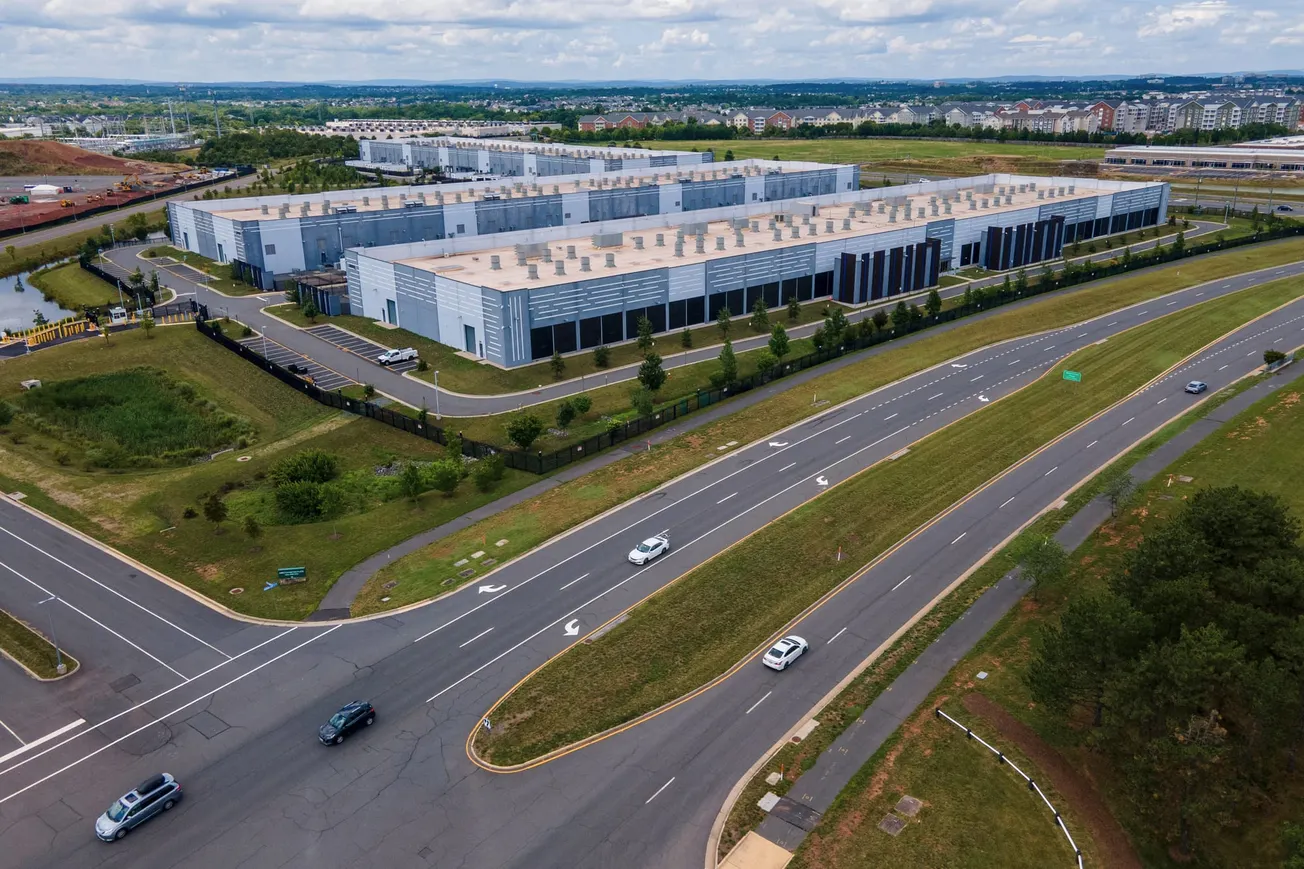
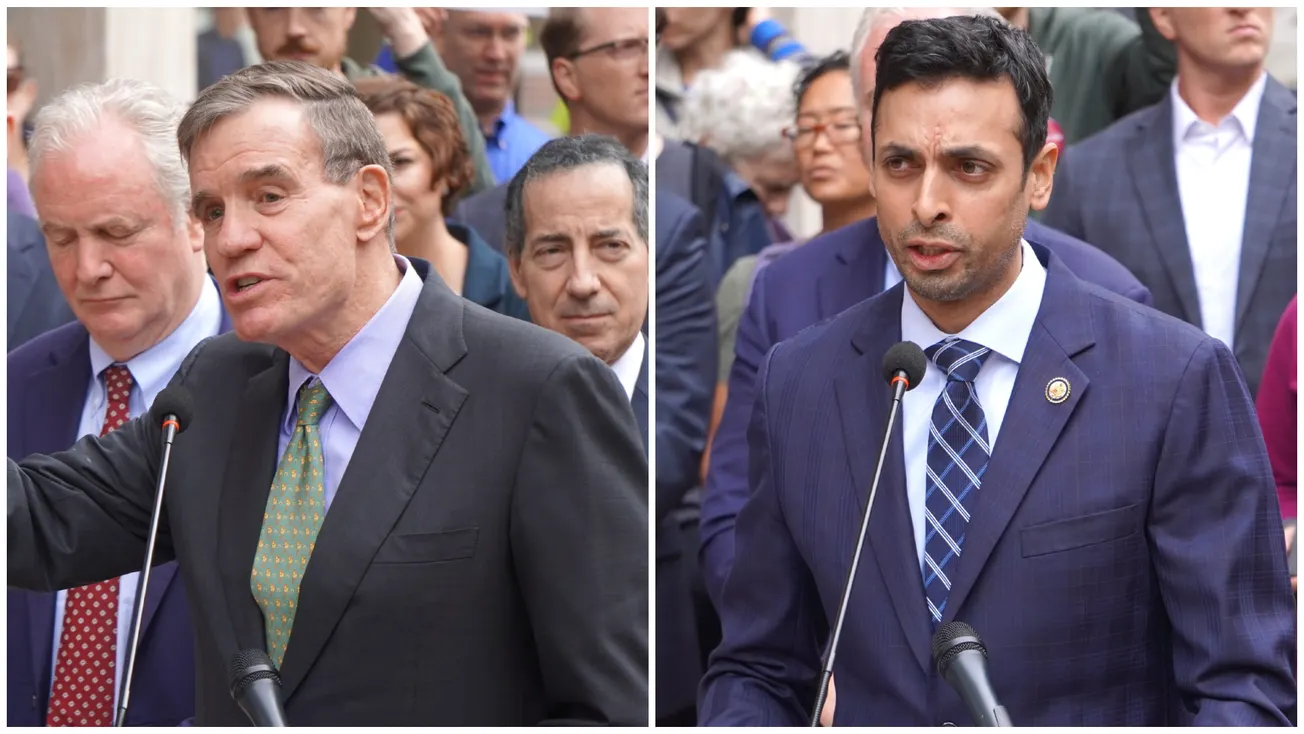
Subramanyam and U.S. Sen. Mark Warner D-Va. recently released a slate of legislative proposals that target the data center industry. The legislators’ bills draw on their firsthand knowledge of data centers in Virginia, which has more data centers than any state in the nation, with nearly 400 operating and over 200 planned.
New bills, provider policies force data centers to pay up
Subramanyam’s Data Center Fair Share Act directs states to develop a tariff to levy on data centers and other large-load users, requiring the facilities to pay for energy infrastructure that must be built to serve them.
The measure would shield residential ratepayers from shouldering the cost of energy generation, transmission and distribution lines that only serve data centers. Under the bill, if a state fails to adopt a tariff, they would lose out on federal highway funds.
In Virginia, Dominion Energy has already taken steps to separate data center-related infrastructure costs from other ratepayers, by creating the GS5 rate class.
Power customers in that class, which mainly encapsulates data centers, are now required to meet specific contractual obligations and payment percentages for generation, distribution, and transmission costs.
Additionally, in the latest case to determine how Dominion charges customers for the buildout of high-voltage transmission lines, the State Corporation Commission ordered the company to create a tariff for data centers to cover the cost of lines that only have to be built because of data centers.
Enhancing siting standards
The Responsible Data Center Siting Act is another proposal by Subramanyam, who was first elected to serve Virginia’s 10th Congressional District in 2025 and is pursuing another term.
His district hosts one of the densest sprawls of data centers in the world. Subramanyam’s bill directs the federal government to create comprehensive guidelines on how to site data centers in communities in a way that protects residents and the environment.
“We are placing a very large concentration of data centers in a few places, including my district. I don’t think that’s sustainable,” Subramanyam said. “We are seeing the industry and its partners prioritize short-term profit over the long term sustainability and community concerns.”
The bill directs the Secretary of Energy to work with the Federal Energy Regulatory Commission, Department of Defense and other appropriate agencies to establish a set of standards for where and how to place data centers in communities nationwide.
“We can’t force states and localities to make decisions about zoning and rate protections, for instance, but what we can do is set very clear guidelines that help not just the states and localities, but industry,” Subramanyam said.
Boosting transparency about power and water
Warner and Subramanyam have pitched similar bills that will require data centers to publicly disclose information about their energy and water use, emissions, backup generation and other environmental impacts.
“It would also condition valuable tax benefits on meeting strong efficiency and sustainability standards. We have to make sure big tech companies are paying for the energy used by data centers, not the residents in these communities,” Warner said in a statement.
His bill would also form the federal tax treatment of AI data centers, conditioning the federal bonus depreciation on data centers meeting various energy efficiency and environmental standards.
Subramanyam’s bill focuses on acquiring accurate projections of how much water and power a data center will need. This information can help localities better plan for the infrastructure and resources needed before they allow a data center to be built in their communities.
“The data is not always accurate and you leave a community finding out later on that they actually need to build extra energy infrastructure or have available extra water infrastructure, and then those resources get taken away from the community,” Subramanyam said.
Subramanyam has also filed a bill to develop a strategy to protect data centers and the surrounding communities from potential cyber or physical attacks from foreign adversaries.
In Virginia, state lawmakers in the General Assembly this year passed legislation to tighten restrictions on back up generators and introduce a new energy consumption tax.
State leaders are also creating more standards for data centers’ water use in some scarcity areas and noise levels near neighborhoods.
Virginia Mercury is part of States Newsroom, a nonprofit news network supported by grants and a coalition of donors as a 501c(3) public charity. Virginia Mercury maintains editorial independence. Contact Editor Samantha Willis for questions: info@virginiamercury.com.