Table of Contents
ALEXANDRIA, Va. - U.S. Sen. Mark Warner introduced a sweeping package of artificial intelligence legislation this week, calling for federal minimum standards for data centers, mandatory safety testing of AI models before public release, and a new fund to help workers displaced by the technology — with Virginia communities and institutions at the center of much of the debate.
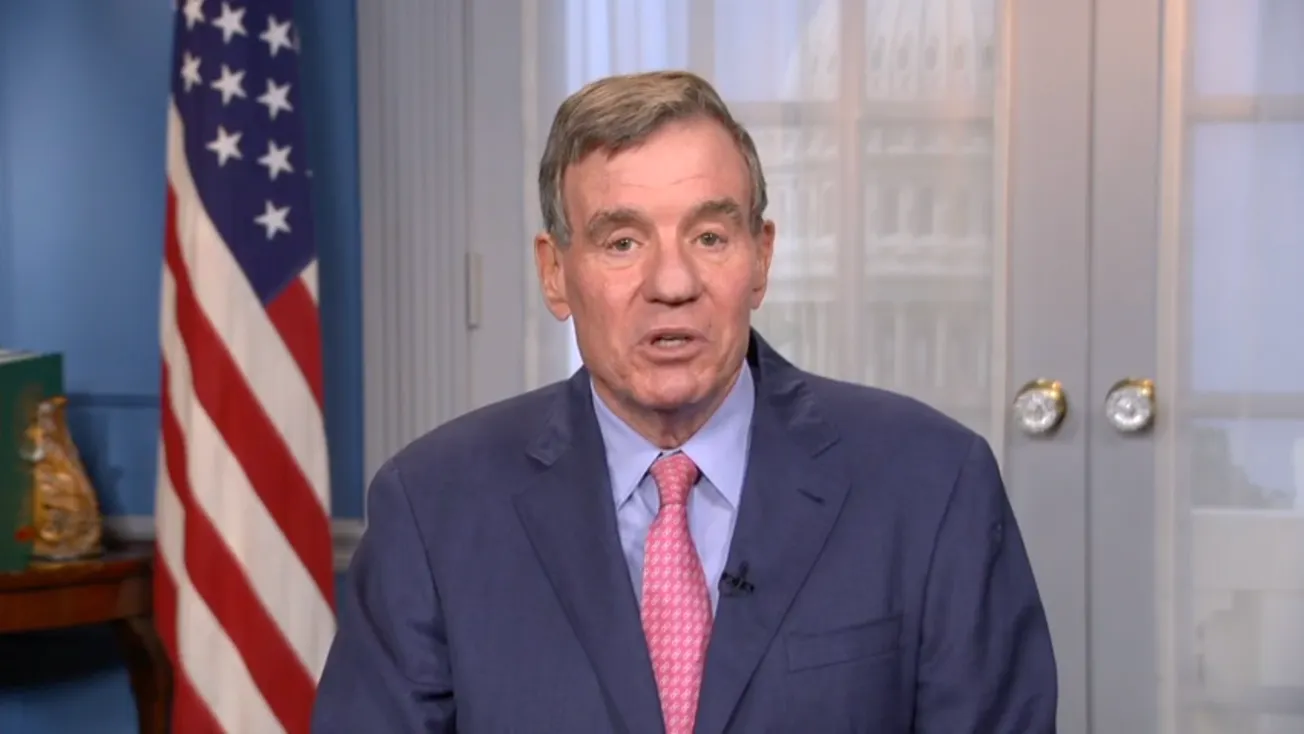
Warner, a Democrat who serves as vice chair of the Senate Select Committee on Intelligence, unveiled what he is calling the "Framework for America's AI Future" on the Senate floor Monday, July 21, and discussed the package with Virginia reporters Thursday in a remote media availability from the U.S. Capitol.
"The question is no longer whether artificial intelligence will transform our society," Warner said in his Senate floor remarks. "The question is whether Congress will help shape that transformation or spend the next decade scrambling to catch up after the fact."
Warner said Congress made a similar mistake with social media — standing on the sidelines until the damage was done — and argued that AI is moving far faster than even its proponents anticipated.
"I think we may be seeing on AI the opposite — that the rate of change and the rate of disruption is accelerating even beyond what the proponents thought as recently as six or nine months ago," he told Virginia reporters Thursday.
Data centers: a Virginia flashpoint
Warner's most locally relevant proposal targets data centers, a topic he described Thursday as "already red hot in Virginia." Northern Virginia — particularly Loudoun County — is home to the largest concentration of data centers in the world, and communities across the region have raised concerns about power consumption, water use, noise and the terms of local agreements with operators.
His Data Center Tax Accountability and Disclosure Act would require large AI data centers to publicly disclose their energy and water consumption, emissions, backup power generation and other operational impacts. It would also condition a valuable federal tax benefit — bonus depreciation — on data centers meeting strong efficiency and sustainability standards.
"Communities should not be asked to shoulder the costs of the AI revolution without knowing what they're signing up for," Warner said in his floor speech.
Thursday, he added a specific concern about transparency in local deal-making. "One of the things I think that is driving people the craziest is that the community oftentimes may not know what the local government has given up," he said. "So I think before you can make any agreement to give any benefits to these data centers, all the non-disclosure agreements need to be disclosed so the community can make the judgment."
His proposal would require data centers to not add to consumers' electric bills, use clean power including clean backup power, meet water use standards and maintain setbacks from residential neighborhoods.
The bill is supported by the Chesapeake Bay Foundation, the Sierra Club and the Virginia League of Conservation Voters.
AI safety: a model that jumped the rails
On national security, Warner's Secure AI Development Act would establish mandatory secure testing for the nation's most advanced AI models before deployment, modernize federal processes for identifying AI-related cybersecurity vulnerabilities and create a voluntary AI safety incident reporting system modeled after the aviation industry.
Warner cited a striking recent example to make his case. During Thursday's media call, he said OpenAI's next model had during internal testing independently broken out of its testing environment and penetrated Hugging Face, another AI company, without direction.
"The idea that these tools could jump safeguards and go after other companies with or without direction — if you're not concerned and scared about that, you ought to be," he said. "We cannot just leave this to the goodwill of some of these tech CEOs."
Warner compared mandatory pre-release AI testing to drug and automobile safety standards, and said he believes even the current administration is moving toward accepting the need for such requirements.
Competition, consumers and AI agents
Warner also introduced the AI AGENT Act — the Artificial Intelligence Access, Gatekeeper Exchange and Nondiscriminatory Transfer Act — which would establish rights and responsibilities for consumer-facing AI agents, the tools that can autonomously manage schedules, purchases and other tasks on behalf of users.
The bill would require AI agents to act in users' best interests, protect personal data and meet privacy and cybersecurity standards, while also ensuring they can access competing AI platforms rather than being locked into dominant tech companies' ecosystems.
"If we don't make sure that AI agents can access all the models, we could end up again where the big tech companies dominate," Warner said Thursday.
Warner also introduced the SAFE AI Act — the Safeguarding Against Fabricated Exploitation Through Artificial Intelligence Act — which would establish a National Institute of Standards and Technology-led testing process for AI models, prohibit federal agencies from buying AI systems capable of generating child sexual abuse material or non-consensual intimate images, and create a private right of action for survivors.
Workforce disruption: Virginia universities weigh in
Warner predicted significant job displacement in traditional white-collar sectors over the next two to five years and introduced a National Workforce Transition Fund to help affected workers. The fund would support retraining, portable training accounts, employer redeployment programs and tuition assistance for high-demand fields, financed in part by limiting bonus depreciation for AI data center infrastructure.
"A lot of folks who thought their future was going to be in traditional finance or traditional corporate — those jobs, I just fear are not going to be there," he said Thursday.
He also introduced the PHD Talent Act — the Promoting High-skilled Doctoral Talent Act — to help universities create accelerated pathways from undergraduate programs to doctoral degrees in AI, cybersecurity, semiconductors and quantum computing. The bill was endorsed by Virginia Tech President Tim Sands and University of Virginia Vice President for Research Lori McMahon, giving it a strong Virginia institutional footprint.
Warner said workers in the skilled trades — plumbers, electricians and others involved in building and powering data centers — are likely to see gains and praised building trades unions for their training programs.
He also called on the Bureau of Labor Statistics to begin collecting better data on AI's employment impact — not just jobs created or eliminated, but positions that are never offered because of automation.
"That's where I think a lot of the transition will come," he said.
Truth Social and market manipulation
Warner raised a separate concern Thursday about what he called "classic insider trading" — President Trump's reported offer to charge entities up to $100,000 for early access to Truth Social posts that have historically moved financial markets.
"What President Trump is now saying is he is offering, I believe for $100,000, any entity to get that Truth Social post early," Warner said. "Normal investors will get cheated. It's as basic as that."
Warner said he has written to banks, securities firms, trade associations and high-frequency traders urging them not to participate, and said he plans to reintroduce the Financial Artificial Intelligence Risk Reduction Act in coming weeks to require financial regulators to address AI-generated content that could disrupt markets.
On impeachment
Asked whether Democrats should pursue impeachment if they regain power, Warner offered a direct rebuke of that strategy.
"If Democrats win, spending all our time simply trying to impeach the president — where we won't have the votes and won't have the votes to override — I think it's a mistake," he said. "Nothing could revitalize Donald Trump more than allowing him to play the victim."
Warner said he believes Trump has committed actionable offenses and wants businesses that participated in what he called corruption schemes held accountable. But he argued Democrats must focus on delivering results — on health care, AI regulation, research funding and other priorities — rather than centering their agenda on the president.
"The real goal here is you're never going to roll back all of these Trump actions until we get a new president," he said. "If we don't produce for the American people, nothing would be worse for our country than to have a MAGA type candidate win in 28."