
Table of Contents
ALEXANDRIA, VA. - The Washington metropolitan area lost 100,500 jobs between May 2025 and May 2026, with federal workforce reductions accounting for more than half of those losses, according to new data from the Metropolitan Washington Council of Governments.
Of the total jobs lost, 54,500 were federal positions. From January 2025 to May 2026, the total number of federal jobs in the region dropped from 375,800 to 312,500 — the lowest level in 30 years. The Washington-Arlington-Alexandria metro area has a higher concentration of federal employment than any other metropolitan area in the United States, according to COG.
The professional and business services sector also shed approximately 32,100 jobs compared to the previous year.
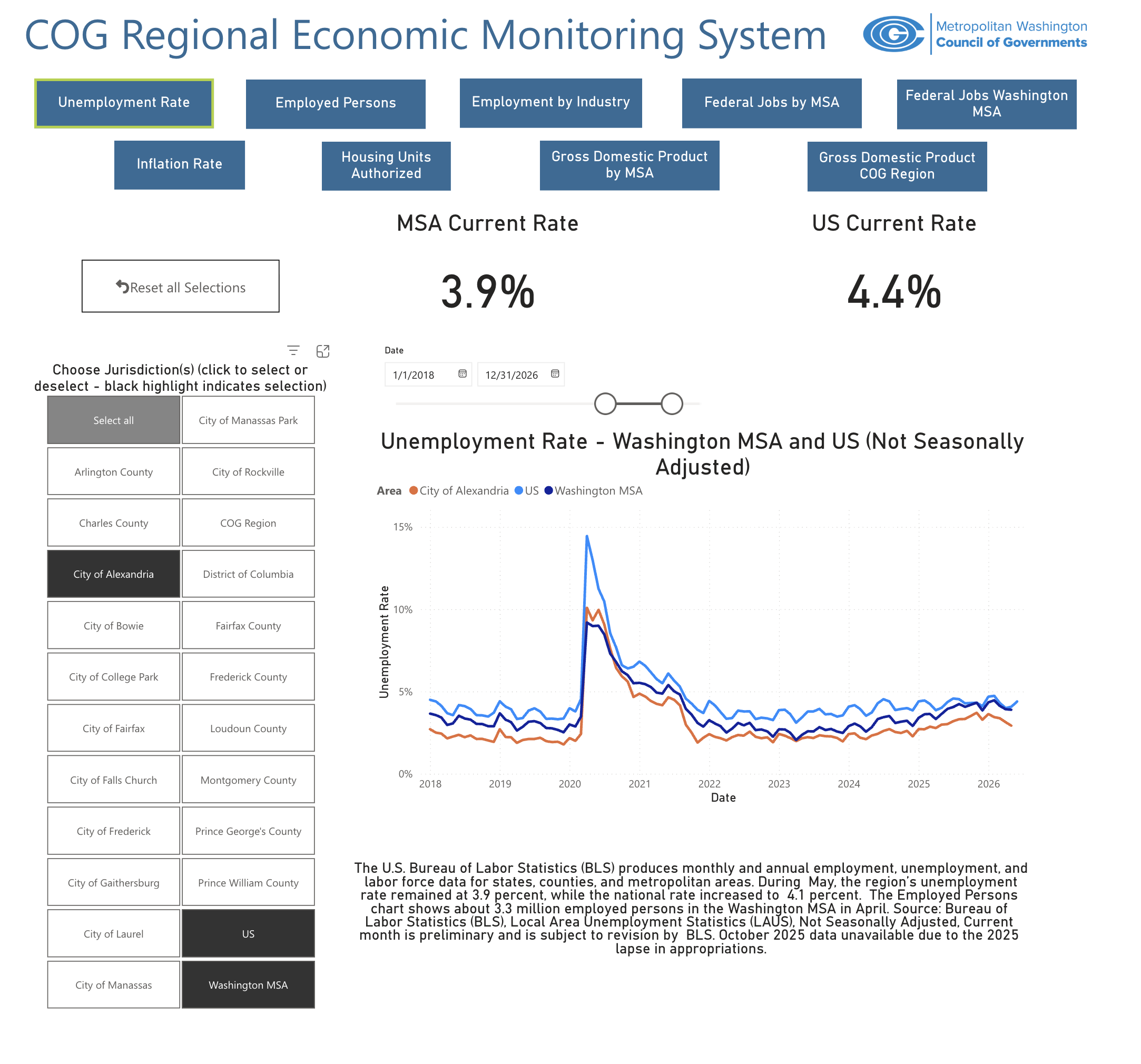
Alexandria is not immune to the broader regional trends, but the city's unemployment rate of 3.1 percent as of April 2026 remains below the Washington MSA rate of 3.9 percent and the national rate of 4.0 percent, according to COG's dashboard. A year earlier, in May 2025, Alexandria's rate stood at 3.0 percent, the MSA at 3.6 percent, and the national rate at 4.0 percent — suggesting the region's job losses are beginning to push unemployment modestly higher even in relatively insulated localities. COG's data shows Alexandria has consistently tracked below both the regional and national unemployment rates going back to at least 2018. The city had approximately 96,006 employed persons as of May 2026.
Inflation has accelerated sharply across the region. The Washington MSA inflation rate reached 4.1 percent in May 2026, up from 3.0 percent in March and more than double the 1.9 percent rate recorded during the same period a year earlier. The national inflation rate rose from 3.3 percent in March to 4.2 percent in May.
The data comes from COG's Regional Economic Monitoring System, which tracks job growth, unemployment, inflation, housing production, and federal workforce changes across the District of Columbia, suburban Maryland, and Northern Virginia. An interactive dashboard with current and historical data is available at mwcog.org.