Table of Contents
Two of the three candidates in Alexandria's April 21 City Council special election have submitted responses to a biking and pedestrian safety questionnaire from the Alexandria Bicycle and Pedestrian Advisory Committee. Democratic nominee Sandy Marks and independent Frank Fannon filed responses; independent Alison Virginia O'Connell has acknowledged receipt but has not submitted answers as of Tuesday.
BPAC, a registered nonprofit, does not endorse candidates. The responses are posted at alexandriabpac.org.
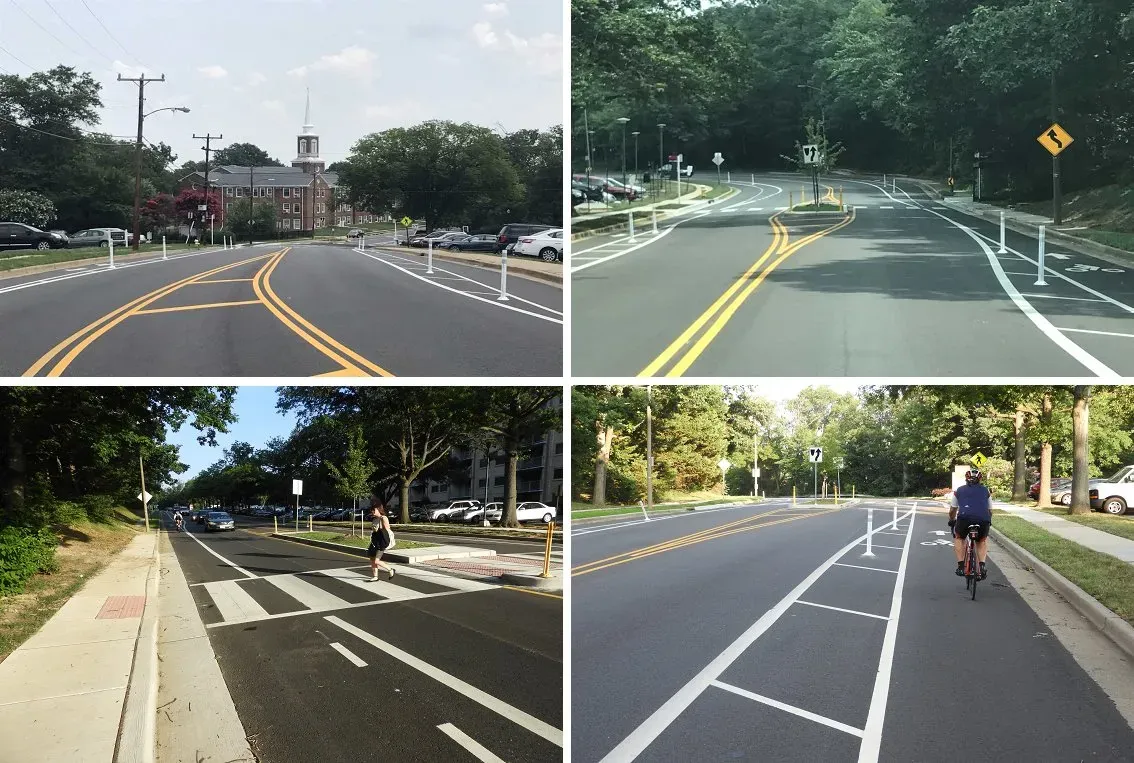
The questionnaire covers candidates' personal walking and biking experience, feelings of safety, support for specific infrastructure investments, and their positions on the city's planned Complete Streets project on Braddock Road — a proposal the Alexandria Brief has covered extensively since last fall. The Alexandria Brief published a publisher's note explaining the project in detail ahead of February's Traffic and Parking Board hearing, and reported on the personal attacks that emerged in public comments leading up to the vote. The board approved the project in late February; implementation is expected in 2028.
During February's Democratic firehouse primary, Marks was one of two candidates — along with Tim Laderach — who affirmed support for the Braddock Road project at an Alexandria Federation of Civic Associations forum. The Alexandria Brief covered where all five primary candidates stood on biking and pedestrian issues ahead of that election.
Personal experience
The two candidates describe strikingly different relationships with active transportation.
Marks, who lives in Del Ray, says she walks at least a few miles every day — for exercise, errands, and community connection. She uses Capital Bikeshare to extend her range and describes biking as something she does more than she realizes. She writes that watching Alexandria's streets on foot and by bike has given her practical insight into infrastructure needs across neighborhoods.
Fannon describes himself plainly as a "car first person." He says he owns a bike but rarely rides it, and that his lifestyle requires driving to transport people and things. He has lived in three Alexandria neighborhoods for over 35 years — Rosemont, near Duke and Henry streets, and his current home in the College Park/Clover neighborhood — and says he has never felt unsafe walking and has never come close to a pedestrian-vehicle accident.
Safety and infrastructure
Asked what three measures should be taken to improve pedestrian and bike safety, the candidates' answers point in opposite directions.
Marks offers three concrete priorities: protected infrastructure and Complete Streets design that changes behavior without relying on constant enforcement; connectivity that closes gaps along routes to schools, parks, libraries and transit; and a strengthened Safe Routes to School program. She shares a personal note — her younger son was struck by a slow-moving car in their neighborhood despite doing everything right — and says the experience informs how she thinks about street safety.
Fannon does not offer three specific safety measures. Instead, he argues that the car remains Alexandria's primary mode of transportation and that the city must keep traffic flowing as it grows. He says he has noticed what he describes as unnecessary no-turn-on-red signs at intersections, slowing vehicular traffic.
On speed cameras, Marks says yes — when used transparently, with equitable placement and regular public reporting — on major corridors where speeding causes crashes. Fannon opposes them, arguing they are a revenue tool that removes human judgment and can impose a significant financial burden on lower-income residents.
The bike network
Marks calls the lack of a complete, connected network one of the biggest barriers to more biking — particularly for new or infrequent riders. She says unpredictability, not distance, is what keeps people from biking more, and that closing gaps along east-west connections and near schools should be the priority.
Fannon says he is glad Alexandria has shared roadways for cars and bikes, but argues that bike lanes have been "too divisive" and "quite often unnecessary." He says he drives Seminary Road and upper King Street multiple times a week and rarely sees cyclists.
Braddock Road
The sharpest difference between the two candidates is on the Braddock Road Complete Streets project, which is likely to come before the City Council on appeal.
Marks says safety must be the primary goal. She says she has already met with Rosemont neighbors to share that view and that while the tradeoffs are real — including parking, convenience, and neighborhood needs — the data on speeding and crash history creates an obligation to act. She says she wants more families to feel safe walking and biking to George Washington Middle School and nearby shops without needing a car.
Fannon draws a line at parking. He says he supports safety improvements between West Street and Mount Vernon Avenue, but would not support removing parking spaces between Mount Vernon Avenue and Russell Road, citing the needs of local churches and homeowners and what he describes as a limited documented history of serious safety concerns for cyclists in that stretch. The city's data, reported by the Alexandria Brief, shows 17 crashes and 8 injuries on the corridor between 2019 and 2023, as well as a pedestrian fatality in 2015.
What's next
See the full responses from the candidates here. BPAC said it is still hoping to receive O'Connell's responses.
The Braddock Road project was approved by the Traffic and Parking Board in late February. If appealed to the City Council, the next council member — seated as early as May 2 — could have a vote on its fate.
Early voting is underway through April 18 at the Office of Voter Registration and Elections, 132 N. Royal St. Election Day is April 21.
 Ryan Belmore