Table of Contents
Alexandria City Council meets Tuesday night with two budget-related items on the docket that will shape the city's fiscal debate through spring: a resolution of intent to change how it funds Alexandria City Public Schools, and the introduction of an ordinance setting the maximum allowable property tax rates for calendar year 2026.
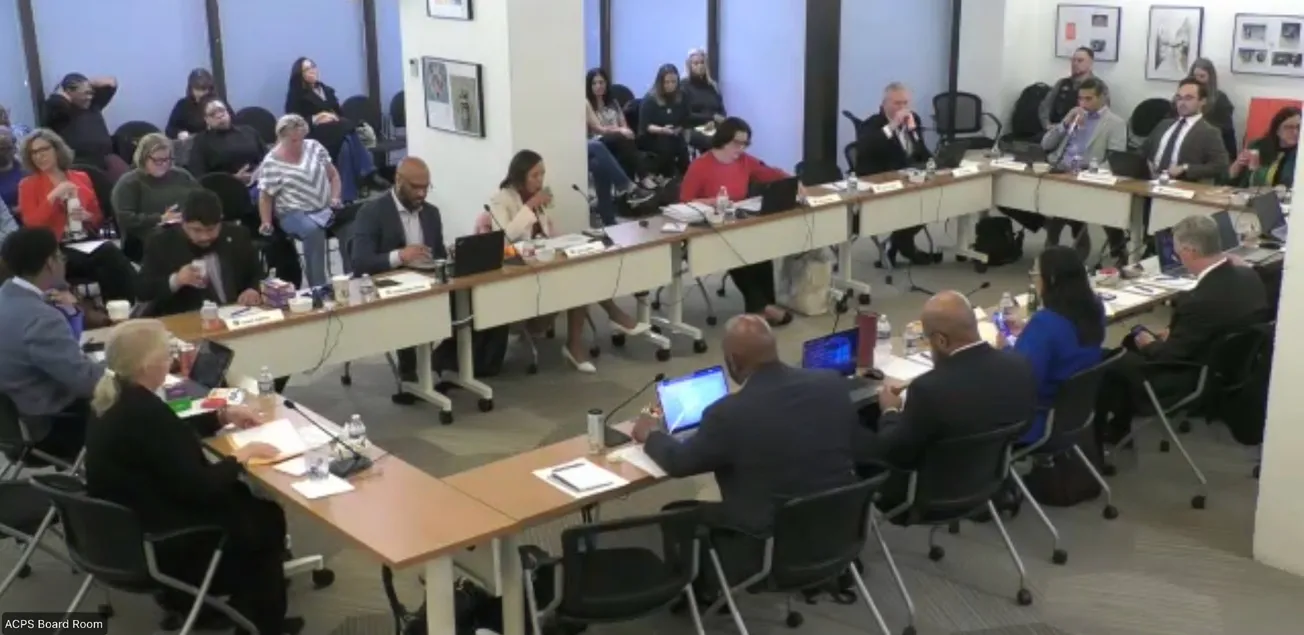
The meeting comes six days after a joint work session with the School Board focused on a $5.6 million gap between what ACPS says it needs to honor its first collective bargaining agreement and what City Manager Jim Parajon's proposed budget provides. Final budget adoption is set for April 29.
The classification resolution
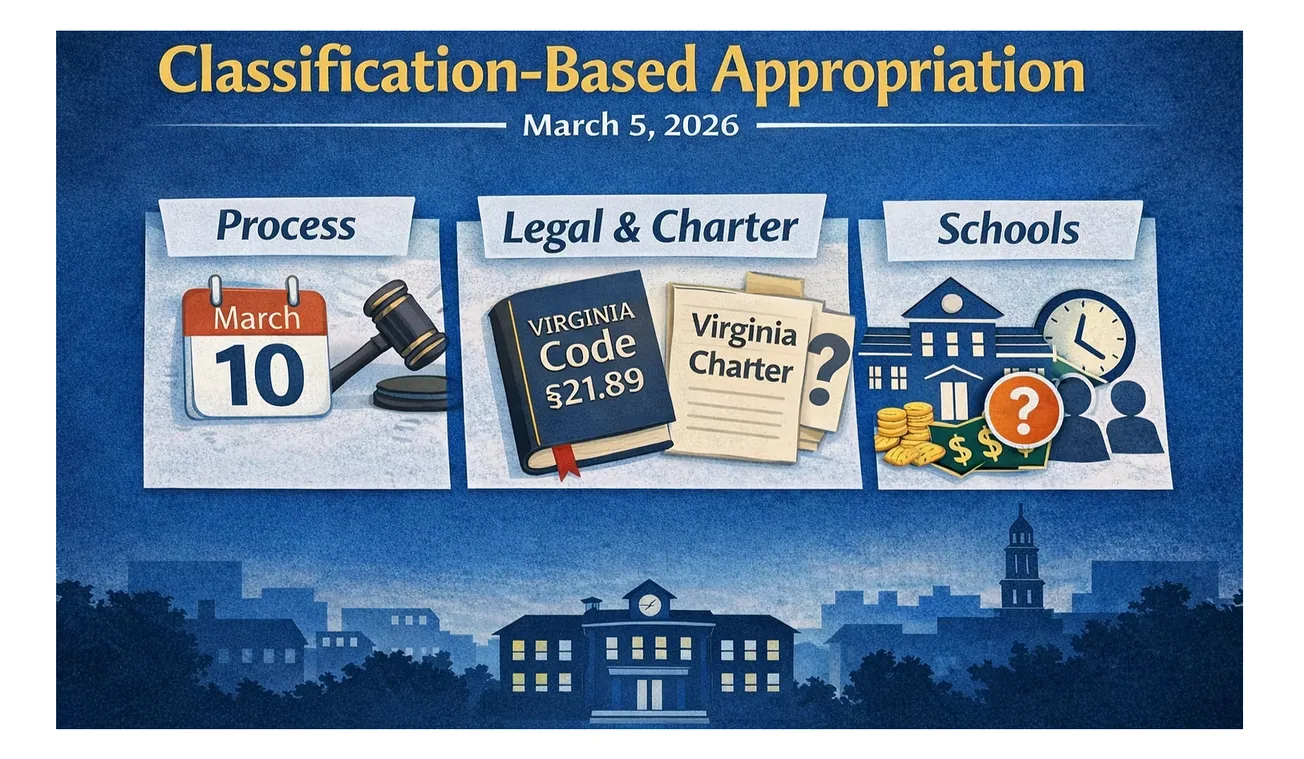
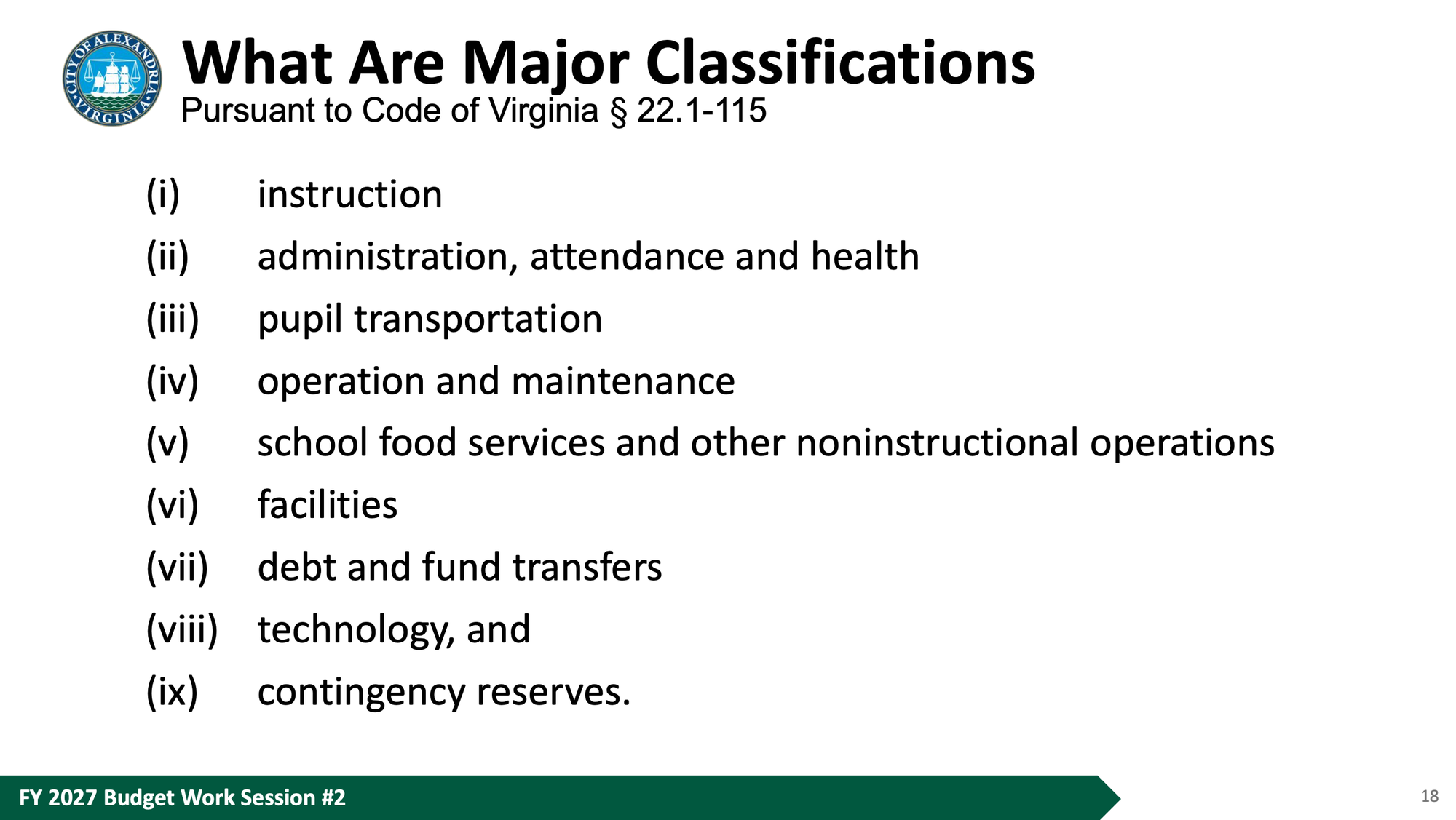
Item 18 on Tuesday's docket — added in a revised agenda published Friday — asks Council to formally declare its intent to appropriate ACPS funds beginning in FY 2028 by the nine major classifications defined in Virginia law: instruction, administration and attendance, pupil transportation, operation and maintenance, food services and noninstructional operations, facilities, debt and fund transfers, technology, and contingency reserves. Under the current practice, Council appropriates a single lump-sum transfer to ACPS each year.
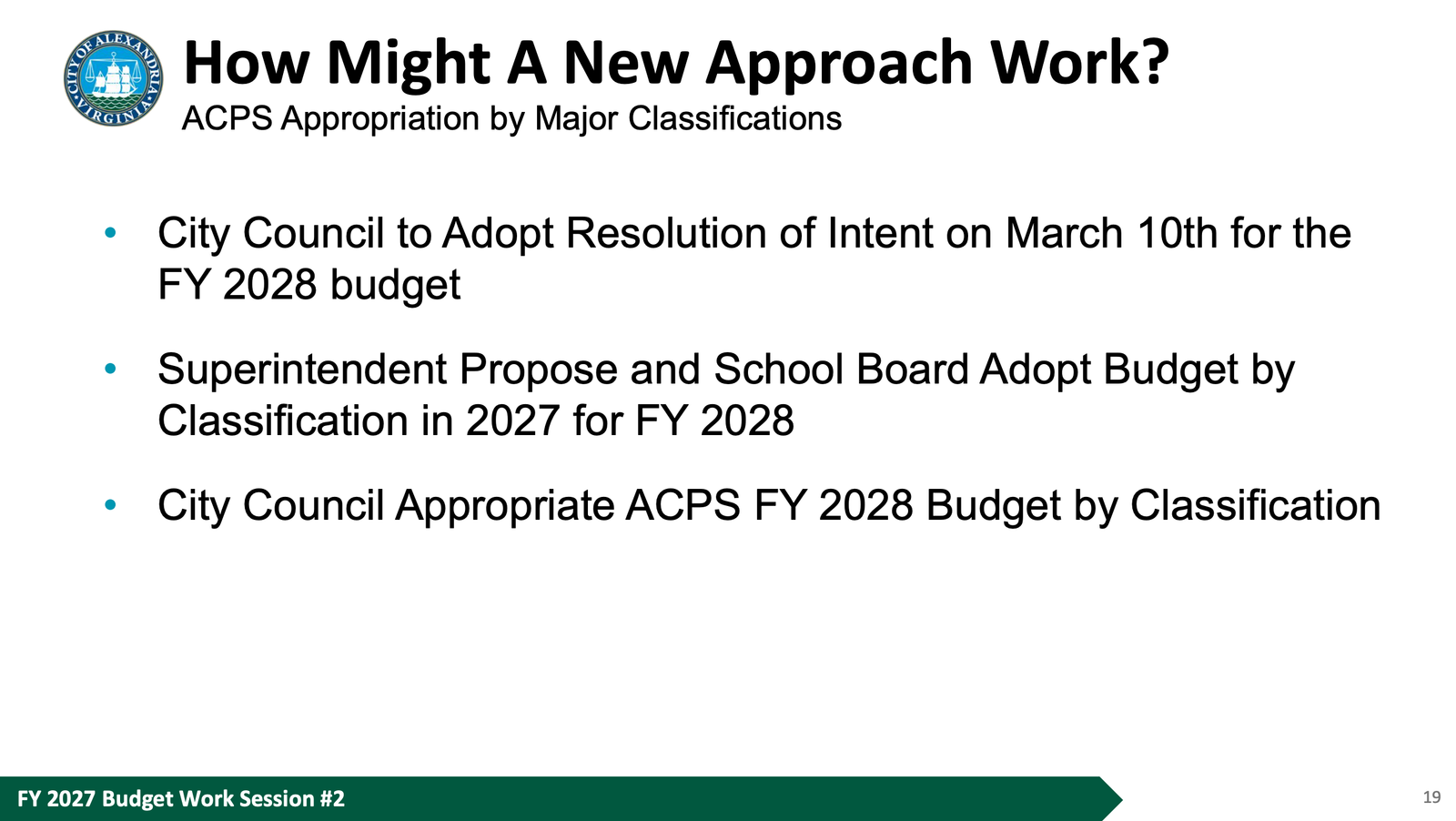
The resolution text, published Friday alongside the revised docket, frames the change as a transparency measure. It cites Virginia Code § 22.1-94, which explicitly permits either lump-sum or classification-based appropriation, and directs ACPS to submit its FY 2028 budget estimates broken down by those categories.
Mayor Alyia Gaskins previewed the proposal at Wednesday's joint work session, framing it directly in the context of the collective bargaining dispute. "If someone says, well, council, you need to fund collective bargaining, well, there's a way that the category can say collective bargaining," she said. "And you would see either we're funding it or we're not funding it."
School board member Kelly Carmichael Booz published a statement Friday raising legal, procedural, and operational objections to the proposal, arguing that multiple sections of the Alexandria City Charter deliberately insulate school funds from city financial controls. The resolution cites the same charter section Booz flagged — Alexandria City Charter § 6.03 — but interprets it as requiring ACPS to submit budget estimates by classification to the City Manager, not as a constraint on how Council may appropriate funds. Booz is asking the school board to authorize Chair Michelle Rief to send a formal memo to Council requesting a delay and a dedicated joint session before any vote is taken.
 Ryan Belmore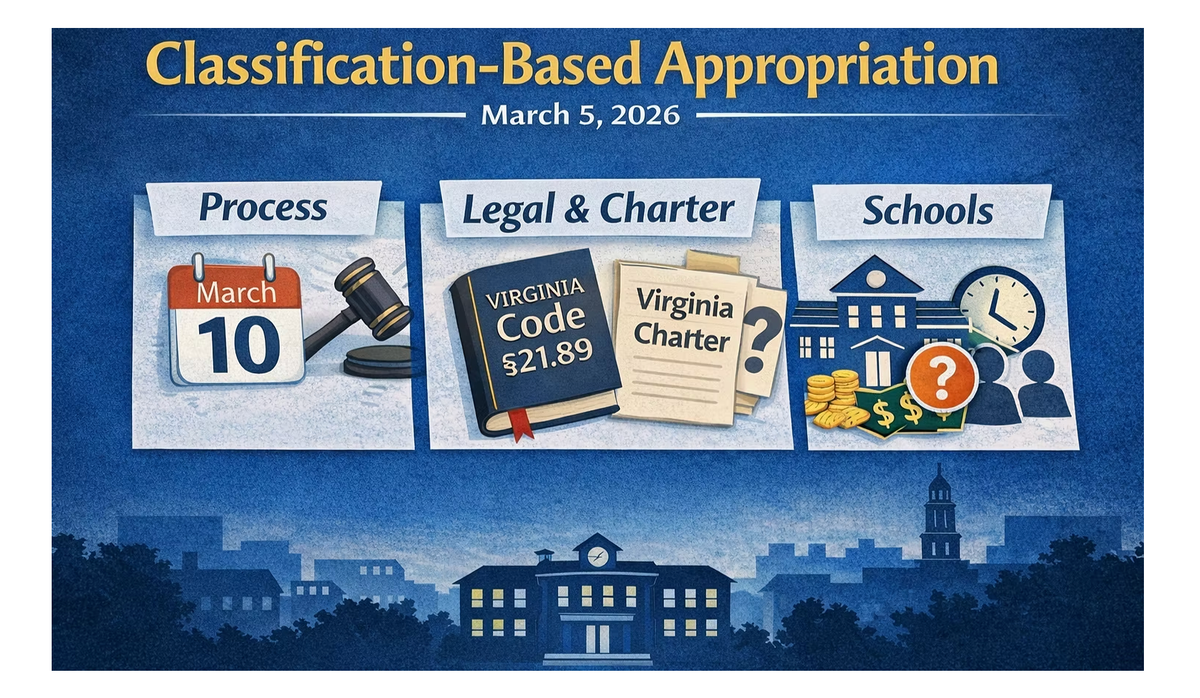
The tax rate ordinance
Tuesday's meeting marks the introduction and first reading of the ordinance setting calendar year 2026 property tax rates. A second reading and public hearing are scheduled for April 18, with final passage on April 29.
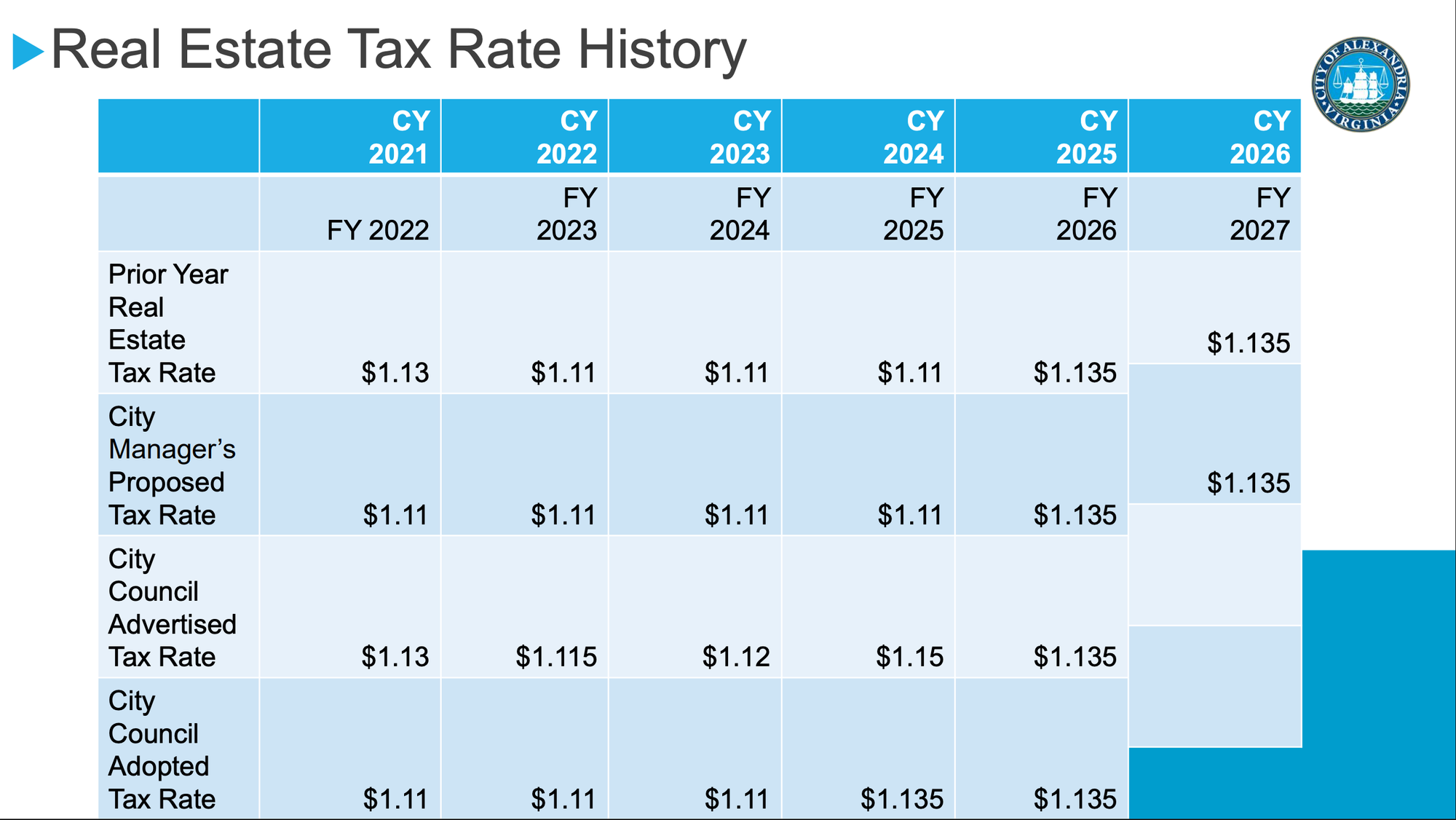
City Manager Parajon's proposed budget holds the real estate tax rate flat at $1.135 per $100 of assessed value, the same rate in effect for the past two years. But Tuesday's first reading sets the maximum advertised rate, which Council can set higher than what it ultimately intends to adopt — preserving flexibility as the budget process continues through the spring. In four of the past five budget cycles, Council advertised a rate higher than the one it ultimately adopted.
Whether Council will advertise a higher rate this year is an open question, and one directly connected to the schools funding dispute. At Wednesday's work session, Gaskins was explicit that there is no council consensus on a tax increase. "There is not agreement among the full body on a tax increase," she said. "There's, I think, one person who's eager to pursue that." She added that even if Council pursued an increase, any new revenue would be divided across all city departments — not directed solely to ACPS.
The city's total new general fund revenue growth for FY 2027 is approximately $20 million, driven largely by a 3.51% increase in taxable real property assessments. Parajon's proposed budget already draws on approximately $14 million in fund balance for FY 2027 operations — near the upper limit of what the city's fiscal policies allow without risking its AAA bond rating, according to Budget Director Morgan Routt.
The ordinance's actual tax rate figures are blank in the published draft, as is standard practice at first reading. Council will vote Tuesday night to set the maximum advertised rate — the ceiling from which it will work toward a final number at second reading on April 18 and adoption on April 29.
 Ryan Belmore
What's at stake
Together, the two items frame the central tension Council will have to resolve before April 29. The classification resolution, if adopted, signals to ACPS that the era of lump-sum appropriations is ending and that Council intends greater visibility into how city funds are spent in the future. The tax rate vote will signal whether Council is willing to give itself the option of raising revenue to close the schools funding gap — or whether it is committed to holding the line.
School Board Chair Rief closed Wednesday's joint session by encouraging both bodies to keep looking for solutions. "We have similar options around either cut more or raise taxes," Gaskins told the room. "We have to wrestle with that as a council, and we will continue to do that."
Tuesday's meeting begins at 7 p.m. at City Council Chambers at Del Pepper Community Resource Center, 4850 Mark Center Drive. A closed executive session is scheduled for 6:30 p.m. The budget public hearing is on Monday at 5:30 p.m. at the same location. Budget adoption is set for April 29.
 Ryan Belmore