Table of Contents
Vaccine-preventable diseases skyrocketed fivefold in Alexandria last year, tuberculosis cases jumped 71%, and HIV infections climbed 24%, according to the Alexandria Health Department's 2024 Disease Investigation Report released today.
The report covers the calendar year 2024. Eve Elliott, a communications officer for the health department, said the timeline reflects the work required to collect and validate a large dataset, as well as privacy protections that prevent the department from publishing very recent case data.
"Although this large-scale analysis takes time, AHD reviews disease reports continuously," Elliott told The Alexandria Brief. "When new or suspected cases come in, we investigate and take action right away."
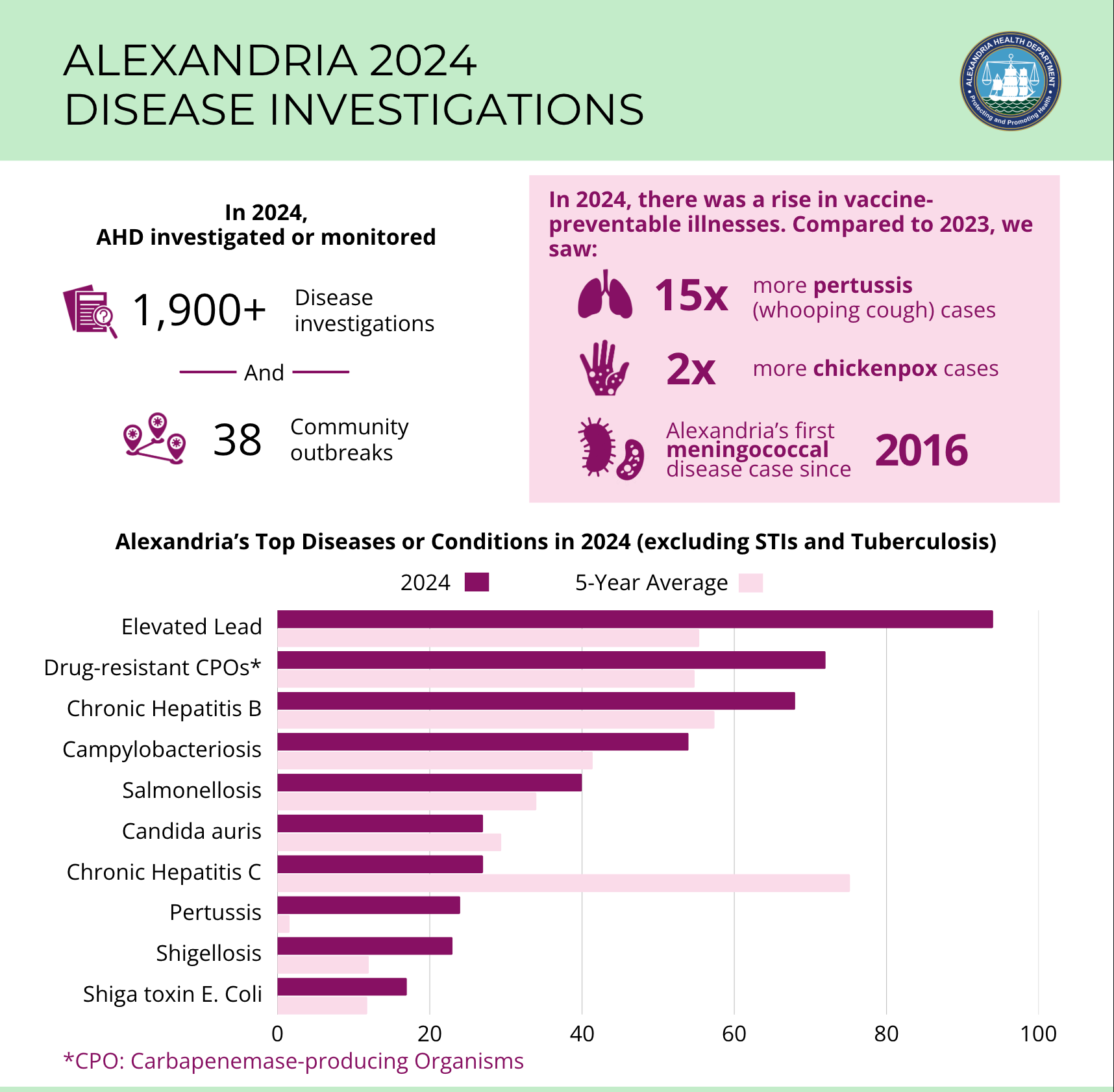
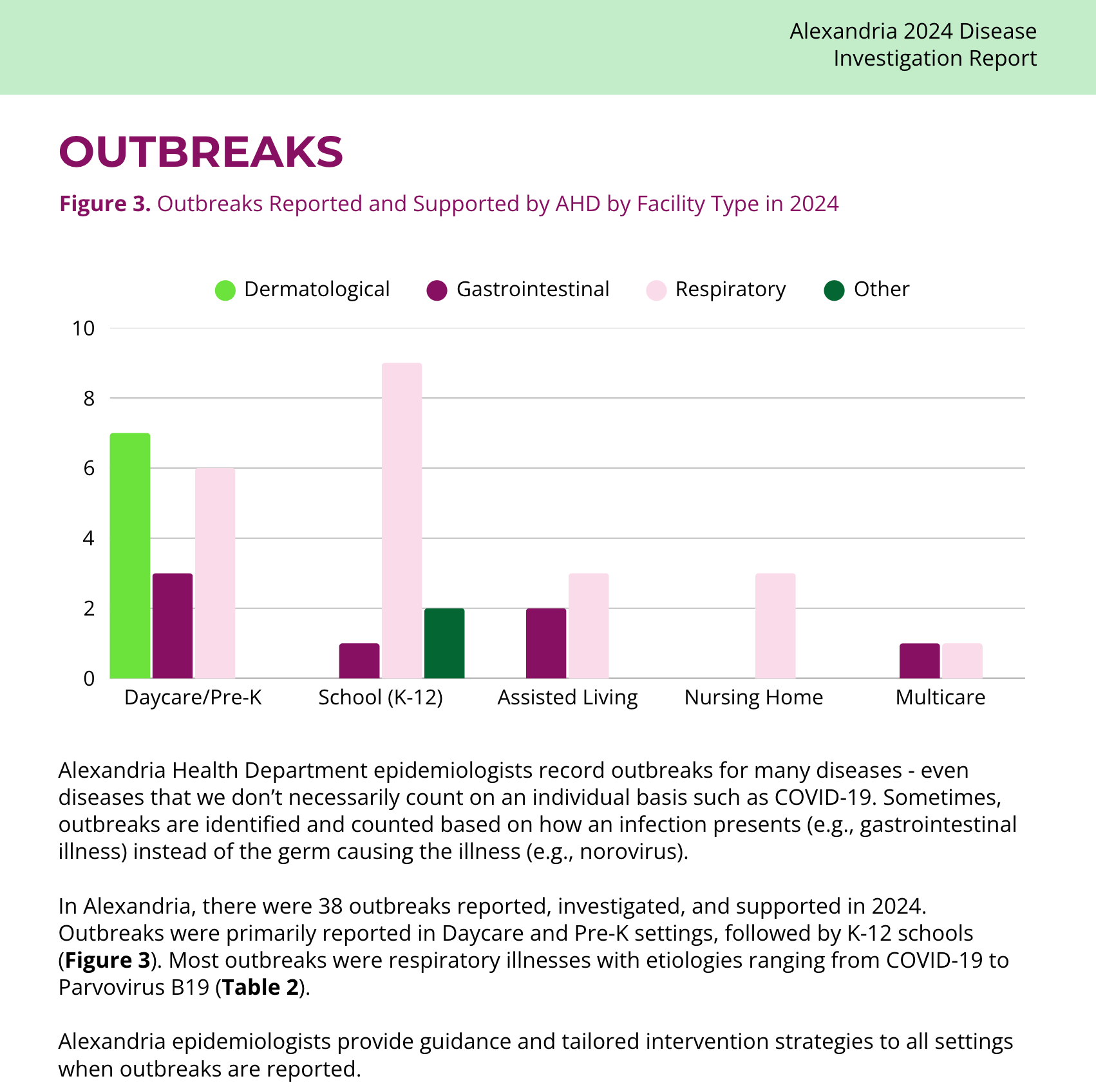
The department conducted more than 1,900 disease investigations in 2024 — a 4% decrease from the prior year — and responded to 38 community outbreaks. Most of those outbreaks were respiratory illnesses, with causes ranging from COVID-19 to Parvovirus B19, and they occurred primarily in daycare and pre-K settings, followed by K-12 schools.
Vaccine-preventable diseases
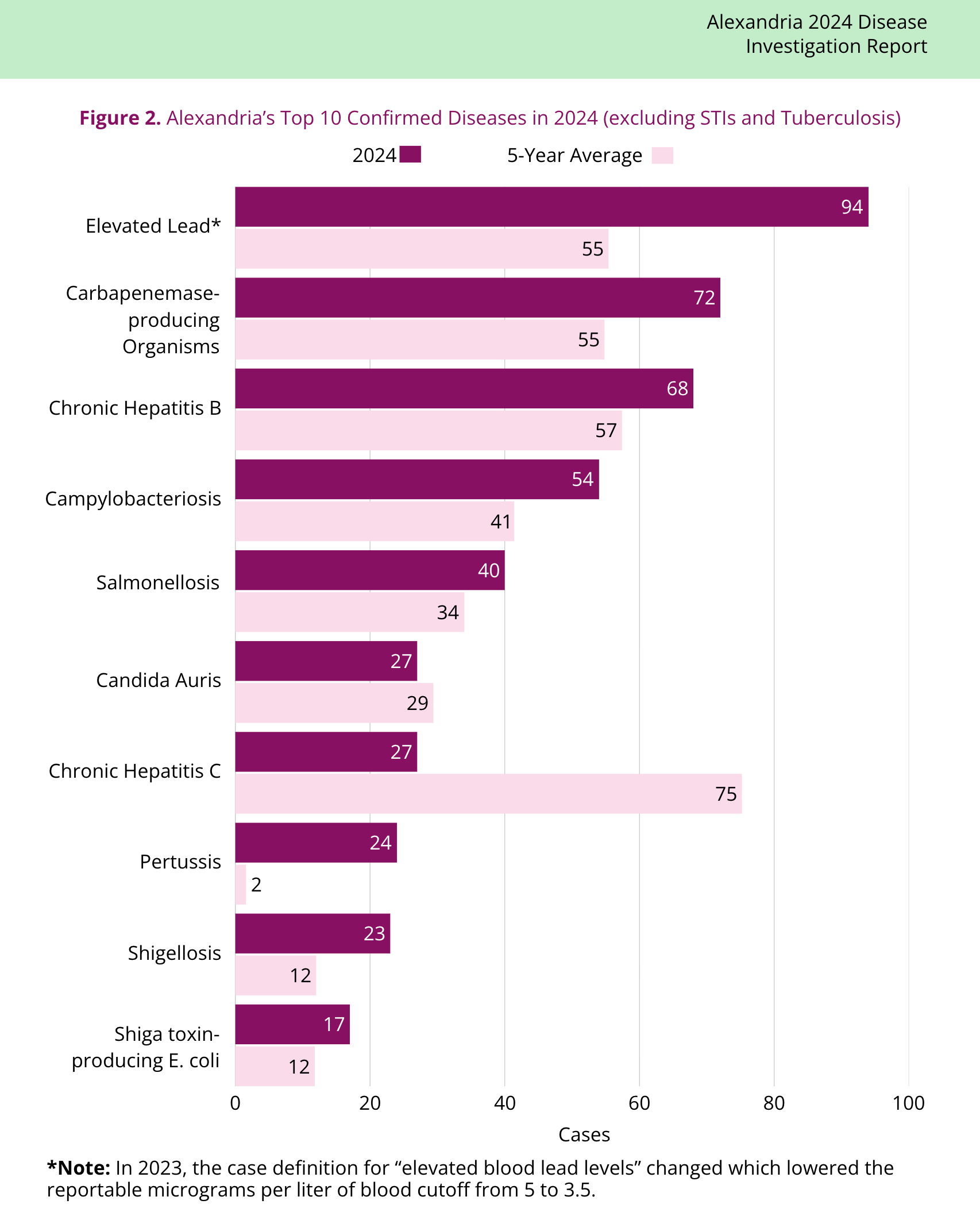
Cases of vaccine-preventable illness rose from 8 to 41 in a single year, driven largely by whooping cough outbreaks in schools. Pertussis recorded 24 cases in 2024 — 15 times higher than in 2023 and well above the five-year average of 2. Chickenpox cases doubled from 7 to 14. The department also responded to Alexandria's first meningococcal disease case since 2016. Health officials said the surge mirrors trends recorded across Virginia and the United States.
Updated March 26, 2026: After publication, the Alexandria Health Department provided preliminary 2025 pertussis data from the Virginia Monthly Morbidity Surveillance Report. Reported cases dropped to 11 in 2025, down from 24 in 2024 — a decrease that also occurred statewide. Elliott said health officials believe the 2024 spike was largely driven by outbreaks in which close contact allowed the disease to spread more easily. The 2025 figures are preliminary and subject to change. HIV data for 2025 was not immediately available.
STIs
Sexually transmitted infections accounted for 66% of the department's reportable disease caseload, with 1,254 investigations in 2024. While overall STI cases dipped 2% from 2023, gonorrhea cases rose 9%, and HIV cases increased 24%. Alexandria's STI incidence rate remains higher than Virginia's across all four tracked diseases — chlamydia, syphilis, gonorrhea, and HIV.
Tuberculosis
TB cases increased 71%, from 7 to 12, between 2023 and 2024. Confirmed latent tuberculosis infections dropped 30%, however, from 137 to 96 cases.
Multidrug-resistant organisms
With 72 confirmed cases, carbapenemase-producing organisms were the second most reported condition in Alexandria in 2024, well above the five-year average of 55. Overall, MDRO cases increased 14% from 2023 to 2024. Detections have climbed sharply since 2018, when just 11 cases were recorded, peaking at 160 in 2021.
Other findings
Elevated lead levels were the top-reported condition in the city, with 94 cases — nearly double the five-year average of 55. Officials noted a 2023 change in the national case definition lowered the reportable blood lead threshold from 5 to 3.5 micrograms per deciliter, which affected case counts. Chronic hepatitis B resurged to 68 cases, above its five-year average of 57, making it the third most reported condition. Chronic hepatitis C, by contrast, continued a years-long decline, falling to 27 cases against a five-year average of 75.
Campylobacteriosis reached 54 cases, up from a five-year average of 41, and salmonellosis recorded 40 cases against an average of 34. Shigellosis nearly doubled its five-year average, reaching 23 cases compared to an average of 12.
Foodborne illness cases overall fell 10%, from 188 to 170, though officials noted levels had rebounded past pre-pandemic figures in recent years. The department also investigated a typhoid or paratyphoid infection for the first time since 2012.
Invasive Group A Strep cases rose 71%, from 7 to 12. Zoonotic disease investigations fell by nearly half, from 45 to 23, though two mpox cases were investigated, and the rabies positivity rate among tested animals rose from 3% to 9% — both positive animals were raccoons.
Disparities and the road ahead
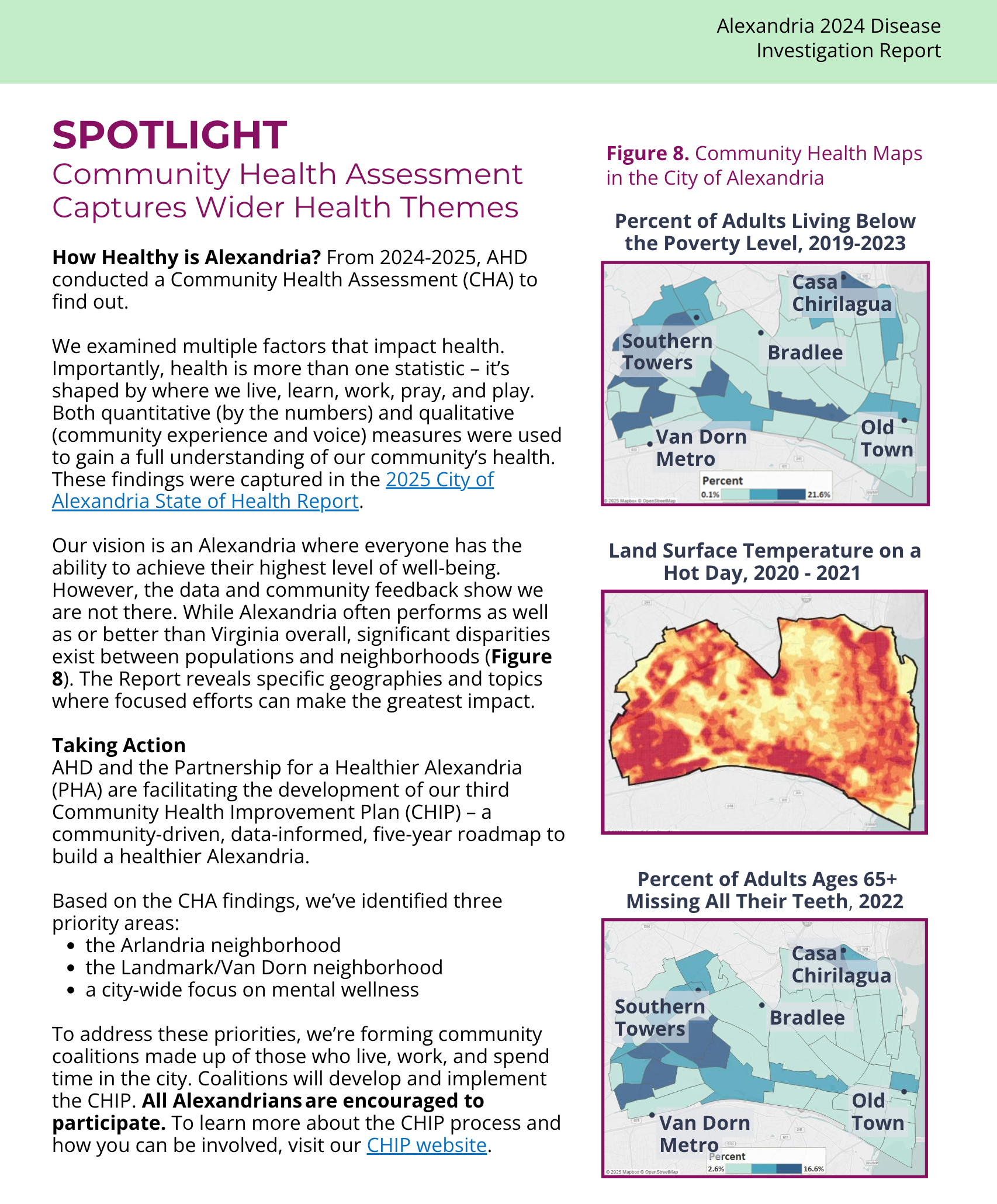
The report also highlights findings from a community health assessment the department conducted from 2024 to 2025. While Alexandria often performs as well as or better than Virginia overall, the assessment found significant health disparities between neighborhoods. Based on those findings, the department and the Partnership for a Healthier Alexandria identified three priority areas for a new five-year Community Health Improvement Plan: the Arlandria neighborhood, the Landmark/Van Dorn neighborhood, and a citywide focus on mental wellness. Community coalitions will develop and carry out the plan, and all Alexandrians are encouraged to participate.
"A lot of this disease investigation work happens quietly, behind the scenes," said Dr. Anne Gaddy, deputy director of the Alexandria Health Department. "But this work is vital. Continuous monitoring and investigation are how we prevent a single illness from becoming a community-wide problem."
Residents can access the full report and additional data at alexandriava.gov/Health.