Table of Contents
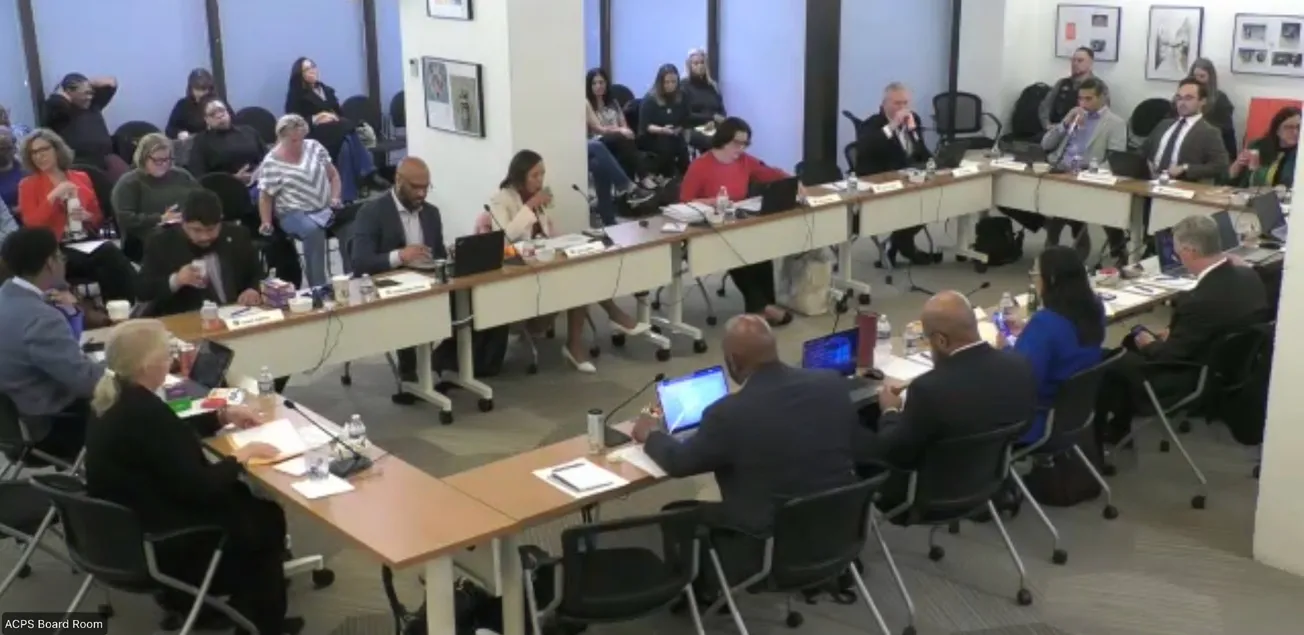
A school board member is calling on Alexandria City Council to slow down a proposal that would fundamentally change how the city funds its public schools — one she says was introduced at the end of Wednesday's joint budget work session with no opportunity for discussion.
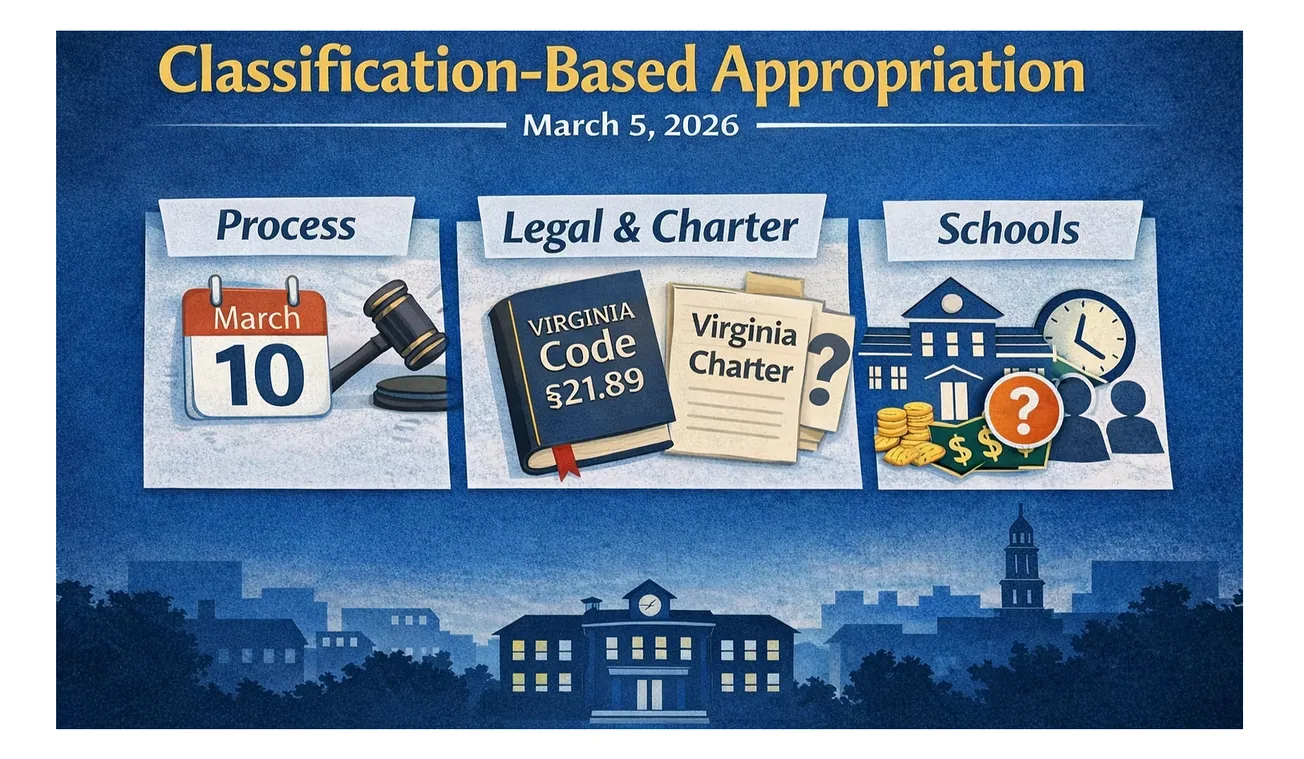
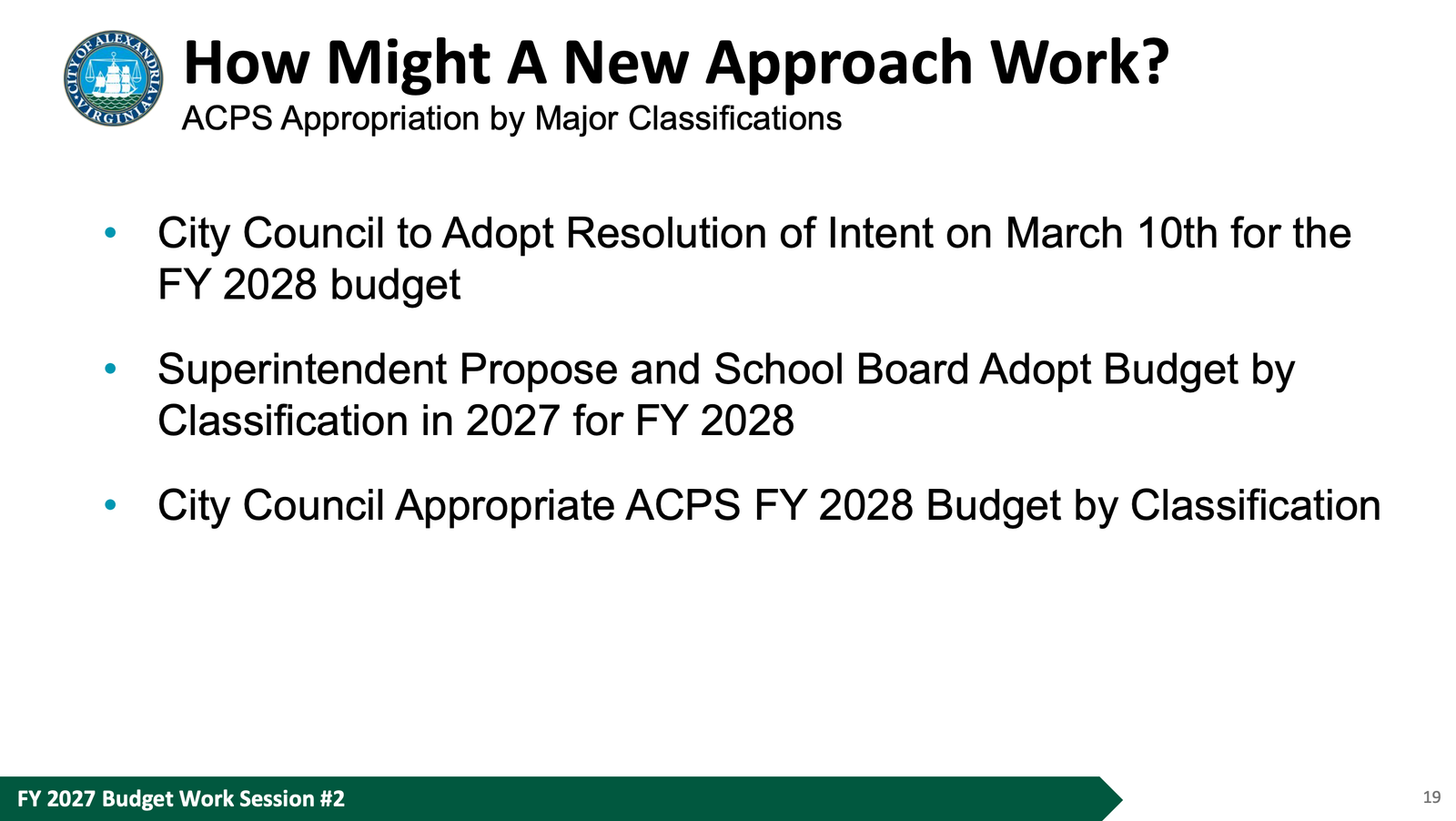
Board member Kelly Carmichael Booz published a statement Thursday night that she had intended to deliver at the school board meeting before a power outage canceled it. In it, she raises legal, operational, and procedural concerns about a city plan to appropriate ACPS funds by major spending category rather than as a lump-sum transfer, as has been the historical practice. Council is expected to vote on a resolution of intent on Tuesday, March 10.
"Not a single question about it was asked or answered between the two bodies," Booz wrote.
The proposal emerged on a tense evening. The joint work session on Wednesday was dominated by a $5.6 million gap between what ACPS says it needs to honor its first-ever collective bargaining agreement with the Education Association of Alexandria and what City Manager Jim Parajon's proposed budget provides. Mayor Alyia Gaskins noted the city learned about the tentative $12.7 million agreement — announced the same day as the meeting — from a press release. The city's own collective bargaining costs across all four municipal bargaining units total $7.1 million; the proposed ACPS agreement would nearly double that.
 Ryan Belmore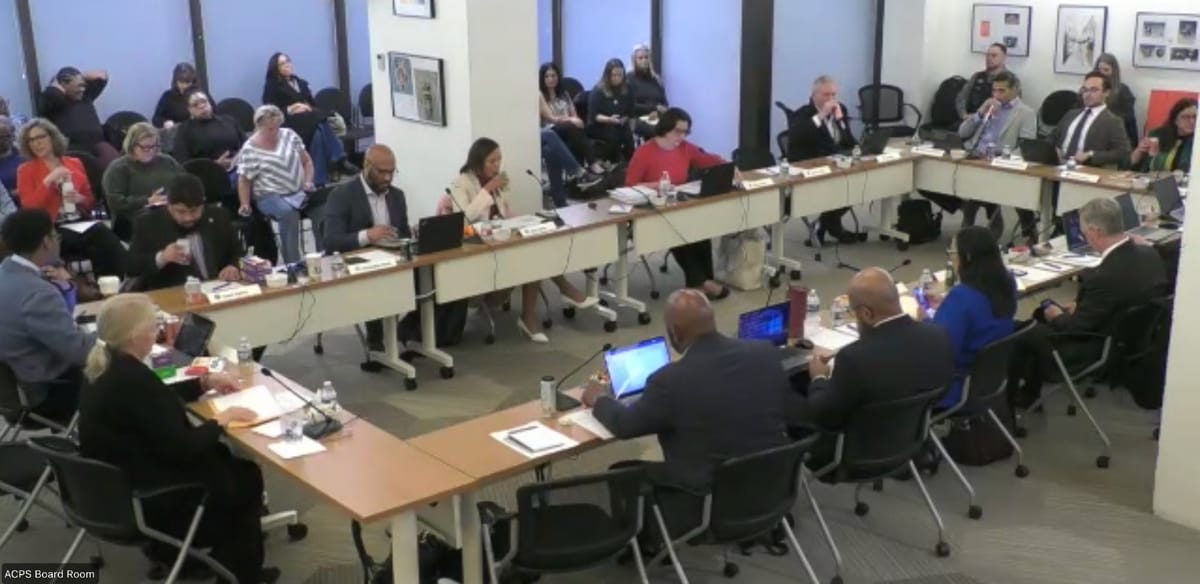
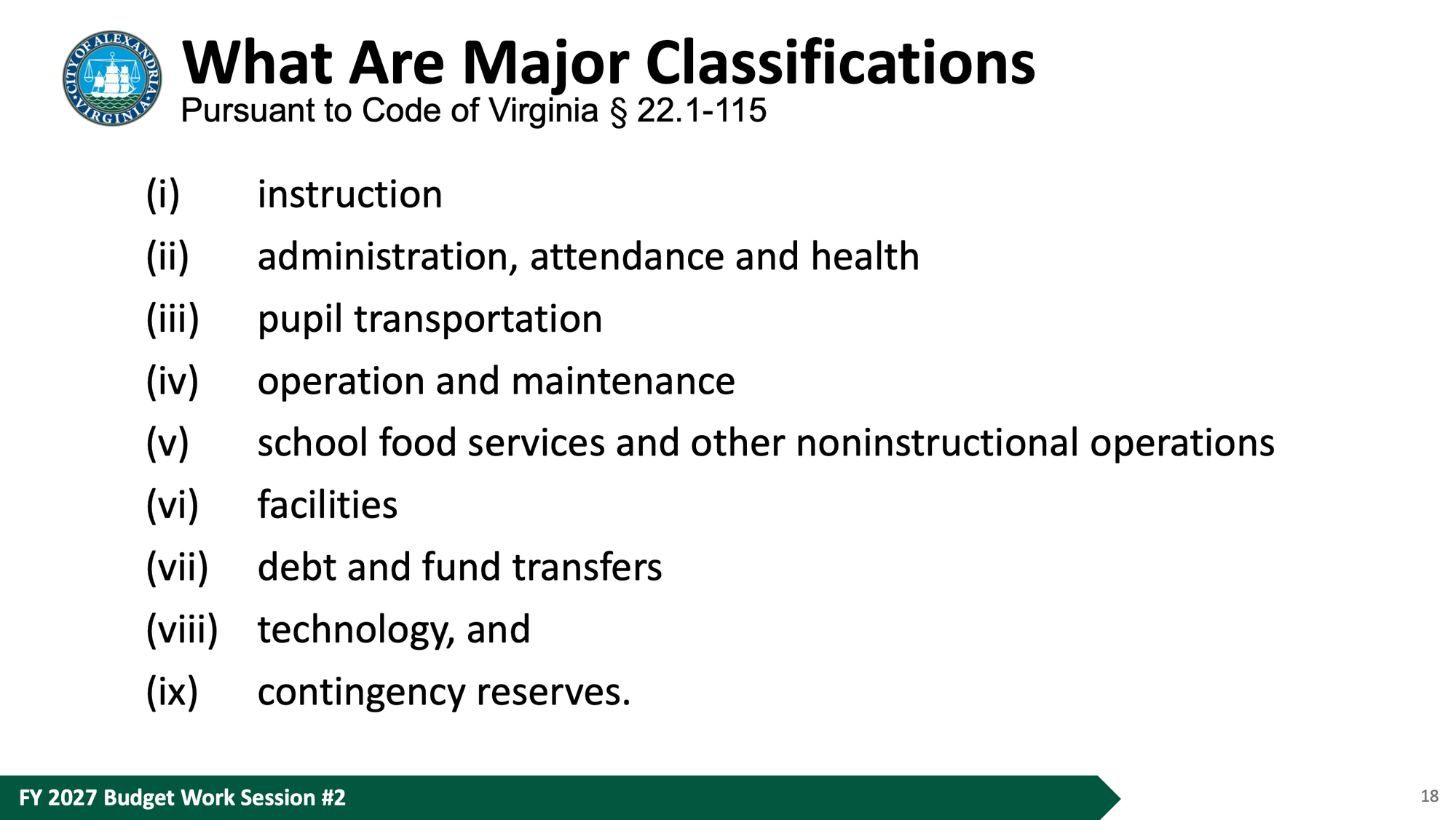
Gaskins framed the classification proposal as a transparency measure. "If someone says, well, council, you need to fund collective bargaining, well, there's a way that the category can say collective bargaining," she said at the session. "And you would see either we're funding it or we're not funding it." City staff noted that Virginia law explicitly permits — alongside the traditional lump-sum method — appropriation by major classifications, including instruction, transportation, facilities, and technology.
Booz does not dispute the city's legal authority to pursue the change, but argues the Alexandria City Charter should give both bodies pause. She cited multiple charter sections that she says deliberately insulate school funds from city financial controls, including a provision specifying that the city manager may only recommend revisions to the school board's budget "in its total estimated expenditure." She is asking both bodies' legal counsel to examine whether classification-based appropriation conflicts with that framework before any vote is taken.
She also raised operational concerns. Under Virginia Code § 22.1-89, classification-based appropriation would require a formal Council vote before ACPS could move funds across budget lines mid-year — potentially affecting responses to enrollment surges, special education needs, building emergencies, or federal funding disruptions.
The resolution text, published Friday as part of the revised docket, cites the same charter section Booz flagged — Alexandria City Charter § 6.03 — but reads it as requiring ACPS to submit budget estimates to the City Manager by classification, not as a constraint on how Council may appropriate funds.
School Board Chair Michelle Rief noted at Wednesday's session that ACPS's budget book already breaks spending down by those categories and cautioned that the new structure would require additional administrative staff time at a moment when ACPS is already eliminating positions. She did not oppose the direction outright.
The classification proposal arrived at a moment of broader fiscal strain. ACPS has already approved $7.7 million in cuts for FY 2027 and is asking the city for a 3.5% appropriation increase — $5.6 million more than the city manager proposed — to fund the collective bargaining agreement and remain competitive on teacher pay. Alexandria was the only Northern Virginia school division not to offer a cost-of-living adjustment in FY 2026, dropping from first to seventh in regional teacher starting pay in a single year.
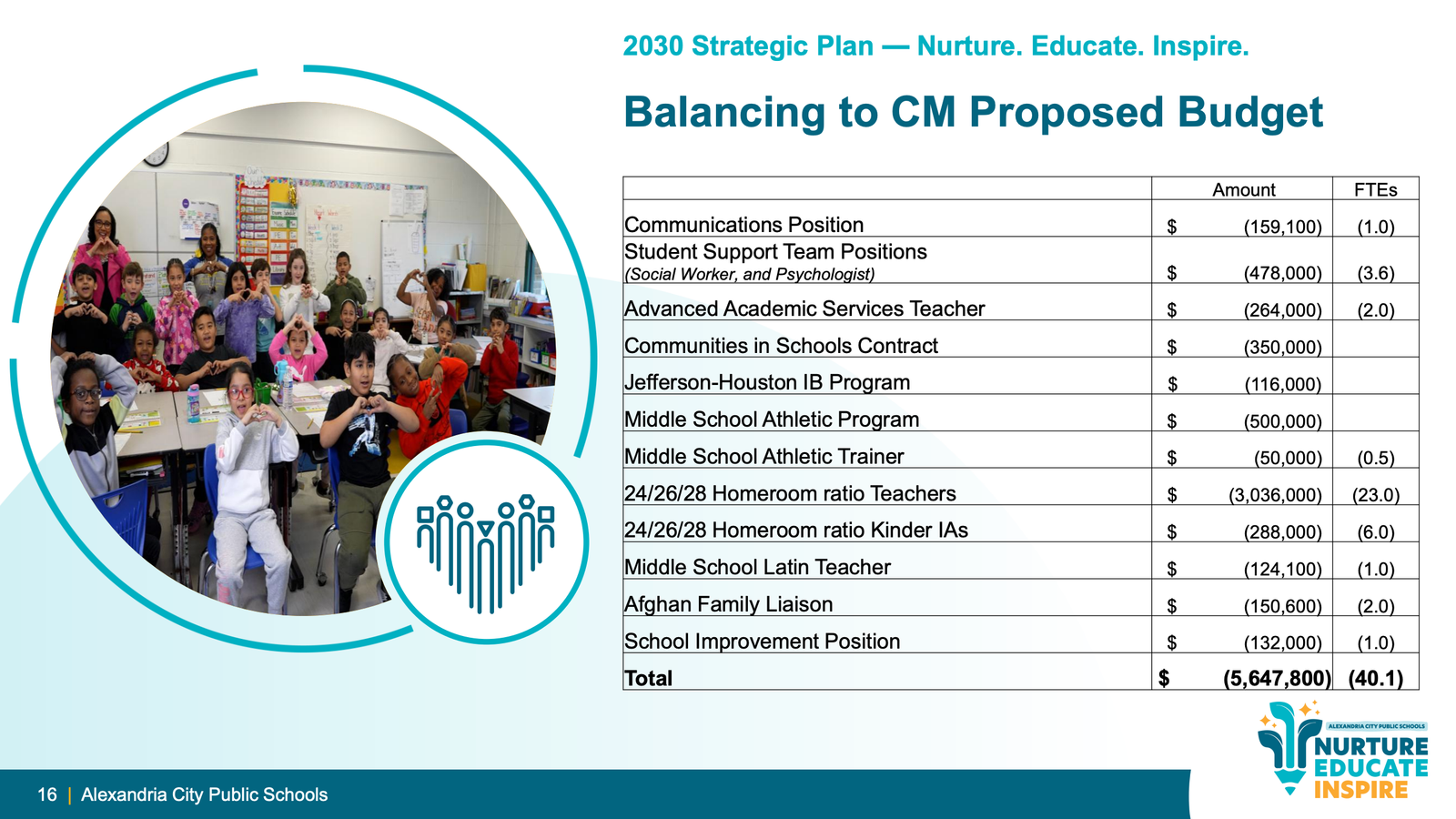
If Council does not close the gap, ACPS presented a detailed list of what would have to be cut: 23 homeroom teachers, social workers and psychologists, the middle school athletic program, Communities in Schools services, the Jefferson-Houston IB program, Afghan family liaisons, and other positions — 40.1 full-time equivalents in total.
Booz is asking the board to authorize Rief to send a formal memo to Council requesting a delay of the March 10 resolution and a dedicated joint session before any vote. She is also calling for the resolution text — which has not been made public — to be released ahead of Monday's meeting.
At the joint work session on Wednesday, Mayor Gaskins said that Council would vote on a resolution of intent on Tuesday, March 10. The resolution was not included on the original docket published March 5, but was added in a revised agenda published Friday
The public hearing on the FY 2027 budget is Monday at 5:30 p.m. Budget adoption is set for April 29.
 Ryan Belmore
Updated 7:55 a.m., March 6, 2026: This story has been updated to reflect that a revised docket published Friday morning shows the resolution of intent has been added to Tuesday's City Council meeting agenda as item 18.