Table of Contents
ALEXANDRIA, Va. - Sixty feet down a stairwell — with no elevator yet and the permanent stairs still under construction — two enormous pumps hummed so quietly that Paul Carbary had trouble telling which ones were running.
"They're about the quietest pumps I've ever seen," said Carbary, AlexRenew's senior operations and maintenance adviser, who first set foot on the treatment plant site in 2002. Each of the four wet-weather pumps can move 45 million gallons a day at full speed.
The pumps are among the most striking pieces of RiverRenew, the program that AlexRenew will bring online July 1 to meet a state-mandated deadline — and the reason the utility invited The Alexandria Brief underground this week for a look at what crews have built.
For more than 160 years, the oldest parts of Alexandria have been served by a combined sewer system that carries both sewage and stormwater in a single pipe. On dry days, those pipes route everything to AlexRenew's treatment plant. But when it rains hard, the system overflows, sending a mix of stormwater and raw sewage straight into the river. As little as a quarter-inch of rain can trigger one of these combined sewer overflows, or CSOs, and AlexRenew says the city's outfalls discharge about 140 million gallons of that combined flow into local waterways each year, across roughly 70 overflow events.
"I think remarkably few people know that CSOs exist and are just pouring combined sewage into the river," said Ryan Payne, the program manager for RiverRenew, using the shorthand for combined sewer overflows.
Giving the sewage a new low point
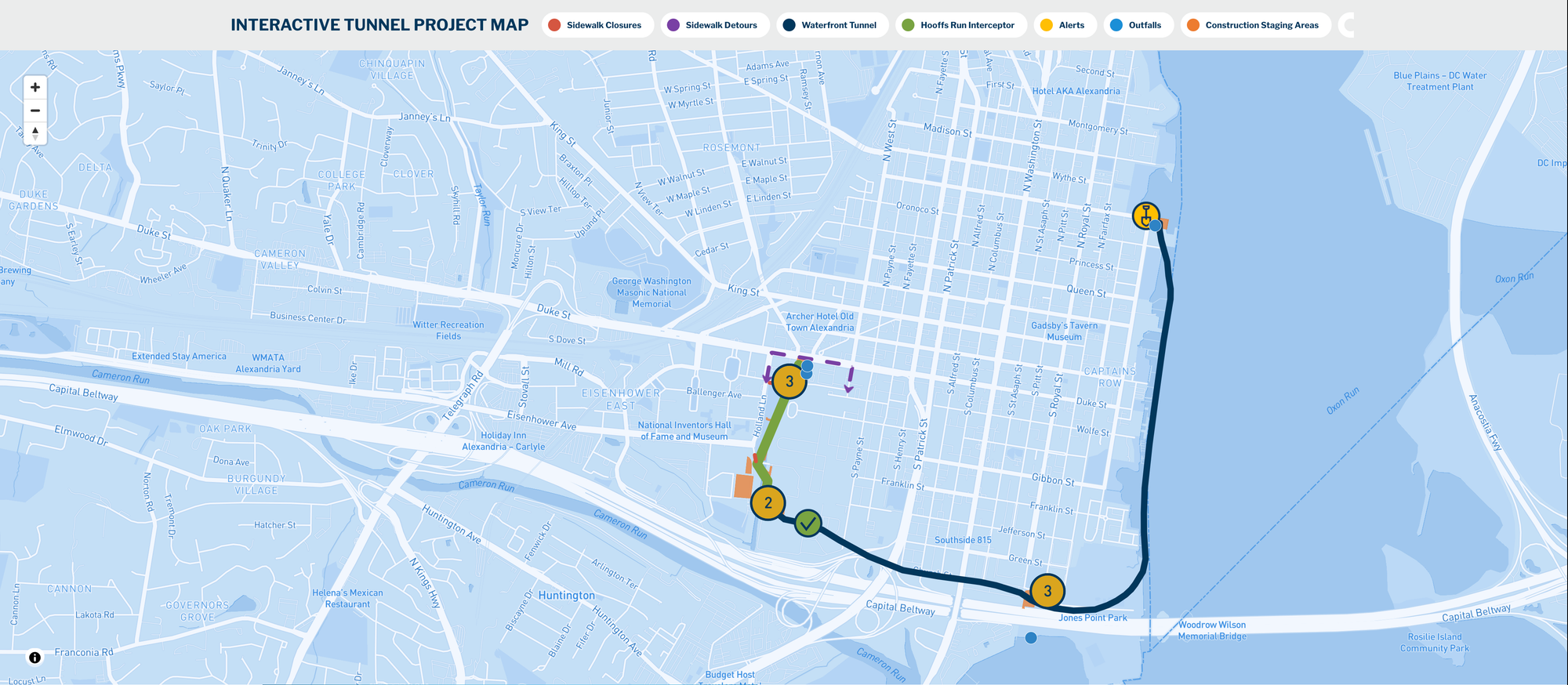
The fix, Payne explained beside a cutaway model of the station, is essentially to give the city's overflow somewhere new to go. RiverRenew's 2.2-mile Waterfront Tunnel — 12 feet in diameter, running underground to Pendleton Street — captures the combined flow that would otherwise spill into the river and stores it until the plant has the capacity to treat it.
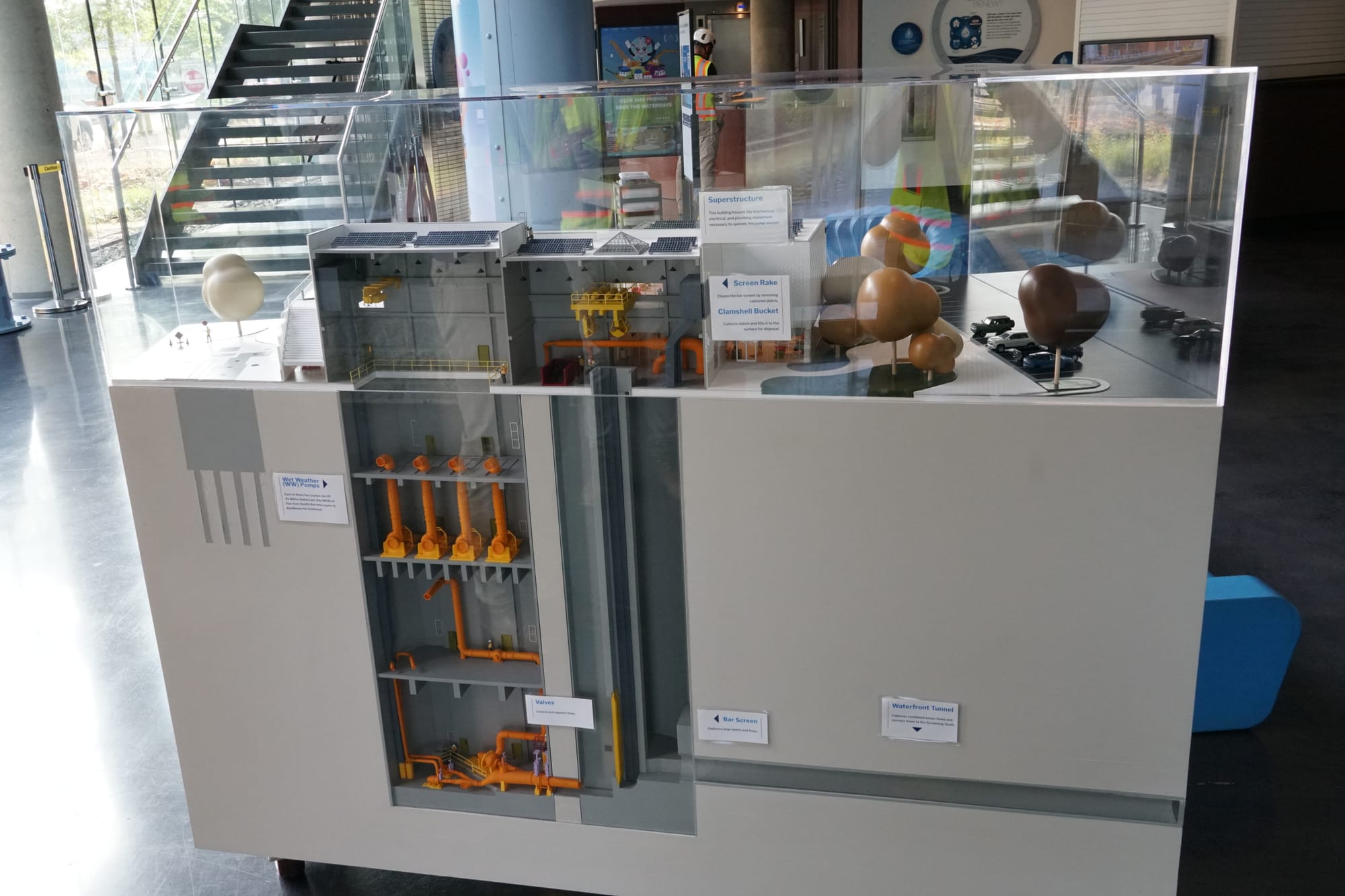
"It's a gravity sewer system that's larger and deeper than all the existing sewer systems," Payne said. "Rather than overflowing at the low point of the river, we've given it all a new low point."
Everything ends at the pumping station. Incoming flow first passes through a bar screen, where an overhead rake-and-claw system scoops out sticks, bottles, trash bags and other debris and drops it into a dumpster. The claw mechanism alone weighs about 4,000 pounds and travels roughly 160 feet — "about the height of the Statue of Liberty," not counting the base, Carbary said — down to clean the screen and back up again.
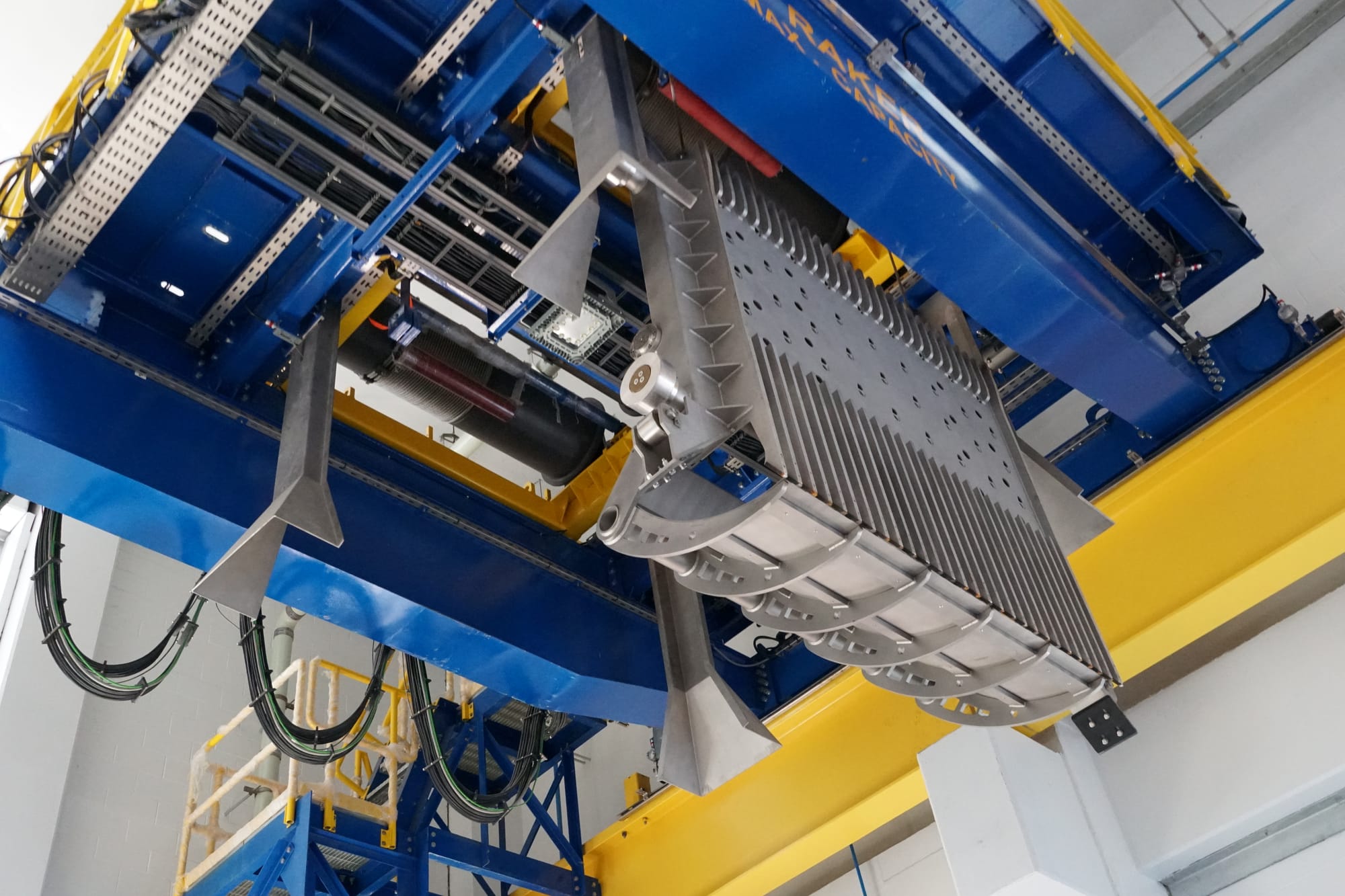
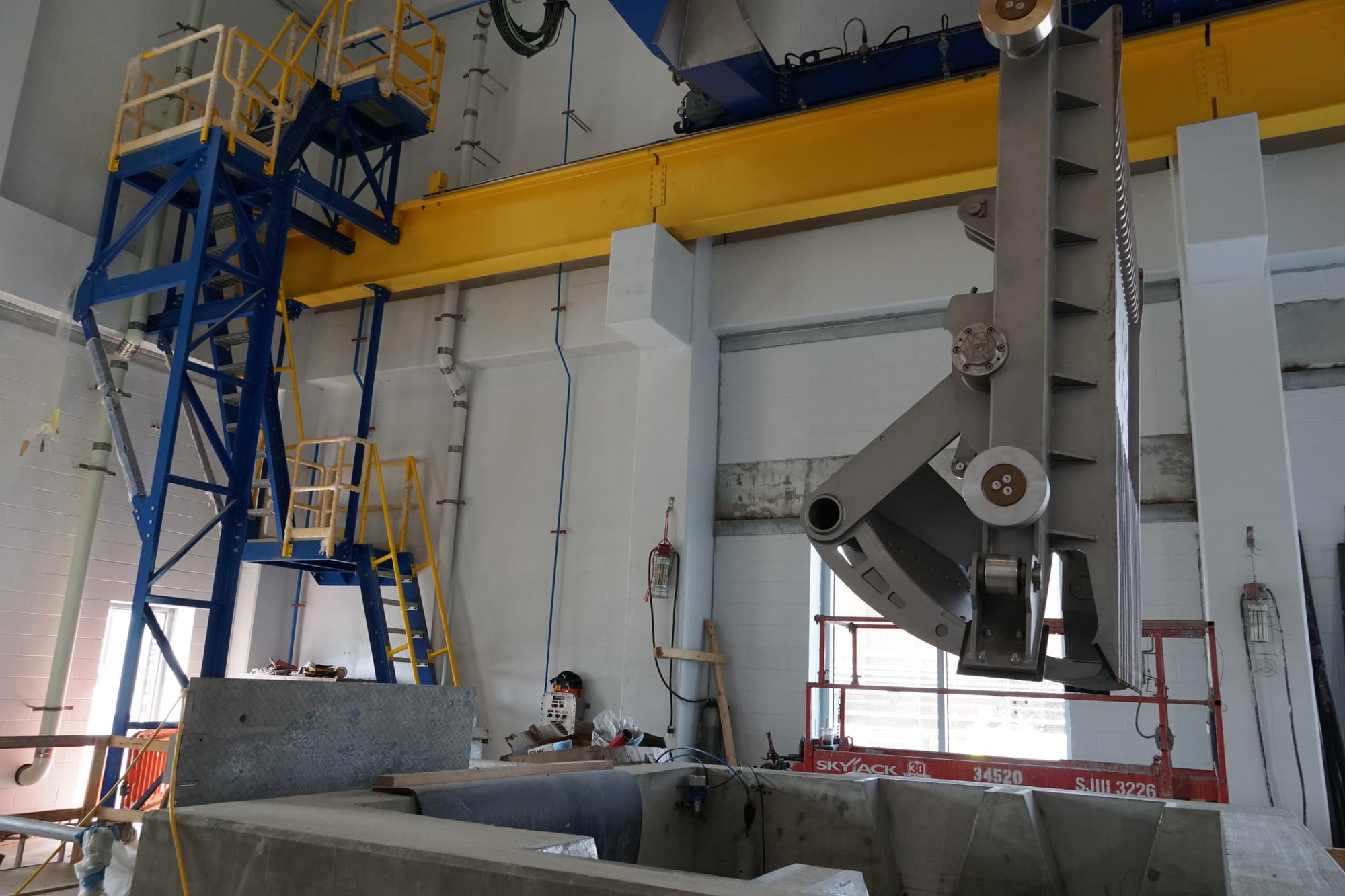
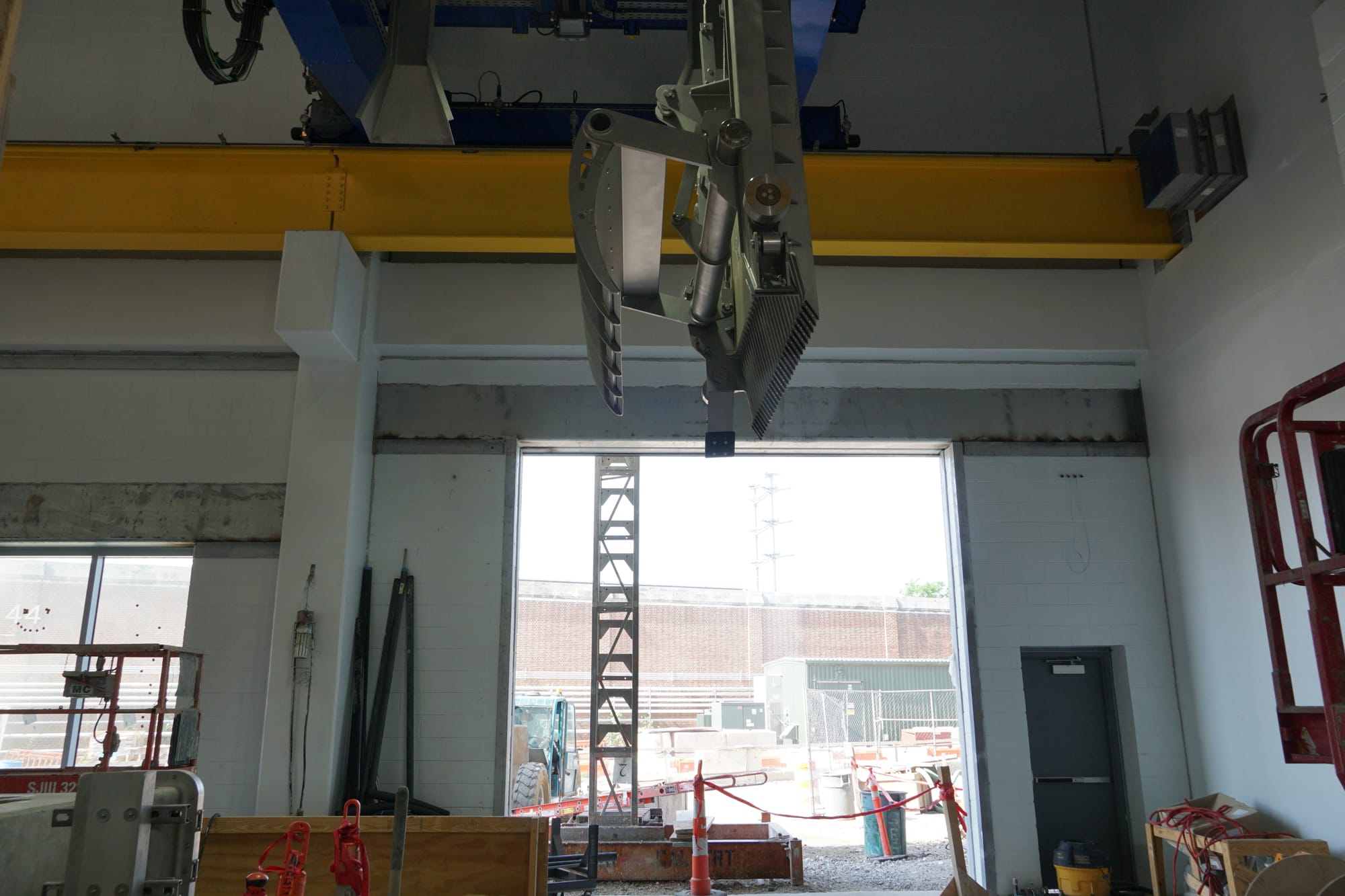
The station's overhead rake-and-claw system clears sticks, bottles and other debris from the incoming flow and drops it into a dumpster. The mechanism travels roughly 160 feet — about the height of the Statue of Liberty, minus the base. (Ryan M. Belmore/The Alexandria Brief)
From there, the station's pumps lift the water back toward the plant for treatment. Carbary described it as "three pump stations in one": one set dewaters the tunnel, another handles solids, and the wet-weather pumps provide extra muscle for the biggest storms. Those wet-weather pumps, he said, may run only one to four times a year.
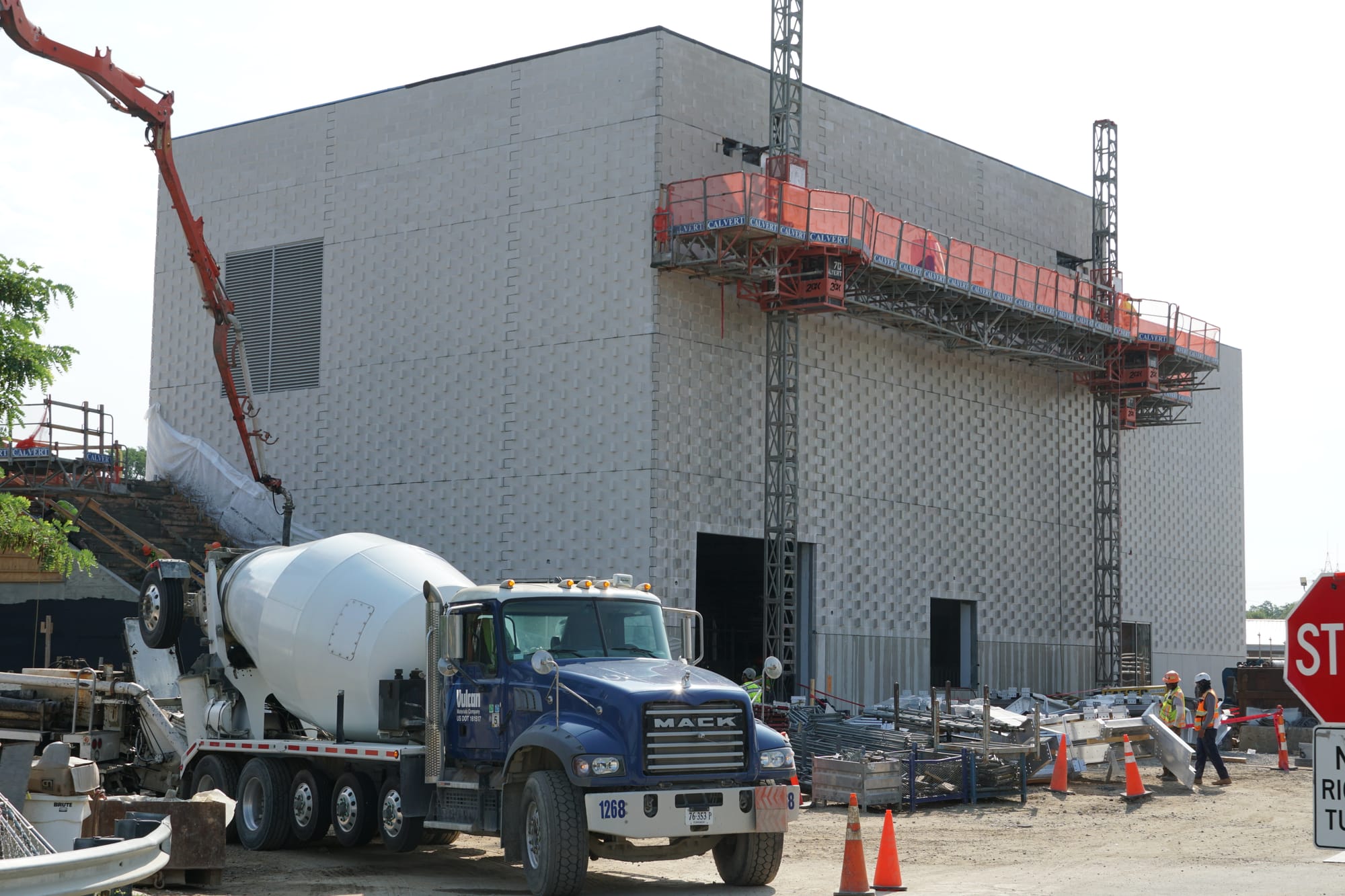
The day of the tour, crews were running just two of the four wet-weather pumps at low speed, part of a month-long commissioning process. Workers were also pouring concrete for exterior stairs, finishing masonry, and tying in the odor-control system. An elevator is still months away.
"The elevator manufacturer has decided not to follow our project schedule," Payne said dryly. For now, the only way down is the stairs — and reaching the bottom of the 12-story shaft means 14 flights of them. Carbary said one worker has made the full descent seven times in a single day.
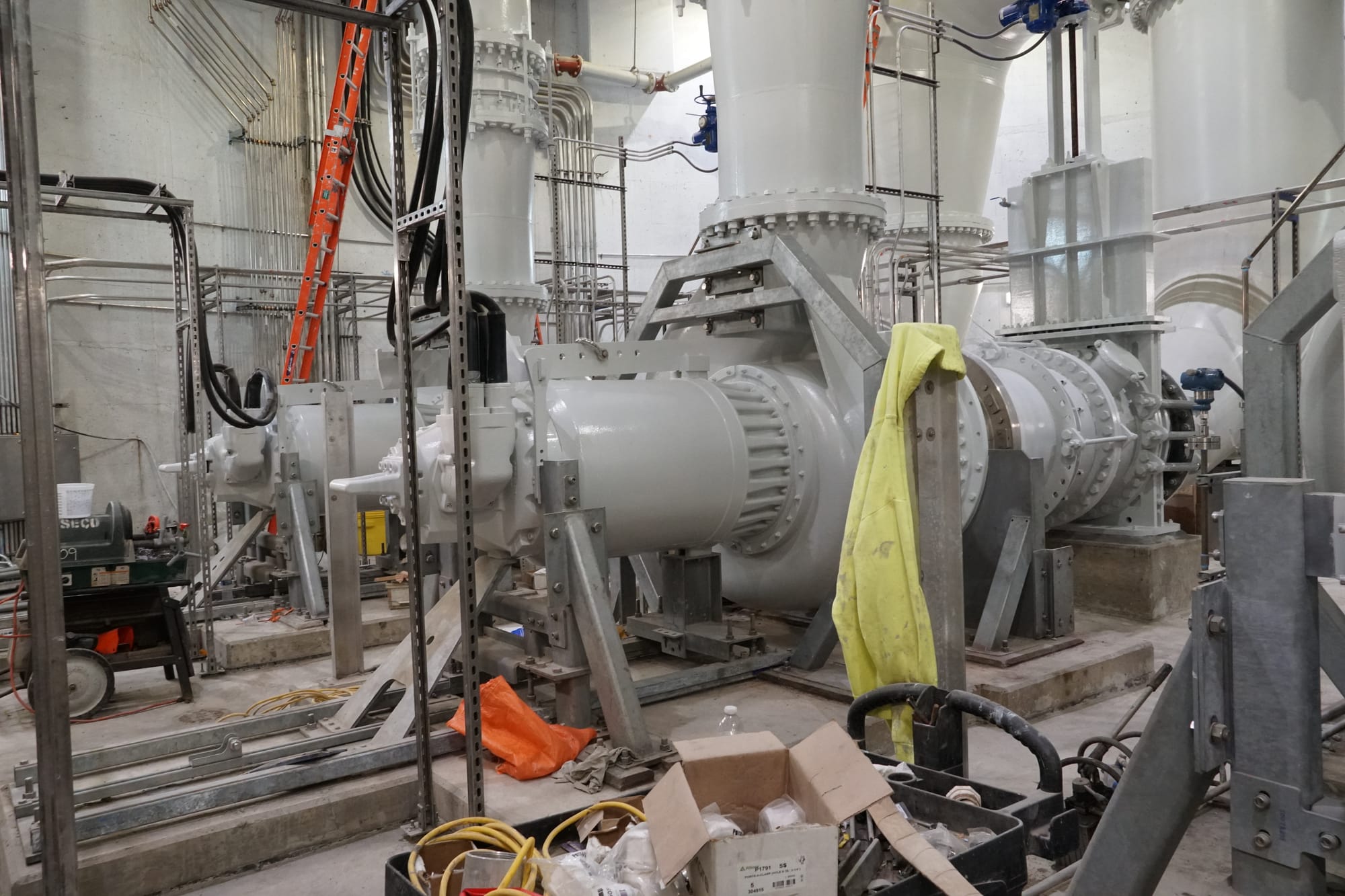
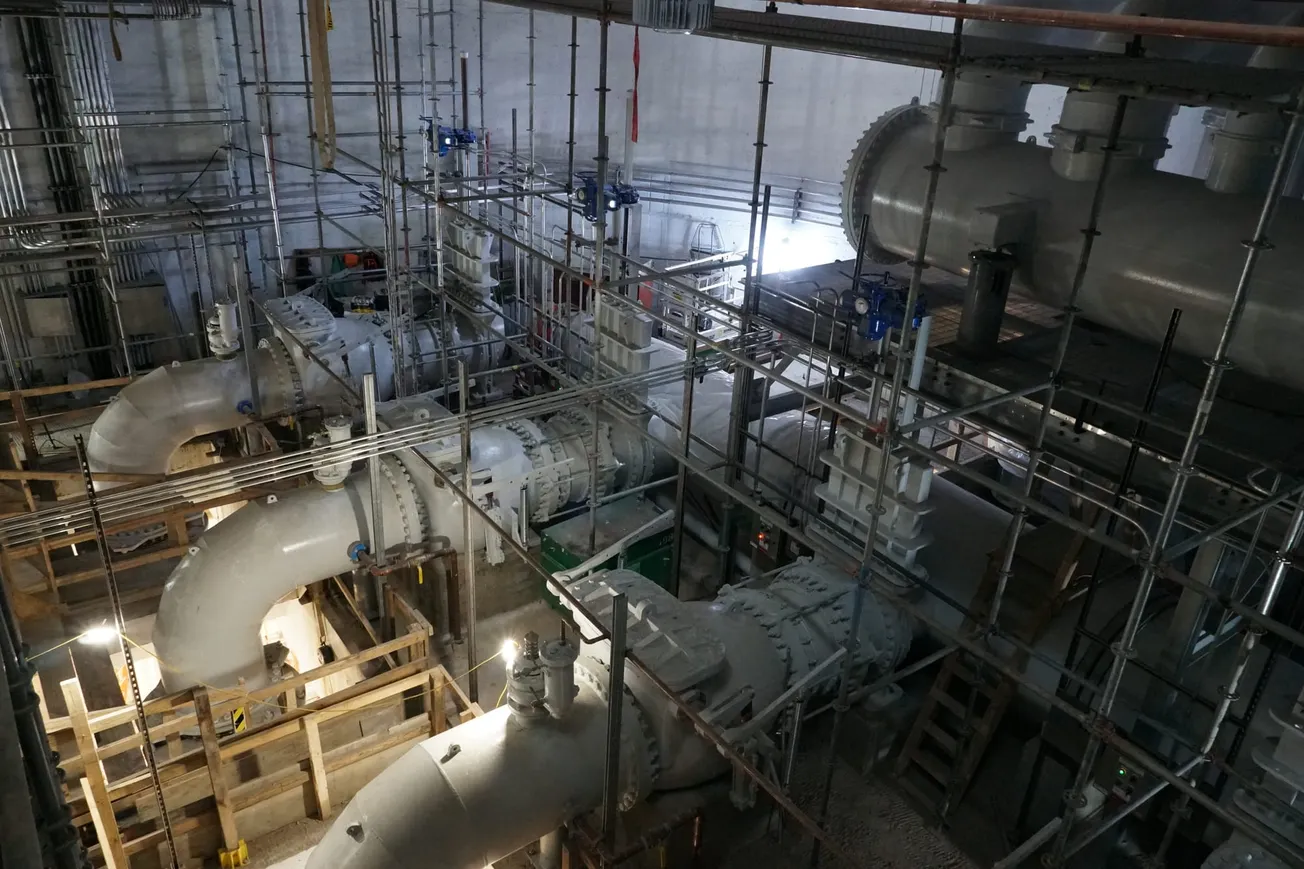
Two of the station's four wet-weather pumps ran at low speed during a commissioning test the morning of June 11. Each pump can move up to 45 million gallons of water a day at full speed. (Ryan M. Belmore/The Alexandria Brief)
Built for the climate of 2100
The project is not designed to stop the riverine and tidal flooding that low-lying parts of Alexandria experience, Payne said. But the system was engineered with climate change in mind, sized for what modeling suggests a 100-year storm could look like in the year 2100, with structures built to sit above a future 100-year floodplain.
Payne said the driving force behind the project's capacity is stormwater, not population growth. Even as Alexandria densifies, he said, low-flow fixtures have kept residential sewage use essentially flat.
The station is also on track to become the first LEED-certified pumping station in Virginia, with solar panels, skylights and a green roof. Payne said the team expects to reach LEED gold, above the silver requirement.
Once operational, RiverRenew will cut the city's combined sewer overflows dramatically. AlexRenew projects the number of overflow events will drop from about 70 a year to fewer than four, and the annual volume reaching local waterways from roughly 140 million gallons to under 17 million — a reduction the utility says will be felt most in Hooffs Run, a small tidal creek, where overflows will fall by 99%. The system is still designed to overflow during a handful of the most extreme storms each year; capturing every drop, Payne said, would have required a tunnel closer to 50 feet in diameter rather than 12.
"You can't build the largest tunnel in the history of the United States for a single municipality," he said. "I think of it as a transformational moment for Alexandria, similar to 1952," when the city's wastewater treatment plant first came online. "This is the largest single step forward for water quality in the city of Alexandria in its history."
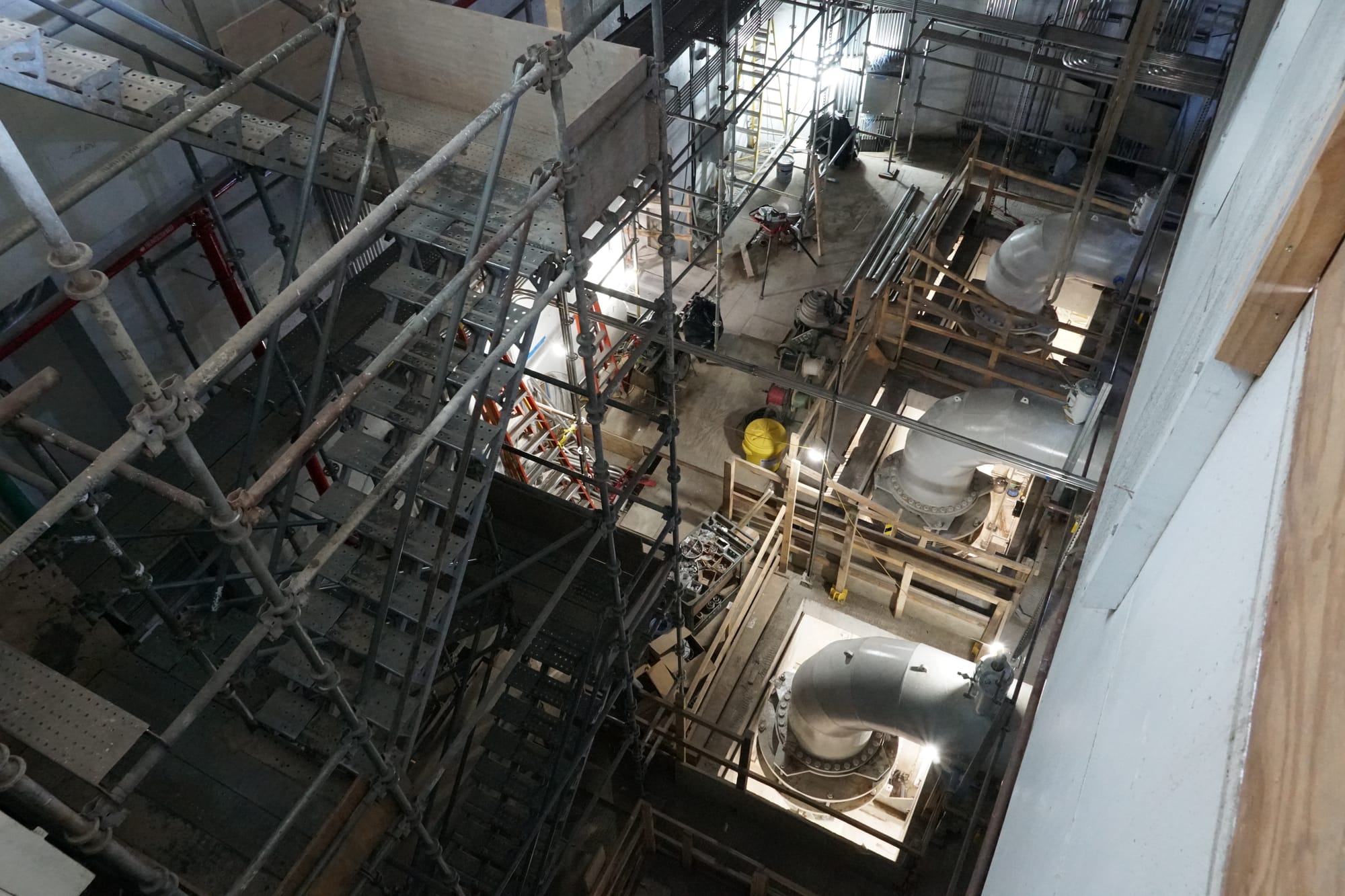
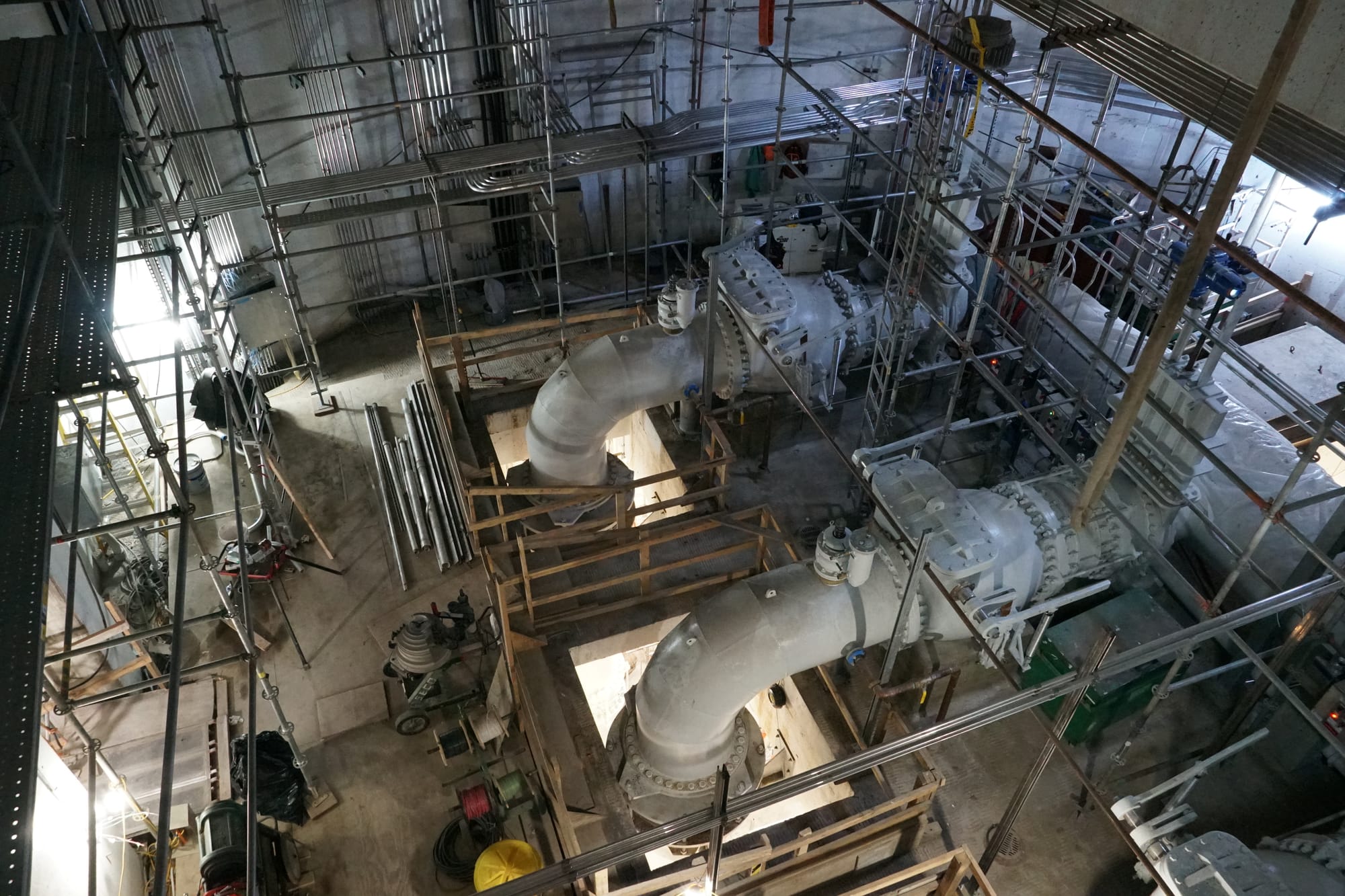
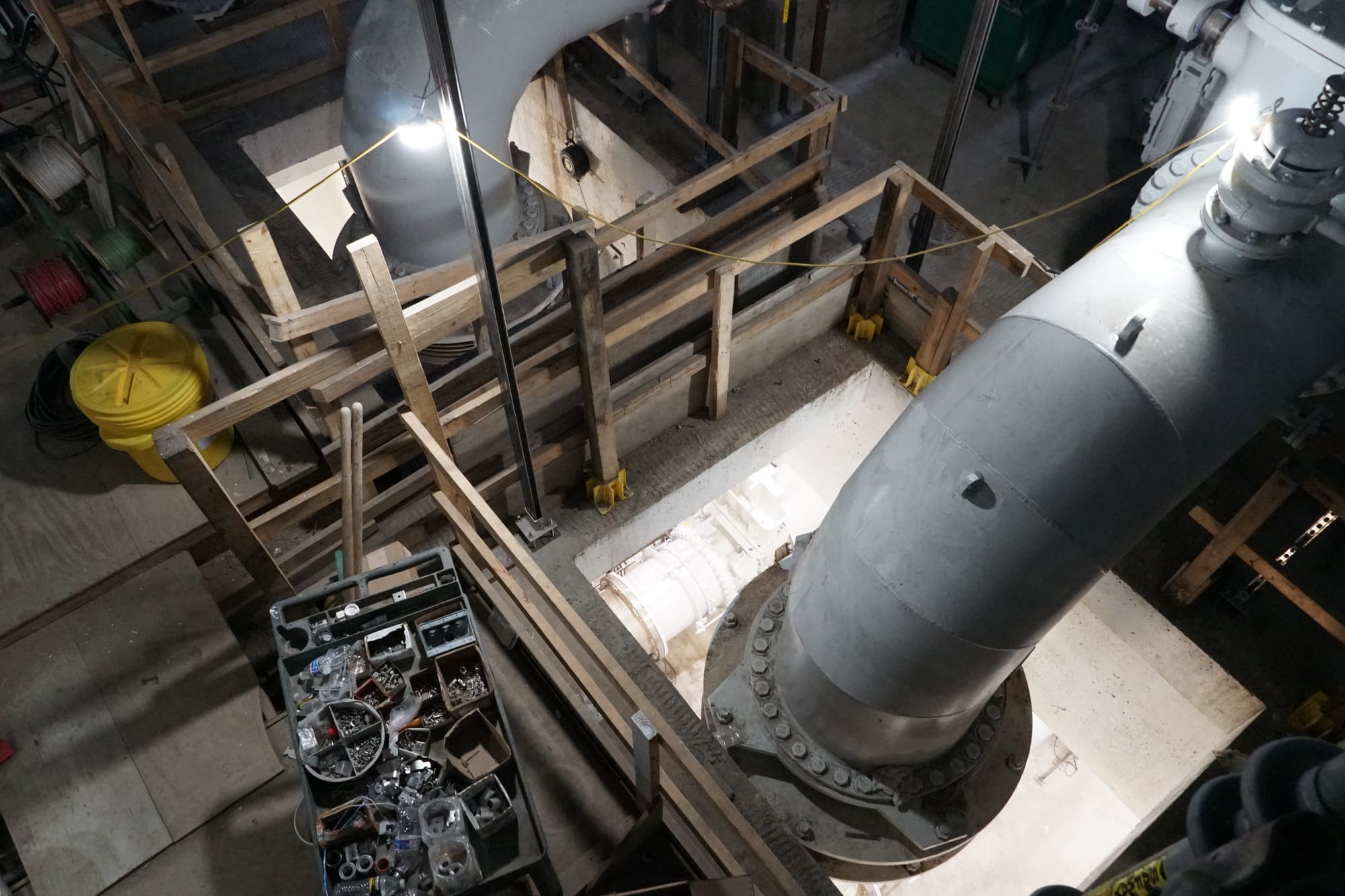
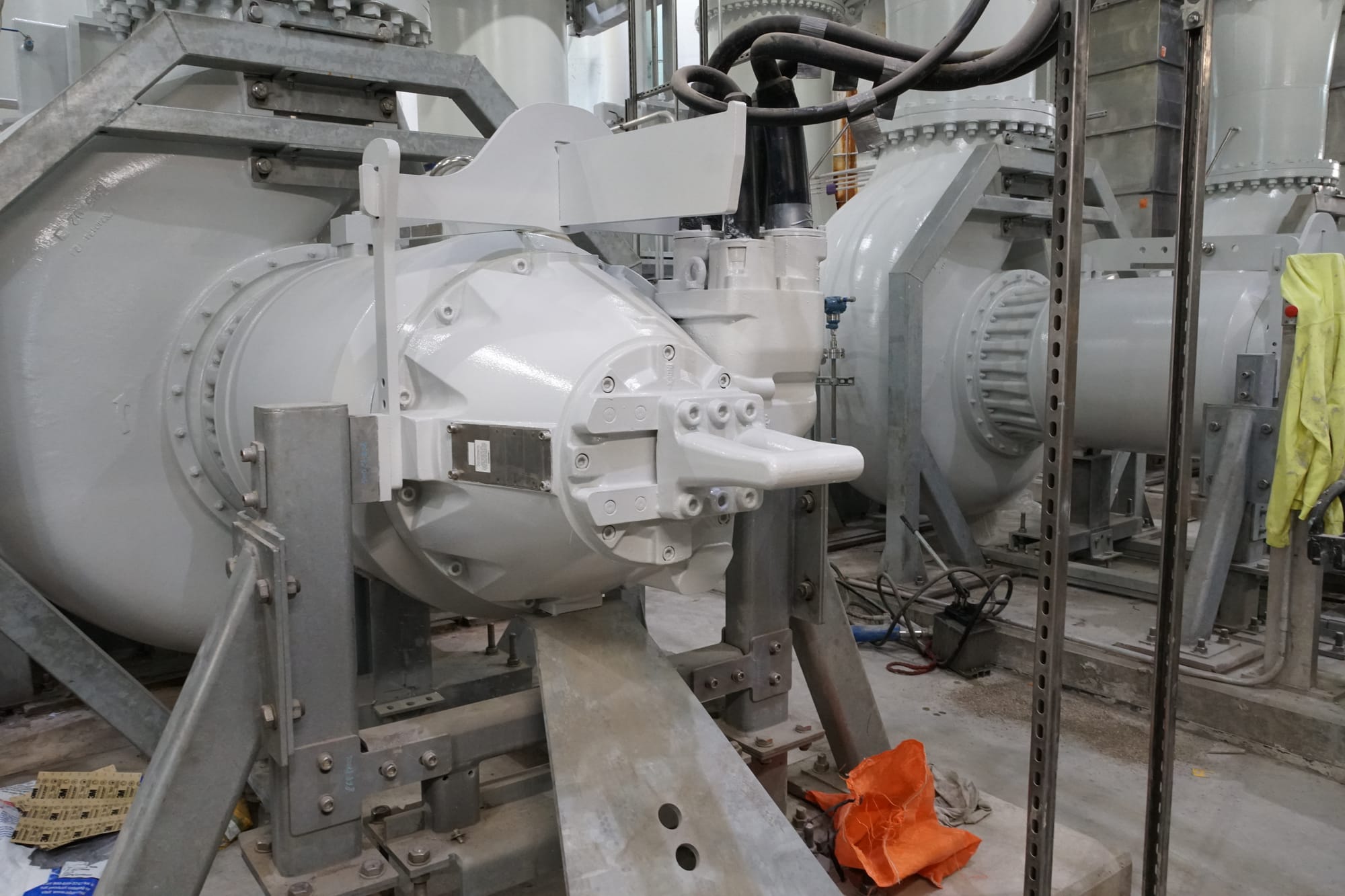
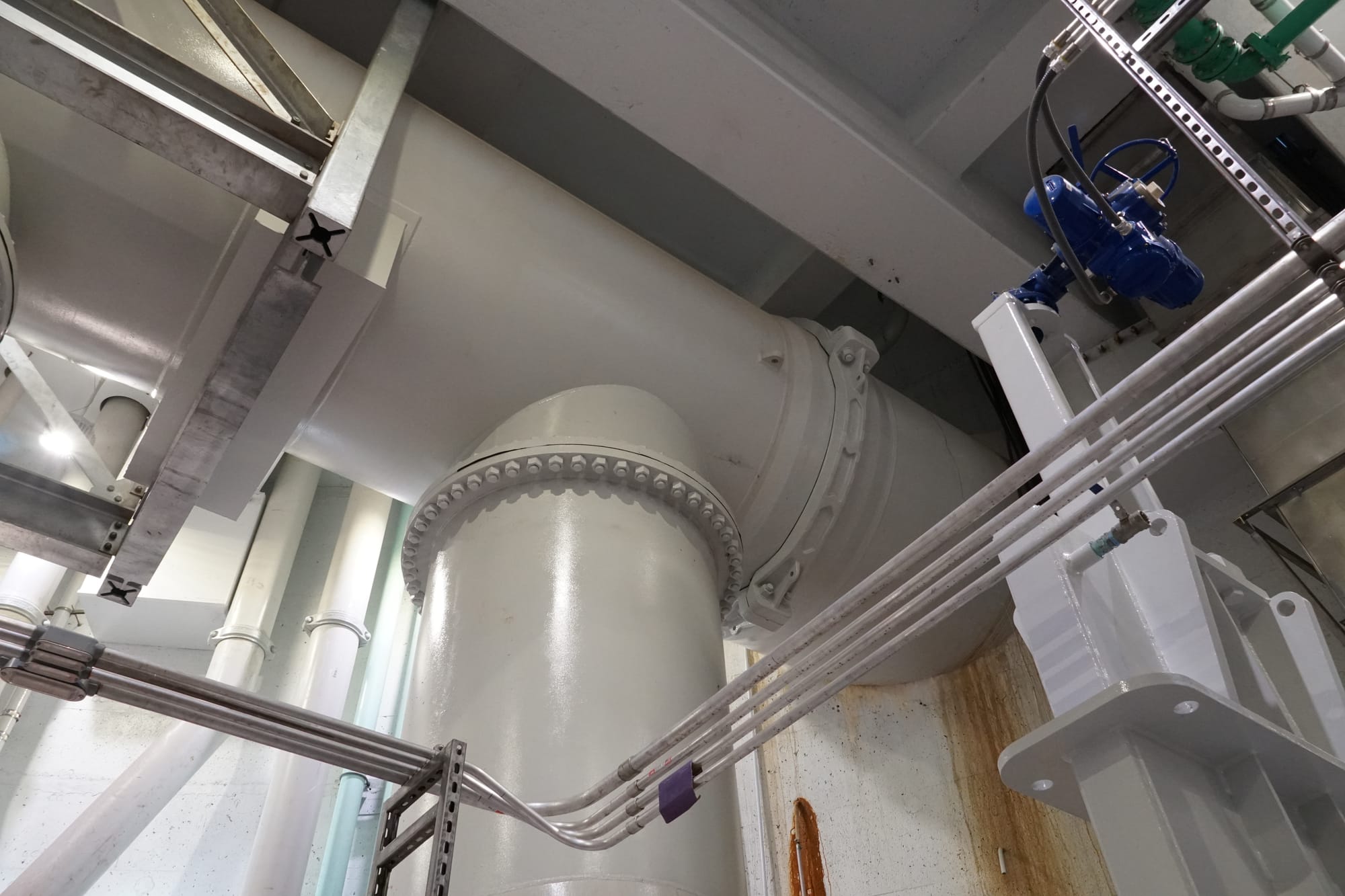
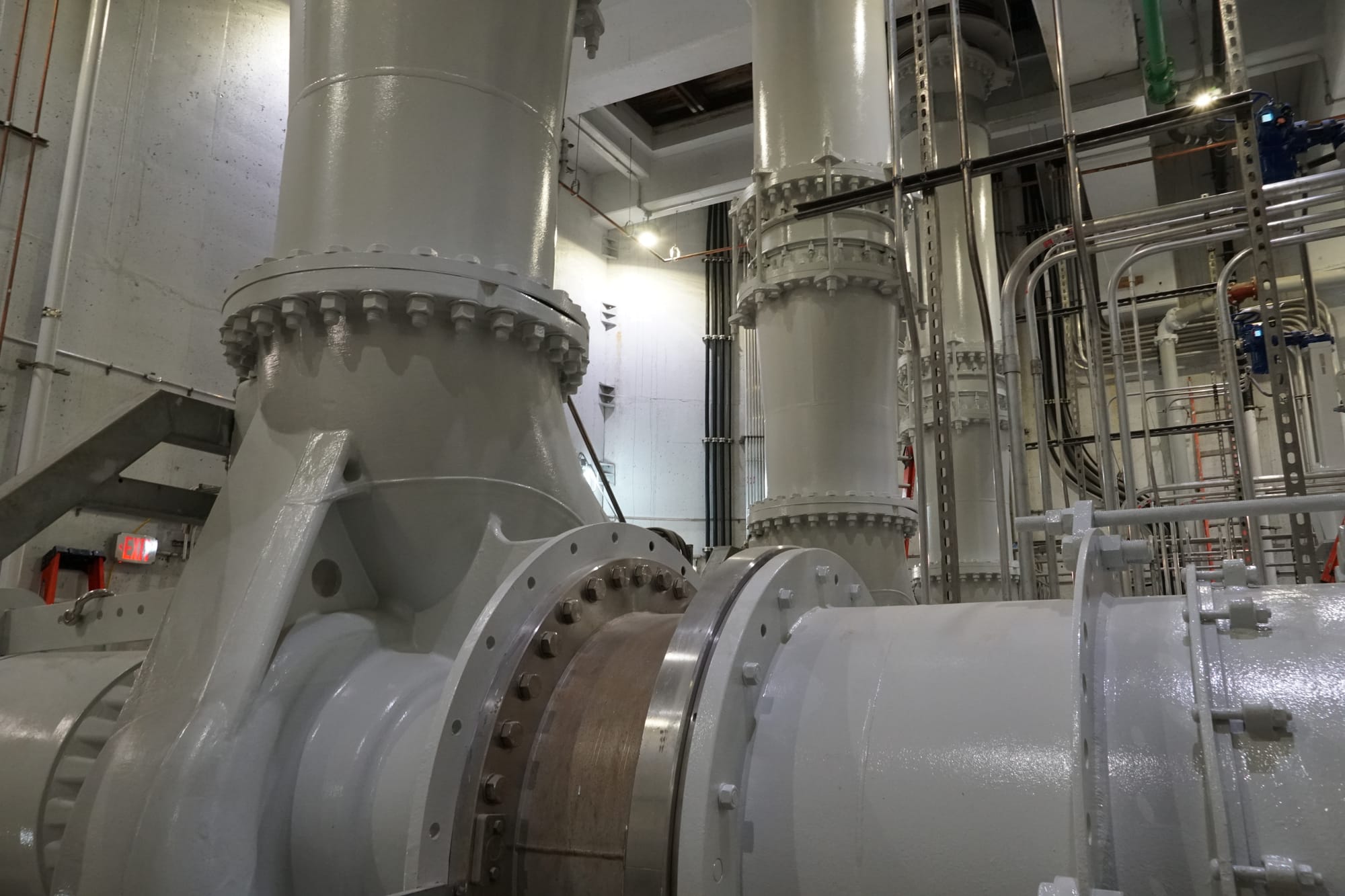
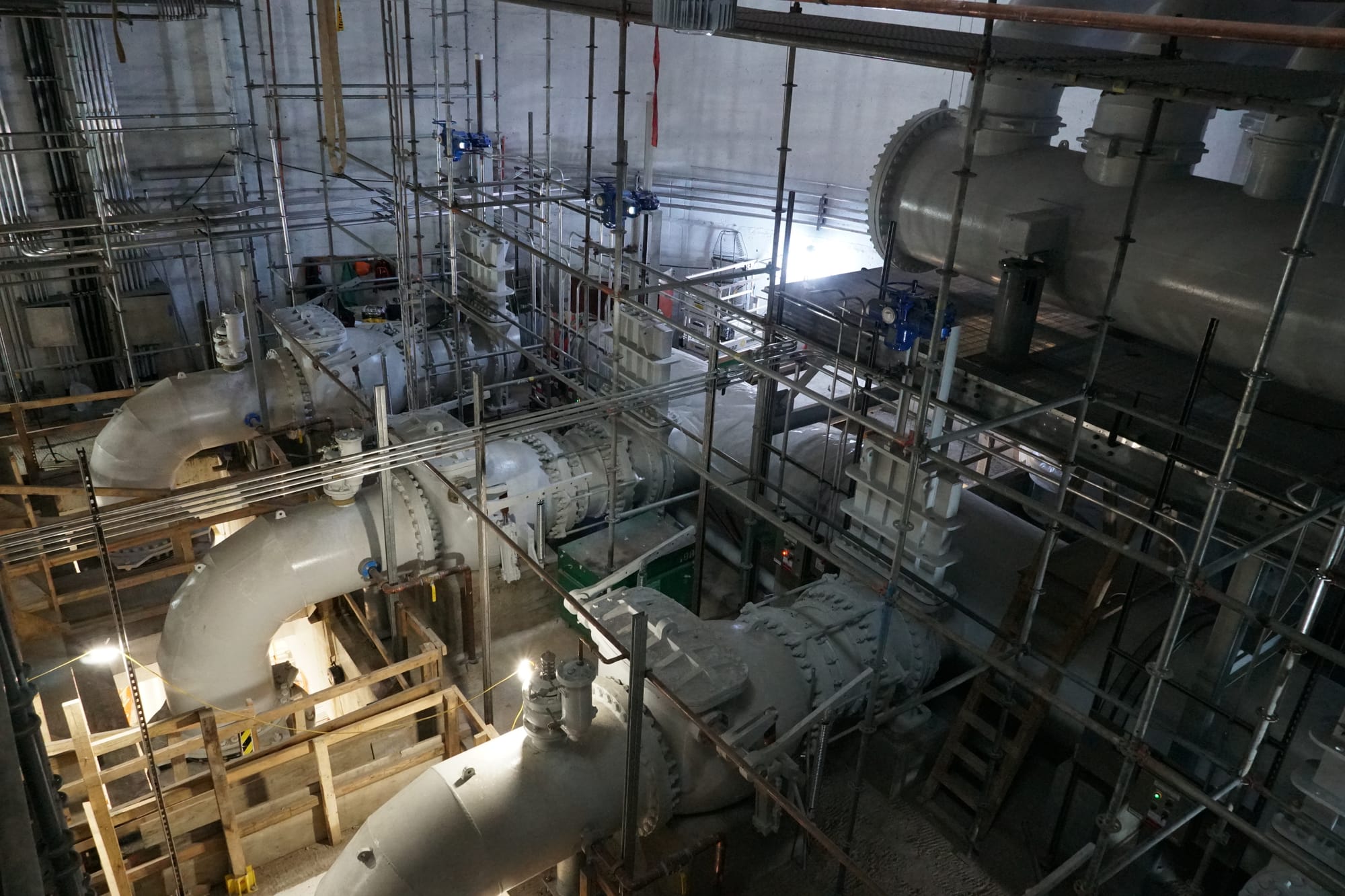
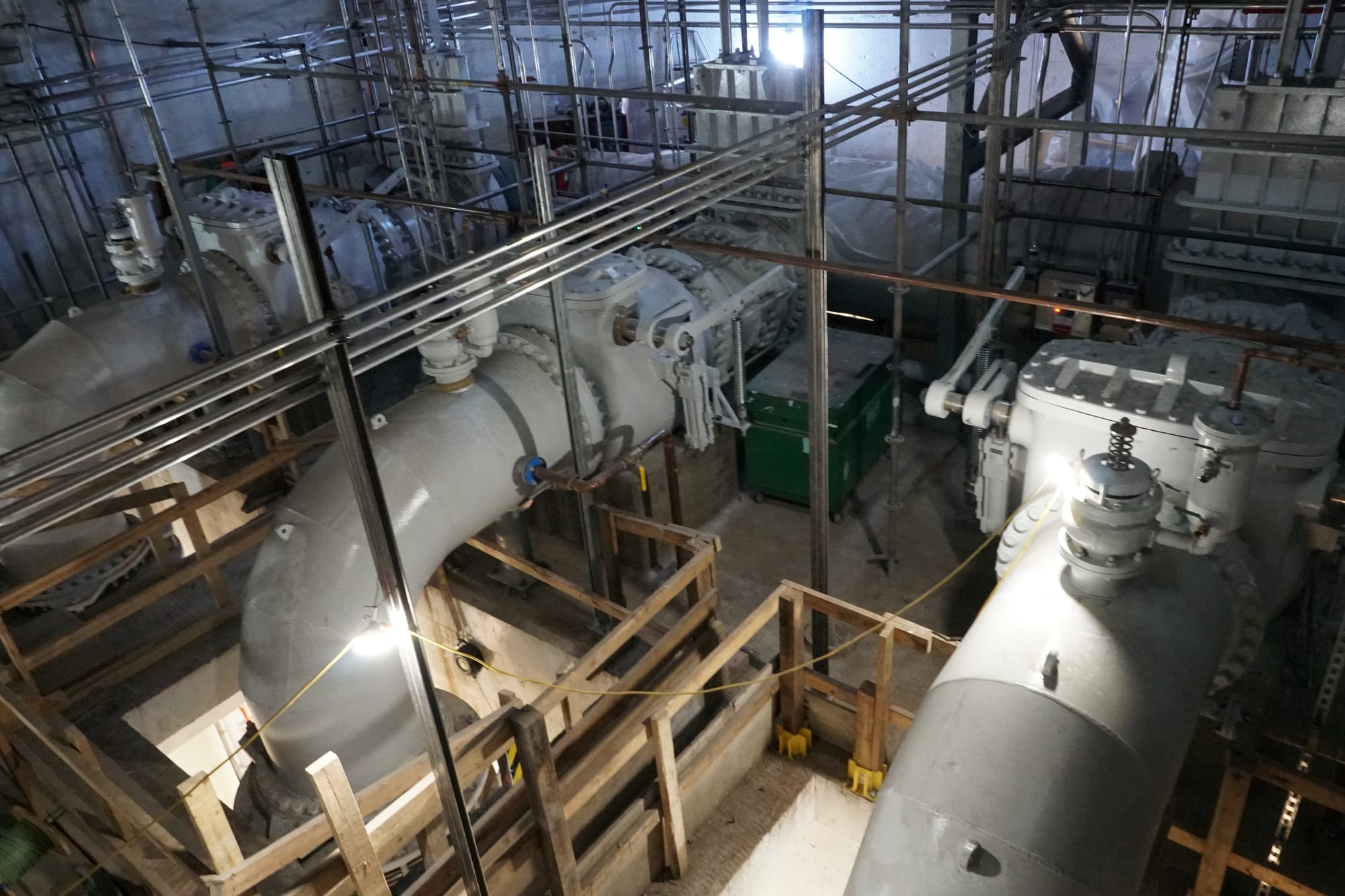
Large-diameter pipes and valves route flow through the pumping station, parts of which remained an active construction site days before the program's July 1 start. (Ryan M. Belmore/The Alexandria Brief)
An unprecedented timeline
AlexRenew says the program is on time and on budget, with construction completed in roughly eight years from planning through permitting — about half the 15 years Payne said comparable projects typically take. The Waterfront Tunnel was mined in about 16 months by a boring machine, which advanced by pushing off precast concrete rings installed four feet at a time. At one point, crews lined 130 feet of tunnel in a single day.
Payne and operations staff also pointed to the program's public-space work: a promenade built over the infrastructure at the former Robinson Terminal site on Pendleton Street, a rebuilt boardwalk trail at African American Heritage Park, new wayfinding signage and more than 4,000 native plants. The Pendleton Street promenade has become popular enough that the city is fielding requests to hold weddings there.
For the average resident, Payne said, the most immediate change will be visible: less trash and debris reaching the river. AlexRenew plans to track the tonnage of captured material on a public dashboard.
"Alexandrians on a daily basis interact with the waterways," Payne said. "This is the first step to providing cleaner, healthier waterways for the community for generations."
Carbary, who has watched a giant hole in the ground become an underground building over the past two years, framed his takeaway around what residents send down the drain — wipes, floss, pharmaceuticals and the like, all of which end up at the plant.
"It's not a trash can," he said. "There are people that have to contend and treat and bring that water level up to quite a high standard."
AlexRenew will mark the milestone with a ribbon-cutting ceremony at 9 a.m. July 1.