Table of Contents
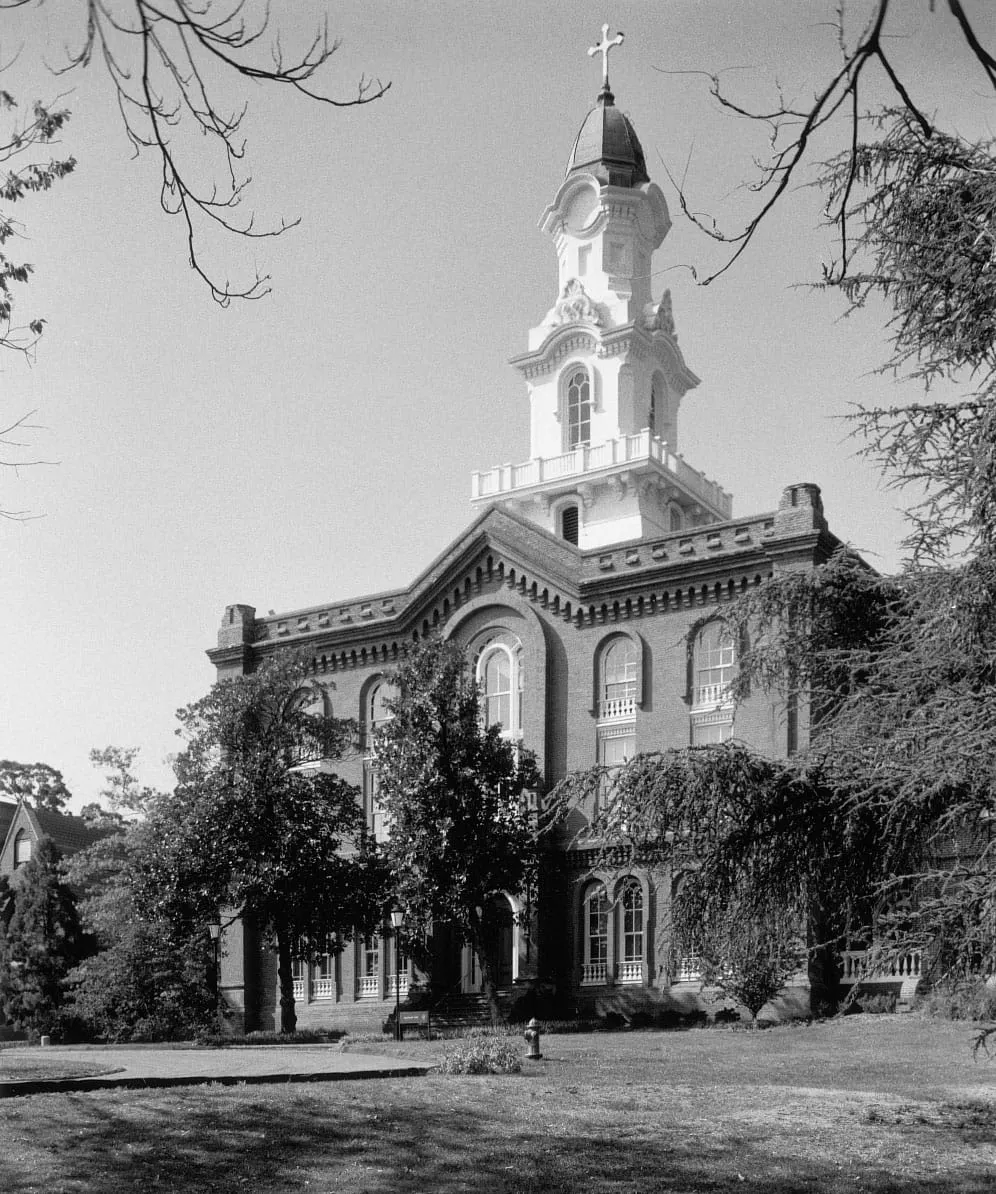
ALEXANDRIA, Va. — On June 23, 1897, Virginia Theological Seminary opened a three-day commencement ceremony — an annual event that drew clergy, dignitaries and visitors from across the Episcopal church to Alexandria. The Annual Missionary Sermon was preached on the first day; graduating students recited their final essays on the second day, when Bishop Francis Whittle handed out diplomas in the afternoon; and ordination services on the third day closed the proceedings.
But the most striking detail from the commencement isn't the program. It's how the visitors got there. "Guests attending the ceremonies arrived in Alexandria primarily by train," the Historic Alexandria record notes, "including the electric train that stopped at King and Washington Streets, and were transported to the Seminary by waiting carriages."
That single sentence captures how Alexandria operated as a transit gateway at the close of the 19th century. The Washington, Alexandria and Mount Vernon Railway — one of the earliest electric interurban lines in the United States, which had begun service in 1892 — ran through Alexandria with multiple stops including the intersection of King and Washington streets, then as today the city's most central crossroads. Steam trains from the Orange and Alexandria Railroad and other lines deposited additional passengers at Alexandria's depots, where horse-drawn carriages waited to carry them onward to outlying destinations: up the hill to the Seminary, west to the country estates of Fairfax County, south along the river to Mount Vernon. The city's economy in the 1890s was built in significant part on this gateway role — Alexandria as the rail-served entry point to the rest of Northern Virginia, with a hospitality and carriage trade developed around the visitors who passed through.
The 1897 commencement was, in that sense, less an event than a snapshot of the system at work. Within a generation, the automobile would begin to dismantle that system. The electric streetcars would be gone by 1932; the waiting carriages, a memory long before that. But for several decades at the turn of the 20th century, Alexandria's identity was as much about being a gateway as a destination.
Information via the City of Alexandria's Office of Historic Alexandria and the Washington, Alexandria and Mount Vernon Railway historical records.