Table of Contents
ALEXANDRIA, Va. - Two years before the Declaration of Independence, a group of men gathered at a courthouse in Alexandria and wrote something nearly as consequential.
On July 18, 1774, George Washington, George Mason and 23 other prominent Fairfax County citizens convened at the courthouse on Market Square — the same block that stands at the center of Old Town today — and approved a document called the Fairfax Resolves. Drafted primarily by Mason and championed by Washington, the resolutions were among the most forceful colonial rejections of British authority written before the Revolution, according to Historic Alexandria.
The Resolves declared that the British Parliament had no right to tax the American colonies, no right to govern their internal affairs, and no legitimate claim of supreme authority over colonial life. They stopped short of calling for independence — that would come two years later — but they laid the intellectual groundwork for it with unusual clarity and force. Among the 24 articles: a call to boycott British goods, a defense of the right to trial by jury, and a declaration that the colonists were entitled to all the rights of Englishmen.
The moment was born of urgency. Earlier that spring, the British Parliament had passed the Coercive Acts — known in the colonies as the Intolerable Acts — in response to the Boston Tea Party. The Acts closed Boston Harbor, revoked the Massachusetts charter, and allowed British soldiers to be housed in private homes. Alexandrians had already sent provisions to Boston in solidarity. Now they were putting principles on paper.
Mason, who lived at Gunston Hall in Fairfax County, did most of the drafting. Washington, who chaired the meeting, brought the weight of his military reputation and civic standing to the gathering. Both men were already figures of consequence in Virginia. According to George Washington's Mount Vernon, the Fairfax Resolves were approved at a meeting of the County Committee chaired by Washington at the courthouse in Alexandria — and within a year, Washington would be riding north to take command of the Continental Army.
Within two years, Mason's ideas would resurface in the Virginia Declaration of Rights — which in turn shaped Thomas Jefferson's language in the Declaration of Independence.
The 24 men who signed the Fairfax Resolves that day at Market Square were not yet revolutionaries in name. But the words they approved on July 18, 1774, made clear that something had shifted — that the patience of the colonies was exhausted and that Alexandria, a prosperous port town on the Potomac, was not going to stand aside.
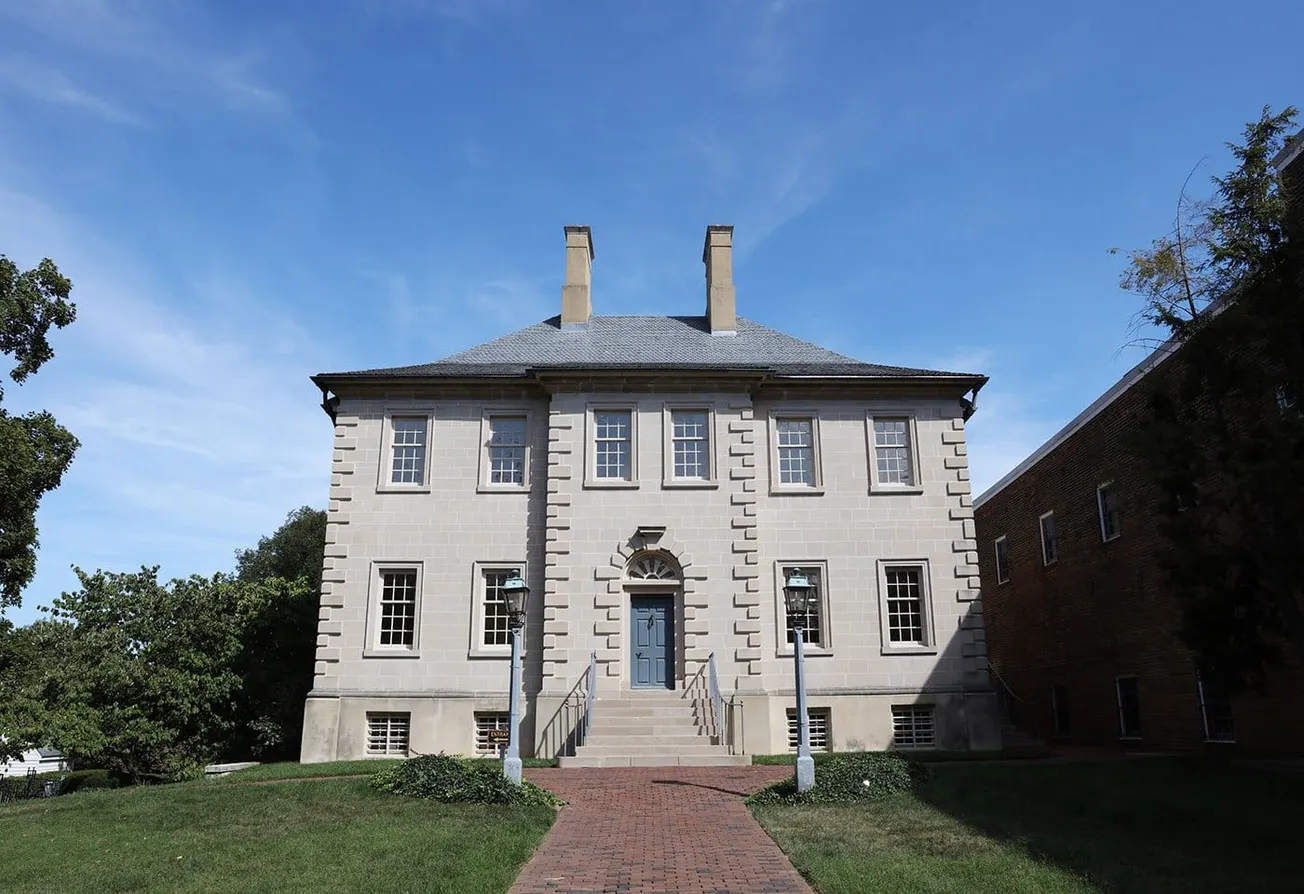
Today, Carlyle House is marking the 252nd anniversary of the signing with a walking tour — Those Who Signed the Fairfax Resolves — beginning at Christ Church, 118 N. Washington St. Tickets are $20 per person; registration is required. The 1.5-hour guided tour visits sites connected to the signers, many of which are still standing.