Table of Contents
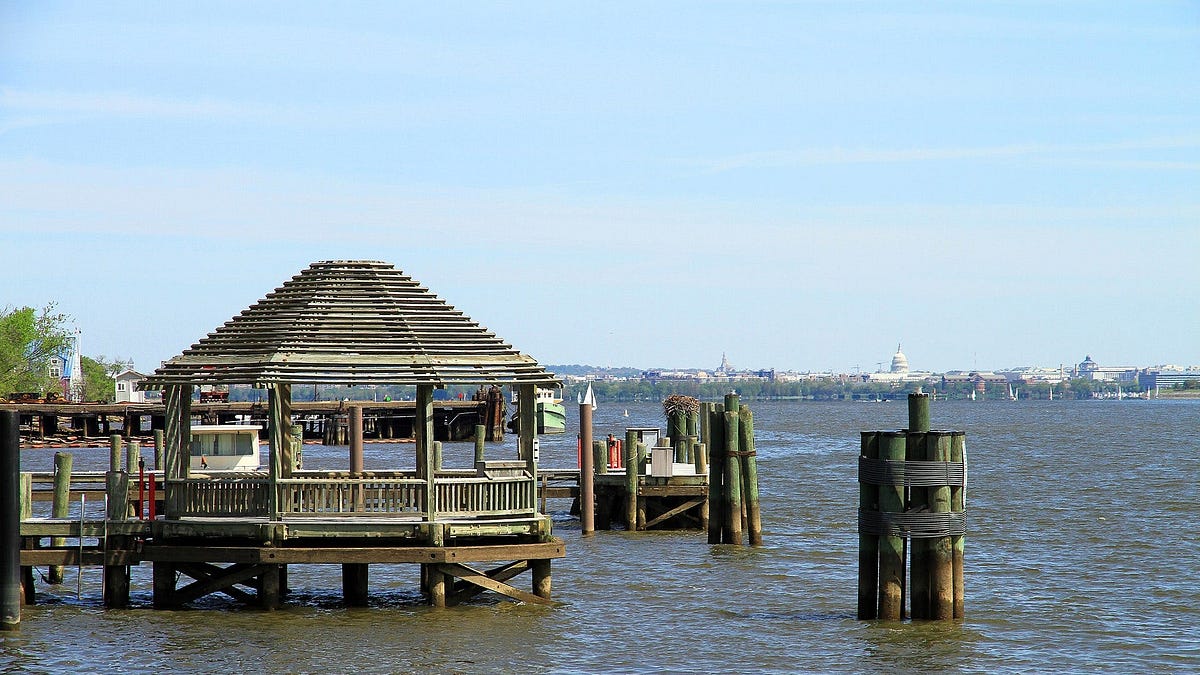
Virginia health officials have partially lifted a recreational water advisory for the Potomac River, removing restrictions that had covered Alexandria's waterfront since mid-February following a catastrophic sewage pipeline collapse upstream.
The Virginia Department of Health announced the partial lift Thursday, nearly three weeks after issuing the original advisory Feb. 13. The Alexandria Health Department notified residents the same day.
The advisory remains in place for a 4.7-mile stretch of the river running from the American Legion Memorial Bridge (I-495) to the Route 120 Chain Bridge — the area closest to the spill site. Samples collected by the Washington, D.C., Department of Energy and Environment and DC Water continue to show elevated E. coli levels near the collapse point.
The decision to partially lift the advisory followed a review of water quality samples collected by the Virginia Department of Environmental Quality. Samples taken Feb. 17, 25, 26, and 27 showed bacteria levels acceptable for recreational use downstream, clearing the way to remove restrictions along Alexandria's shoreline.
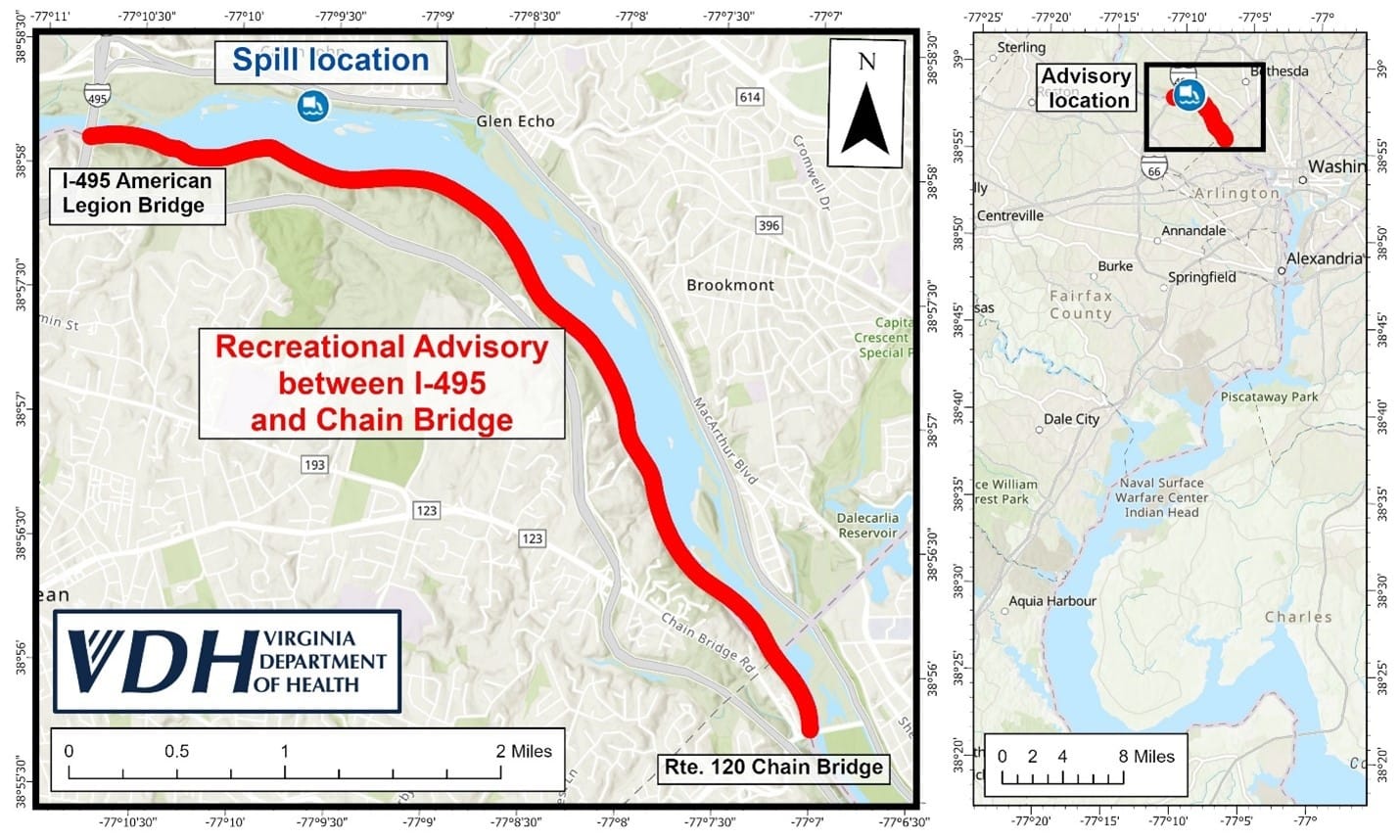
The spill traces back to Jan. 19, when the Potomac Interceptor pipeline — a major sewer main running through Maryland — collapsed and began discharging raw sewage into the river. More than 240 million gallons of sewage have spilled into the waterway, according to Delegate Alfonso Lopez (D), who represents Northern Virginia constituents and shared the figure in a newsletter to his district last month. DC Water has been using an emergency bypass through the C&O Canal as part of its response.
Alexandria's drinking water has not been affected. The city's water intake is located upstream from the spill.
Even with Alexandria's waterfront cleared, health officials cautioned that natural bodies of water always carry risk. Anyone who comes into contact with river water should wash their skin promptly with soap and water and rinse any gear, clothing or equipment that touched the water. Those who develop symptoms after exposure should seek medical care and inform their provider.
The Alexandria Health Department said it will continue monitoring local health data for any increase in gastrointestinal illness linked to water exposure.
Residents with health questions can call AHD at 703-746-4988 during normal business hours. For repair updates, visit DC Water's website. For information about ongoing Virginia impacts, visit vdh.virginia.gov/news/potomac-sewage-spill/.
 Ryan Belmore