Table of Contents
Renting remains cheaper than buying a starter home in the Washington-Arlington-Alexandria metro area, but a sharp drop in buying costs is narrowing that gap faster than nearly anywhere else in the country — and could flip the equation within three years, according to a new Realtor.com report released Thursday.
The monthly cost of buying a starter home in the D.C. metro currently runs $2,988, compared to a median rent of $2,281 — a difference of $707, or 31%. While renters are still coming out ahead, that cushion has shrunk by $338 over the past year, one of the steepest year-over-year declines among the 50 largest U.S. metros tracked in the report.
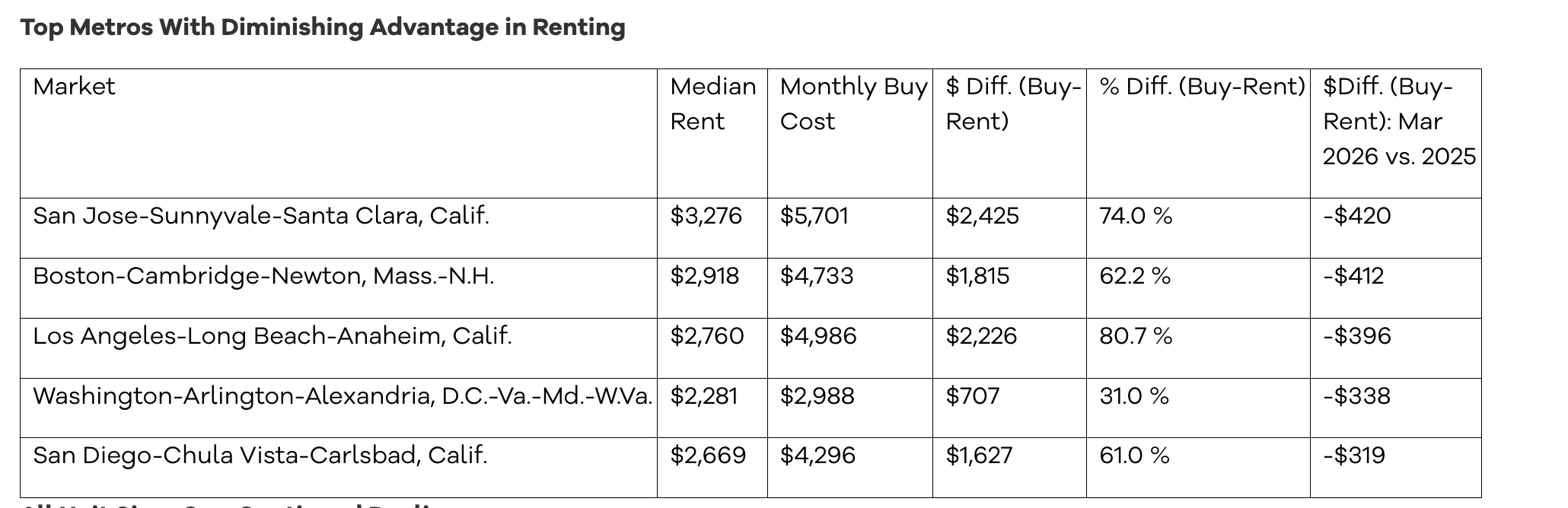
The driver is falling buying costs. Home purchase costs in the region dropped 10.7% year over year, while rents edged down just 0.9%. If those trends hold, the report projects buying would become the more cost-effective option in the D.C. area in approximately three years — placing it among only five major metros nationwide where that crossover is expected in the near term.
The picture looks different elsewhere in the region. In Baltimore, where buying costs have also fallen sharply — down 5.8% year over year — the crossover is projected even sooner, at roughly two years, with a current gap of just $206 per month. By contrast, Virginia Beach renters save $354 per month over buying, a gap that has barely budged, while Richmond renters save $851 monthly, with buying costs there falling only 1.9%.
"What's striking is that the crossover in these markets is being driven by two different forces," said Jiayi Xu, economist at Realtor.com. "In Pittsburgh, it's rising rents that are closing the gap. In markets like Memphis and Baltimore, it's buy costs cooling faster than rents. The path looks different, but the destination is the same, and it's worth watching as we move through 2026."
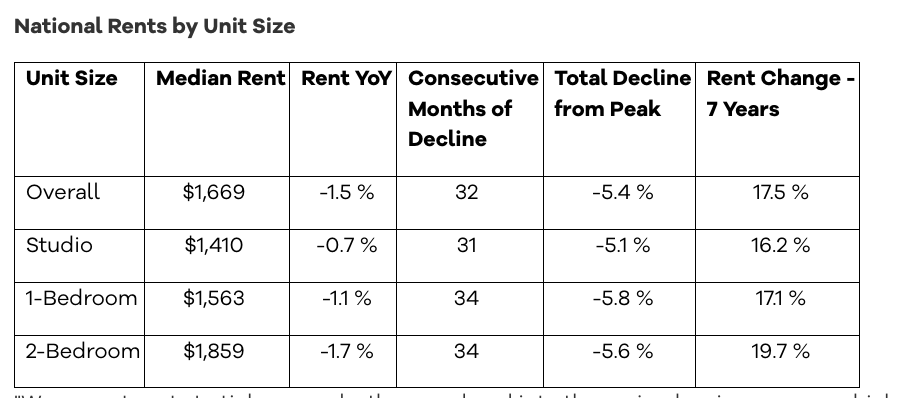
Nationally, renting remains the more affordable option across all 50 major metros, with average monthly savings of $920 compared to buying. The national median asking rent stood at $1,669 in March, down 1.5% year over year — its 32nd consecutive month of annual declines.