Table of Contents
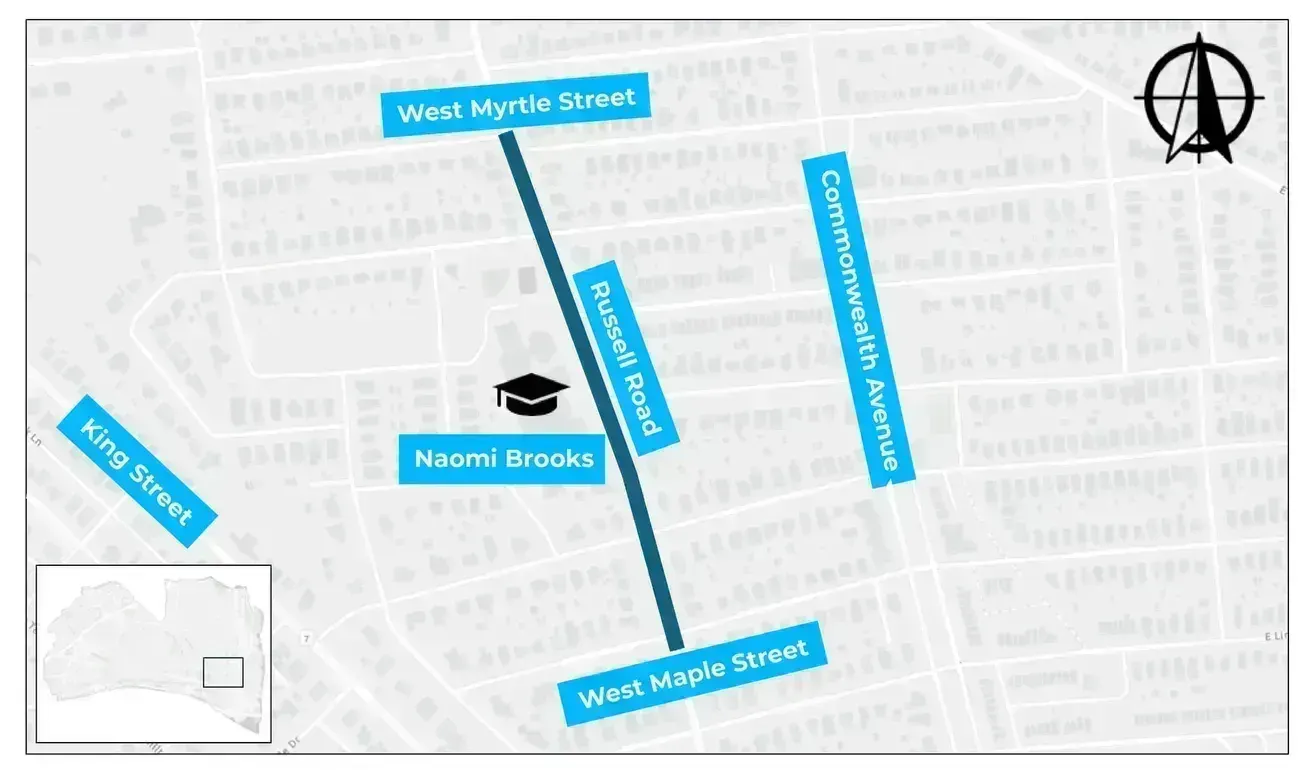
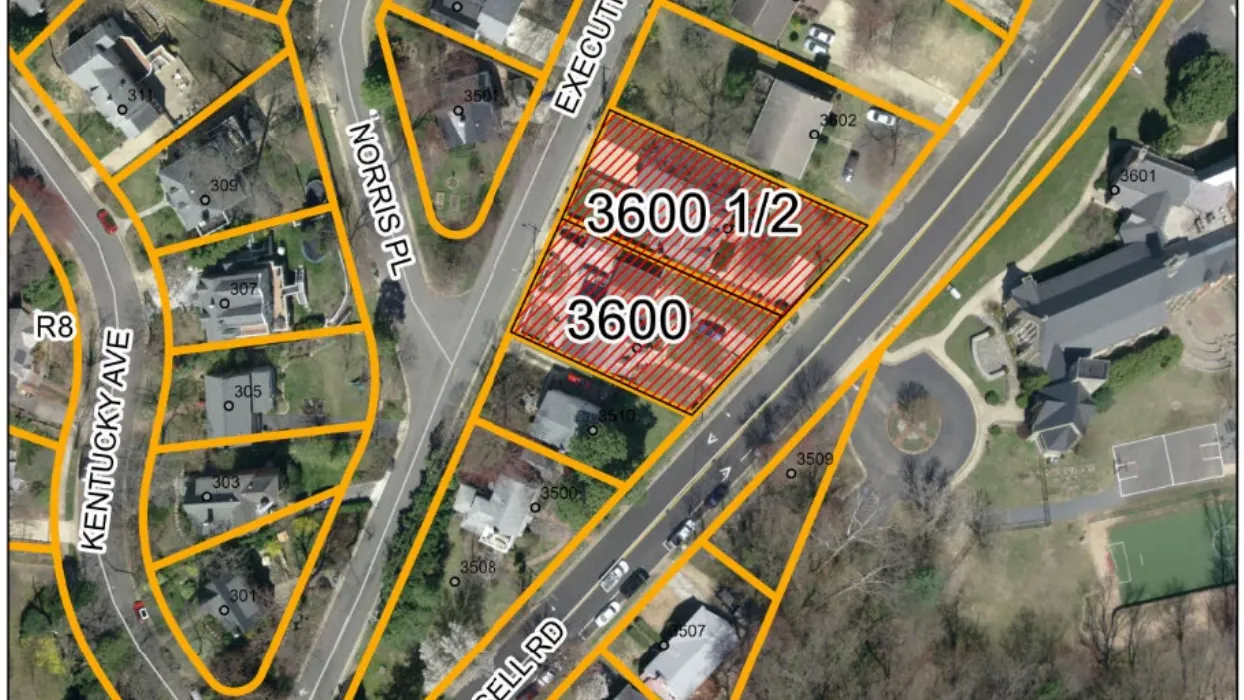
ALEXANDRIA, Va. — City Council will decide Sept. 19 whether to change the addresses of two Russell Road houses, one of them numbered 3600½, after the owners of the half-numbered property said nine years of misdirected mail and packages left them no other option.
Darien and Lisa Tillinghast, who own 3600½, asked the city in May to renumber their address. Staff approved a change giving both houses new numbers: 3600½ would become 3578 Russell Road, and the neighboring 3600 would become 3550. Susan Saffelle Hughes and Michael A. Hughes, who own 3600, appealed. Planning and Zoning staff recommend council affirm the decision.

It appears to be the first appeal to reach council under Section 5-2-94, the renumbering ordinance council adopted unanimously April 18. The Tillinghasts' address problem prompted that ordinance. The ordinance gave the city manager authority to change addresses to eliminate confusion, correct errors or address health and safety concerns, and created the appeal process now being used against that change.
The ordinance anticipates that a renumbering may affect more than one property. It requires an owner requesting a change to submit a proposed plan covering their own property and "other properties as applicable."

What the applicants told the city
The Tillinghasts bought the house in April 2017 and say the trouble started immediately. Their petition lists misdeliveries from Amazon, Walmart, Giant, FedEx, UPS and what they called a myriad of other services, plus lost and misdirected USPS mail and services performed at the neighboring property. They also receive mail and packages meant for 3600.
Part of the problem is digital. Google Maps tags the 3600½ lot as both 3600 and 3602, according to their filing, and the city's own GIS Parcel Viewer displayed 3600 for both lots as of May.

The Postal Service has been blunter. A package went out for delivery July 17 and came back three days later marked "No Such Number," returned to sender, according to emails the couple sent city planner William Cook and included in the record. Lisa Tillinghast wrote that it matched what the local postmaster had told her husband a year earlier: that 3600½ does not exist.
They also wrote that emergency services might not find the right house, and that delays could cost property and lives. They said they had tried supplemental signage without success.
Their filing notes a wrinkle in the new ordinance: it directs applicants to submit renumbering requests through the city's APEX system, but APEX did not appear to accept them. They filed through Alex311 instead, on May 11.
How staff got to 3550 and 3578
The city's renumbering procedure routes requests through its GIS program for research, then circulates a recommendation to the fire department, police department, the emergency communications center, Planning and Zoning and Transportation and Environmental Services for comment before a decision.
Staff did not agree at first. An initial review, which included checking with city emergency services and the local postmaster, found the addressing was functioning as intended. On a second look, staff concluded the half address does cause problems for people unfamiliar with the numbering system, and sent a letter June 18 proposing new numbers for both houses.
The staff report lays out the reasoning. Half numbers are common across Alexandria but less so in neighborhoods of detached single-family homes. Russell Road carries heavy traffic, with limited on-street parking and limited sidewalks in front of the two properties, all of which complicates deliveries. The misdelivery history was extensive, the owners had tried other fixes, and only two properties would be affected.
The block left no room to solve it with one change. Addresses on the west side of Russell Road are even, running 3602, 3604, 3606 and 3608 to the north and 3510 and 3508 to the south. No whole numbers were available, staff wrote in the presentation prepared for the hearing.
Staff did not adopt what the applicants proposed. The Tillinghasts asked that 3600½ simply become 3600, with the neighbor taking any even number between 3512 and 3598 — they suggested 3520, 3590 or 3598. Instead, staff assigned new numbers to both houses.

A change would fall on the applicants as well. In a July email, Lisa Tillinghast wrote that they would have to redo signage at the street, on the house and on Executive Avenue, and asked how to notify banks and the Department of Motor Vehicles of an address that, until now, some systems said did not exist.
The appeal
The owner of 3600 filed on June 27 and submitted more material July 15. The docket lists the appellants as Susan Saffelle Hughes and Michael A. Hughes; the staff report names the appellant as Susan L. Saffelle and lists her as the owner of 3600.
City records have carried incorrect names in the case. In June, Darien Tillinghast wrote to Cook that his middle initial is T, not L, and that his wife's maiden name had been pulled from an old property record. "The 'L' is an error on our part," Cook replied, saying he would correct it going forward. The staff report going to council still lists the applicants as Darien L. Tillinghast and Lisa Fues.
Her appeal, sent to City Clerk Gloria Sitton on June 27, works through staff's five criteria point by point.
On half numbers: not the problem. She wrote that she and her husband ran into their regular UPS driver at another location and told him about the proposal. He questioned the need for it, she wrote, and recited the block from memory — 3608, 3606, 3604, 3602, 3600½, 3600.
On Russell Road's traffic, parking and sidewalks: she argued the opposite. The circular driveway at Grace Episcopal Church across the street makes deliveries easier, she wrote. Her household paid to put in the sidewalk in front of 3600; 3600½ has none. Parking in front of the two houses is restricted to Sundays, so on most days there are no parked cars on their side. An address change, she wrote, will not change traffic volume on Russell Road.
She also argued the renumbering would make things worse, not better, by breaking the sequence a driver can follow: replacing 3600½ and 3600 with 3550 and 3578 leaves a gap where the block currently runs in order.
On the misdelivery history: she wrote that misdeliveries happen across the city regardless of address, that she does not receive the Tillinghasts' parcels more often than any other neighbor's, and that she gets few misdeliveries at all. She said she tells Amazon her house is the old stone house with stone steps and a low stone wall, and that she advised her neighbor early on to describe her own brick house the same way.
On the house's history: 3600½ was built in 1993, she wrote, and the address was never a problem until 2017. The previous owners lived there 22 years under the surname Safford — close to her own, Saffelle — without trouble. She also wrote that two other large single-family homes a few blocks up Russell Road share a split address.
And she noted that the city's letter proposing to change her address reached her at 3600 Russell Road without difficulty.
The sign, and other options
The appeal argues the confusion comes from next door. A large sign in the front and back yards of 3600½ lists five different addresses for the property, she wrote, though the house has one. Passersby have asked her whether there are vacancies next door, and delivery drivers have knocked on her door confused by it. If the goal is less confusion, she wrote, dealing with the signage would be far less disruptive than renumbering two established addresses.
She listed alternatives she said the city had not weighed: delivery lockers, package boxes, clearer delivery instructions and post office boxes.
An address since 1939
Her parents built the house in 1939 on land belonging to her grandfather, she wrote, and 3600 Russell Road has been the address ever since — more than 86 years. The family's church across the street is 3601. She and her husband both turn 70 this year, and she wrote that a wide network of family, friends, former students and colleagues knows them by that address, some of whom she expects they would lose touch with. Her husband is in the middle of an insurance claim involving multiple contractors, which she said renumbering would complicate.
"Changing our address would impose a significant burden and create an unnecessary hardship," she wrote, asking the city to let the house keep its number.
A dispute between neighbors
Part of the appeal concerns the relationship between the two households rather than addressing. Saffelle Hughes attributes the problem to her neighbors rather than to the address, describing a relationship that has deteriorated since 2017, including an incident over a misdelivered grocery order that she wrote led to police involvement, a court date and more than $2,500 in legal fees. Charges were dropped, she wrote.
The larger issue, she argued, is not the address but how delivery mistakes get handled between these particular neighbors, and an address change will not stop mistakes from happening.
The Tillinghasts' account of those events is not in the council record. The city's decision rests on the addressing criteria in Section 5-2-94, not on the relationship between the two households.
What renumbering involves
The city's GIS program, in the Department of Information Technology Services, handles addressing and fields roughly 200 renumbering requests a year, most tied to new development and infill. Fractions were the historical way to handle infill when no whole number was available; the city now uses letters such as A or B, which avoids touching neighboring properties.
Changing an address puts work on the owner. The city updates some records, but property owners must handle the rest — utilities, billing, deliveries and the accumulated paperwork of an address. Staff have prepared a guide dividing which updates the city makes and which the residents must, and say they will provide sample letters and templates.
The presentation staff prepared for the hearing summarizes the appeal in three bullet points: that delivery drivers are familiar with the addresses and renumbering will not fix the problem, that the house and address carry historical significance for the appellant, and that the change would be a significant burden. It does not mention the sign, the alternatives she proposed or the dispute between the households. The core of staff's case is on the preceding slide: no whole numbers are available.
Council can affirm the decision, reject it, or modify it by picking different numbers. Staff note that other numbers would work as long as they are even and leave room for adjacent properties.
Whatever council decides takes effect 45 days after the parties are notified in writing. If council affirms the decision, the new numbers would take effect in early November.
Planning and Zoning Director Paul Stoddard signed the June 18 letter proposing the change, which gave affected parties 30 days to appeal. The appeal arrived nine days later.
The public hearing begins at 9:30 a.m. Saturday, Sept. 19, at the Del Pepper Community Resource Center, 4850 Mark Center Drive.
Ryan Belmore is an Alexandria resident and the founder and publisher of The Alexandria Brief. Send tips, feedback, and story ideas to ryan@alexandriabrief.com.