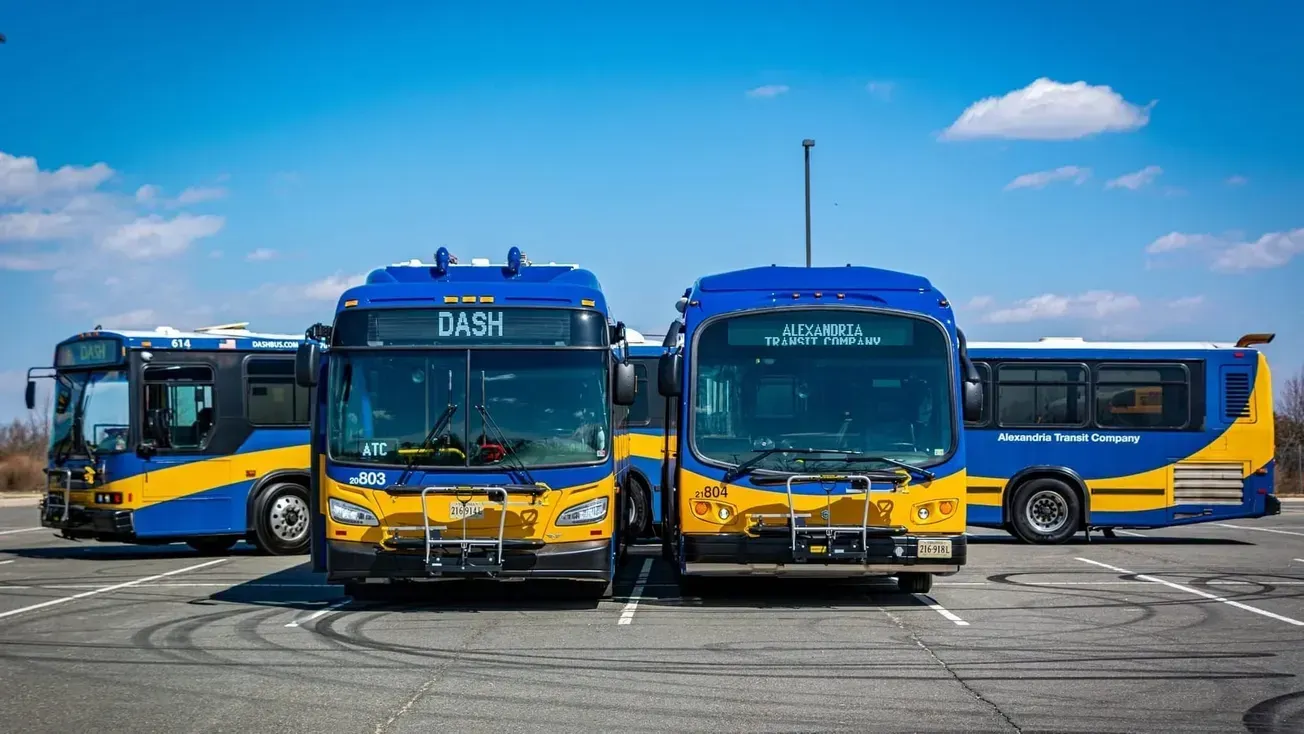
ALEXANDRIA, Va. — Mayor Alyia Gaskins asked City Council on Tuesday to back the creation of a friendship city relationship with Osijek, Croatia, an outgrowth of the month Alexandria spent as the Croatian national soccer team's World Cup base camp.
Gaskins said she circulated a memo to council members and was asking for their support in directing the city manager to work with the city attorney to place a friendship city subcommittee on the Oct. 13 legislative meeting agenda. If council approves that, she would ask for a resolution creating a time-limited and specific friendship city partnership.
Not a sister city
A friendship city is a lighter, non-binding agreement, Gaskins said — time-bound and specific, and meant to give the city a shorter window to explore whether it wants a deeper relationship. She framed the partnership around sport and tourism, tied to the exchanges the embassy raised and to soccer.
Alexandria does not appear to have any friendship city relationships now. City code names only the four sister cities.
Alexandria has four sister cities, each named in city code: Dundee, Scotland, adopted first; Helsingborg, Sweden; Caen, France, added in 1990; and Gyumri, Armenia, added in 1994. Those ties have produced the Mayor's Cup rugby challenge with Dundee, revived in August after years away, along with student exchanges and a Helsingborg Symphony visit.
The code also sets up the machinery Gaskins is asking to expand. Title 1, Chapter 2 establishes a 17-member Sister Cities Committee, 16 of them voting, appointed by council to two-year staggered terms, with two seats reserved for the Alexandria-Gyumri Sister City Committee. Applicants must name which of the four cities they are primarily interested in, so the committee stays balanced among them. The code requires standing subcommittees for each sister city — Helsingborg, Dundee, Caen and Gyumri — and allows the committee to create others.
That is what council would take up Oct. 13: adding a friendship city subcommittee to that structure. The resolution creating the Osijek partnership would follow.
Osijek is Croatia's fourth-largest city and the economic and cultural center of Slavonia, the country's eastern region. It sits on the Drava River about 10 miles from the Serbian border and recorded a population of 96,313 in the 2021 census, down from 165,253 in 1991. Known in Roman times as Mursa, it was held by the Ottomans for more than 150 years and is home to the Josip Juraj Strossmayer University of Osijek, founded in 1975. Its mayor is Ivan Radić.
The city was heavily shelled by the Yugoslav People's Army and Serbian forces during the Croatian War of Independence. The war killed 1,724 Osijek residents, among them 397 civilians.
Osijek lists 16 twin cities, the oldest a 1972 pairing with Pécs, Hungary, and most of them European, along with partners in China, Australia and Turkey. None are in the United States. It also keeps a separate, lighter category — one partner city, Novi Sad, Serbia, since 2002 — much like the distinction Alexandria would draw between a sister city and a friendship city.
Where it came from
Gaskins tied the proposal to the summer. Sports united the community, she said, and the city put substantial time and energy into hosting Croatia at Episcopal High School and the hotel now known as the Satire.
The groundwork predates the team. Gaskins traced the partnership to a meeting with Croatian Ambassador Pjer Šimunović a few months before the tournament, and in May, at the opening of a Croatian stamp exhibit at the Torpedo Factory Art Center, she told the room the partnership was "bigger than football." Real success, she said then, would be the team feeling like family rather than guests.
She has been pointing toward something like this since the team arrived. At the base camp opening on June 10, before 700 to 800 children from city recreation, school and soccer programs, Gaskins read a proclamation naming Alexandria the proud host city and described the month ahead as the start of a lasting relationship of friendship and cultural exchange between Alexandria and Croatia. The Alexandria Soccer Association handed out commemorative World Cup booklets to the children that night.
Croatia chose Alexandria in January from more than 60 possible base camps, after a federation delegation visited eight sites in the northeastern U.S. and Canada.
The payoff, she said, has been attention: Alexandria has been picked up in international travel magazines and is drawing notice in a new way.
The Croatian embassy then approached the city about how to build on that, she said, looking at continued exchanges tied to sport. She said the partnership could also build on developing ties between the Alexandria Soccer Association and counterparts in the prospective friendship city.
Visitor spending in Alexandria topped $1 billion for the second straight year, the city reported at Visit Alexandria's annual meeting last week, with revenue per available hotel room hitting a record $119. Visit Alexandria credits the World Cup, the city's America 250 events and its Unlock Your Story campaign for a strong finish to the fiscal year.
Gaskins told that meeting she received hundreds of messages a day during the team's stay, from people planning trips and from Croatians following the team. One woman wrote that Alexandria felt like a little place in Croatia.
Council took no vote Tuesday. The item was raised during council reports.