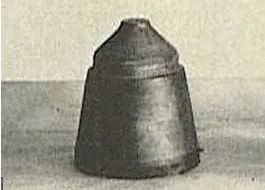
ALEXANDRIA, Va. — On June 11, 1904, an act of childhood curiosity nearly turned into tragedy when the two youngest children of Thomas Hayden discovered a dynamite-filled shell in a junk pile near their home on the south side of Duke Street, between Lee and Union.
Not knowing what they had found, the children dragged the heavy shell back to their yard and began striking it with a hammer, hoping to separate the lead pieces. Without warning, the shell exploded — sending fragments tearing through nearby fences and outbuildings, hurling pieces of metal high enough to land several blocks away.
What should have killed both children instead left them unharmed. Despite being close enough to the explosive that the blast leveled property around them, both Hayden children escaped without injury. No other residents were hurt.
A working waterfront city
The accident says something about turn-of-the-century Alexandria: this was a port city where industrial materials moved through warehouses, rail yards, and waterfront lots, and where unguarded debris piles were common features of the working landscape. A dynamite shell sitting in a junk pile on the south side of Duke Street between Lee and Union streets — just a few blocks from the Potomac waterfront — was strange enough to be newsworthy, but apparently not strange enough to be unprecedented.
The same area today, between Lee and Union streets, sits at the heart of Old Town's tourist and residential district — blocks where children now play in well-manicured public spaces rather than in junk piles near the river.
Dynamite in 1904
Dynamite was invented by Alfred Nobel in 1867 and had been commercially available in the United States for nearly four decades by the time the Hayden children encountered the shell. By 1904, it was widely used in mining, construction, and demolition work — including in the rapidly expanding port and railroad infrastructure of Alexandria. Surplus and discarded explosives were common enough in industrial areas that incidents involving children and abandoned ordnance appeared periodically in newspapers of the era.
The Hayden children's escape made local news because of what didn't happen — what looked like an obvious tragedy yielded no casualties. In the era of front-page newspaper accident chronicles, "children's miraculous escape" was the kind of human-interest story that stuck.
Information via the Office of Historic Alexandria.