Table of Contents
Updated 5:35 p.m., May 27, 2026: This story has been updated with a response from the City of Alexandria received after initial publication.
ALEXANDRIA, Va. — Waymo, the Alphabet-owned self-driving car company, notified Mayor Alyia Gaskins by email on May 13 that it would begin mapping Alexandria's streets a week later, according to records the mayor's office provided to The Alexandria Brief — and Gaskins responded by asking how the company had coordinated with other localities and requesting a meeting to understand what was happening.
At a public meeting of Virginia's Autonomous Driving Work Group on May 22 in Mechanicsville, Waymo representatives told state lawmakers and transportation officials the company had begun mapping in Arlington and Alexandria using human-driven vehicles, according to draft minutes published by the work group. A Tesla representative at the same meeting said that company has been mapping in Virginia "with its vehicles already," the minutes state.
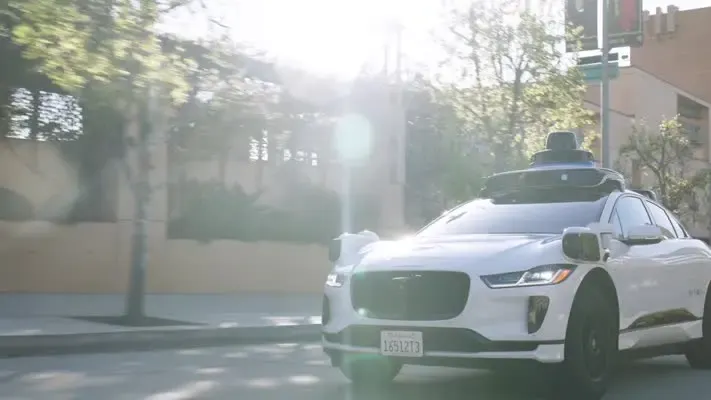
In Alexandria, that notice took the form of an email to the mayor copying the city manager and city transportation staff. Rich Harrington, a Waymo policy adviser, wrote to Gaskins on May 13: "Starting May 20, we will begin deploying human-driven vehicles in Alexandria to collect map data," with similar work in Arlington "a few weeks later." Harrington wrote that the company's mapping plan "covers the full city limits, starting in Old Town and moving from east to west," using all-electric Jaguar I-PACE vehicles "driven manually by trained safety specialists." He described the mapping as "a critical first step" and "a catalyst for eventual operations in Northern Virginia and the broader DMV region," while emphasizing that "rides are not currently offered to the public, and this testing does not indicate the launch of a commercial service."
Gaskins replied the next evening that she had already noticed the vehicles. "I have started to see your vehicles locally, so it is helpful to understand more about your approach and future plans," she wrote on May 14, asking how Waymo had "coordinated with local governments in other communities" and requesting a conversation with relevant city staff. Harrington responded May 15 that the company would be "happy to schedule a briefing" within the next two weeks. City Manager Jim Parajon and city staff members Cheran Ivery and Leah Riley were copied on that message.
Gaskins told The Alexandria Brief the exchange represented her "only communication" with the company on the subject. "As you can see, I responded requesting a meeting to better understand what is happening," she wrote. The mayor's office confirmed Wednesday that the briefing has not yet taken place.
Ebony Fleming, the city's director of communications and public information, said in an email Wednesday that Waymo "alerted Transportation & Environmental Services staff" on May 13 of its plan to begin mapping May 20, and that "beyond the initial contact, Waymo has not reached out to the City about the mapping." Fleming said the city does not currently have a formal policy on autonomous vehicles, and that staff "continues to monitor the statewide working group developing recommendations for future autonomous vehicle legislation and coordinates with peer cities and national organizations to better understand the opportunities, operational considerations, and challenges associated with this emerging technology." The Alexandria Police Department did not respond to questions.
Asked about the company's coordination with Alexandria, Harrington referred the questions to Waymo spokesperson Ethan Teicher. In a written statement, Teicher said the company was "currently mapping in Northern Virginia as an important preparatory step should the Commonwealth authorize fully autonomous ride-hailing" but said Waymo did "not currently have plans for a commercial service in Virginia." He did not address questions about whom the company had briefed in Alexandria or when.
Self-driving vehicles are not currently permitted to carry passengers in Virginia, and mapping is typically conducted with a human driver, as Waymo described. Whether and when autonomous vehicles could operate commercially in the commonwealth rests with the General Assembly, which has not yet created a legal framework.
A bill that would have done so, SB 670, sponsored by Sen. Saddam Azlan Salim, D-Fairfax, passed the Senate 35-4 in February but stalled in the House, where the Transportation Committee voted in March to continue it to the 2027 session. The measure would require operators of fully autonomous vehicles used commercially to obtain an autonomous operation certificate from the state, carry at least $1 million in liability coverage and file a law-enforcement interaction plan, among other requirements. Salim has said he expects a licensing process could be running by July 2027 at the earliest, with vehicles on the road no sooner than 2028, and has said he began pursuing the legislation after learning Waymo was expanding into Washington, D.C.
The bill also contains a provision of direct consequence for Alexandria: it would bar localities from imposing their own requirements on autonomous vehicles or prohibiting their operation, leaving such vehicles subject only to the same local ordinances that apply to cars driven by people. If that language becomes law, the city's ability to set its own rules for the vehicles now mapping its streets would be limited. Alexandria has already encountered a version of that dynamic with autonomous delivery robots. Serve Robotics began making Uber Eats deliveries on city sidewalks in December under a 2017 state law that bars localities from imposing licensing, registration or insurance requirements on personal delivery devices, with the city's mobility chief noting at the time that "the City's ability to regulate delivery robots is limited under current state law."
Separately, the General Assembly this year passed and the governor signed a measure expanding the state's autonomous vehicle work group to assess the labor and workforce effects of the technology, including potential job losses and gains. At the May 22 meeting, the work group also discussed coordinating with other jurisdictions on autonomous vehicle rules. A state transportation official said staff-level discussions had taken place between localities and noted that the Metropolitan Washington Council of Governments has been considered as a venue, "given the need to have compatible interjurisdictional rules" across the region, according to the draft minutes.
Waymo currently operates paid rides in 11 U.S. metropolitan areas and provides more than 500,000 rides per week, according to the company, which says it is working to expand to more than 20 additional cities, including London and Tokyo. Teicher said in his statement that Waymo is "actively working to bring the safety and mobility benefits of our service to the public in Washington, D.C."
This story is based on emails provided to The Alexandria Brief by the office of Mayor Alyia Gaskins; draft minutes of the May 22 meeting of Virginia's Autonomous Driving Work Group; written responses from Waymo and the City of Alexandria; the text and legislative history of SB 670; and reporting by WIRED, which first reported nationally on Waymo's Northern Virginia mapping.
The Alexandria Brief
Alexandria, Va., news and information you won't find anywhere else.
The Alexandria Brief has no ads, no paywall, and no corporate owner. Support this work with a monthly or annual subscription, or a one-time contribution.
Publisher: Ryan Belmore, an Alexandria resident and journalist. Send feedback, story ideas, news, and tips to ryan@alexandriabrief.com.
© 2026 Alexandria News, LLC / The Alexandria Brief. All rights reserved. This material may not be published, broadcast, rewritten, or redistributed without express written permission.