Table of Contents
ALEXANDRIA, Va. — For generations, a hard rain over Old Town meant raw sewage in the river. As of Wednesday, it no longer does.
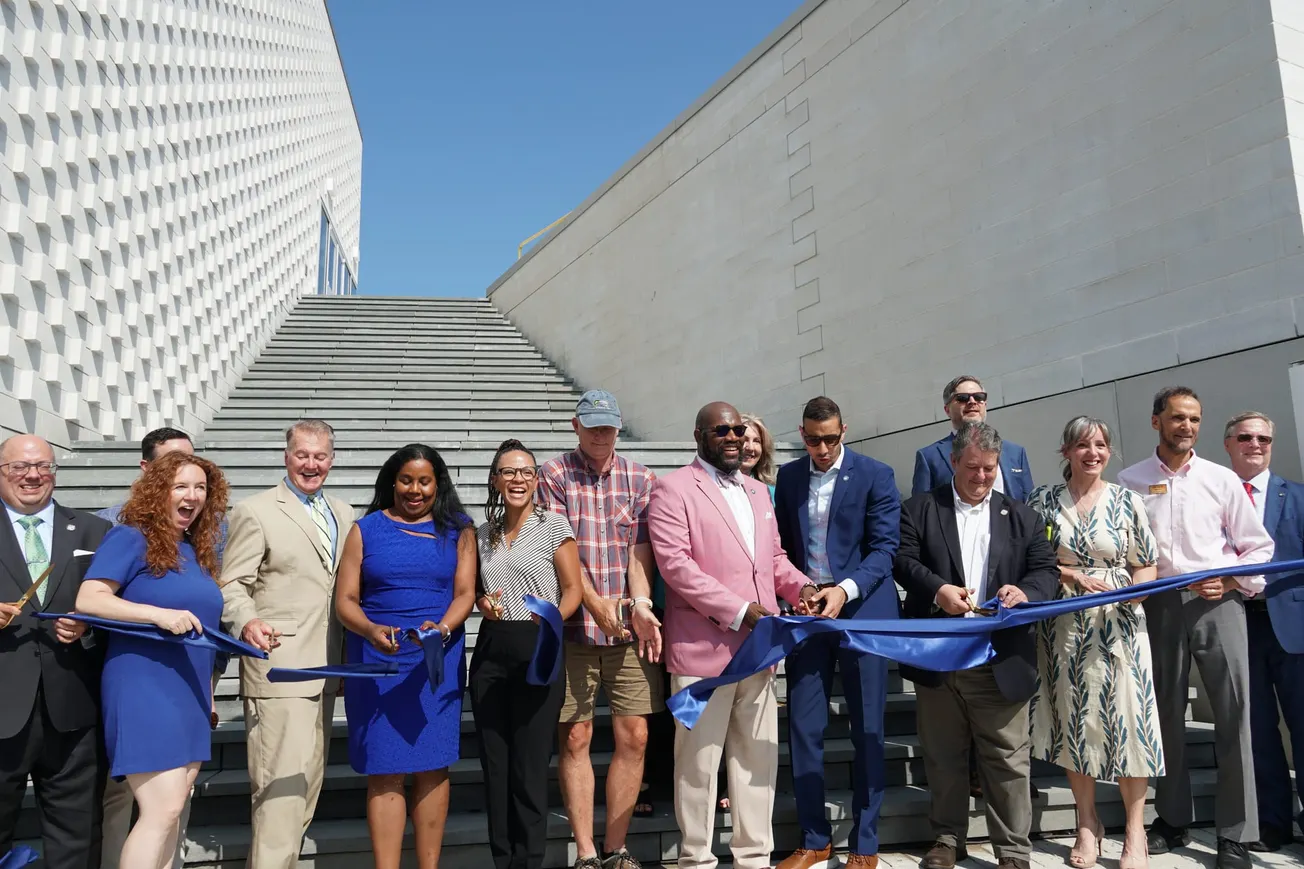
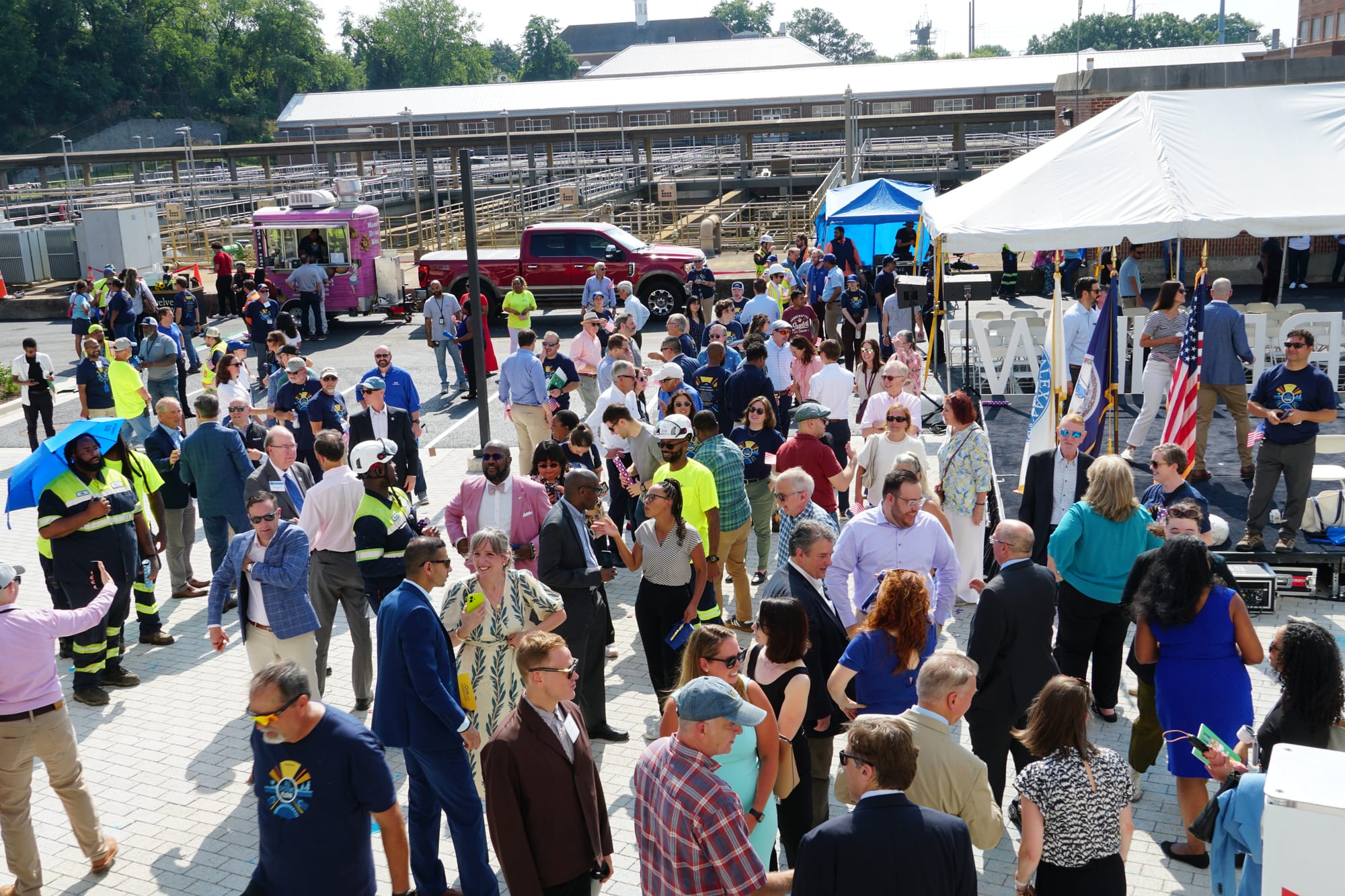
AlexRenew dedicated RiverRenew on July 1, marking the day the largest infrastructure project in Alexandria's history came online and beat a state deadline that officials had once been told was impossible. Under a tent pitched against a heat index climbing toward 100 degrees, more than 100 people — elected officials, engineers, environmental advocates and the crews who built the system — gathered at AlexRenew's Limerick Street campus to cut the ribbon on the 12-story underground pumping station now at the heart of the city's defense against sewage overflows.
"Today is more than the operational completion of RiverRenew," said John Hill, chair of AlexRenew's board of directors, who emceed the ceremony. "It denotes the beginning of a new era for the Potomac River, Hunting Creek and Hooffs Run."
The system is built to prevent about 120 million gallons of combined sewage from reaching local waterways each year, AlexRenew said.
A problem rooted in the 1800s
The oldest parts of Alexandria are served by a combined sewer system that carries both sewage and stormwater in a single network of pipes. On dry days, everything flows to AlexRenew's treatment plant. But heavy rain — as little as a quarter-inch — could overwhelm the pipes, sending a mix of stormwater and untreated sewage into the Potomac and its tributaries through four outfalls.
Brent Walls, the Upper Potomac Riverkeeper, told the crowd his organization pushed hard — sometimes bitterly — to ensure the fix addressed all four outfalls, including the largest, at the city's waterfront.
"It got ugly at times," Walls said, recounting the fight that preceded the 2017 state law mandating the work. "We locked horns with Alexandria officials, tussled with Virginia lawmakers and pressured the Virginia governor." A clean Potomac, he said, is "the greatest legacy we can ever hope to leave for our children."
The 2017 law from the Virginia General Assembly originally required Alexandria to remediate its outfalls by July 1, 2025. The deadline was later extended a year, to July 1, 2026 — the date the system met.
"You actually did it"
Speaker after speaker returned to the timeline: eight years from concept to completion, roughly half the time comparable projects typically take.
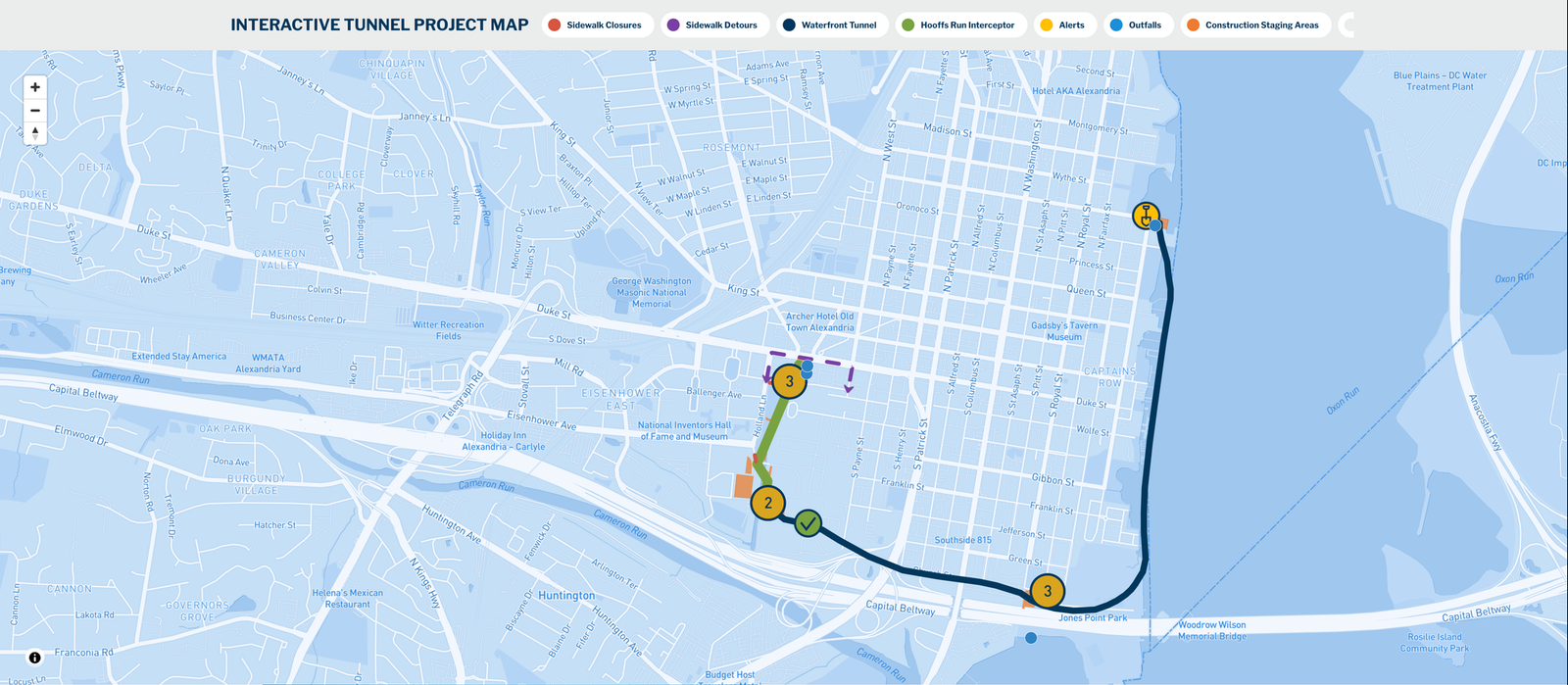
"Completing a project of this magnitude in the required timeline was once considered impossible," said Justin Carl, AlexRenew's general manager and CEO, who served as RiverRenew's first program manager beginning in 2017. He described the work as "three projects in one" — the 2.2-mile Waterfront Tunnel, the "inverted high-rise" pumping station and a new pipeline through one of the city's cherished parks — built through a pandemic, record inflation and global supply disruptions.
"Pure grit got us here," Carl said. "Everything we've done over these last eight years culminates in a brighter future for Alexandria."

Jonathan Rak, deputy director of the Virginia Department of Environmental Quality and a former AlexRenew general counsel, put it more bluntly, quoting his boss: "You actually freaking did it. You beat the deadline by a few days."

The project drew backing from every level of government. AlexRenew financed it with a $321 million federal WIFIA loan from the U.S. Environmental Protection Agency and $186 million in low-interest loans from Virginia's Clean Water Revolving Fund, along with state and federal grants — a structure officials said was designed to ease the burden on ratepayers.
"This is quite possibly the most beautiful pump station I have ever seen," said Jess Kramer, the EPA's assistant administrator for water, who called the city "an inspiration" for other communities.
A city that "found a way"
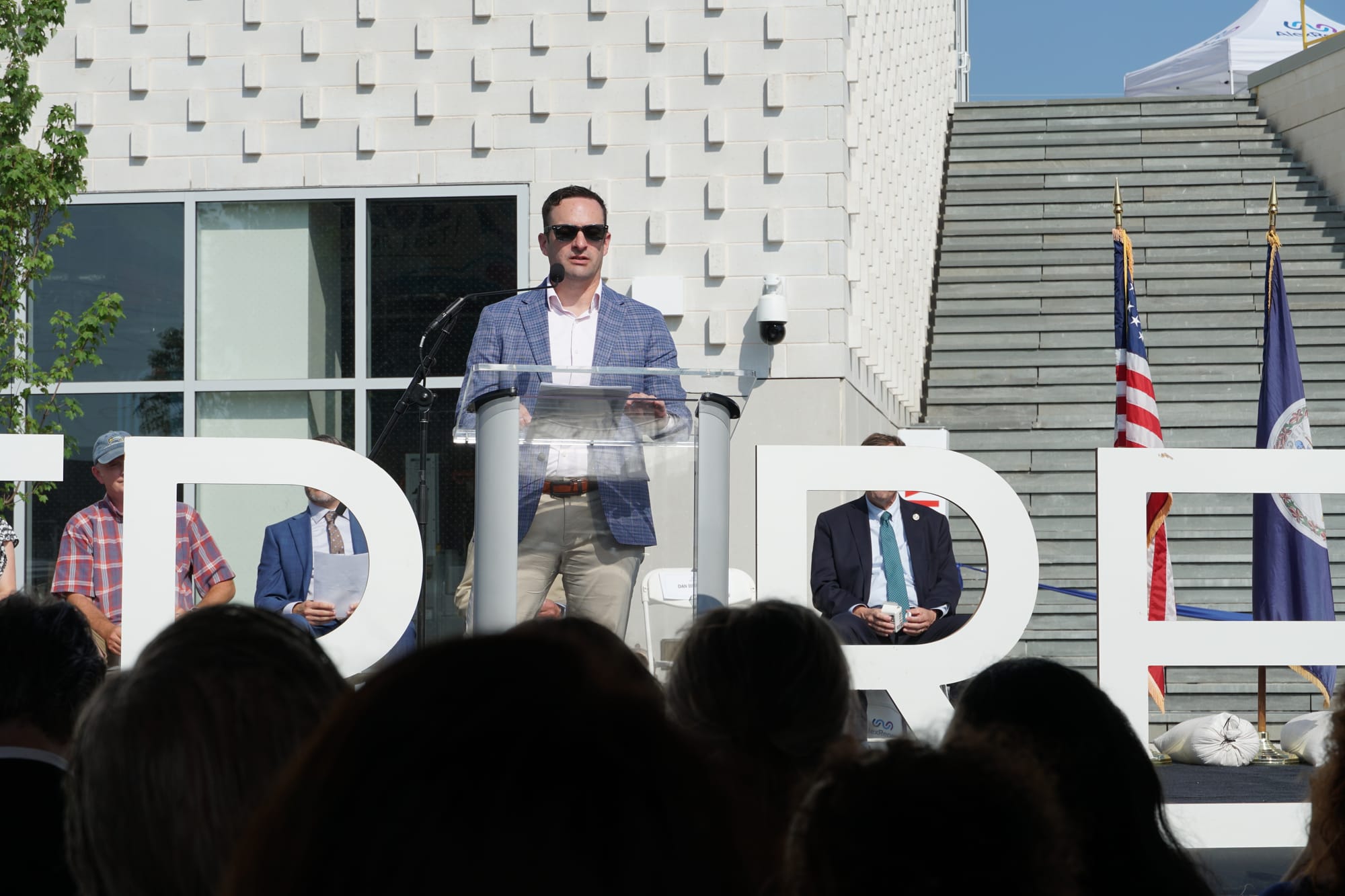
Dan Bradfield, who chaired the RiverRenew Stakeholder Advisory Group, said the project's legacy was as much about process as pipe. He credited AlexRenew with giving residents "a real seat at the table," and said municipalities across the country had reached out to study Alexandria's community-engagement model.
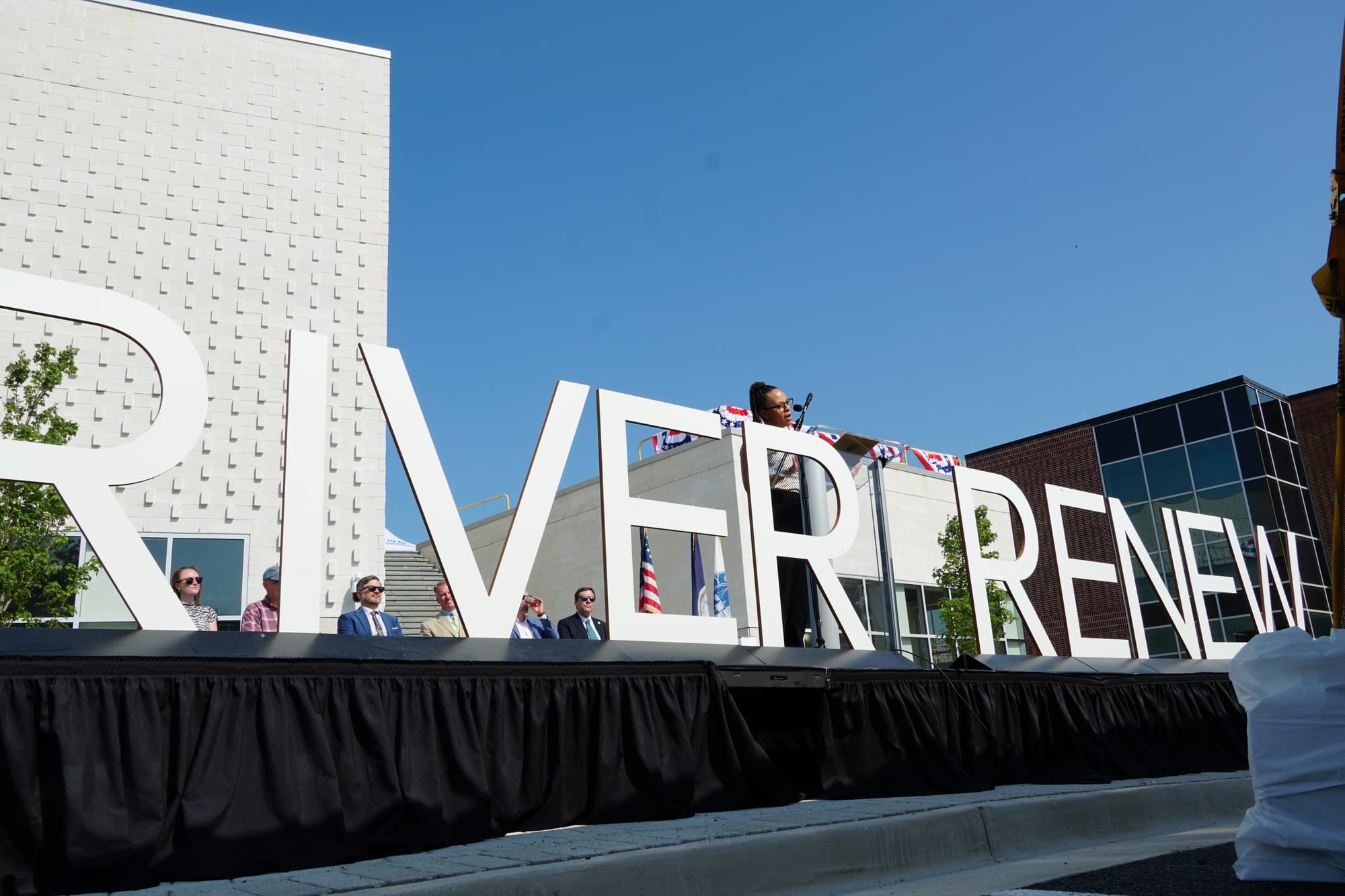
Mayor Alyia Gaskins closed the remarks by casting the milestone as a turning point for the city. She said RiverRenew "closes the chapter on a centuries-old problem" and opens "a new story, a story that is focused on cleaner, healthier waterways."
"We are a place where when there are big problems, we don't run from them, we find a way to tackle them," Gaskins said, crediting a coalition that ranged from elected officials and workers to environmental advocates. When the answer wasn't clear, she said, "we pull together every stakeholder you can imagine... until we can work toward a common goal."
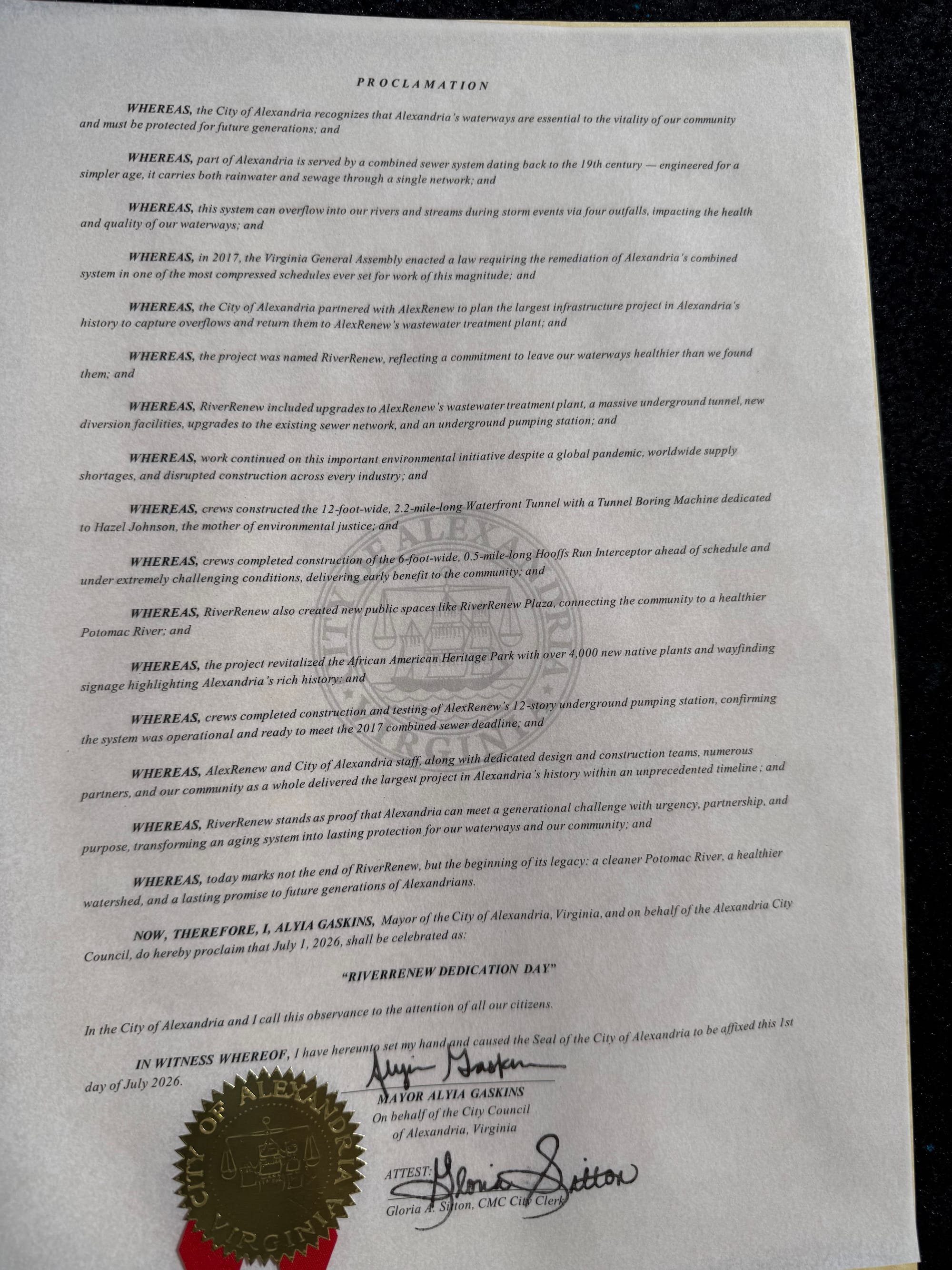
Gaskins then read a proclamation declaring July 1, 2026, "RiverRenew Dedication Day," borrowing a closing line from Ms. Moxie, the character in AlexRenew's children's book about the project: "All the fish get to roam because the dirty water is gone from their home." The proclamation declared that "today marks not the end of RiverRenew, but the beginning of its legacy: a cleaner Potomac River, a healthier watershed and a lasting promise to future generations of Alexandrians."
How it works
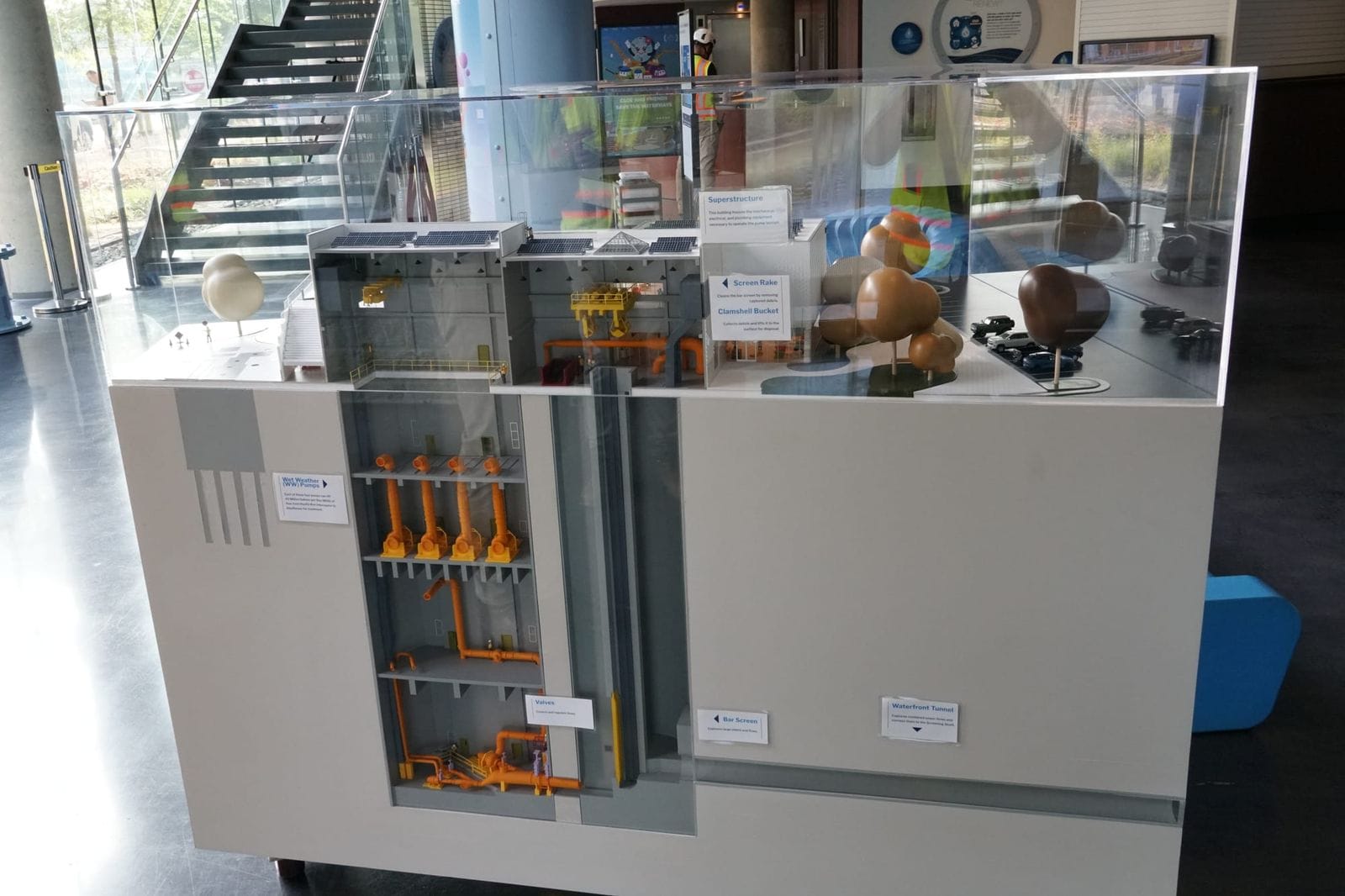
RiverRenew is designed to reduce the city's combined sewer overflows from about 70 events a year to fewer than four, cutting the annual volume reaching local waterways from roughly 140 million gallons to under 17 million. Overflows into Hooffs Run, a small tidal creek, are expected to fall by 99%.
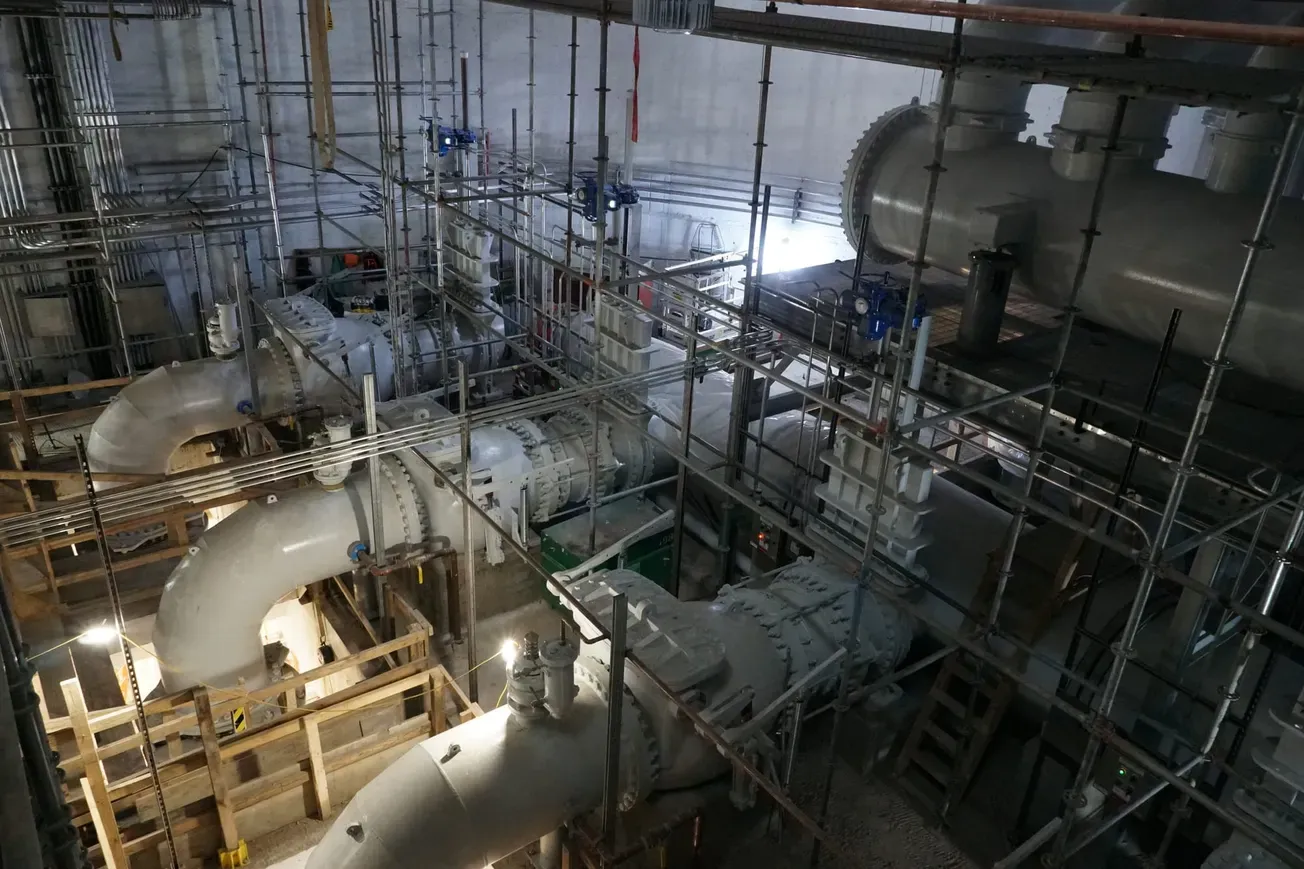
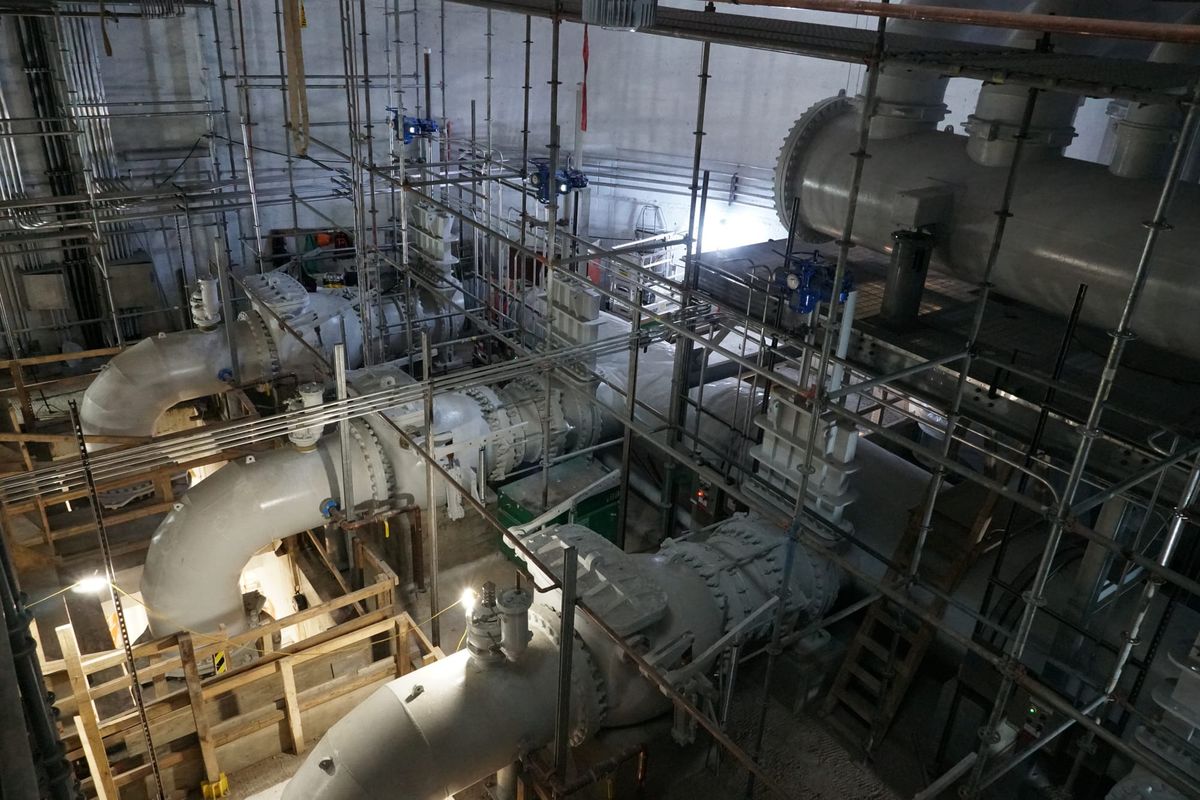
The tunnel that makes it possible was mined by a 465-foot-long boring machine named Hazel — for Hazel Johnson, widely regarded as the mother of the environmental justice movement. Running 12 feet in diameter and more than 100 feet below Old Town, it passes beneath the Potomac for about half its length and stores combined flow until the pumping station can lift it back to the plant for treatment. Inside the station, tunnel-dewatering pumps rated at 20 million gallons a day and four wet-weather pumps rated at 45 million gallons a day each move the flow toward the surface.
Carl told The Alexandria Brief the system actually began running Monday, two days before the ceremony — meaning the pumps were already on the job as officials gathered to dedicate them.
Beyond the pipe, RiverRenew reshaped public space along the water: 4,000 native plants and new wayfinding signage at African American Heritage Park, a new pocket park nearby, and a waterfront promenade at Pendleton Street.
After the ribbon fell, guests were invited to tour the station's green roof and peer down into the shaft The Alexandria Brief descended last month — the deep, quiet machine that, as of this week, is finally on the job.
The Alexandria Brief toured the RiverRenew pumping station on June 11. Read that inside look here.
Also on hand: From the U.S. Congress, representatives from the offices of Sen. Mark Warner and Rep. Don Beyer. From the Virginia House of Delegates, Majority Leader Charniele Herring and Dels. Alfonso Lopez and Kirk McPike. From Alexandria City Council, Vice Mayor Sarah Bagley and council members John Chapman, Abdel Elnoubi and Sandy Marks. Former mayors Justin Wilson and Allison Silberberg and former Vice Mayor Amy Jackson also attended, along with City Manager Jim Parajon and Fairfax County Supervisor Dan Storck.
 Ryan Belmore