Table of Contents
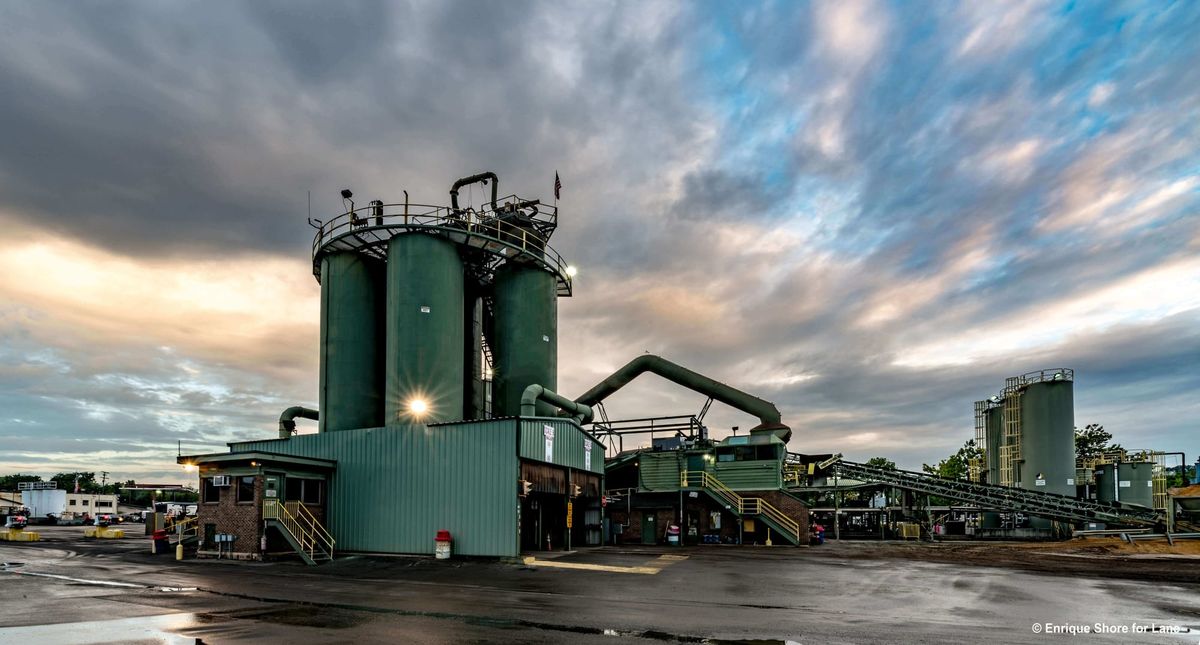
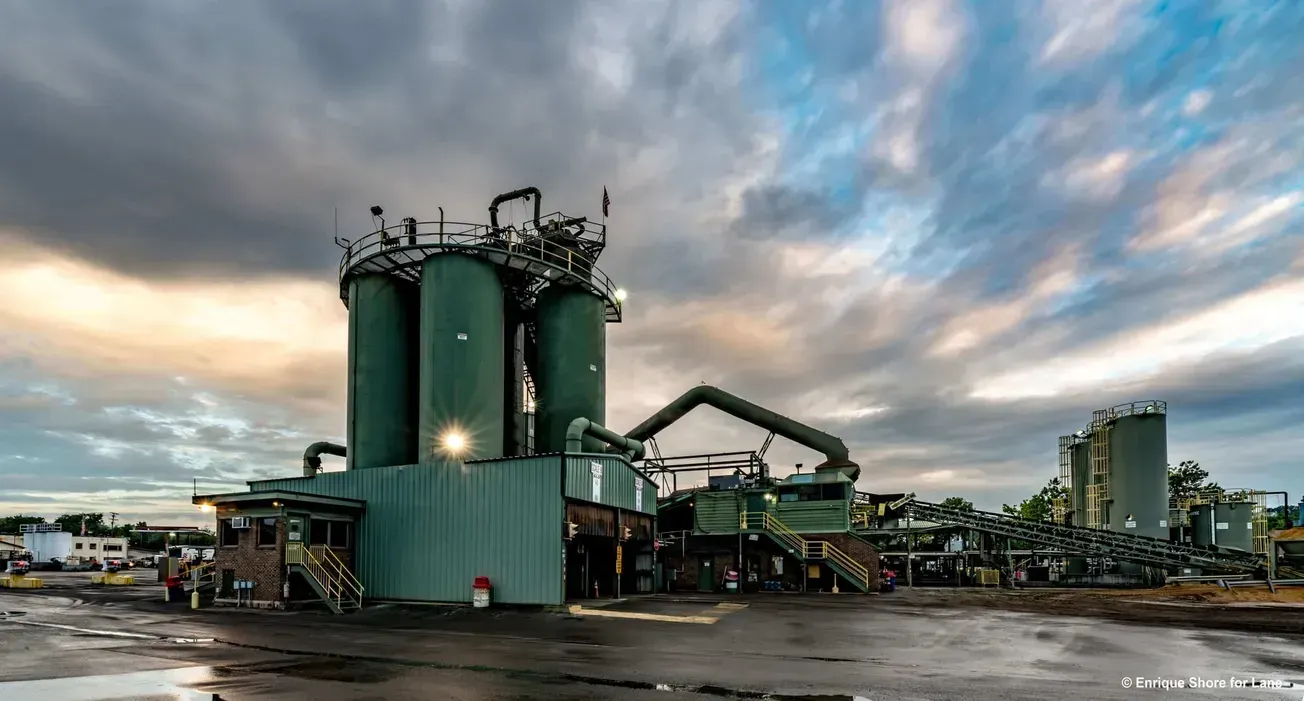
ALEXANDRIA, Va. — The Alexandria City Council voted Wednesday night to deny Virginia Paving Company's request for a five-year extension to continue operating its West End asphalt plant, upholding the 2027 closure deadline the city set in 2019 over the objections of the company and its attorney and siding with a Planning Commission that had recommended denial by a 6-0 vote earlier this month.
The vote was 6-0-1, with Councilman Canek Aguirre abstaining, after more than an hour of public comment and council debate at the Del Pepper Community Resource Center.
"Bet on Alexandria"
Mayor Alyia Gaskins moved to support the Planning Commission's denial recommendation, framing the decision as a test of the city's commitment to its own planning vision.
"This SUP extension just factually does not substantially conform to the city's master plan," Gaskins said. "I am an optimist too. So for me this decision is about whether or not we are committed to our vision. And so I'm inclined to learn from our predecessors to move us forward and bet on Alexandria."
Vice Mayor Sarah Bagley said she wrestled with the decision but landed on support for the Small Area Plan that envisions the Eisenhower West corridor transitioning to transit-oriented, mixed-use development near the Van Dorn Metro station.
"If ultimately I get a vote in line with the motion by my colleague, it is in recognition of my fundamental belief in the Small Area Plan and the vision that it has laid forward," Bagley said, while adding that she had asked the applicant during the hearing whether something less than a five-year extension — even one that still incentivized the company to make Courtney Avenue improvements — might be possible. She said she did not hear enough support from colleagues for that middle-ground approach to put it on the floor.
Councilman Canek Aguirre, who ultimately abstained, acknowledged the difficulty of the decision, citing the economic realities facing the site and the city's track record of industrial sites sitting vacant for decades after closure. "I wish we were better positioned in this situation," he said. "Things won't change unless you make them change."
Virginia Paving's attorney: the site faces "severe technical issues"
Ken Wire, the attorney representing Virginia Paving, gave a lengthy presentation arguing that market conditions — not inaction — had prevented the site from redeveloping since the 2019 sunset provision was set.
"It's not for lack of will, it's for lack of market conditions," Wire told the council. "That's not my fault. That's not Virginia Paving's fault. It's not the community's fault. That's just the reality."
Wire pointed to the site's location in a federally designated floodplain — roughly 10 of its 12 acres now lie within the floodplain, a condition that has worsened since 2019 — and said the vision of building 10-story residential towers there "is not viable." He told the council that regardless of the vote, the site's industrial zoning, floodplain status, and adjacency to a transloading facility and a waste-to-energy plant create long-term redevelopment challenges the city will have to address with or without the asphalt plant.
"Whether you approve this plant tonight or not, we still have a problem to figure out," Wire said.
On the question of whether a shorter extension — one to two years — was possible, Wire told the council that some conditions, like the production cap reduction and Code Red air quality restrictions, could stay on the table regardless of the term length. But he said that the Courtney Avenue improvements the company had offered, which would create a public loop road, were cost-intensive enough that they only penciled out over a five-year period. "To the 18-month scenario, you have to revisit some of these cost implications because it's frankly not worth it," he said. "If you said keep all these on there for a year we'd probably just have to close."
Residents: a promise made, a promise kept
Speakers against the extension lined up in force during the public comment period.
Mark Sullivan, a Cameron Station resident, told council that he and his wife had purchased their condo in 2019 partly based on assurances from city officials that Virginia Paving would be gone by Jan. 1, 2027. "We were continuously reassured that Virginia Paving would be out of there," Sullivan said. "Tonight is a real opportunity for the City Council to stand up and show that it supports the people of the West End of Alexandria."
Michael Hogan, a retired military officer who said he moved to the neighborhood about seven years ago, said research into the plant's sunset clause had helped him decide to settle there. "A couple of weeks ago I saw the notice saying here it is for re-voting and redoing. And it kind of shocked me," he said. "They've already agreed to this, so what's going on?"
Hernando Garzon, an economist who spoke against the extension, argued the city was forgoing significant tax revenue and blocking broader development by allowing the plant to stay. He called the plant's continued operation a "negative externality" that imposed opportunity costs on the city's finances while benefiting only a single private business.
A representative of Greenhill Capital, which owns 23 acres adjacent to the site and has approvals for nearly 900 units of mixed-use redevelopment nearby, told the council that conversations with prospective investors in the Greenhill project consistently come back to the plant. "The one that continues to ring consistently is that of Virginia Paving — it being an eyesore, the pollution, etc.," the Greenhill representative said. "Nobody at this time is really interested in making any kind of capital investment towards our project given the current conditions of the Virginia Paving site." Greenhill said it had made two purchase offers on the Virginia Paving property through its attorney, and received no response to either.
Former Councilmember Redella S. "Del" Pepper, who was on the Council that set the 2019 deadline and said at the time she intended it to be final, told the council Wednesday that granting an extension would make the area "less attractive for developers to make bids on nearby properties."
Mindy Lyle, who chaired the advisory group that developed the 2015 Eisenhower West Small Area Plan, spoke after Pepper and told the council the plan's failure to include a rezoning of the property at the time was a mistake that should not be compounded now. "What I'm asking you to do tonight is not extend this any more than one year and institute a rezoning of this property so that we do not end up with an industrial use that's a by-right use that lasts for 20 or 30 more years," she said.
What comes next
The denial means Virginia Paving's existing Special Use Permit remains in effect with its current Jan. 1, 2027 closure date. The company still owns the property and retains the right to pursue industrial uses that are permitted by-right under the site's I/Industrial zoning — which does not require a special use permit — including storage and manufacturing, according to planning staff comments at the June 22 Planning Commission hearing. A rezoning of the property, which multiple speakers requested, would require a separate public hearing process, staff has said.
Wire told council the company intends to keep working with planning staff on the site's future regardless of the vote's outcome.
The consent docket, covering items 7 through 14 and 16 through 20, passed unanimously. Item 15, a request for release of contingent reserves for a jail operational efficiency study, was pulled by Councilman Chapman before passing separately in a roll call vote. Chapman was the lone no vote on that item.
Earlier in the evening, the Stormwater Utility and Flood Mitigation Advisory Commission received the city's annual Commission of the Year Impact Award, presented by Councilman Chapman.
 Ryan Belmore