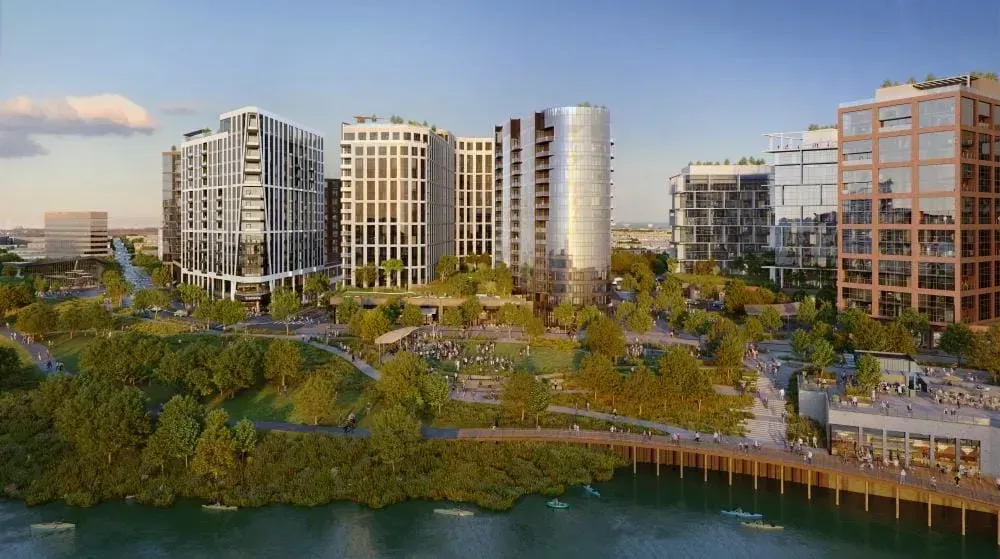
ALEXANDRIA, Va. — City Manager James Parajon will brief the City Council on Tuesday, June 9, on a term sheet for a proposed $135 million tax increment financing package to redevelop the former Potomac River Generating Station, the latest step in the city's review of a deal that would help convert the shuttered Old Town North coal plant into a mixed-use waterfront neighborhood.
The item appears on Tuesday's docket as No. 11 under the City Manager's Oral Report, listed as "Briefing and Consideration of a Term Sheet for a Potential Public Infrastructure Investment at 1300 North Royal Street, the Former Potomac River Generating Station (PRGS) Site, through Tax Increment Financing." It carries two attachments: the term sheet itself and a document of additional community feedback.
As an oral-report briefing, the June 9 item is the framework's formal introduction to the council rather than a binding vote on the financing. It follows Parajon's April 28 oral report, which first outlined the financing concept. The legislative meeting begins at 7 p.m. at the Del Pepper Community Resource Center, 4850 Mark Center Drive, and is carried on government Channel 70, the city website, and Zoom.
 Ryan Belmore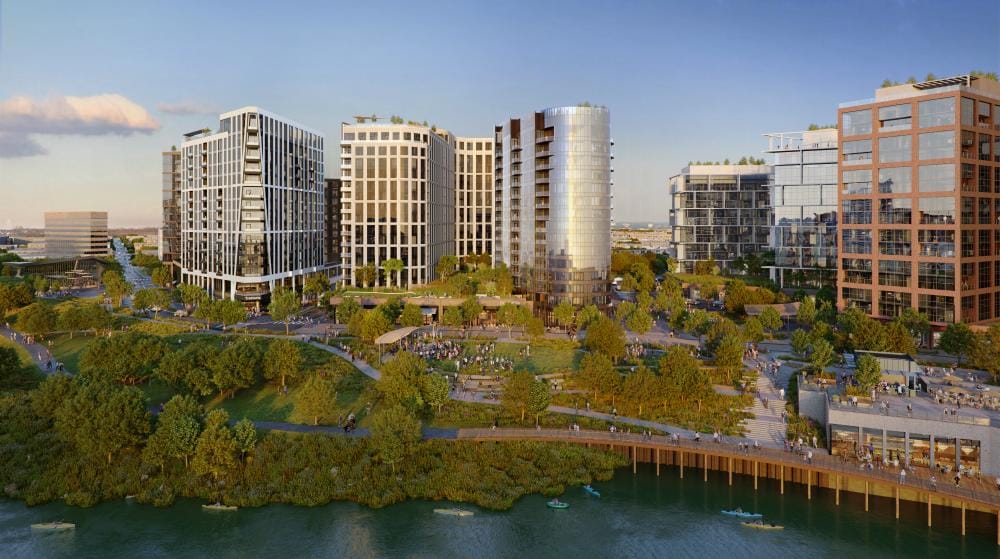
What the term sheet lays out
The framework is a non-final outline meant to guide negotiations, with every element subject to council approval. Its core terms:
The city would structure the issuance of $135 million in net infrastructure proceeds from revenue bonds, with no more than $70 million allocated to Phase I and the balance reserved for Phase II, contingent on the developer meeting performance criteria. The bonds are independent of the city's own bonding capacity and would be repaid from a defined slice of new tax revenue the project itself generates — real property, sales, discretionary meals and transient lodging taxes — rather than from existing city revenue. Any annual transfer of that increment revenue is subject to council appropriation.
The reimbursement structure puts the risk on the developer first. HRP must fund all costs up front, and bond proceeds reimburse only eligible, completed and verified work. Before receiving any Phase I financing, the developer or its lenders must invest a minimum of $110 million in public infrastructure, including costs already incurred.
The city frames the request as meeting its "but-for" test — the standard holding that the project has a financial gap and would not be feasible as envisioned without public investment. Total private investment is estimated at roughly $2 billion, against about $290 million in public infrastructure overall.
Community feedback now part of the record
The second attachment to the June 9 item reflects the public engagement that has accompanied the proposal. HRP held two virtual community meetings in the run-up to the council dates. The first, on May 4, drew more than 170 attendees with questions on deconstruction, remediation, the financing proposal, transportation and design.
The second, on May 26 — HRP's 20th community meeting on the project — focused on master-plan phasing, arts and cultural uses, environmental remediation, and the power plant deconstruction plan. The hour-long session, hosted by land use attorney Ken Wire of Wire & Gill, walked neighbors through how the coal plant will come down even as the first new buildings go up and addressed questions raised after the May 4 meeting. The city's project page reports the May 26 meeting drew roughly 180 registrants and about 120 attendees.
 Ryan Belmore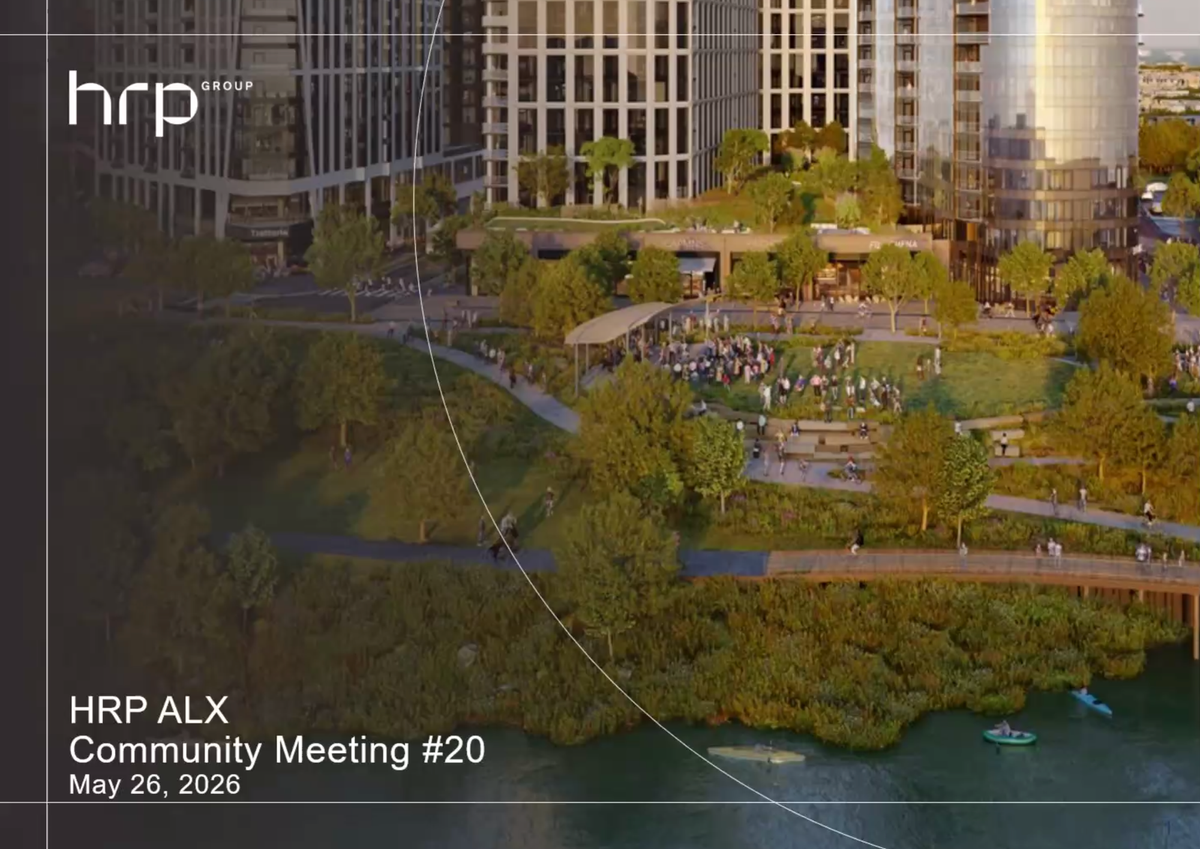
The CDA piece comes later
One element absent from the June calendar is the Community Development Authority — the separate public body that would issue the bonds and backstop the financing through special assessments on properties within the district, all currently owned by HRP. The city anticipates taking up the CDA ordinance in the fall, contingent on the council first approving the city investment. The structure echoes the city's only prior use of the tool, for the Landmark Mall redevelopment.
What comes next
The June 9 briefing precedes the council's scheduled action on the proposal. The city has said votes on the financing authorization, the development and performance agreement, and Phase I development approvals — the Development Special Use Permits for Block B, Block C, the Waterfront Park and the Rail Corridor Park, which the Planning Commission unanimously recommended on June 2 — are set for a public hearing Saturday, June 13. That docket has not yet been published.
Background
The plant operated from the late 1940s until 2012, when it closed after more than a decade of resident and city advocacy over air quality. HRP bought the 18.87-acre site in late 2020. The council approved the rezoning and Coordinated Development District in July 2022, and the Infrastructure Development Site Plan won approval in June 2023. At full buildout, the site is planned for roughly 2.5 million square feet of mixed-use development, up to 2,000 residences, more than five acres of publicly accessible open space and a subsidized arts and cultural hub.
How to weigh in
Written comments for the record can be emailed to the City Clerk at CouncilComment@alexandriava.gov. The term sheet and project background are posted at alexandriava.gov/PRGS.