
Table of Contents
ALEXANDRIA, Va. — On June 20, 1863, Alexandria became the capital of Virginia. The federally occupied city, which Union forces had held since May 1861, took on the new role the same day West Virginia formally joined the Union as the 35th state — a sequence of events that had been deliberately set in motion two years earlier by Francis Harrison Pierpont and the Unionist Virginians of the northwestern counties.
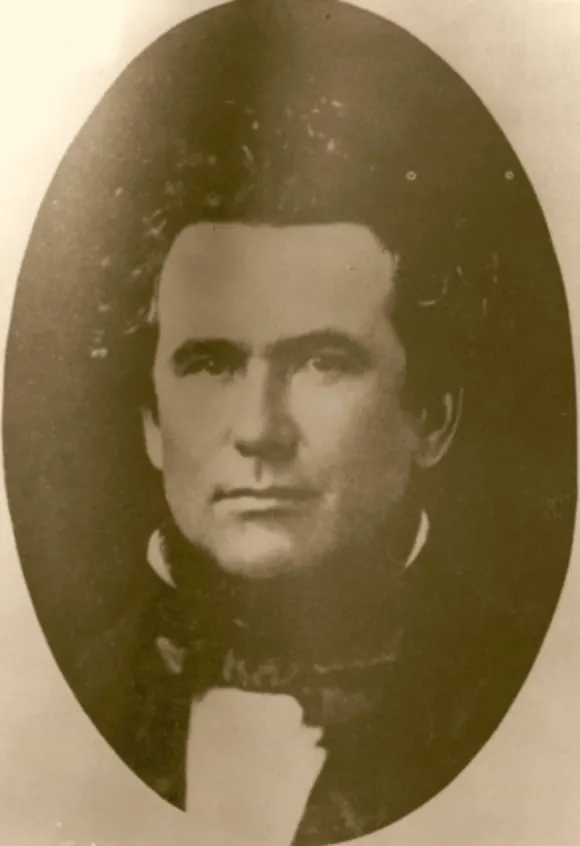
The path to Alexandria's brief tenure as state capital ran through the politics of secession. When Virginia's secession convention voted to leave the Union in April 1861, delegates from the northwestern counties — long advocates of separate statehood, with strikingly different economies and political alignments from Tidewater Virginia — refused to accept the decision. Those Unionist delegates and their allies gathered in Wheeling and formed what they called the Restored Government of Virginia, with Pierpont, an attorney and longtime statehood advocate from Marion County, as governor. The federal government recognized the Wheeling government as the legitimate state government of Virginia, which solved a constitutional problem: the U.S. Constitution forbids the creation of new states within the borders of existing states without that state's legislative consent. By recognizing the Restored Government as Virginia's legitimate government, Washington could then accept that government's consent to the partition that created West Virginia.
That partition was formally completed on June 20, 1863, when West Virginia joined the Union. The Restored Government, no longer headquartered in territory that was part of Virginia, moved its operations across the state to Alexandria — the largest population center in Virginia under continuous federal control. Pierpont and his small administration set up in the city for what would prove to be nearly two years of state government conducted from within federal lines, an unusual arrangement that placed Virginia's recognized state government effectively under the protection of the U.S. Army.
A new constitution, written under occupation
Under Pierpont's leadership in Alexandria, a convention of Unionist Virginians wrote a new Virginia constitution in 1864. The document — adopted in Alexandria — formally abolished slavery in the parts of Virginia controlled by the Restored Government, nearly a year before Appomattox. It also confirmed and recognized the creation of West Virginia, retroactively settling the constitutional question that had attended the partition the year before. The 1864 constitution would, after the war, become the framework that the Pierpont administration tried to extend to the rest of Virginia during the early months of Reconstruction.
When the Confederate government collapsed in April 1865 and Union forces took Richmond, the constitutional logic that had placed Virginia's capital in Alexandria no longer applied. The Restored Government moved to Richmond, taking over the buildings that had served as the capital of the Confederacy for the war years. Pierpont served as the postwar governor of the reunified Virginia until 1868, when Reconstruction-era politics ended his tenure.
For Alexandria itself, the 22-month period as Virginia's capital left relatively little physical mark. The Restored Government operated out of leased and federally provided space rather than purpose-built buildings; the city's role as a state capital was a function of military geography more than civic infrastructure. But the constitutional and political work done in Alexandria during those months — particularly the 1864 constitution and its abolition clause — was substantive enough that historians have long counted the Restored Government's time in Alexandria as a meaningful chapter in both Virginia's Civil War history and the longer story of how slavery ended in the South.
Information via the City of Alexandria's Office of Historic Alexandria, the Library of Virginia, the Virginia Museum of History and Culture and the Encyclopedia Virginia.