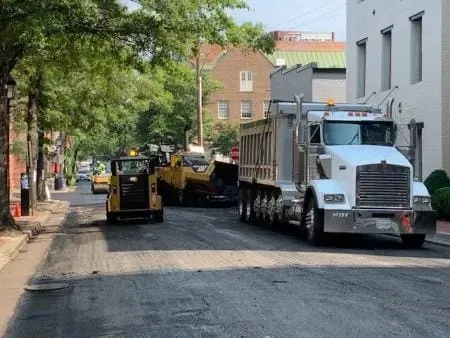
ALEXANDRIA, Va. — City crews will repave or do concrete work on 11 stretches of street this week, including Hilton Street from Duke Street to Upland Place and North Pickett Street from Seminary Road to Finley Lane.
Temporary "No Parking" signs go up before work starts. The city says vehicles parked in work areas will be towed, and that the paving program coordinates with parking enforcement and tracks the signs electronically.
Repaving, Sept. 14-18:
- Bayliss Drive, from Cross Drive to the end
- Cross Drive, from Scroggins Road to the end
- Hilton Street, from Duke Street to Upland Place
- North Galliard Street, from Seminary Road to the end
- Murray Lane, from North Pickett Street to the end
- North Pickett Street, from Seminary Road to Finley Lane
- Fillmore Avenue, from Seminary Road to North Chambliss Street
Concrete work:
- East Alexandria Avenue, 200 and 300 blocks
- East Braddock Road, 300 block
- East Monroe Avenue, 600 block
- Terrett Avenue, 2400 block
Residents get about a week's notice, by project sign or a flier on the door. Work runs from 7 a.m. to 5 p.m. unless the city says otherwise. Crews mill off the top layer, adjust utilities and lay about two inches of hot-mix asphalt. Streets reopen at the end of each work day.
Rain moves the schedule. Hot-mix asphalt needs warm, dry weather, so a wet day cancels work until the next business day. Equipment, utility coordination and other city projects can push a street back, too.
Alexandria has more than 561 lane miles of road and repaves roughly 50 a year. The season runs from early April into November.
Every three years, the city scores each street from 1 to 100 on a Pavement Condition Index and works from the lowest ratings up. Since a citywide assessment in 2019, paving has gone to streets rated serious, very poor and poor, which is why the work lands in scattered blocks rather than whole neighborhoods. Staff also weigh traffic volume, planned utility work, cost and community interest.
The city aims to repave arterial roads every eight to 12 years and residential streets every 10 to 15.
Potholes and sidewalk damage can be reported through Alex311. More information, including the pavement condition map, is at alexandriava.gov/Potholes.
Ryan Belmore is an Alexandria resident and the founder and publisher of The Alexandria Brief. Send tips, feedback, and story ideas to ryan@alexandriabrief.com.